





Gjør som tusenvis av andre bokelskere
Abonner på vårt nyhetsbrev og få rabatter og inspirasjon til din neste leseopplevelse.
Ved å abonnere godtar du vår personvernerklæring.Du kan når som helst melde deg av våre nyhetsbrev.

"Jervis's startling proposals require and repay careful attention by all serious students of Paul's letters."This major contribution to an ongoing debate about Paul's theology suggests that Paul thought not in terms of two ages but in terms of life in this age or life in Christ."What is time? Ann Jervis contends that Pauline interpreters of all stripes have ignored this question for far too long. Replacing the usual contrast between 'this age' and the 'age to come' with 'death-time' and 'life with Christ, ' Jervis provokes reflection not only on Paul's view of time but on his Christology, soteriology, and ecclesiology. Her startling proposals require and repay careful attention by all serious students of Paul's letters."--Beverly Roberts Gaventa, Princeton Theological Seminary (emerita)"The problem that Jervis tackles in this book is arguably the most difficult one in the letters of Paul, not only on its own internal terms but also in its existential challenge to Christian reception of Paul. Jervis gives us a characteristically learned and incisive treatment of all the relevant texts. What is more, she wrestles profoundly with the greatest theological problem of all: the fact of death."--Matthew V. Novenson, University of Edinburgh"This rigorous and challenging book charts a new course in Pauline interpretation, centering our understanding of the time of the gospel on the crucified and living Christ. Through Jervis's analysis, we learn to ask not only 'What time is it?' but crucially 'Whose time is it?' Essential reading for all serious students of Paul's gospel."--Susan G. Eastman, Duke Divinity School (emerita)"Jervis's bold intervention mounts a considered and wide-ranging challenge to commonplace accounts not only of the apostle's eschatology but also of his Christology and his account of salvation. She invites us to see afresh how, for Paul, the massive gravity of Christ bends everything around it, including time itself. The result is an extraordinary reframing of the Christian life in terms of the fundamental antimony between Christ's own 'life-time' and the time of death. A welcome provocation!"--Philip G. Ziegler, University of Aberdeen
"A nonpartisan case for the importance of religious liberty in US society"--
This collection aims to map a diversity of approaches to the artform by creating a 360 Degrees view on the circus.
Examining philosophical, evolutionary, and literary perspectives, this book explores imagination as a cognitive power and an essential dimension of human flourishing. It demonstrates how imagination plays multiple roles in human cognition and shapes humanity in profound ways, making possible our experience of a meaningful world.
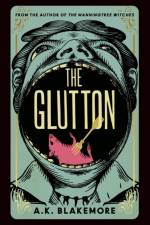
One man with an insatiable hunger: a novel of desire and destruction in Revolutionary France, based on a true story, from the Desmond Elliott Prize-winning author of The Manningtree Witches.
Why is Israel¿s relatively small and low-budget military also the world¿s most innovative, technologically and logistically? Edward Luttwak and Eitan Shamir look to the IDF¿s unique structure: integrating army, air force, and navy in one service, under an officer class constantly refreshed by short tenures, the IDF is built for agility and change.
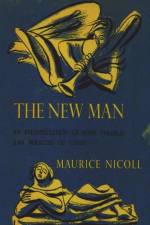
"ALL sacred writings contain an outer and an inner meaning. Behind the literal words lies another range of meaning, another form of knowledge. According to an old¿age tradition, Man once was in touch with this inner knowledge and inner meaning. There are many stories in the Old Testament which convey another knowledge, a meaning quite different from the literal sense of the words. The story of the Ark, the story of Pharaoh's butler and baker, the story of the Tower of Babel, the story of Jacob and Esau and the mess of pottage, and many others, contain an inner psychological meaning far removed from their literal level of meaning. And in the Gospels the parable is used in a similar way." -from the Preface. The New Man is an effort to elaborate the Gospels in light of this inner truth, in order to guide man along the necessary journey he must undertake to avoid violence and self-destruction.
Are you ready to learn the ways of Voodoo and finally take control of your destiny even if you are a beginner?Discover the secrets of Voodoo with the book Voodoo for Beginners. Immerse yourself in a mystical and fascinating world and discover how this ancient religion can affect your life.Suitable for the young and curious, this book is the ideal guide for those attracted to mystery and spirituality.Explore the rituals, beliefs, and history of Voodoo and discover how this tradition survives to this day.Apart from simply being just a religion, Voodoo is actually an entire way of life which is centered around an immense respect for one's elders.In this book you'll find:The Voodoo Spiritual StructureThe Cult of Met KalfouHow to Remove Black Magic SpellsVoodoo Rituals: How to perform some rituals that you could use for othersFace the unknown and open your mind to knowledge with "Voodoo for Beginners."Purchase it today and immerse yourself in a world of mystery and magic!
In a world shaken by ecological, economic and political crises, the forces of authoritarianism and reaction seem to have the upper hand. How should we name, map and respond to this state of affairs?
A look back from a future in which racism is no more-inspiring us to start taking positive action today"It's the year 2050... and racism has ended." Could this really be our future? If so, what has to happen now to achieve such a radical change? In How We Ended Racism, Justin Michael Williams and Shelly Tygielski reveal a path for real and lasting global impact-not just talking about it, studying it, or making small steps, but actually ending racism in one generation.Williams and Tygielski draw from a wide array of scientific studies, as well as their practical successes in teaching a multitude of diverse groups across perceived "divides," to show us how to shift our perspective and enact lasting change in our families, workplaces, communities, and beyond. Here they provide solid answers to the questions future generations will ask about this pivotal time in history, by laying out the eight conditions that needed to arise in humanity to realize this possibility, covering: . How was it possible? The research on large-scale social change that showed racism could end. What were the first steps? Overcoming doubt, owning our emotions, and committing to truth. What were the biggest challenges? Shadow work, big conversations, and forgiveness. Which tools actually worked? The field-tested methods that allowed us to heal and connect. Who ended racism? How we-each of us-helped our culture evolve to make racism a thing of the past"You don't fix racism," say the authors. "You don't fight it. You don't make it better. You end it. We learned how to bridge any political or ideological divide-inviting liberals, conservatives, and everyone in between to cocreate a future worth fighting for." Here is a guide that dares to envision a world beyond typical diversity, equity, and inclusion work while providing tools and action steps to create a liberated future-so that our descendants can look back at this era as the time when we decided to end racism for the good of all.
"This book tells the story, in both English and Arabic, of a land full of people--people with families, hopes, dreams, and a deep connection to their home--before Israel's establishment in 1948, known to Palestinians as the Nakba, or "catastrophe." Denying Palestinian existence has been a fundamental premise of Zionism, which has sought not only to hide this existence but also to erase its memory. But existence leaves traces, and the imprint of the Palestine that was remains, even in the absence of those expelled from their lands. It appears in the ruins of a village whose name no longer appears in the maps, in the drawing of a lost landscape, in the lyrics of a song, or in the photographs from a family album." --
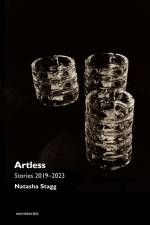
Composed of stories, fragmentary essays, and even press releases Stagg has been commissioned to write, Artless captures the media landscape lived and generated in New York during the past half decade. Since the 2016 publication of her debut novel Surveys, Stagg has positioned herself as an in-demand expert on--and critic of--the psychic experience of self-mythology within the cruelly optimistic metaverse of infinite branding. Part voyeur and part participant, Stagg continues her exploration of the branded identity and its elusive, bottomless desire for authenticity.
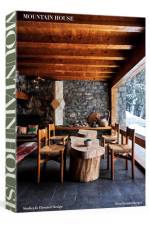
"A stunning photographic collection of mountain houses around the world that incorporate the surrounding ranges and vistas into their designs, from the author of Surf Shack and Bibliostyle. From Morocco to Patagonia, and Brazil to New Hampshire, interior designer Nina Freudenberger presents some of the most spectacular homes hidden in mountainous regions around the world, including modern lodges, rustic hideaways, hillside chalets, and more. Explore mountain living at its best in fall, winter, spring, and summer with 200 beautiful full-color images of each home. Among the twenty homes featured in this book, you'll find an isolated villa nestled in Switzerland's Engadin Valley; a former U.S. Forest Service cabin in California's San Gabriel Mountains; a modern concrete getaway just outside of Mexico City; and a renovated home in the Catskills built as a hotel for artists in the late 1800s. With simply designed interiors that keep the focus on the view just outside the window, these homes epitomize the tranquility and isolation we seek in the wilderness and the design ingenuity that mountain life demands"--
"Step back inside the world of President Jed Bartlet's Oval Office with Fitzgerald and McCormack as they reunite the West Wing cast and crew in a lively and colorful 'backstage pass' to the ... series. This intimate, in-depth reflection reveals how The West Wing was conceived, and spotlights the army of people it took to produce it, the lifelong friendships it forged, and the service it inspired. From cast member origin stories to the collective cathartic farewell on the show's final night of filming, What's Next [provides] on-set and off-camera anecdotes that even West Wing superfans have never heard. Meanwhile, a deeper analysis of the show's legacy through American culture, service, government, and civic life underscores how the series envisaged an American politics of decency and honor, creating an aspirational White House beyond the bounds of fictional television"--
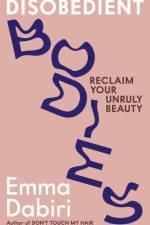
An unmissable pocket-sized manifesto from Emma Dabiri, bestselling author of Don't Touch My Hair and What White People Can Do NextBody hair. 'Fat' thighs. Something's always 'too big' or 'too small'. What part of your beautiful self were you taught to hate?We spend a lot of time hiding our 'defects', according to society's ideals of beauty. Ideals that are often tyrannical, commercially entangled, homogenizing and imposed upon us by oppressive systems that are further strengthened by our conditioned self loathing.This book will explore how to unpack, process, rebel and subvert - offering alternative ways of seeing beauty, drawing on other cultures, worldviews, times, places, and looking beyond the capitalist model - to find the inherent joy in our disobedient bodies.Accompanies a major exhibition at Wellcome Collection in autumn 2023.
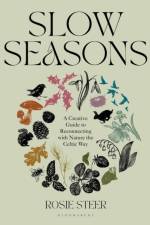
In her late-twenties, feeling utterly overwhelmed by the pace of modern city life, Rosie Steer found solace in the traditions she had been brought up with, influenced by her Scottish roots, that celebrated nature and observed the small steady shifts in the seasons. The Celtic Wheel of the year is an ancient seasonal cycle that aligns with solar events - the solstices and equinoxes - and their rough midpoints. For each mini-season, Rosie shares nature notes for what we can look out for as the days get warmer or cooler, the nights longer or shorter, alongside activities, things to make, flowers or fruit to forage, seasonal recipes to enjoy and a modern take on the traditional celebrations. By slowing down and paying attention to the ebbs and flows of nature, we can find moments of calm whenever we need them.
The Kolbrin incorporates a body of enlightened teachings that are a treasure of the centuries, a light on the path of Truth, and as relevant to the world today as they were in the past. The majority of what is presented here was actually salvaged from a pile of discarded manuscripts that had been partially burned and weathered.The Kolbrin is concerned with goodness and virtue, courage and mortality, spiritual ideals and human aspirations. It seeks to enshrine love in a place beyond the clamor and craving of mortal flesh, which may be enough to condemn it. The Masters can only record the results of their own searching in the Kolbrin. They discovered assurance but are unable to share it with others. If others want it, they must follow in the footsteps of the Masters, which is a long and winding road not for the faint of heart. The first step on that path is to research the required moral code and standards of conduct. The next step is to put these into action and make them the rule of life. They are the disciplines that allowed the truly enlightened ones of the past to awaken inner perception and make direct contact with The Universal Source of Truth. Only by following in their footsteps can anyone be assured of a path certain of reaching the desired goal. The Kolbrin incorporates a body of enlightened teachings that are a treasure of the centuries, a light on the path of Truth, and as relevant to the world today as they were in the past. The majority of what is presented here was actually salvaged from a pile of discarded manuscripts that had been partially burned and weathered. Some of the manuscripts were transcribed onto thin metal plates at some point and became known as 'The Bronzebook of Britain.' Manuscripts that were traditionally thought to have been copied from salvaged manuscripts that were not transcribed on metal plates and formed a work known as 'The Coelbook' are included. During the second and third decades of the twentieth century, these books were in the hands of a religious group in England that was never very powerful because membership requirements were too stringent. The Kolbrin appears to have been on the verge of extinction throughout history, but it has survived thanks to a few people who had no idea what it was all about, who were neither intellectual nor wealthy, and for whom the practicalities of life took precedence. Originally, there were twenty-one books, which were said to be twelve books of Britain, eight books of Egypt, and one of the Trojans, but their names are uncertain. Only a portion of these books remain, and it appears that much of the historical content has been removed.The significance of what is presented here lies in what is projected from the past into the present lamentable spiritual vacuum; in the assistance it can provide to ordinary men and women, not in what it offers to the literary world. These writings must be evaluated solely on this basis. Any knowledge's worth is determined by its utility in the present moment. We know from later books of the Kolbrin that its contents had to be kept secret for centuries because they could have been misunderstood or found unacceptable. Perhaps they will fare better now.The Masters can only record the results of their own searching in the Kolbrin. They discovered assurance but are unable to share it with others. If others want it, they must follow in the footsteps of the Masters, which is a long and winding road not for the faint of heart. The first step on that path is to research the required moral code and standards of conduct. The next step is to put these into action and make them the rule of life. They are the disciplines that allowed the truly enlightened ones of the past to awaken inner perception and make direct contact with The Universal Source of Truth. Only by following in their footsteps can anyone be assured of a path certain of reaching the desired goal.
There are not many classical art books that walk the line of lighthearted humor. A book like this will fill the hole in the market for books that are both artistically educational and entertaining!
In this follow-up to Clanlands Sam & Graham document their journey across New Zealand, a country Graham calls home and that Sam has longed to visit since learning it was a popular destination for Scottish immigrants to settle back in the 19th century.Follow the 'outlandish' pair as they explore the Scottish influence of New Zealand: connecting with the rich culture and Scottish heritage, sampling world-class food & drink, and being humbled by incredible landscapes and pulse-raising activities. All of this accompanied (of course!) by a healthy side of Sam torturing his faithful travel companion, Graham.Told in the pair's characteristic bantering style, Clanlands 2 promises to be an informative and entertaining deep dive into a much-loved country... and yet another unforgettable wild adventure.
What do handprints on early cave paintings tell us about the role of women in hunting? What does a mobile phone have to do with femicides? Or Kim Kardashian's diamond ring with Elena Ferrante? Annabelle Hirsch curates a compendium of women and their things, uncovering the thoughts and feelings at the heart of women's daily lives in this intimate and lively alternative history
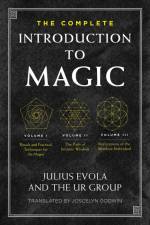
All three volumes of the occult classic available together as a deluxe boxed set for the first time
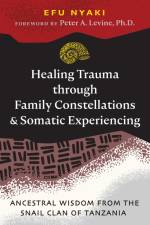
A holistic method for resolving individual and intergenerational trauma.
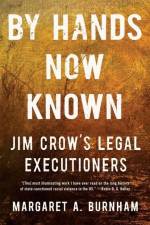
If the law cannot protect a person from a lynching, then isn't lynching the law?In By Hands Now Known, Margaret A. Burnham, director of Northeastern University's Civil Rights and Restorative Justice Project, challenges our understanding of the Jim Crow era by exploring the relationship between formal law and background legal norms in a series of harrowing cases from 1920 to 1960. From rendition, the legal process by which states make claims to other states for the return of their citizens, to battles over state and federal jurisdiction and the outsize role of local sheriffs in enforcing racial hierarchy, Burnham maps the criminal legal system in the mid-twentieth-century South, and traces the unremitting line from slavery to the legal structures of this period and through to today.Drawing on an extensive database, collected over more than a decade and exceeding 1,000 cases of racial violence, she reveals the true legal system of Jim Crow, and captures the memories of those whose stories have not yet been heard.
Abonner på vårt nyhetsbrev og få rabatter og inspirasjon til din neste leseopplevelse.
Ved å abonnere godtar du vår personvernerklæring.