






Gjør som tusenvis av andre bokelskere
Abonner på vårt nyhetsbrev og få rabatter og inspirasjon til din neste leseopplevelse.
Ved å abonnere godtar du vår personvernerklæring.Du kan når som helst melde deg av våre nyhetsbrev.

LITTLE BOOKS. A series of short books by the world's greatest writers on the experiences that make us humanAlso in the Vintage Minis series:Home by Salman RushdieBabies by Anne EnrightEating by Nigella LawsonDrinking by John Cheever
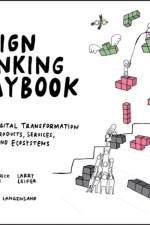
The Design Thinking Playbook, by Michael Lewrick, is an insightful book that delves into the world of design thinking. Published in 2018 by John Wiley & Sons Inc, this book belongs to the genre of Business & Management. The author introduces readers to a new mindset and a deeply human process that can help any organization to be more innovative and more successful. The Design Thinking Playbook provides a detailed explanation of all stages of the design thinking process, along with a toolkit for its practical implementation. This book is not just for designers, but for everyone who wants to spark innovation and solve complex problems. It's a must-read for anyone involved in business and management. Published by John Wiley & Sons Inc, this book is a valuable addition to any professional's library.
A resource to help understand, evaluate, and use agile and hybrid agile approaches. This practice guide provides guidance on when, where, and how to apply agile approaches and provides practical tools for practitioners and organisations wanting to increase agility.
The follow-on to the bestselling Time to Think, explaining how to create a Thinking Environment for groups and for individuals.
Updated to commemorate its 20th anniversary, this classic resource further explores the effects of grief and sheds new light on how to begin to take effective actions to complete the grieving process and work towards recovery and happiness.Incomplete recovery from grief can have a lifelong negative effect on the capacity for happiness. Drawing from their own histories as well as from others', the authors illustrate how it is possible to recover from grief and regain energy and spontaneity. Based on a proven program, The Grief Recovery Handbook offers grievers the specific actions needed to move beyond loss. New material in this edition includes guidance for dealing with:· Loss of faith· Loss of career and financial issues· Loss of health· Growing up in an alcoholic or dysfunctional homeThe Grief Recovery Handbook is a groundbreaking, classic handbook that everyone should have in their library. ?This book is required for all my classes. The more I use this book, the more I believe that unresolved grief is the major underlying issue in most people's lives. It is the only work of its kind that I know of that outlines the problem and provides the solution.??Bernard McGrane, Ph.D., Professor of Sociology, Chapman University
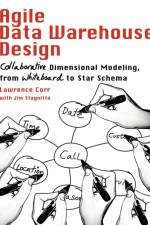
Agile Data Warehouse Design is a step-by-step guide for capturing data warehousing/business intelligence (DW/BI) requirements and turning them into high performance dimensional models in the most direct way: by modelstorming (data modeling + brainstorming) with BI stakeholders.This book describes BEAM¿, an agile approach to dimensional modeling, for improving communication between data warehouse designers, BI stakeholders and the whole DW/BI development team. BEAM¿ provides tools and techniques that will encourage DW/BI designers and developers to move away from their keyboards and entity relationship based tools and model interactively with their colleagues. The result is everyone thinks dimensionally from the outset! Developers understand how to efficiently implement dimensional modeling solutions. Business stakeholders feel ownership of the data warehouse they have created, and can already imagine how they will use it to answer their business questions. Within this book, you will learn:¿ Agile dimensional modeling using Business Event Analysis & Modeling (BEAM¿) ¿ Modelstorming: data modeling that is quicker, more inclusive, more productive, and frankly more fun!¿ Telling dimensional data stories using the 7Ws (who, what, when, where, how many, why and how)¿ Modeling by example not abstraction; using data story themes, not crow's feet, to describe detail¿ Storyboarding the data warehouse to discover conformed dimensions and plan iterative development¿ Visual modeling: sketching timelines, charts and grids to model complex process measurement - simply¿ Agile design documentation: enhancing star schemas with BEAM¿ dimensional shorthand notation¿ Solving difficult DW/BI performance and usability problems with proven dimensional design patternsLawrence Corr is a data warehouse designer and educator. As Principal of DecisionOne Consulting, he helps clients to review and simplify their data warehouse designs, and advises vendors on visual data modeling techniques. He regularly teaches agile dimensional modeling courses worldwide and has taught dimensional DW/BI skills to thousands of students.Jim Stagnitto is a data warehouse and master data management architect specializing in the healthcare, financial services, and information service industries. He is the founder of the data warehousing and data mining consulting firm Llumino.
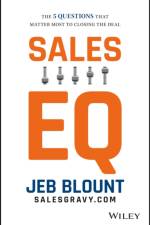
The New Psychology of Selling The sales profession is in the midst of a perfect storm. Buyers have more power more information, more at stake, and more control over the sales process than any time in history.
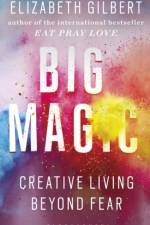
Big Magic, by Elizabeth Gilbert, is a truly enchanting book that explores the mysterious nature of inspiration. Published by Bloomsbury Publishing PLC in 2016, this book falls under the genre of Self-Help & Personal Development. Gilbert, best known for her international bestseller 'Eat, Pray, Love', delves into her own creative process and shares her wisdom and unique perspective about creativity. With profound empathy and radiant generosity, she offers potent insights into the mysterious nature of inspiration, making 'Big Magic' a must-read for anyone hoping to live a creative life. This book serves as a powerful reminder of the transformative power of creativity. It encourages readers to embrace curiosity, tackle what they most love, and face down what they most fear. Whether we are looking to write a book, make art, find new ways to address challenges in our work, embark on a dream long deferred, or simply infuse our everyday lives with more mindfulness and passion, 'Big Magic' cracks open a world of wonder and joy.
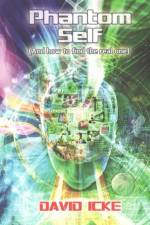
The vast majority of us unknowingly suffer from a slave mentality. We constantly experience the psychological phenomena of cognitive dissonance, where our beliefs and behaviour are in conflict, and Stockholm syndrome - the traumatic bonding with a captor. Our ability to decode reality is linked to what we are able to perceive. Icke believes our reality has been hijacked by an invisible force the Gnostics used to call Archons. He maintains that we are headed towards a cashless world and human settlements which are projected as local community initiatives but are actually centralized systems of control. Our health is being systematically weakened: if you are sick, you are easier to control. Ickes dystopian view of the future assumes that the masses will stay glued to their TVs, locked forever into the hive mind of the Matrix, which says "I have no power." Can humanity break free? Through truth and love we can become who and what we really are.
This practical guide presents the cutting-edge work of the Trauma Center's yoga therapy programme, teaching all therapists how to incorporate it into their practices.
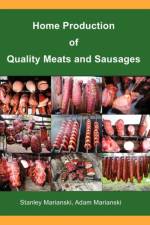
Home Production of Quality Meats and Sausages - The Making of a Sausage Maker. There has been a need for a comprehensive one-volume reference on the manufacture of meats and sausages at home. There are many cookbooks loaded with recipes which do not build any foundation for the serious hobbyist to follow. This leaves him with little understanding of the sausage making process and afraid to introduce his own ideas. There are highly technical and expensive professional books that are written for meat plant managers or graduate students pursuing a master's degree in meat technology. Unfortunately, these works are written in such difficult technical terms, that most of them are beyond the comprehension of an average person. Home Production of Quality Meats and Sausages bridges the gap that exists between highly technical textbooks and the requirements of the typical hobbyist. Technical terms were substituted with their equivalent but simpler meanings and many photographs, drawings and tables were included. The book covers topics such as curing and making brines, smoking meats and sausages, U.S. Standards, making fresh, smoked, emulsified, fermented and air dried products, making special sausages such as head cheeses, blood and liver sausages, low salt, low fat and Kosher products, hams, bacon, butts and loins, poultry, fish and game, safety, creating your own recipes and much more... To get the reader started 172 recipes are provided which were chosen for their originality and historical value. Although recipes play an important role in these products, it is the process that ultimately decides the sausage quality. It is perfectly clear that the authors don't want the reader to copy the recipes only: "We want him to understand the sausage making process and we want him to create his own recipes. We want him to be the sausage maker."
Producer gas is generated from solid fuels such as wood, charcoal, coal, peat, and agricultural residues. Although it has been used to power internal combustion engines since their invention, it has been largely overlooked for the past 50 years. During the early 1940s, when petroleum supplies for civilian use ran out in Europe, Asia, and Australia, producer gas was responsible for putting trucks, buses, taxis, tractors and other vehicles back on the roads, and boats back on the rivers. In 1939 Europe operated about 9,000 gas producer buses and trucks, and there were almost none on any other continent. By 1941, however, about 450,000 vehicles were in operation in all parts of the world, and by 1942 the number had grown to approximately 920,000. Gas producers were then in use not only in land vehicles, but also in boats, barges, and stationary engines. By 1946 more than a million motorized devices around the world operated on producer gas. In Europe and Asia alone, the use of producer gas in the 1940s contributed to saving millions of people from starvation. Basically, producer gas is made when a thin stream of air passes through a bed of glowing coals. The coals may come from the burning of wood, charcoal, coke, coal, peat, or from wastes such as corn cobs, peanut shells, sawdust, bagasse, and paper. (In some cases these materials must be pressed into bricks or pellets before they will produce adequate coals, and special generators may also be needed.)
An authoritative visual guide to marine and freshwater life around the world including hundreds of fish, shells, crabs, corals, echinoderms, seals, jellyfish, sharks, turtles, rays, whales and amphibians.
Rewriting the science of Alzheimer's Disease, this book presents the first proven plan to reverse Alzheimer's Disease. Revealing that AD is not one condition but in fact three, it outlines 36 metabolic factors, including micronutrients, hormone levels and sleep, which together can trigger downsizing in the brain.
Untangled is an enlightening book by the acclaimed psychologist, Lisa Damour. Published in 2017 by Atlantic Books, this work falls under the genre of self-help and psychology. Untangled is a guide for parents to understand and navigate the turbulent teenage years. Damour employs her expertise in psychology to untangle the complex web of adolescence, offering practical advice and reassurance. Through the pages of this book, she takes you on a journey of understanding, shedding light on the often misunderstood changes that teenagers undergo. Atlantic Books is proud to present this essential guide for anyone struggling to understand the teens in their life. Read Untangled, and discover the key to a happier, healthier relationship with your teenager.
Creating the Impossible reveals a surprising yet practical alternative to traditional approaches to goal-setting, productivity, creativity and project management. Perfect for solopreneurs, entrepreneurs, artists, work teams, leaders and anyone who has ever dreamed an impossible dream but given up before they ever really got started.
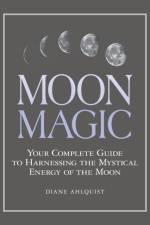
Information for novice readers on the moon's energy and how they can harness that power in their every day lives.
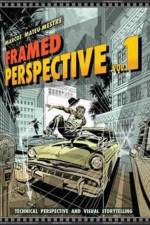
"Perspective is a discipline often set aside when it comes to general art study, though it is essential to master in order to produce any piece of art that is and feels realistic. Framed Perspective 1 equips artists with the technical knowledge needed to produce successful visual storytelling-related drawings: from understanding the basics of the space around us and how we perceive it, all the way to more sophisticated endeavors, like creating entire locations that will become the believable set ups our characters and stories will happen within. As intimidating as perspective may seem, best-selling author and artist Marcos Mateu-Mestre delivers each lesson in an accessible and informative way that takes the mystery out of achieving successful scenes. The book includes extensive step-by-step practical explanations of how to build objects and environments of all sorts, taking that first sketch to a fully rendered artwork with many of his finished illustrations as examples. Sure to be the most popular book in your art library, it will train you to see the world in a way that allows you to enjoy every curve and slope you see in it and, more importantly, translate that vision into art with accuracy and a great sense and understanding of depth and proportion. Your perspective will never be the same!" --Publisher.
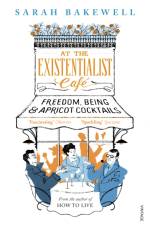
Three young friends meet over apricot cocktails at the Bec-de-Gaz bar on the rue Montparnasse. They are Jean-Paul Sartre, Simone de Beauvoir and their friend Raymond Aron, who opens their eyes to a radical new way of thinking...
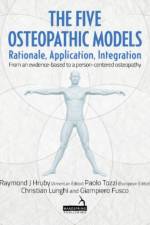
This book is intended as a manual for both students and osteopathic professionals interested in exploring the principles, objectives, origins and application of the five osteopathic models.
For many complaints and conditions, the benefits from surgery are lower, and the risks higher, than you or your surgeon think. In this book you will see how commonly performed operations can be found to be useless or even harmful when properly evaluated. That these claims come from an experienced, practising orthopaedic surgeon who performs many of these operations himself, makes the unsettling argument particularly compelling.Of course no surgeon is recommending invasive surgery in bad faith, but Ian Harris argues that the evidence for the success for many common operations, including knee arthroscopies, back fusion or cardiac stenting, become current accepted practice without full examination of the evidence. The placebo effect may be real, but is it worth the recovery time, expense and discomfort?
Synopsis coming soon.......
Inclding chapters on interactive advertising and integrated advertising, this edition contains fifty specially drawn new illustrations of key campaigns. It covers every aspect of the business, from how to write copy and learn the creative process to how agencies work and the different strategies used for all types of media.
Calculus For Dummies, 2nd Edition (9781119293491) was previously published as Calculus For Dummies, 2nd Edition (9781118791295). While this version features a new Dummies cover and design, the content is the same as the prior release and should not be considered a new or updated product.
An accessible and reassuring guide to childhood health and immunity from a pediatrician who’s both knowledgeable about the latest scientific research and respectful of a family’s risk factors, health history, and concerns In The Vaccine-Friendly Plan, Paul Thomas, M.D., presents his proven approach to building immunity: a new protocol that limits a child’s exposure to aluminum, mercury, and other neurotoxins while building overall good health. Based on the results from his pediatric practice of more than eleven thousand children, as well as data from other credible and scientifically minded medical doctors, Dr. Paul’s vaccine-friendly protocol gives readers • recommendations for a healthy pregnancy and childbirth • vital information about what to expect at every well child visit from birth through adolescence • a slower, evidence-based vaccine schedule that calls for only one aluminum-containing shot at a time • important questions to ask about your child’s first few weeks, first years, and beyond • advice about how to talk to health care providers when you have concerns • the risks associated with opting out of vaccinations • a practical approach to common illnesses throughout the school years • simple tips and tricks for healthy eating and toxin-free living at any age The Vaccine-Friendly Plan presents a new standard for pediatric care, giving parents peace of mind in raising happy, healthy children.Praise for The Vaccine-Friendly Plan“Finally, a book about vaccines that respects parents! If you choose only one book to read on the topic, read The Vaccine-Friendly Plan. This impeccably researched, well-balanced book puts you in the driver’s seat and empowers you to make conscientious vaccine decisions for your family.”—Peggy O’Mara, editor and publisher, Mothering Magazine “Sure to appeal to readers of all kinds as a friendly, no-nonsense book that cuts through the rhetoric surrounding vaccines. It offers validation to those who avoid some or all, while offering those who do want to vaccinate help on how to do so safely. This is a great book for anyone with children in their lives.”—Natural Mother “A valuable, science-supported guide to optimizing your child’s health while you navigate through complex choices in a toxic, challenging world.”—Martha Herbert, M.D., Ph.D., Harvard Medical School “An impressively researched guide, this important book is essential reading for parents. With clear and practical advice for shielding children from harmful toxins, it will compel us all to think differently about how to protect health.”—Jay Gordon, M.D., FAAP “Rather than a one-size-fits-all vaccine strategy, the authors suggest thoughtful, individualized decisions based on research and collaboration between parents and clinicians—a plan to optimize a child’s immune system and minimize any risks.”—Elizabeth Mumper, M.D., founder and CEO, The Rimland Center for Integrative Pediatrics“This well-written and thought-provoking book will encourage parents to think through decisions—such as food choices and the timing of vaccines—that affect the well-being of their children. In a world where children’s immune systems are increasingly challenged, this is a timely addition to the literature.”—Harriet Lerner, Ph.D., bestselling author of The Dance of Anger and The Mother Dance
The definitive translation of Plato's Republic, the most influential text in the history of Western philosophyLong regarded as the most accurate rendering of Plato's Republic that has yet been published, this widely acclaimed translation by Allan Bloom was the first to take a strictly literal approach. In addition to the annotated text, there is also a rich and valuable essay -- as well as indices -- which will enable readers to better understand the heart of Plato's intention.
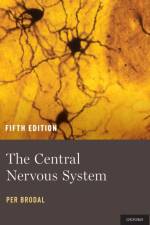
The Fifth edition finds the text of The Central Nervous System thoroughly updated and revised, better equipping students with essential information in the field of clinical neuroscience. This text, reviewed to reflect new information as well as understanding of student needs for critical thinking, contains the systematic, in-depth coverage of topics of great clinical interest.
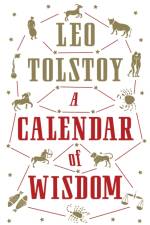
Banned in Russia under Communism, A Calendar of Wisdom was Tolstoy's last major work, and one of his most popular both during and after his lifetime. This new translation by Roger Cockrell will offer today's generation of readers the chance to discover, day by day, these edifying and carefully selected pearls of wisdom.
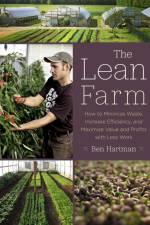
A practical, systems-based approach for a more sustainable farming operation "Ben Hartman has revolutionized his methods, cut down his work hours dramatically, and shrunk the size of his farm, all while making a better income."--Civil Eats To many people today, using the words "factory" and "farm" in the same sentence is nothing short of sacrilege. In many cases, though, the same sound business practices apply whether you are producing cars or carrots. Author Ben Hartman and other young farmers are increasingly finding that incorporating the best new ideas from business into their farming can drastically cut their wastes and increase their profits, making their farms more environmentally and economically sustainable. By explaining the lean system for identifying and eliminating waste and introducing efficiency in every aspect of the farm operation, The Lean Farm makes the case that small-scale farming can be an attractive career option for young people who are interested in growing food for their community. Working smarter, not harder, also prevents the kind of burnout that start-up farmers often encounter in the face of long, hard, backbreaking labor. Lean principles grew out of the Japanese automotive industry, but they are now being followed on progressive farms around the world. Using examples from his own family's one-acre community-supported farm in Indiana, Hartman clearly instructs other small farmers in how to incorporate lean practices in each step of their production chain, from starting a farm and harvesting crops to training employees and selling goods. Inside The Lean Farm you'll discover how to apply lean practices like: Every Tool In Its Place Ten Types of Farm Waste Establish Pull, Don't Push Limits of Lean Lean for More Profit and much more! While the intended audience for this book is small-scale farmers who are part of the growing local food movement, Hartman's prescriptions for high-value, low-cost production apply to farms and businesses of almost any size or scale that hope to harness the power of lean in their production processes. Ben Hartman was named a "Grist 50! Fixer" "The Lean Farm should be dissected, digested, and discussed--then applied--on every single farm: big or small, wholesale or retail, livestock or produce. It would make all farms more profitable, productive, and pleasurable."--Joel Salatin, owner of Polyface Farm
Abonner på vårt nyhetsbrev og få rabatter og inspirasjon til din neste leseopplevelse.
Ved å abonnere godtar du vår personvernerklæring.