








Gjør som tusenvis av andre bokelskere
Abonner på vårt nyhetsbrev og få rabatter og inspirasjon til din neste leseopplevelse.
Ved å abonnere godtar du vår personvernerklæring.Du kan når som helst melde deg av våre nyhetsbrev.

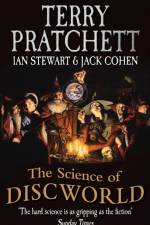
The fantastic first book in the Sunday Times bestselling Science of Discworld seriesWhen a wizardly experiment goes adrift, the wizards of Unseen University find themselves with a pocket universe on their hands: Roundworld, where neither magic nor common sense seems to stand a chance against logic. The Universe, of course, is our own. And Roundworld is Earth. As the wizards watch their accidental creation grow, we follow the story of our universe from the primal singularity of the Big Bang to the internet and beyond. Through this original Terry Pratchett story (with intervening chapters from Cohen and Stewart) we discover how puny and insignificant individual lives are against a cosmic backdrop of creation and disaster. Yet, paradoxically, we see how the richness of a universe based on rules, has led to a complex world and at least one species that tried to get a grip of what was going on. Terry Pratchett is the acclaimed creator of the global bestselling Discworld series, the first of which, The Colour of Magic, was published in 1983. Raising Steam is his fortieth Discworld novel. His books have been widely adapted for stage and screen, and he is the winner of multiple prizes, including the Carnegie Medal, as well as being awarded a knighthood for services to literature. After falling out with his keyboard he now talks to his computer. Occasionally, these days, it answers back.www.terrypratchett.co.uk@terryandrob Professor Ian Stewart is the author of many popular science books. He is the mathematics consultant for New Scientist and a Professor of Mathematics at the University of Warwick. He was awarded the Michael Faraday Prize for furthering the public understanding of science, and in 2001 became a Fellow of the Royal Society. Dr Jack Cohen is an internationally-known reproductive biologist, and lives in Newent, Gloucestershire. Jack has a laboratory in his kitchen, helps couples get pregnant by referring them to colleagues, invents biologically realistic aliens for science fiction writers and, in his spare time, throws boomerangs. Jack, who has more letters to his name than can be repeated here, writes, lectures, talks and campaigns to promote public awareness of science, particularly biology. He is mostly retired.
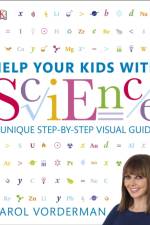
A simple, visual approach to helping your child understand science from Carol VordermanReduce the stress of studying science and help your child with their homework by following Help Your Kids with Science, a unique visual guide that demystifies the subject for everyone.Using clear, accessible pictures, diagrams and easy-to-follow step-by-steps - and covering all the important areas of biology, chemistry and physics - you'll learn to approach even the most complex science problems with confidence. Includes a glossary of key science terms and symbols.Help Your Kids with Science is the perfect guide for every frustrated parent and desperate child, who want to understand science and put it into practice.
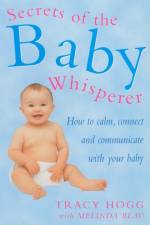
Tracy Hogg knows babies. She can calm even the most distressed or difficult infant, because she understands their language. Hence, her clients call her 'The Baby Whisperer'. Her incredible sensitivity and ability to read infants' cries, coos and assorted baby noises quickly earned Tracy the admiration and gratitude of high-profile couples, including a host of celebrities. In this remarkable parenting book, Tracy demystifies the magic she has performed with some five thousand babies. She teaches parents how to work out what kind of baby they have, what kind of mother and father they are, and what kind of parenting plan will work best for them. Believing that babies need to become part of the family - rather than dominate it - she has developed a practical programme that works with infants as young as a day old. Her methods are also applauded by scientists: 'Tracy's is a voice that should be heard. She appears very knowledgeable about modern infant research and has incorporated this to a level parents can understand. In spite of all the baby how-tos on the market, this one will stand out.'
The unabridged, downloadable audiobook edition of Michael J Sandels, Justice: Whats the Right Thing to Do? Read by the author himself. Considering the role of justice in our society and our lives, Michael Sandel reveals how an understanding of philosophy can help to make sense of politics, religion, morality - and our own convictions. Breaking down hotly contested issues, from abortion, euthanasia and same-sex marriage, to patriotism, dissent and affirmative action, Sandel shows how the biggest questions in our civic life can be broken down and illuminated through reasoned debate. Justice promises to take readers - of all ages and political persuasions - on an exhilarating journey to confront todays political and moral controversies in a fresh and enlightening way.
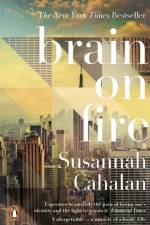
'My first serious blackout marked the line between sanity and insanity. Though I would have moments of lucidity over the coming days and weeks, I would never again be the same person ...' Susannah Cahalan was a happy, clever, healthy twenty-four-year old. Then one day she woke up in hospital, with no memory of what had happened or how she had got there. Within weeks, she would be transformed into someone unrecognizable, descending into a state of acute psychosis, undergoing rages and convulsions, hallucinating that her father had murdered his wife; that she could control time with her mind. Everything she had taken for granted about her life, and who she was, was wiped out.Brain on Fire is Susannah's story of her terrifying descent into madness and the desperate hunt for a diagnosis, as, after dozens of tests and scans, baffled doctors concluded she should be confined in a psychiatric ward. It is also the story of how one brilliant man, Syria-born Dr Najar, finally proved - using a simple pen and paper - that Susannah's psychotic behaviour was caused by a rare autoimmune disease attacking her brain. His diagnosis of this little-known condition, thought to have been the real cause of devil-possessions through history, saved her life, and possibly the lives of many others. Cahalan takes readers inside this newly-discovered disease through the progress of her own harrowing journey, piecing it together using memories, journals, hospital videos and records. Written with passionate honesty and intelligence, Brain on Fire is a searingly personal yet universal book, which asks what happens when your identity is suddenly destroyed, and how you get it back.'With eagle-eye precision and brutal honesty, Susannah Cahalan turns her journalistic gaze on herself as she bravely looks back on one of the most harrowing and unimaginable experiences one could ever face: the loss of mind, body and self. Brain on Fire is a mesmerizing story'-Mira Bart k, New York Times bestselling author of The Memory PalaceSusannah Cahalan is a reporter on the New York Post, and the recipient of the 2010 Silurian Award of Excellence in Journalism for Feature Writing. Her writing has also appeared in the New York Times, and is frequently picked up by the Daily Mail, Gawker, Gothamist, AOL and Yahoo among other news aggregrator sites.
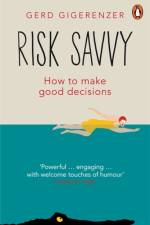
A fascinating, practical guide to making better decisions with our money, health and personal lives from Gerd Gigerenzer, the author of Reckoning with Risk.Risk-taking is essential for innovation, fun, and the courage to face the uncertainties in life. Yet for many important decisions, we're often presented with statistics and probabilities that we don't really understand and we inevitably rely on experts in the relevant fields - policy makers, financial advisors, doctors - to analyse and choose for us. But what if they don't quite understand the way the information is presented either? How do we make sure we're asking doctors the right questions about proposed treatment? Is there a rule of thumb that could help choose the right partner?This entertaining book shows us how to recognize when we don't have all the information and know what to do about it. Gerd Gigerenzer looks at examples from every aspect of life to identify the reasons for our collective misunderstanding of the risks we face. He shows how we can all use simple rules to avoid being manipulated into unrealistic fears or hopes, to make better-informed decisions, and to learn to understand risk and uncertainty in our own lives.'Gigerenzer is brilliant and his topic is fabulous' Steven Pinker'Catchily optimistic and slyly funny' GuardianGerd Gigerenzer is Director of the Center for Adaptive Behavior and Cognition at the Max Planck Institute for Human Development in Berlin and former Professor of Psychology at the University of Chicago. He is the author of several books on heuristics and decision making, including Reckoning with Risk.
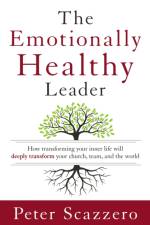
Do you feel too overwhelmed to enjoy life, unable to sort out the demands on your time? Are you doing your best work as a leader, yet not making an impact? Have you ever felt stuck, powerless to change your environment? In The Emotionally Healthy Leader, bestselling author Peter Scazzero shows leaders how to develop a deep, inner life with Christ, examining its profound implications for surviving stress, planning and decision making, building teams, creating healthy culture, influencing others, and much more. Going beyond simply offering a quick fix or new technique, The Emotionally Healthy Leader gets to the core, beneath-the-surface issues of uniquely Christian leadership. This book is more than a book you will read; it is a resource you will come back to over and over again.
Hannah Arendt's authoritative and controversial report on the trial of German Nazi leader Adolf Eichmann first appeared as a series of articles in the New Yorker in 1963. This revised edition of Eichmann in Jerusalem contains further factual material that came to light after the trial, as well as Arendt's postscript commenting on the controversy that arose over her book.
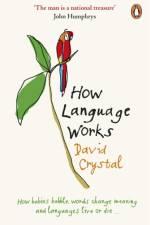
In this fascinating survey of everything from how sounds become speech to how names work, David Crystal answers every question you might ever have had about the nuts and bolts of language in his usual highly illuminating way. Along the way we find out about eyebrow flashes, whistling languages, how parents teach their children to speak, how politeness travels across languages and how the way we talk show not just how old we are but where we re from and even who we want to be.
Writing under the pseudonym of Johannes de silentio, Kierkegaard uses the form of a dialectical lyric to present his conception of faith. Abraham is portrayed as a great man, who chose to sacrifice his son, Isaac, in the face of conflicting expectations and in defiance of any conceivable ethical standard. The infamous and controversial 'teleological suspension of the ethical' challenged the contemporary views of Hegel's universal moral system, and the suffering individual must alone make a choice 'on the strength of the absurd'. Kierkegaard's writings have inspired both modern Protestant theology and existentialism.
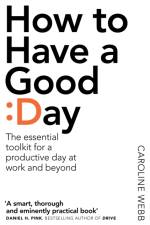
In How to Have a Good Day, economist and former McKinsey partner Caroline Webb shows readers how to use recent findings from behavioral economics, psychology, and neuroscience to transform our approach to everyday working life.Advances in these behavioral sciences are giving us ever better understanding of how our brains work, why we make the choices we do, and what it takes for us to be smart and savvy. But it's not always been easy to see how to apply these insights in the workplace - until now.In How to Have a Good Day, Webb explains how three big scientific ideas can help us be at our best every day. She shows us exactly how to apply this science to our plans, tasks and conversations, in step-by-step guidance that allows us to: - Set better priorities- Make the hours go further- Turn every interaction into a success- Strengthen our personal impact- Be resilient in the face of setbacks- Sustain our energy over the course of the day Webb teaches us how to be at our best under pressure, and gives us specific tools to tackle common work challenges - from conflict with colleagues, to dull meetings and packed inboxes.Filled with stories of people who have used Webb's insights to boost their job satisfaction and performance at work, How to Have a Good Day is the book so many people wanted when they finished Nudge, Blink and Thinking Fast and Slow, and were looking for practical ways to apply this fascinating science to their own lives and careers.A remarkable and much needed book, How to Have a Good Day firmly delivers on its promise, showing us all how to have a lifetime of good days.
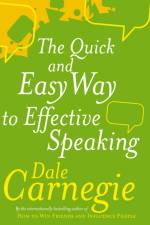
Good public speakers are made, not born - or so thinks Dale Carnegie, the pioneer of personal business skills. Yet business, social and personal satisfaction depend heavily upon a person's ability to communicate clearly. Public speaking is an important skill which anyone can acquire and develop. It is also the very best method of overcoming self-consciousness and building confidence, courage and enthusiasm. This classic, well established title has been called 'the most brilliant book of its kind'. It takes you step by step through:-Acquiring basic public speaking skills-Building confidence -Speaking effectively the quick and easy way -Earning the right to talk -Vitalising your talk -Sharing the talk with the audience as well as organisation and presentation skills
Increasingly, organisations rely on information for their day-to-day operations, and the loss or unavailability of information can mean the difference between success and ruin. Information risk management (IRM) is about identifying, assessing and prioritising risks to keep information secure and available. This accessible book is a practical guide to understanding the principles of IRM and developing a strategic approach to an IRM programme. It also includes a chapter on applying IRM in the public sector. It is the only textbook for the BCS Practitioner Certificate in Information Risk Management.
In April 1956, a refitted oil tanker carried fifty-eight shipping containers from Newark to Houston. From that modest beginning, container shipping developed into a huge industry that made the boom in global trade possible. The Box tells the dramatic story of the container's creation, the decade of struggle before it was widely adopted, and the sweeping economic consequences of the sharp fall in transportation costs that containerization brought about. But the container didn't just happen. Its adoption required huge sums of money, both from private investors and from ports that aspired to be on the leading edge of a new technology. It required years of high-stakes bargaining with two of the titans of organized labor, Harry Bridges and Teddy Gleason, as well as delicate negotiations on standards that made it possible for almost any container to travel on any truck or train or ship. Ultimately, it took McLean's success in supplying U.S. forces in Vietnam to persuade the world of the container's potential. Drawing on previously neglected sources, economist Marc Levinson shows how the container transformed economic geography, devastating traditional ports such as New York and London and fueling the growth of previously obscure ones, such as Oakland. By making shipping so cheap that industry could locate factories far from its customers, the container paved the way for Asia to become the world's workshop and brought consumers a previously unimaginable variety of low-cost products from around the globe. Published in hardcover on the fiftieth anniversary of the first container voyage, this is the first comprehensive history of the shipping container. Now with a new chapter, The Box tells the dramatic story of how the drive and imagination of an iconoclastic entrepreneur turned containerization from an impractical idea into a phenomenon that transformed economic geography, slashed transportation costs, and made the boom in global trade possible.
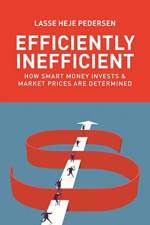
Financial market behavior and key trading strategies-illuminated by interviews with top hedge fund expertsEfficiently Inefficient describes the key trading strategies used by hedge funds and demystifies the secret world of active investing. Leading financial economist Lasse Heje Pedersen combines the latest research with real-world examples and interviews with top hedge fund managers to show how certain trading strategies make money-and why they sometimes don't.Pedersen views markets as neither perfectly efficient nor completely inefficient. Rather, they are inefficient enough that money managers can be compensated for their costs through the profits of their trading strategies and efficient enough that the profits after costs do not encourage additional active investing. Understanding how to trade in this efficiently inefficient market provides a new, engaging way to learn finance. Pedersen analyzes how the market price of stocks and bonds can differ from the model price, leading to new perspectives on the relationship between trading results and finance theory. He explores several different areas in depth-fundamental tools for investment management, equity strategies, macro strategies, and arbitrage strategies-and he looks at such diverse topics as portfolio choice, risk management, equity valuation, and yield curve logic. The book's strategies are illuminated further by interviews with leading hedge fund managers: Lee Ainslie, Cliff Asness, Jim Chanos, Ken Griffin, David Harding, John Paulson, Myron Scholes, and George Soros.Efficiently Inefficient effectively demonstrates how financial markets really work.Free problem sets are available online at http://www.lhpedersen.com
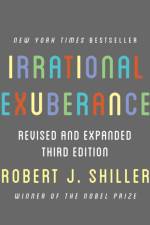
Why the irrational exuberance of investors hasn't disappeared since the financial crisisIn this revised, updated, and expanded edition of his New York Times bestseller, Nobel Prize-winning economist Robert Shiller, who warned of both the tech and housing bubbles, cautions that signs of irrational exuberance among investors have only increased since the 2008-9 financial crisis. With high stock and bond prices and the rising cost of housing, the post-subprime boom may well turn out to be another illustration of Shiller's influential argument that psychologically driven volatility is an inherent characteristic of all asset markets. In other words, Irrational Exuberance is as relevant as ever. Previous editions covered the stock and housing markets-and famously predicted their crashes. This edition expands its coverage to include the bond market, so that the book now addresses all of the major investment markets. It also includes updated data throughout, as well as Shiller's 2013 Nobel Prize lecture, which places the book in broader context. In addition to diagnosing the causes of asset bubbles, Irrational Exuberance recommends urgent policy changes to lessen their likelihood and severity-and suggests ways that individuals can decrease their risk before the next bubble bursts. No one whose future depends on a retirement account, a house, or other investments can afford not to read this book.
Acclaimed as one of the most exciting books in the history of American letters, this modern epic became an instant bestseller upon publication in 1974, transforming a generation and continuing to inspire millions. This 25th Anniversary Quill Edition features a new introduction by the author; important typographical changes; and a Reader's Guide that includes discussion topics, an interview with the author, and letters and documents detailing how this extraordinary book came to be. A narration of a summer motorcycle trip undertaken by a father and his son, the book becomes a personal and philosophical odyssey into fundamental questions of how to live. The narrator's relationship with his son leads to a powerful self-reckoning; the craft of motorcycle maintenance leads to an austerely beautiful process for reconciling science, religion, and humanism. Resonant with the confusions of existence, Zen and the Art of Motorcycle Maintenance is a touching and transcendent book of life.
In Everybody Matters, CEO Bob Chapman and bestselling author Raj Sisodia challenge traditional thinking about how to run a business and how to be an inspirational leader. Starting in 1997, Barry-Wehmiller CEO Bob Chapman has pioneered a dramatically different approach to leadership that creates off-the-charts morale, loyalty, creativity, and business performance. At Barry-Wehmiller, every single person matters, just like in a family. That's not a clich on a mission statement; it's the bedrock of the company's success.In Everybody Matters, Chapman and co-author Raj Sisodia show how any organization can stop viewing its employees are simply func tions, to be moved around, 'managed' with carrots and sticks, or discarded at will. By doing so, disengaged workers begin to share their gifts and talents toward a shared future. Uninspired workers stop feeling that their jobs have no meaning. And everyone stops counting the minutes until it's time to go home.Everybody Matters chronicles Chapman's journey to find his true calling and provides clear steps to transform your own workplace, whether you lead two people or two hundred thousand.'If you're ready for a new way of doing business, this is the book for you' Daniel H. Pink, author of To Sell Is Human and Drive'Bob Chapman is on a mission to change the way businesses treat their employees' Inc.magazine
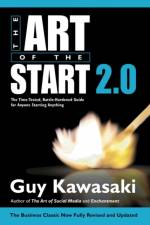
Fully revised and expanded for the first time in a decade, The Art of the Start 2.0 is Guy Kawasaki's classic bestselling guide to launching and making your new product, service or idea a success. This new edition has been expanded to reflect the seismic changes in business over the last decade, in which once-invulnerable market leaders have struggled and many of the basics of getting established have become easier, cheaper and more democratic.Today, business plans are no longer necessary. Social media has replaced PR and advertising as the key method of promotion. Crowdfunding is now a viable alternative to investors. Cloud computing makes basic infrastructure affordable for almost any new venture.The Art of the Start 2.0 will show you how to effectively deploy all these new tools. And it will help you master the fundamental challenges that have not changed: building a strong team, creating an awesome product or service, and facing down your competition. Whether you're an aspiring entrepreneur, own a business, or want to get more entrepreneurial within any organisation, this book will help you make your crazy ideas stick. It's an adventure that's more art than science - the art of the start.'The Art of the Start 2.0 is the ultimate entrepreneurship handbook. Kawasaki's generous wisdom, tips, and humour reflect his successes and failures. We can all benefit from his insights' Arianna Huffington, president and editor in chief, Huffington Post'A successful entrepreneur requires three things: a garage, an idea, and this book - Guy's irrepressible guide to the raw essentials of life in a young company' Michael Moritz, Sequoia Capita Guy Kawasaki is the chief evangelist of Canva (an online design service) and an executive fellow of the Haas School of Business at U.C. Berkeley. Previously, he was the chief evangelist of Apple and special adviser to the CEO of the Motorola business unit of Google. His many acclaimed books include The Art of Social Media and Enchantment.
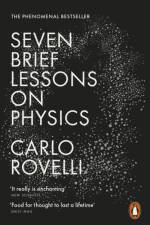
THE PHENOMENAL BESTSELLER'There's a book I've been carrying around like a small Bible, Seven Brief Lessons on Physics' - Benedict CumberbatchEverything you need to know about modern physics, the universe and your place in the world in seven enlightening lessonsThese seven short lessons guide us, with simplicity and clarity, through the scientific revolution that shook physics in the twentieth century and still continues to shake us today. In this beautiful and mind-bending introduction to modern physics, Carlo Rovelli explains Einstein's theory of general relativity, quantum mechanics, black holes, the complex architecture of the universe, elementary particles, gravity, and the nature of the mind. In under eighty pages, readers will understand the most transformative scientific discoveries of the twentieth century and what they mean for us. Not since Richard Feynman's celebrated best-seller Six Easy Pieces has physics been so vividly, intelligently and entertainingly revealed.
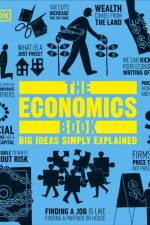
All the big ideas, simply explained - an innovative and accessible guide to economicsBring economics to life with The Economics Book, an essential guide to more that 100 of the big ideas in economic theory and practice covering everything from ancient theories right up to cutting-edge modern developments.From Aristotle to John Maynard Keynes and beyond, all the greatest economists and their theories are featured and the innovative graphics, step-by-step summaries and mind maps help clarify hard-to-grasp concepts.The Economics Book is perfect for economic students and anyone who has an interest in how economies work.
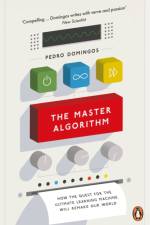
A spell-binding quest for the one algorithm capable of deriving all knowledge from data, including a cure for cancerSociety is changing, one learning algorithm at a time, from search engines to online dating, personalized medicine to predicting the stock market. But learning algorithms are not just about Big Data - these algorithms take raw data and make it useful by creating more algorithms. This is something new under the sun: a technology that builds itself. In The Master Algorithm, Pedro Domingos reveals how machine learning is remaking business, politics, science and war. And he takes us on an awe-inspiring quest to find 'The Master Algorithm' - a universal learner capable of deriving all knowledge from data.
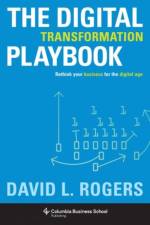
Rethink your business for the digital age.Every business begun before the Internet now faces the same challenge: How to transform to compete in a digital economy?Globally recognized digital expert David L. Rogers argues that digital transformation is not about updating your technology but about upgrading your strategic thinking. Based on Rogers's decade of research and teaching at Columbia Business School, and his consulting for businesses around the world, The Digital Transformation Playbook shows how pre-digital-era companies can reinvigorate their game plans and capture the new opportunities of the digital world.Rogers shows why traditional businesses need to rethink their underlying assumptions in five domains of strategy-customers, competition, data, innovation, and value. He reveals how to harness customer networks, platforms, big data, rapid experimentation, and disruptive business models-and how to integrate these into your existing business and organization.Rogers illustrates every strategy in this playbook with real-world case studies, from Google to GE, from Airbnb to the New York Times. With practical frameworks and nine step-by-step planning tools, he distills the lessons of today's greatest digital innovators and makes them usable for businesses at any stage.Many books offer advice for digital start-ups, but The Digital Transformation Playbook is the first complete treatment of how legacy businesses can transform to thrive in the digital age. It is an indispensable guide for executives looking to take their firms to the next stage of profitable growth.
Timothy Morton argues that ecological awareness in the present Anthropocene era takes the form of a strange loop or Mobius strip, twisted to have only one side. Deckard travels this oedipal path in Blade Runner (1982) when he learns that he might be the enemy he has been ordered to pursue. Ecological awareness takes this shape because ecological phenomena have a loop form that is also fundamental to the structure of how things are.The logistics of agricultural society resulted in global warming and hardwired dangerous ideas about life-forms into the human mind. Dark ecology puts us in an uncanny position of radical self-knowledge, illuminating our place in the biosphere and our belonging to a species in a sense that is far less obvious than we like to think. Morton explores the logical foundations of the ecological crisis, which is suffused with the melancholy and negativity of coexistence yet evolving, as we explore its loop form, into something playful, anarchic, and comedic. His work is a skilled fusion of humanities and scientific scholarship, incorporating the theories and findings of philosophy, anthropology, literature, ecology, biology, and physics. Morton hopes to reestablish our ties to nonhuman beings and to help us rediscover the playfulness and joy that can brighten the dark, strange loop we traverse.
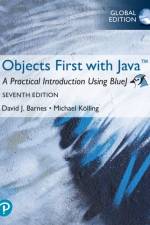
A Modern Approach to Functional Programming Objects First with Java: A Practical Introduction is an introduction to object-oriented programming for beginners. The main focus of the book is general object-oriented and programming concepts from a software engineering perspective. The first chapters are written for students with no programming experience with later chapters being more suitable for advanced or professional programmers. The Java programming language and BlueJthe Java development environment are the two tools used throughout the book. BlueJ's clear visualization of classes and objects means that students can immediately appreciate the differences between them and gain a much better understanding of the nature of an object than they would from simply reading source code. Unlike traditional textbooks, the chapters are not ordered by language features but by software development concepts. The Sixth Edition goes beyond just adding the new language constructs of Java 8. The books exploration of this new language demonstrates a renaissance of functional ideas in modern programming. While functional programming isnt new in principle, its seen a boost in popularity based on the current computer hardware available and the changing nature of projects programmers wish to tackle. Functional language constructs make it possible to efficiently automate currency, make use of multiple cores without much effort on the side of the programmer, are both more elegant and readable, and offer great potential in solving the issue of parallel hardware. Functional programming has become an essential part of the field, and Objects First with Java gives students a basic understanding of an area theyll need to master in order to succeed in the future.
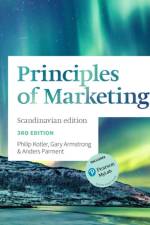
Principles of Marketing Scandinavian Edition is an ideal introductory text for undergraduate students and practitioners alike. This, the second Scandinavian edition, is true to Kotler and Armstrongs classic conceptual framework, which has proved itself an exceptional introduction to marketing and has been used by millions of students all over the world. Principles of Marketing book outlines and discusses concepts and ideas that help students and practitioners develop an effective marketing strategy for todays markets. Cases and examples are written to reflect current best practice in Scandinavian and European companies. The book describes and explains how these companies deal with challenges in domestic and international markets. Set within a Scandinavian context, the text is nonetheless global in scope and thus very relevant for modern marketers.
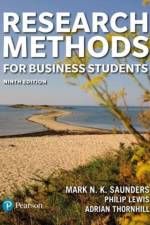
Research Methods for Business Students has been fully revised for this seventh edition and continues to be the market-leading textbook in its field, guiding hundreds of thousands of student researchers to success in their research methods modules, research proposals, projects and dissertations. So, if you're thinking . . . 'How do I choose my topic?''I'm confused by all these different philosophies''I need to collect my data; what do I do first?'When and what do I need to write? . . . then, open this book to discover: Regular checklists and Progressing your research project sections to give you step-by-step practical guidance on the process A glossary of clear definitions for 600 research terms Cases and examples of students and academics research and topical news articles illustrating research in practice Detailed chapters on choosing your topic, reviewing the literature, understanding philosophies, research design, access and ethics, secondary data, data collection and analysis, and writing about and presenting your researchDont forget to visit www.pearsoned.co.uk/saunders where you can use online tutorials on research software, such as IBM SPSS Statistics and NVivo, test yourself with hundreds of multiple choice questions, analyse over 60 further case studies, and learn how to search the Internet more efficiently and effectively with our Smarter Online Searching guide! Start your project with confidence and complete it with success!Mark Saunders is Professor of Business Research Methods at The Surrey Business School, University of Surrey. Philip Lewis was a Principal Lecturer and Adrian Thornhill was a Head of Department, both at the University of Gloucestershire.
Get creative and remember the days with this six-year memory book. Write down your goals for the month and the dates to remember from the previous month. This is a perfect gift for yourself, a friend or a family member who values special dates and memories. They will be able to look back at six-year memories with this journal.
Offers therapists a low tech-high impact, interactive way to explain polyvagal theory to clients.
Abonner på vårt nyhetsbrev og få rabatter og inspirasjon til din neste leseopplevelse.
Ved å abonnere godtar du vår personvernerklæring.