









Gjør som tusenvis av andre bokelskere
Abonner på vårt nyhetsbrev og få rabatter og inspirasjon til din neste leseopplevelse.
Ved å abonnere godtar du vår personvernerklæring.Du kan når som helst melde deg av våre nyhetsbrev.

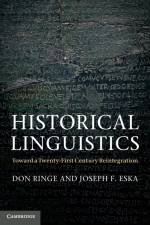
Bringing the advances of theoretical linguistics to the study of language change in a systematic way, this innovative textbook demonstrates the mutual relevance of historical linguistics and contemporary linguistics. Numerous case studies throughout the book show both that theoretical linguistics can be used to solve problems where traditional approaches to historical linguistics have failed to produce satisfying results, and that the results of historical research can have an impact on theory. The book first explains the nature of human language and the sources of language change in broad terms. It then focuses on different types of language change from contemporary viewpoints, before exploring comparative reconstruction - the most spectacular success of traditional historical linguistics - and the problems inherent in trying to devise new methods for linguistic comparison. Positioned at the cutting edge of the field, the book argues that this approach can and should lead to the re-integration of historical linguistics as one of the core areas in the study of language.
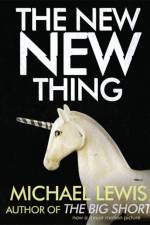
In the last years of the millennium, Michael Lewis, bestselling author of The Big Short and The Undoing Project, sets out to find the world's most important technology entrepreneur, the man who embodies the spirit of the coming age. He finds him in Jim Clark, the billionaire who founded Netscape and Silicon Graphics and who now aims to turn the healthcare industry on its head with his new billion-dollar project. Lewis accompanies Clark on the maiden voyage of his vast yacht and, on the sometimes hazardous journey, takes the reader on the ride of a lifetime through a landscape of geeks and billionaires. Through every brilliant anecdote and funny character sketch, Michael Lewis allows us an inside look at the world of the super-rich, whilst drawing a map of free enterprise in the twenty-first century.
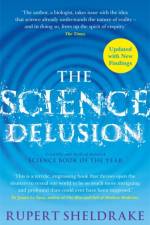
The science delusion is the belief that science already understands the nature of reality. The fundamental questions are answered, leaving only the details to be filled in. In this book, Dr Rupert Sheldrake, one of the world's most innovative scientists, shows that science is being constricted by assumptions that have hardened into dogmas. The sciences would be better off without them: freer, more interesting, and more fun. According to the dogmas of science, all reality is material or physical. The world is a machine, made up of dead matter. Nature is purposeless. Consciousness is nothing but the physical activity of the brain. Free will is an illusion. God exists only as an idea in human minds, imprisoned within our skulls. But should science be a belief-system, or a method of enquiry? Sheldrake shows that the materialist ideology is moribund; under its sway, increasingly expensive research is reaping diminishing returns. In the skeptical spirit of true science, Sheldrake turns the ten fundamental dogmas of materialism into exciting questions, and shows how all of them open up startling new possibilities.The Science Delusion will radically change your view of what is possible. and give you new hope for the world.
The Epilepsy Prescriber's Guide to Antiepileptic Drugs provides a practical and concise reference guide for use by all those clinicians and allied health professionals that treat or care for patients with epilepsy. In full colour throughout, this volume presents the antiepileptic drugs (AEDs) in alphabetical order and for each AED the information is divided into eight coloured sections: general therapeutics, pharmacokinetics, interaction profile, adverse effects, dosing and use, special populations, and suggested reading. This handy pocket guide will be an excellent companion for all clinicians that treat patients with epilepsy.
Why is America again unjustly at war? Why is its politics distorted by wedge issues like abortion and gay marriage? Why is anti-Semitism still so powerfully resurgent? Such contradictions within democracies arise from a patriarchal psychology still alive in our personal and political lives in tension with the equal voice that is the basis of democracy. This book joins a psychological approach with a political-theoretical one that traces both this psychology (based on loss in intimate life) and resistance to it (based on the love of equals) to the Roman Republic and Empire and to three Latin masterpieces: Virgil's Aeneid, Apuleius's The Golden Ass, and Augustine's Confessions. In addition, this book explains many other aspects of our present situation including why movements of ethical resistance are often accompanied by a freeing of sexuality and why we are witnessing an aggressive fundamentalism at home and abroad.
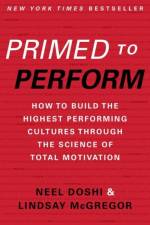
The revolutionary book that teaches you how to use the cutting edge of human psychology to build high performing workplace cultures.Too often, great cultures feel like magic. While most leaders believe culture is critical to success, few know how to build one, or sustain it over time.What if you knew the science behind the magica science so predictive and powerful that you could transform your organization? What if you could use cutting edge psychology to unlock peoples innate desire to innovate, experiment, and adapt? In Primed to Perform, Neel Doshi and Lindsay McGregor show you how to do just that. The result: higher sales, more loyal customers, and more passionate employees.Primed to Perform explains the counter-intuitive science behind great cultures, building on over a century of academic thinking. It shares the simple, highly predictive new measurement toolthe Total Motivation (ToMo) Factorthat enables you to measure the strength of your culture, and track improvements over time. It explores the authors original research into how Total Motivation leads to higher performance in iconic companies, from Apple to Starbucks to Southwest Airlines. Most importantly, it teaches you to build great cultures, using a systematic and sustainable approach.High performing cultures cant be left to chance. Organizations must create systems that shape and maintain them. Whether youre a five-person team or a startup, a school, a nonprofit or a mega-institution, Primed to Perform shows you how.
This revised and extended edition of the leading textbook on European economic history has been updated to take account of contemporary economic developments and the latest research and debates. A concise and accessible introduction that covers the full sweep of the European history, the book focuses on the interplay between the development of institutions and the generation and diffusion of knowledge-based technologies. With simple explanations of key economic principles, the book is an ideal introduction for students in history and economics. Revised textboxes and figures, an extensive glossary, suggestions for further reading and a suite of online resources lead students to a comprehensive understanding of the subject. New material covers contemporary economic developments such as the financial crises of 2007/2008, the Eurozone crisis, new trends in inequality and the austerity debates. This remains the only textbook students need to understand Europe's unique economic development and its global context.
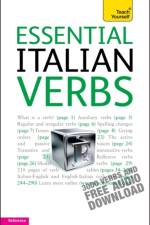
Is this the right course for me?Essential Italian Verbs is the course for you if you need help with your study of Italian. This fully revised edition of our best-selling course now comes with free downloadable audio support containing hints on how to learn verbs effectively.The aim of this book is to help you improve your command of Italian by focusing on one aspect of language learning that invariably causes difficulties - verbs and the way they behave. Whether you are a complete beginner or a relatively advanced learner, you can consult the book when you need to know the form of a verb quickly. The introductory section gives you a complete overview of Italian verbs and how they work in the various tenses. This book also contains:- full coverage of the main tenses for 200 frequently used Italian verbs arranged alphabetically for quick and easy reference- examples of the verbs in everyday use, with colloquial expressions and words sharing the same origin- an Italian-English verb list of approximately 3000 verbs with details of the patterns they follow- an English-Italian verb list giving the most frequently used English verbs in Italian with details of the patterns they follow- free downloadable audio support with hints on how to learn verbsEssential Italian includes:Chapter 1: What is a verb?Chapter 2: I, you, he, she, it...: personChapter 3: Past, present, future...: tenseChapter 4: Regular and irregular verbsChapter 5: Formation and use of tensesChapter 6: Indicative, conditional subjunctive, imperative...: moodChapter 7: The active and passive voicesChapter 8: Transitive and intransitive verbsChapter 9: Impersonal verbs and constructionsChapter 10: Impersonal verbs and constructionsChapter 11: The impersonal si and the passive siChapter 12: Model verbsChapter 13: Verbs not related to timeChapter 14: Verb-noun collocationsLearn effortlessly with a new, easy-to-read page design and interactive features:Not got much time?One, five and ten-minute introductions to key principles to get you started.Author insightsLots of instant help with common problems and quick tips for success, based on the author's many years of experience.Useful vocabularyEasy to find and learn, to build a solid foundation for speaking.Online testsTests to help you keep track of your progress.Extend your knowledgeExtra online articles to give you a richer understanding of the culture and history of Italy.
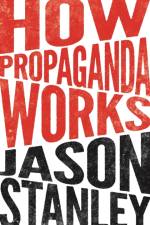
How propaganda undermines democracy and why we need to pay attentionOur democracy today is fraught with political campaigns, lobbyists, liberal media, and Fox News commentators, all using language to influence the way we think and reason about public issues. Even so, many of us believe that propaganda and manipulation aren't problems for us-not in the way they were for the totalitarian societies of the mid-twentieth century. In How Propaganda Works, Jason Stanley demonstrates that more attention needs to be paid. He examines how propaganda operates subtly, how it undermines democracy-particularly the ideals of democratic deliberation and equality-and how it has damaged democracies of the past.Focusing on the shortcomings of liberal democratic states, Stanley provides a historically grounded introduction to democratic political theory as a window into the misuse of democratic vocabulary for propaganda's selfish purposes. He lays out historical examples, such as the restructuring of the US public school system at the turn of the twentieth century, to explore how the language of democracy is sometimes used to mask an undemocratic reality. Drawing from a range of sources, including feminist theory, critical race theory, epistemology, formal semantics, educational theory, and social and cognitive psychology, he explains how the manipulative and hypocritical declaration of flawed beliefs and ideologies arises from and perpetuates inequalities in society, such as the racial injustices that commonly occur in the United States.How Propaganda Works shows that an understanding of propaganda and its mechanisms is essential for the preservation and protection of liberal democracies everywhere.
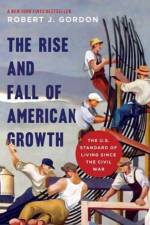
In the century after the Civil War, an economic revolution improved the American standard of living in ways previously unimaginable. Electric lighting, indoor plumbing, motor vehicles, air travel, and television transformed households and workplaces. But has that era of unprecedented growth come to an end? Weaving together a vivid narrative, historical anecdotes, and economic analysis, The Rise and Fall of American Growth challenges the view that economic growth will continue unabated, and demonstrates that the life-altering scale of innovations between 1870 and 1970 cannot be repeated. Gordon contends that the nation's productivity growth will be further held back by the headwinds of rising inequality, stagnating education, an aging population, and the rising debt of college students and the federal government, and that we must find new solutions. A critical voice in the most pressing debates of our time, The Rise and Fall of American Growth is at once a tribute to a century of radical change and a harbinger of tougher times to come.
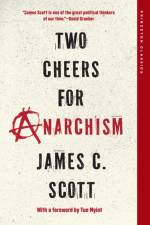
James Scott taught us what's wrong with seeing like a state. Now, in his most accessible and personal book to date, the acclaimed social scientist makes the case for seeing like an anarchist. Inspired by the core anarchist faith in the possibilities of voluntary cooperation without hierarchy, Two Cheers for Anarchism is an engaging, high-spirited, and often very funny defense of an anarchist way of seeing--one that provides a unique and powerful perspective on everything from everyday social and political interactions to mass protests and revolutions. Through a wide-ranging series of memorable anecdotes and examples, the book describes an anarchist sensibility that celebrates the local knowledge, common sense, and creativity of ordinary people. The result is a kind of handbook on constructive anarchism that challenges us to radically reconsider the value of hierarchy in public and private life, from schools and workplaces to retirement homes and government itself. Beginning with what Scott calls "e;the law of anarchist calisthenics,"e; an argument for law-breaking inspired by an East German pedestrian crossing, each chapter opens with a story that captures an essential anarchist truth. In the course of telling these stories, Scott touches on a wide variety of subjects: public disorder and riots, desertion, poaching, vernacular knowledge, assembly-line production, globalization, the petty bourgeoisie, school testing, playgrounds, and the practice of historical explanation. Far from a dogmatic manifesto, Two Cheers for Anarchism celebrates the anarchist confidence in the inventiveness and judgment of people who are free to exercise their creative and moral capacities.
The remarkable scientific story of how Earth became an oxygenated planetThe air we breathe is twenty-one percent oxygen, an amount higher than on any other known world. While we may take our air for granted, Earth was not always an oxygenated planet. How did it become this way? Donald Canfield-one of the world's leading authorities on geochemistry, earth history, and the early oceans-covers this vast history, emphasizing its relationship to the evolution of life and the evolving chemistry of the Earth. Canfield guides readers through the various lines of scientific evidence, considers some of the wrong turns and dead ends along the way, and highlights the scientists and researchers who have made key discoveries in the field. Showing how Earth's atmosphere developed over time, Oxygen takes readers on a remarkable journey through the history of the oxygenation of our planet.
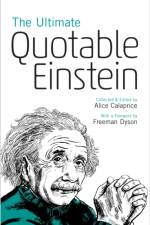
Here is the definitive new edition of the hugely popular collection of Einstein quotations that has sold tens of thousands of copies worldwide and been translated into twenty-five languages.The Ultimate Quotable Einstein features 400 additional quotes, bringing the total to roughly 1,600 in all. This ultimate edition includes new sections--"e;On and to Children,"e; "e;On Race and Prejudice,"e; and "e;Einstein's Verses: A Small Selection"e;--as well as a chronology of Einstein's life and accomplishments, Freeman Dyson's authoritative foreword, and new commentary by Alice Calaprice.In The Ultimate Quotable Einstein, readers will also find quotes by others about Einstein along with quotes attributed to him. Every quotation in this informative and entertaining collection is fully documented, and Calaprice has carefully selected new photographs and cartoons to introduce each section.Features 400 additional quotationsContains roughly 1,600 quotations in allIncludes new sections on children, race and prejudice, and Einstein's poetryProvides new commentaryBeautifully illustratedThe most comprehensive collection of Einstein quotes ever published
Pack your cutlass and blunderbuss--it's time to go a-pirating! The Invisible Hook takes readers inside the wily world of late seventeenth- and early eighteenth-century pirates. With swashbuckling irreverence and devilish wit, Peter Leeson uncovers the hidden economics behind pirates' notorious, entertaining, and sometimes downright shocking behavior. Why did pirates fly flags of Skull & Bones? Why did they create a "e;pirate code"e;? Were pirates really ferocious madmen? And what made them so successful? The Invisible Hook uses economics to examine these and other infamous aspects of piracy. Leeson argues that the pirate customs we know and love resulted from pirates responding rationally to prevailing economic conditions in the pursuit of profits. The Invisible Hook looks at legendary pirate captains like Blackbeard, Black Bart Roberts, and Calico Jack Rackam, and shows how pirates' search for plunder led them to pioneer remarkable and forward-thinking practices. Pirates understood the advantages of constitutional democracy--a model they adopted more than fifty years before the United States did so. Pirates also initiated an early system of workers' compensation, regulated drinking and smoking, and in some cases practiced racial tolerance and equality. Leeson contends that pirates exemplified the virtues of vice--their self-seeking interests generated socially desirable effects and their greedy criminality secured social order. Pirates proved that anarchy could be organized. Revealing the democratic and economic forces propelling history's most colorful criminals, The Invisible Hook establishes pirates' trailblazing relevance to the contemporary world.
Everybody knows that mathematics is indispensable to physics--imagine where we'd be today if Einstein and Newton didn't have the math to back up their ideas. But how many people realize that physics can be used to produce many astonishing and strikingly elegant solutions in mathematics? Mark Levi shows how in this delightful book, treating readers to a host of entertaining problems and mind-bending puzzlers that will amuse and inspire their inner physicist. Levi turns math and physics upside down, revealing how physics can simplify proofs and lead to quicker solutions and new theorems, and how physical solutions can illustrate why results are true in ways lengthy mathematical calculations never can. Did you know it's possible to derive the Pythagorean theorem by spinning a fish tank filled with water? Or that soap film holds the key to determining the cheapest container for a given volume? Or that the line of best fit for a data set can be found using a mechanical contraption made from a rod and springs? Levi demonstrates how to use physical intuition to solve these and other fascinating math problems. More than half the problems can be tackled by anyone with precalculus and basic geometry, while the more challenging problems require some calculus. This one-of-a-kind book explains physics and math concepts where needed, and includes an informative appendix of physical principles. The Mathematical Mechanic will appeal to anyone interested in the little-known connections between mathematics and physics and how both endeavors relate to the world around us.
The Oxford Translation of Aristotle was originally published in 12 volumes between 1912 and 1954. It is universally recognized as the standard English version of Aristotle. This revised edition contains the substance of the original Translation, slightly emended in light of recent scholarship; three of the original versions have been replaced by new translations; and a new and enlarged selection of Fragments has been added. The aim of the translation remains the same: to make the surviving works of Aristotle readily accessible to English speaking readers.
The Oxford Translation of Aristotle was originally published in 12 volumes between 1912 and 1954. It is universally recognized as the standard English version of Aristotle. This revised edition contains the substance of the original Translation, slightly emended in light of recent scholarship; three of the original versions have been replaced by new translations; and a new and enlarged selection of Fragments has been added. The aim of the translation remains the same: to make the surviving works of Aristotle readily accessible to English speaking readers.
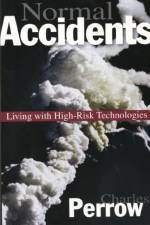
Normal Accidents analyzes the social side of technological risk. Charles Perrow argues that the conventional engineering approach to ensuring safety--building in more warnings and safeguards--fails because systems complexity makes failures inevitable. He asserts that typical precautions, by adding to complexity, may help create new categories of accidents. (At Chernobyl, tests of a new safety system helped produce the meltdown and subsequent fire.) By recognizing two dimensions of risk--complex versus linear interactions, and tight versus loose coupling--this book provides a powerful framework for analyzing risks and the organizations that insist we run them. The first edition fulfilled one reviewer's prediction that it "e;may mark the beginning of accident research."e; In the new afterword to this edition Perrow reviews the extensive work on the major accidents of the last fifteen years, including Bhopal, Chernobyl, and the Challenger disaster. The new postscript probes what the author considers to be the "e;quintessential 'Normal Accident'"e; of our time: the Y2K computer problem.
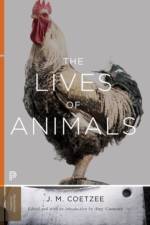
The idea of human cruelty to animals so consumes novelist Elizabeth Costello in her later years that she can no longer look another person in the eye: humans, especially meat-eating ones, seem to her to be conspirators in a crime of stupefying magnitude taking place on farms and in slaughterhouses, factories, and laboratories across the world. Costello's son, a physics professor, admires her literary achievements, but dreads his mother's lecturing on animal rights at the college where he teaches. His colleagues resist her argument that human reason is overrated and that the inability to reason does not diminish the value of life; his wife denounces his mother's vegetarianism as a form of moral superiority. At the dinner that follows her first lecture, the guests confront Costello with a range of sympathetic and skeptical reactions to issues of animal rights, touching on broad philosophical, anthropological, and religious perspectives. Painfully for her son, Elizabeth Costello seems offensive and flaky, but--dare he admit it?--strangely on target. Here the internationally renowned writer J. M. Coetzee uses fiction to present a powerfully moving discussion of animal rights in all their complexity. He draws us into Elizabeth Costello's own sense of mortality, her compassion for animals, and her alienation from humans, even from her own family. In his fable, presented as a Tanner Lecture sponsored by the University Center for Human Values at Princeton University, Coetzee immerses us in a drama reflecting the real-life situation at hand: a writer delivering a lecture on an emotionally charged issue at a prestigious university. Literature, philosophy, performance, and deep human conviction--Coetzee brings all these elements into play. As in the story of Elizabeth Costello, the Tanner Lecture is followed by responses treating the reader to a variety of perspectives, delivered by leading thinkers in different fields. Coetzee's text is accompanied by an introduction by political philosopher Amy Gutmann and responsive essays by religion scholar Wendy Doniger, primatologist Barbara Smuts, literary theorist Marjorie Garber, and moral philosopher Peter Singer, author of Animal Liberation. Together the lecture-fable and the essays explore the palpable social consequences of uncompromising moral conflict and confrontation.
From Guy Kawasaki, the bestselling author of The Art of the Start and Enchantment, The Art of Social Media is a no-nonsense guide to becoming a social media superstar.By now it's clear that whether you're promoting a business, a product, or yourself, social media is near the top of what will determine your success or failure. And there are countless pundits, authors, and consultants eager to advise you.But there's no one quite like Guy Kawasaki, the legendary former chief evangelist for Apple and one of the pioneers of business blogging, tweeting, facebooking, tumbling, and much, much more. Now Guy has teamed up with his Canva colleague Peg Fitzpatrick to offer The Art of Social Media - the one essential guide you need to get the most bang for your time, effort, and money.With more than 100 practical tips, tricks, and insights, Guy and Peg present a ground-up strategy to produce a focused, thorough, and compelling presence on the most popular social-media platforms. They guide you through the steps of building your foundation, amassing your digital assets, going to market, optimizing your profile, attracting more followers, and effectively integrating social media and blogging.For beginners overwhelmed by too many choices, as well as seasoned professionals eager to improve their game, The Art of Social Media is full of tactics that have been proven to work in the real world. Or as Guy puts it, "e;Great Stuff, No Fluff."e;Guy Kawasaki, who helped make Macintosh a household name, now runs Garage Technology Ventures, a venture-capital firm. He has held his workshop, "e;Boot Camp for Start-ups,"e; around the world. Kawasaki is the author of seven previous books, including Art of the Start, Enchantment and Rules for Revolutionaries.
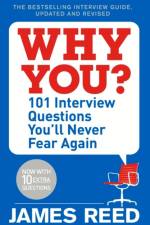
**Revised and updated for 2017 with ten extra tech questions.**Learn the secrets to excelling at interview, direct from top interviewers and recruiters, in Why You? by James Reed, chairman of recruitment specialists REED.You can't prepare an answer for every interview question. So, of the thousands of questions they might ask, which ones will they ask?After extensive research among hundreds of interviewers and thousands of interviewees, finally here's the book that will give you the answer.Why You? is based on direct input from top interviewers in REED's unrivalled recruitment network. It offers powerful preparation techniques, the lowdown on how to answer the most common questions and - above all - how to adopt a winning mindset at interview, one that will help you succeed on the day.From classic questions like 'tell me about yourself' and 'what are your greatest weaknesses?' to puzzlers like 'sell me this pen' and 'how many traffic lights are there in London?', James Reed reveals what interviewers are really asking.James Reed is the Chairman of REED, the recruitment specialists. He first joined the company in 1992 after graduating from Harvard Business School; since then REED has more than quadrupled in size and reed.co.uk has become the number one job site in the UK and Europe. REED now receives more than 46 million job applications a year and has delivered over 100 programmes helping more than 140,000 long-term unemployed people back into work. James is co-author of Put Your Mindset to Work, winner of the 'Commuter's Read' prize at the CMI Management Book Awards 2012. He is also a Fellow of the Chartered Institute of Personnel and Development (CIPD).
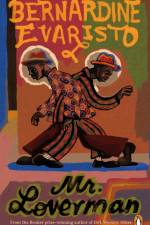
FROM THE BOOKER PRIZE-WINNING AUTHOR OF GIRL, WOMAN, OTHER '[Mr Loverman is] Brokeback Mountain with ackee and saltfish and old people' Dawn FrenchWINNER OF THE JERWOOD FICTION UNCOVERED PRIZE 2014 and FERRO GRUMLEY AWARD FOR LGBT FICTION 2015 Barrington Jedidiah Walker is seventy-four and leads a double life. Born and bred in Antigua, he's lived in Hackney since the sixties. A flamboyant, wise-cracking local character with a dapper taste in retro suits and a fondness for quoting Shakespeare, Barrington is a husband, father and grandfather - but he is also secretly homosexual, lovers with his great childhood friend, Morris.His deeply religious and disappointed wife, Carmel, thinks he sleeps with other women. When their marriage goes into meltdown, Barrington wants to divorce Carmel and live with Morris, but after a lifetime of fear and deception, will he manage to break away?Mr Loverman is a ground-breaking exploration of Britain's older Caribbean community, which explodes cultural myths and fallacies and shows the extent of what can happen when people fear the consequences of being true to themselves.Praise for Bernardine Evaristo: 'One of Britain's most innovative authors . . . Bernardine Evaristo always dares to be different' New Nation'Evaristo remains an undeniably bold and energetic writer, whose world view is anything but one-dimensional' Sunday Times'Audacious genre-bending, in-yer-face wit and masterly retellings of underwritten corners of history are the hallmarks of Evaristo's work' New Statesman Bernardine Evaristo is the author of three critically acclaimed 'verse novels' - Lara, The Emperor's Babe (which won the Arts Council Award in 2000) and Soul Tourists. Mr Loverman is her second prose novel, after 2008's Blonde Roots. Evaristo is a Fellow of the Royal Society of Literature and the Royal Society of Arts, and was awarded an MBE in 2009. She lives in London.
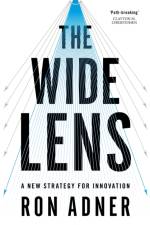
How can great companies do everything right - identify real customer needs, deliver excellent innovations, beat their competitors to market - and still fail? The sad truth is that many companies fail because they focus too intensely on their own innovations, and then neglect the innovation ecosystems on which their success depends. In our increasingly interdependent world, winning requires more than just delivering on your own promises. It means ensuring that a host of partners -some visible, some hidden- deliver on their promises, too. In The Wide Lens, innovation expert Ron Adner draws on over a decade of research and field testing to take you on far ranging journeys from Kenya to California, from transport to telecommunications, to reveal the hidden structure of success in a world of interdependence. A riveting study that offers a new perspective on triumphs like Amazon's e-book strategy and Apple's path to market dominance; monumental failures like Michelin with run-flat tires and Pfizer with inhalable insulin; and still unresolved issues like electric cars and electronic health records, The Wide Lens offers a powerful new set of frameworks and tools that will multiply your odds of innovation success. The Wide Lens will change the way you see, the way you think - and the way you win.
The definitive visual history of the tractorThe complete history of farm machinery, from steam and vintage tractors to the latest combine harvesters is showcased in this lavishly illustrated volume.Packed with images and tractor data on more than 200 iconic machines, The Tractor Book explores the entire range of tractors and farming machines from around the world, such as Fordson Model F and Massey-Harris GP. Histories of famous marques, such as John Deere and Massey Ferguson, sit alongside immersive visual tours of celebrated machines.The Tractor Book covers how tractors work, their history, major marques and catalogues tractors from every era making this a must-have for anyone fascinating by these extraordinary machines.
A New York Times technology and business reporter charts the dramatic rise of Bitcoin and the fascinating personalities who are striving to create a new global money for the Internet age.Digital Gold is New York Times reporter Nathaniel Popper's brilliant and engrossing history of Bitcoin, the landmark digital money and financial technology that has spawned a global social movement.The notion of a new currency, maintained by the computers of users around the world, has been the butt of many jokes, but that has not stopped it from growing into a technology worth billions of dollars, supported by the hordes of followers who have come to view it as the most important new idea since the creation of the Internet. Believers from Beijing to Buenos Aires see the potential for a financial system free from banks and governments. More than just a tech industry fad, Bitcoin has threatened to decentralize some of society's most basic institutions.An unusual tale of group invention, Digital Gold charts the rise of the Bitcoin technology through the eyes of the movement's colorful central characters, including an Argentinian millionaire, a Chinese entrepreneur, Tyler and Cameron Winklevoss, and Bitcoin's elusive creator, Satoshi Nakamoto. Already, Bitcoin has led to untold riches for some, and prison terms for others.
A leading figure in the emerging field of extinction studies, Thom van Dooren puts philosophy into conversation with the natural sciences and his ethnographic encounters to vivify the cultural and ethical significance of modern-day extinctions. Unlike other meditations on the subject, Flight Ways incorporates the particularities of real animals and their worlds, drawing philosophers, natural scientists, and general readers into the experience of living among and losing biodiversity.Each chapter of Flight Ways focuses on a different species or group of birds: North Pacific albatrosses, Indian vultures, an endangered colony of penguins in Australia, Hawaiian crows, and the iconic whooping cranes of North America. Written in eloquent and moving prose, the book takes stock of what is lost when a life form disappears from the world-the wide-ranging ramifications that ripple out to implicate a number of human and more-than-human others. Van Dooren intimately explores what life is like for those who must live on the edge of extinction, balanced between life and oblivion, taking care of their young and grieving their dead. He bolsters his studies with real-life accounts from scientists and local communities at the forefront of these developments. No longer abstract entities with Latin names, these species become fully realized characters enmeshed in complex and precarious ways of life, sparking our sense of curiosity, concern, and accountability toward others in a rapidly changing world.
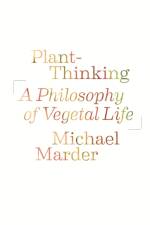
The margins of philosophy are populated by non-human, non-animal living beings, including plants. While contemporary philosophers tend to refrain from raising ontological and ethical concerns with vegetal life, Michael Marder puts this life at the forefront of the current deconstruction of metaphysics. He identifies the existential features of plant behavior and the vegetal heritage of human thought so as to affirm the potential of vegetation to resist the logic of totalization and to exceed the narrow confines of instrumentality. Reconstructing the life of plants "e;after metaphysics,"e; Marder focuses on their unique temporality, freedom, and material knowledge or wisdom. In his formulation, "e;plant-thinking"e; is the non-cognitive, non-ideational, and non-imagistic mode of thinking proper to plants, as much as the process of bringing human thought itself back to its roots and rendering it plantlike.
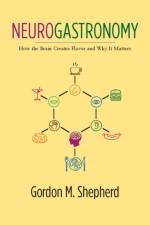
Leading neuroscientist Gordon M. Shepherd embarks on a paradigm-shifting trip through the "e;human brain flavor system,"e; laying the foundations for a new scientific field: neurogastronomy. Challenging the belief that the sense of smell diminished during human evolution, Shepherd argues that this sense, which constitutes the main component of flavor, is far more powerful and essential than previously believed.Shepherd begins Neurogastronomy with the mechanics of smell, particularly the way it stimulates the nose from the back of the mouth. As we eat, the brain conceptualizes smells as spatial patterns, and from these and the other senses it constructs the perception of flavor. Shepherd then considers the impact of the flavor system on contemporary social, behavioral, and medical issues. He analyzes flavor's engagement with the brain regions that control emotion, food preferences, and cravings, and he even devotes a section to food's role in drug addiction and, building on Marcel Proust's iconic tale of the madeleine, its ability to evoke deep memories. Shepherd connects his research to trends in nutrition, dieting, and obesity, especially the challenges that many face in eating healthily. He concludes with human perceptions of smell and flavor and their relationship to the neural basis of consciousness. Everyone from casual diners and ardent foodies to wine critics, chefs, scholars, and researchers will delight in Shepherd's fascinating, scientific-gastronomic adventures.
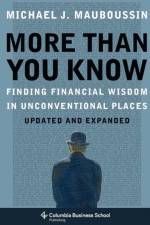
Since its first publication, Michael J. Mauboussin's popular guide to wise investing has been translated into eight languages and has been named best business book by BusinessWeek and best economics book by Strategy+Business. Now updated to reflect current research and expanded to include new chapters on investment philosophy, psychology, and strategy and science as they pertain to money management, this volume is more than ever the best chance to know more than the average investor.Offering invaluable tools to better understand the concepts of choice and risk, More Than You Know is a unique blend of practical advice and sound theory, sampling from a wide variety of sources and disciplines. Mauboussin builds on the ideas of visionaries, including Warren Buffett and E. O. Wilson, but also finds wisdom in a broad and deep range of fields, such as casino gambling, horse racing, psychology, and evolutionary biology. He analyzes the strategies of poker experts David Sklansky and Puggy Pearson and pinpoints parallels between mate selection in guppies and stock market booms. For this edition, Mauboussin includes fresh thoughts on human cognition, management assessment, game theory, the role of intuition, and the mechanisms driving the market's mood swings, and explains what these topics tell us about smart investing.More Than You Know is written with the professional investor in mind but extends far beyond the world of economics and finance. Mauboussin groups his essays into four parts-Investment Philosophy, Psychology of Investing, Innovation and Competitive Strategy, and Science and Complexity Theory-and he includes substantial references for further reading. A true eye-opener, More Than You Know shows how a multidisciplinary approach that pays close attention to process and the psychology of decision making offers the best chance for long-term financial results.
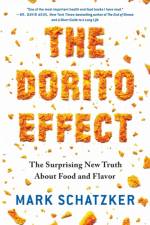
A lively argument from an award-winning journalist proving that the key to reversing Americas health crisis lies in the overlooked link between nutrition and flavor: The Dorito Effect is one of the most important health and food books I have read (Dr. David B. Agus, New York Times bestselling author).We are in the grip of a food crisis. Obesity has become a leading cause of preventable death, after only smoking. For nearly half a century weve been trying to pin the blame somewherefat, carbs, sugar, wheat, high-fructose corn syrup. But that search has been in vain, because the food problem thats killing us is not a nutrient problem. Its a behavioral problem, and its caused by the changing flavor of the food we eat. Ever since the 1940s, with the rise of industrialized food production, we have been gradually leeching the taste out of what we grow. Simultaneously, we have taken great leaps forward in technology, creating a flavor industry, worth billions annually, in an attempt to put back the tastes weve engineered out of our food. The result is a national cuisine that increasingly resembles the paragon of flavor manipulation: Doritos. As foodall foodbecomes increasingly bland, we dress it up with calories and flavor chemicals to make it delicious again. We have rewired our palates and our brains, and the results are making us sick and killing us. With in-depth historical and scientific research, The Dorito Effect casts the food crisis in a fascinating new light, weaving an enthralling tale of how we got to this point and where we are headed. Weve been telling ourselves that our addiction to flavor is the problem, but it is actually the solution. We are on the cusp of a new revolution in agriculture that will allow us to eat healthier and live longer by enjoying flavor the way nature intended.
Abonner på vårt nyhetsbrev og få rabatter og inspirasjon til din neste leseopplevelse.
Ved å abonnere godtar du vår personvernerklæring.