







Gjør som tusenvis av andre bokelskere
Abonner på vårt nyhetsbrev og få rabatter og inspirasjon til din neste leseopplevelse.
Ved å abonnere godtar du vår personvernerklæring.Du kan når som helst melde deg av våre nyhetsbrev.

This landmark book by one of the worlds leading business thinkers is about managing, pure if not simple. It tackles the big questions managers everywhere face, such as:How is anyone supposed to think, let alone think ahead, in this frenetic job? Are leaders really more important than managers? Is email destroying management practice? Are managers the only ones who can, or should, manage? How are managers supposed to connect when the very nature of their job disconnects them from what they are managing? How can you manage it when you cant reliably measure it? MANAGING MAKES SENSE OF WHAT MIGHT BE THE WORLDS MOST IMORTANT JOB.
Research Methods for Arts and Event Management provides a compelling and comprehensive guide to research methods for undergraduate and postgraduate students in arts and event management, as well as for managers in the arts/culture/events industries. This book provides students and practising managers with the following: Essential skills in designing their own qualitative and quantitative research studies that can be implemented in a real working environment Guidance in designing, managing, and monitoring research work which students and practising managers may commission from consultants The necessary theoretical and practical basis to identify and implement appropriate methodologies to conduct research for academic dissertations and theses in the fields of arts, cultural and event management. Furthermore, the book provides readers with multiple test questions, exercises and further resources, as well as a section on specialist terminology. A. J. Veal is Adjunct Professor at the School of Leisure, Sport and Tourism, University of Technology, Sydney, Australia. Christine Burton is an Associate Professor with the UTS Business School, University of Technology, Sydney. Her research focuses on audience development in the museum and arts sectors. Prior to becoming an academic, Christine worked as an arts consultant in Australia and the United Kingdom. Christine has worked on a number of research projects and consultancies including social impact of the arts, arts facilities development and public art planning and development.
The definitive study of the minor planet Chiron, tracing the development of the archetype of the Shaman, or Wounded Healer, which accompanies the soul's journey of awakening. It also demonstrates this theme as reflected in the astronomical picture, and revealed in the individual horoscope. Chiron's story in Greek mythology is explored and illuminated with skilled interpretation, and the astrological symbolism and meaning is detailed through signs, houses and aspects. Essential reading for anyone seeking to shed light on Chiron in the horoscope.
If you want to motivate your employees to be more productive, convince your customers to use more of your products and services, encourage a loved one to engage in healthier habits, or inspire any change in yourself, renowned psychologist Dr. Michael Pantalon can show you how to achieve Instant Influence in six simple steps. Drawing on three decades of research, Dr. Pantalon's easy-to-learn method can create changes both great and small in 7 minutes or less. This scientifically tested method succeeds in every area of work and life by helping people tap into their deeply personal reasons for wanting to change and finding a spark of "e;yes"e; within an answer that sounds like "e;no."e;
Some twenty-five centuries after the Buddha started teaching, his message continues to inspire people across the globe, including those living in predominantly secular societies. What does it mean to adapt religious practices to secular contexts? Stephen Batchelor, an internationally known author and teacher, is committed to a secularized version of the Buddha's teachings. The time has come, he feels, to articulate a coherent ethical, contemplative, and philosophical vision of Buddhism for our age. After Buddhism, the culmination of four decades of study and practice in the Tibetan, Zen, and Theravada traditions, is his attempt to set the record straight about who the Buddha was and what he was trying to teach. Combining critical readings of the earliest canonical texts with narrative accounts of five members of the Buddha's inner circle, Batchelor depicts the Buddha as a pragmatic ethicist rather than a dogmatic metaphysician. He envisions Buddhism as a constantly evolving culture of awakening whose long survival is due to its capacity to reinvent itself and interact creatively with each society it encounters. This original and provocative book presents a new framework for understanding the remarkable spread of Buddhism in today's globalized world. It also reminds us of what was so startling about the Buddha's vision of human flourishing.
Peter Singer's books and ideas have been disturbing our complacency ever since the appearance of Animal Liberation. Now he directs our attention to a challenging new movement in which his own ideas have played a crucial role: effective altruism. Effective altruism is built upon the simple but profoundly unsettling idea that living a fully ethical life involves doing the "e;most good you can do."e; Such a life requires a rigorously unsentimental view of charitable giving: to be a worthy recipient of our support, an organization must be able to demonstrate that it will do more good with our money or our time than other options open to us. Singer introduces us to an array of remarkable people who are restructuring their lives in accordance with these ideas, and shows how, paradoxically, living altruistically often leads to greater personal fulfillment than living for oneself.Doing the Most Good develops the challenges Singer has made, in the New York Times and Washington Post, to those who donate to the arts, and to charities focused on helping our fellow citizens, rather than those for whom we can do the most good. Effective altruists are extending our knowledge of the possibilities of living less selfishly, and of allowing reason, rather than emotion, to determine how we live. Doing the Most Good offers new hope for our ability to tackle the world's most pressing problems.
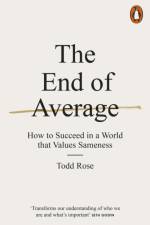
'Must the tyranny of the group rule us from cradle to grave? Absolutely not, says Todd Rose in a subversive and readable introduction to what has been called the new science of the individual ... Readers will be moved' Abigail Zuger, The New York Times'Groundbreaking ... The man who can teach you how not to be average' Anna Hart, Daily Telegraph'Fascinating, engaging, and practical. The End of Average will help everyone - and I mean everyone - live up to their potential' Amy Cuddy, author of Presence'Lively and entertaining ... a cheering story of how the square pegs among us can build successful lives despite being unable or unwilling to fit into round holes' Matthew Reisz, Times Higher Education'Heartening . . . a worthwhile read for the aspiring nonconformist' Iain Morris, Observer
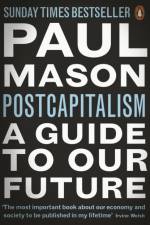
From Paul Mason, the award-winning Channel 4 presenter, Postcapitalism is a guide to our era of seismic economic change, and how we can build a more equal society. Over the past two centuries or so, capitalism has undergone continual change - economic cycles that lurch from boom to bust - and has always emerged transformed and strengthened. Surveying this turbulent history, Paul Mason wonders whether today we are on the brink of a change so big, so profound, that this time capitalism itself, the immensely complex system by which entire societies function, has reached its limits and is changing into something wholly new.At the heart of this change is information technology: a revolution that, as Mason shows, has the potential to reshape utterly our familiar notions of work, production and value; and to destroy an economy based on markets and private ownership - in fact, he contends, it is already doing so. Almost unnoticed, in the niches and hollows of the market system, whole swathes of economic life are changing.. Goods and services that no longer respond to the dictates of neoliberalism are appearing, from parallel currencies and time banks, to cooperatives and self-managed online spaces. Vast numbers of people are changing their behaviour, discovering new forms of ownership, lending and doing business that are distinct from, and contrary to, the current system of state-backed corporate capitalism.In this groundbreaking book Mason shows how, from the ashes of the recent financial crisis, we have the chance to create a more socially just and sustainable global economy. Moving beyond capitalism, he shows, is no longer a utopian dream. This is the first time in human history in which, equipped with an understanding of what is happening around us, we can predict and shape, rather than simply react to, seismic change.
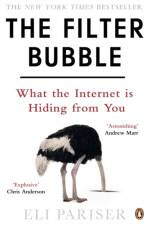
Imagine a world where all the news you see is defined by your salary, where you live, and who your friends are. Imagine a world where you never discover new ideas. And where you can't have secrets.Welcome to 2011.Google and Facebook are already feeding you what they think you want to see. Advertisers are following your every click. Your computer monitor is becoming a one-way mirror, reflecting your interests and reinforcing your prejudices.The internet is no longer a free, independent space. It is commercially controlled and ever more personalised. The Filter Bubble reveals how this hidden web is starting to control our lives - and shows what we can do about it.
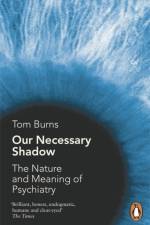
Our Necessary Shadow is the first attempt in a generation to explain the whole subject of psychiatry, from the UK's leading expert, Tom BurnsA lot is written about psychiatry and the things it deals with, but very little that describes psychiatry itself. Why should there be such a need? There isn't a raft of books explaining all the other branches of medicine. But for good or ill, psychiatry is a polemical battleground, critcised on the one hand as an instrument of social control or a barbaric practice, while on the other the latest developments in neuroscience are trumpeted as offering lasting solutions to mental illness. Which of these strikingly contrasting positions should we believe? This is the first attempt in a generation to explain the whole subject of psychiatry. In this deeply thoughtful, descriptive and sympathetic book, Tom Burns reviews the historical development of psychiatry, the places where there is much agreement on treatment and where there is not, throughout alert to where psychiatry helps, and where it is imperfect. What is clear is that mental illnesses are intimately tied to what makes us human in the first place. And the drive to relieve the suffering they cause is even more human. Psychiatry, for all its flaws, currently represents our best attempts to discharge this most human of impulses. It is not something we can just ignore. It is our necessary shadow.Tom Burns is Professor of Social Psychiatry at Oxford University. From the late 1980s he has conducted research, in addition his clinical and teaching work, and has produced nearly 200 peer-reviewed scientific articles.
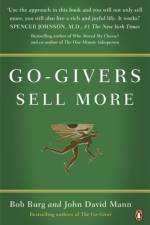
The sequel to the international bestseller The Go-Giver, applying its inspirational approach to real-world challenges.The Go-Giver took the business world by storm with its message that giving is the simplest, most fulfilling, and most effective path to success. It has inspired hundreds of thousands of readers; but some have wondered how the story's lessons stand up to the tough challenges of everyday, real-world business.Bob Burg and John David Mann answer that question in Go-Givers Sell More, a practical guide that turns giving into the cornerstone of a powerful and effective approach to selling.Most of us think of sales as a struggle to make people do something they don't really want to do. But that cut-throat mentality makes the process much harder than it has to be - especially in an economic downturn when customers are more suspicious and defensive than ever. It's far more effective (and satisfying) when salespeople think like Go-Givers and focus on creating value for the customer. Cultivate a trusting relationship and provide outstanding service, and great results will follow automatically.Illustrating their points with a wide range of real-life examples, Burg and Mann offer tips and strategies that anyone in sales can start applying right away.
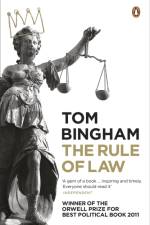
'The Rule of Law' is a phrase much used but little examined. The idea of the rule of law as the foundation of modern states and civilisations has recently become even more talismanic than that of democracy, but what does it actually consist of? In this brilliant short book, Britain's former senior law lord, and one of the world's most acute legal minds, examines what the idea actually means. He makes clear that the rule of law is not an arid legal doctrine but is the foundation of a fair and just society, is a guarantee of responsible government, is an important contribution to economic growth and offers the best means yet devised for securing peace and co-operation. He briefly examines the historical origins of the rule, and then advances eight conditions which capture its essence as understood in western democracies today. He also discusses the strains imposed on the rule of law by the threat and experience of international terrorism. The book will be influential in many different fields and should become a key text for anyone interested in politics, society and the state of our world.
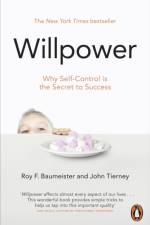
Can you resist everything except temptation? In a hedonistic age full of distractions, it's hard to possess willpower - or in fact even understand why we should need it. Yet it's actually the most important factor in achieving success and a happy life, shown to be more significant than money, looks, background or intelligence. This book reveals the secrets of self-control. For years the old-fashioned, even Victorian, value of willpower has been disparaged by psychologists who argued that we're largely driven by unconscious forces beyond our control. Here Roy Baumeister, one of the world's most esteemed and influential psychologists, and journalist John Tierney, turn this notion on its head. They show us that willpower is like a muscle that can be strengthened with practice and improved over time. The latest laboratory work shows that self-control has a physical basis to it and so is dramatically affected by simple things such as eating and sleeping - to the extent that a life-changing decision may go in different directions depending on whether it's made before or after lunch. You will discover how babies can be taught willpower, the joys of the to-don't list, the success of Alcoholics Anonymous, the pointlessness of diets and the secrets to David Blaine's stunts. There are also fascinating personal stories, from explorers, students, soldiers, ex-addicts and parents.Based on years of psychological research and filled with practical advice, this book will teach you how to gain from self-control without pain, and discover the very real power in willpower. The results are nothing short of life-changing.
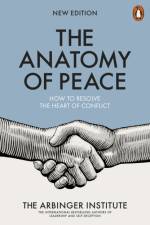
The Anatomy of Peace will instil hope and inspire reconciliation. Through a series of moving stories about once-bitter enemies reunited, it shows us how we routinely misunderstand the causes of conflict - and perpetuate the very problems we're trying to solve. The Anatomy of Peace shows you how to:1. Focus on helping things go right, rather than 'fixing' things that go wrong2. Think about others as people with fears of their own, not obstacles in your way3. Stop worrying about how the world sees you4. Learn to move away from blame and bitternessWelcome to a world without conflict.
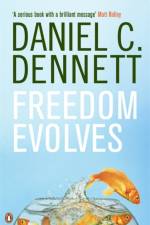
Dennett shows that human freedom is not an illusion; it is an objective phenomenon, distinct from all other biological conditions and found in only one species - us. There was a time on this planet when it didn't exist, quite recently in fact. It had to evolve like every other feature of the biosphere, and it continues to evolve today. Dennett shows that far from there being an incompatibility between contemporary science and the traditional vision of freedom and morality, it is only recently that science has advanced to the point where we can see how we came to have our unique kind of freedom.
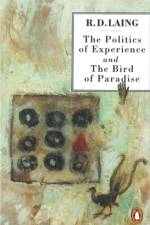
In The Politics of Experience and the visionary Bird of Paradise , R.D. Laing shows how the straitjacket of conformity imposed on us all leads to intense feelings of alienation and a tragic waste of human potential. He throws into question the notion of normality, examines schizophrenia and psychotherapy, transcendence and us and them thinking, and illustrates his ideas with a remarkable case history of a ten-day psychosis. We are bemused and crazed creatures, Laing suggests. This outline of a thoroughly self-conscious and self-critical human account of man represents a major attempt to understand our deepest dilemmas and sketch in solutions. Everyone in contemporary psychiatry owes something to R.D. Laing Anthony Clare, the Guardian.
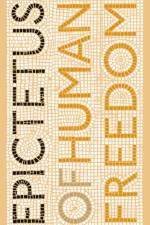
In this personal and practical guide to moral self-improvement and living a good life, the second-century philosopher Epictetus tackles questions of freedom and imprisonment, stubbornness and fear, family, friendship and love, and leaves an intriguing document of daily life in the classical world.GREAT IDEAS. Throughout history, some books have changed the world. They have transformed the way we see ourselves - and each other. They have inspired debate, dissent, war and revolution. They have enlightened, outraged, provoked and comforted. They have enriched lives - and destroyed them. Now Penguin brings you the works of the great thinkers, pioneers, radicals and visionaries whose ideas shook civilization and helped make us who we are.
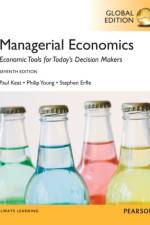
For upper-level undergraduate and first-year MBA courses in managerial and applied economics. This Global Edition has been edited to include enhancements making it more relevant to students outside the United StatesThis text will excite readers by providing a more linear progression, while proving the consistency and relevance of microeconomic theory.The Seventh Edition welcomes a new co-author, Stephen Erfle of Dickinson College, who has contributed many revisions and improvements to the quantitative sections of the text, as well as provided a major addition: the use of Excel in the presentation of many of the numerical and graphical illustrations presented throughout the text. To strengthen students ability to use Excela critical skill in todays job marketnew Excel Applications (Excel Apps) allow readers to turn the static figures and tables in the text into dynamic illustrations.
For MBA/graduate students taking a course in corporate finance. This Global Edition has been edited to include enhancements making it more relevant to students outside the United States Using the unifying valuation framework based on the Law of One Price, top researchers Jonathan Berk and Peter DeMarzo set the new standard for corporate finance textbooks. Corporate Finance blends coverage of time-tested principles and the latest advancements with the practical perspective of the financial manager. With this ideal melding of the core with modern topics, innovation with proven pedagogy, Berk and DeMarzo establish the new canon in finance. For programs and professors who would like a streamlined book that is specifically tailored to the topics covered in the first one-semester course, Corporate Finance: The Core is also available by Jonathan Berk and Peter DeMarzo.
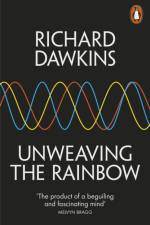
A dazzling, passionate polemic against anti-science movements of all kinds. Keats accused Newton of destroying the poetry of the rainbow by explaining the origin of its colours. In this illuminating and provocative book, Richard Dawkins argues that Keats could not have been more mistaken, and shows how an understanding of science enhances our wonder of the world. He argues that mysteries do not lose their poetry because they are solved: the solution is often more beautiful than the puzzle, uncovering even deeper mysteries. Dawkins takes up the most important and compelling topics in modern science, from astronomy and genetics to language and virtual reality, combining them in a landmark statement on the human appetite for wonder.
'Man and the Natural World, an encyclopaedic study of man's relationship to animals and plants, is completely engrossing ... It explains everything - why we eat what we do, why we plant this and not that, why we keep pets, why we like some animals and not others, why we kill the things we kill and love the things we love ... It is often a funny book and one to read again and again' Paul Theroux, Sunday Times 'The English historian Keith Thomas has revealed modes of thought and ways of life deeply strange to us' Hilary Mantel, New York Review of Books'A treasury of unusual historical anecdote ... a delight to read and a pleasure to own' Auberon Waugh, Sunday Telegraph'A dense and rich work ... the return to the grass roots of our own environmental convictions is made by the most enchantingly minor paths' Ronald Blythe, Guardian
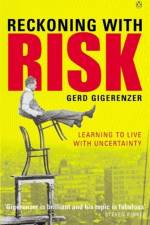
"e;This is an important book, full of relevant examples and worrying case histories. By the end of it, the reader has been presented with a powerful set of tools for understanding statistics...anyone who wants to take responsibly for their own medicalchoices should read it"e; - New ScientistHowever much we crave certainty, we live in an uncertain world. But are we guilty of wildly exaggerating the chances of some unwanted event happening to us? Are ordinary people idiots when reasoning with risk?Far too many of us, argues Gerd Gigerenzer, are hampered by our own innumeracy. Here, he shows us that our difficulties in thinking about numbers can easily be overcome.
'Powerful and gripping... To have read it is to have consulted a first draft of the structural plan of the human psyche ... a glittering tour de force' Spectator Why do we laugh? What makes memories fade? Why do people believe in ghosts? From the acclaimed author of Enlightenment Now and Better Angels of Our Nature, How the Mind Works explores every aspect of mental life, showing that our minds are not a mystery, but a system of organs of computation designed by natural selection.'Pinker's objective in this erudite account is to explore the nature and history of the human mind ... He explores computations and evolutions, and then considers how the mind lets us "e;see, think, feel, interact, and pursue higher callings like art, religion and philosophy' Sunday Times
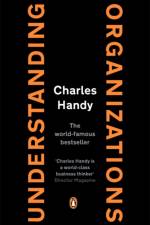
Organizations are a part of everyday life, whether in schools, hospitals, police stations or commercial companies. In this classics text, Charles Handy argues that the key to successful organizations lies in a better understanding of the needs and motivations of the people within them. Understanding Organizations offers an extended 'dictionary' of the key concepts -- culture, motivations, leadership, role-playing, co-ordinating and consultation -- and then shows how this 'language' can help us find new solutions to familiar problems. Few management writers have been as consistently challenging and influential as Charles Handy. Firmly established as one of the core business texts, this book is essential reading for anyone interested in organizations and how to make them work better.
'A passionate defence of the enduring power of human nature ... both life-affirming and deeply satisfying' Daily TelegraphRecently many people have assumed that we are blank slates shaped by our environment. But this denies the heart of our being: human nature. Violence is not just a product of society; male and female minds are different; the genes we give our children shape them more than our parenting practices. To acknowledge our innate abilities, Pinker shows, is not to condone inequality, but to understand the very foundations of humanity.'Brilliant ... enjoyable, informative, clear, humane' New Scientist'If you think the nature-nurture debate has been resolved, you are wrong ... this book is required reading' Literary Review'An original and vital contribution to science and also a rattling good read' Matt Ridley, Sunday Telegraph 'Startling ... This is a breath of air for a topic that has been politicized for too long' Economist
In late 1888, only weeks before his final collapse into madness, Nietzsche (1844-1900) set out to compose his autobiography, and Ecce Homo remains one of the most intriguing yet bizarre examples of the genre ever written. In this extraordinary work Nietzsche traces his life, work and development as a philosopher, examines the heroes he has identified with, struggled against and then overcome - Schopenhauer, Wagner, Socrates, Christ - and predicts the cataclysmic impact of his 'forthcoming revelation of all values'. Both self-celebrating and self-mocking, penetrating and strange, Ecce Homo gives the final, definitive expression to Nietzsche's main beliefs and is in every way his last testament.
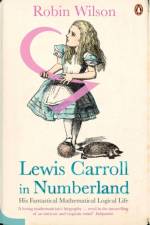
Lewis Carroll's books have delighted children and adults for generations, but behind their exuberant fantasy and delightful nonsense was the mind of a brilliant mathematician. Now his forgotten achievements in the world of numbers are brought to light by acclaimed author and mathematician Robin Wilson. Here he explores the curious imagination of a man whose pioneering work at Oxford University included investigations into voting patterns and tennis seeding, who dreamt up numerical conundrums in bed at night and who filled his writings with problems, paradoxes, puzzles and teasing games of logic. Taking us into a world of mock turtles and maps, gryphons and gravity, Lewis Carroll in Numberland reveals the singular mind of a genius.
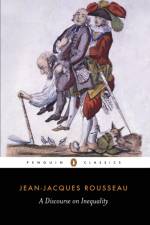
In A Discourse on Inequality Rousseau sets out to demonstrate how the growth of civilization corrupts man s natural happiness and freedom by creating artificial inequalities of wealth, power and social privilege. Contending that primitive man was equal to his fellows, Rousseau believed that as societies become more sophisticated, the strongest and most intelligent members of the community gain an unnatural advantage over their weaker brethren, and that constitutions set up to rectify these imbalances through peace and justice in fact do nothing but perpetuate them. Rousseau s political and social arguments in the Discourse were a hugely influential denunciation of the social conditions of his time and one of the most revolutionary documents of the eighteenth-century.
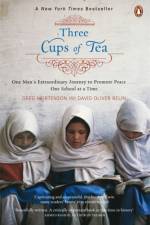
'Here we drink three cups of tea to do business; the first you are a stranger, the second you become a friend, and the third, you join our family, and for our family we are prepared to do anything even die.Haji Ali, Korphe Village Chief, Karakoram mountains, PakistanIn 1993, after a terrifying and disastrous attempt to climb K2, a mountaineer called Greg Mortenson drifted, cold and dehydrated, into an impoverished Pakistan village in the Karakoram Mountains. Moved by the inhabitants' kindness, he promised to return and build a school. Three Cups of Tea is the story of that promise and its extraordinary outcome. Over the next decade Mortenson built not just one but fifty-five schools especially for girls in remote villages across the forbidding and breathtaking landscape of Pakistan and Afghanistan, just as the Taliban rose to power. His story is at once a riveting adventure and a testament to the power of the humanitarian spirit.
Abonner på vårt nyhetsbrev og få rabatter og inspirasjon til din neste leseopplevelse.
Ved å abonnere godtar du vår personvernerklæring.