




















Gjør som tusenvis av andre bokelskere
Abonner på vårt nyhetsbrev og få rabatter og inspirasjon til din neste leseopplevelse.
Ved å abonnere godtar du vår personvernerklæring.Du kan når som helst melde deg av våre nyhetsbrev.

Learn how to create a tranquil outdoor space at home with this practical and inspiring guide!With instructive drawings and step-by-step techniques, Inside Your Japanese Garden walks you through designing and creating your very own Japanese garden. From small projects like benches and gates, to larger undertakings like bridges and mud walls, this book provides a wide variety of ways to enhance the space around your home, no matter the size. Instructions on how to work with stone, mud and bambooas well as a catalogue of the 94 plant varieties used in the gardens shown in the bookround out this complete guide.This book also features 19 gardens that author Sadao Yasumoro has designed and built in Japan, and somelike those at Visvim shop in Tokyo and at Yushima Tenjin in Tokyoare open to the public. From small tsuboniwa courtyard gardens to a large backyard stroll garden with water features, stairs and walls, these real-life inspirations will help spark your own garden plan.These inspirational garden projects include:Tea Garden for an Urban Farmhouse featuring a clay wall with a split-bamboo framework and a stone baseThe Landslide That Became a Garden with a terraced slope, trees, bushes, long grasses and mossA Buddha's Mountain Retreat of Moss and Stone with a vertical-split bamboo fence and a brushwood fenceParadise in an Urban Jungle with a pond, bridge, and lanternsEach garden is beautifully photographed by Hironori Tomino and many have diagrams and drawings to show the essential elements used in the planning and construction.
**Independent Publisher Book Award (IPPY) Winner**Bushido: The Samurai Code of Japan is the most influential book ever written on the Japanese "e;Way of the Warrior."e; A classic study of Japanese culture, the book outlines the moral code of the Samurai way of living and the virtues every Samurai warrior holds dear. It is widely read today in Japan and around the world. There are seven core precepts of Bushido: Rectitude: "e;The power of deciding upon a certain course of conduct in accordance with reason, without wavering."e;Courage: "e;Doing what is right."e;Benevolence: "e;Love, magnanimity, affection for others, sympathy and pity."e;Civility: "e;Courtesy and urbanity of manners."e;Sincerity: "e;The end and the beginning of all things."e;Honor: "e;A vivid conscious of personal dignity and worth."e; Loyalty: "e;Homage and fealty to a superior."e; Together, these seven values create a system of beliefs unique to Japanese philosophy and culture that is widely followed today. Inazo Nitobe, one of Japan's foremost scholars, thoroughly explores each of these values and explains how they differ from their Western counterparts. Until you understand the philosophy behind the ethics, you will never fully grasp what it meant to be a Samuraiwhat it meant to have Bushido. <br. In Bushido, Nitobe points out similarities between Western and Japanese history and culture. He argues that "e;no matter how different any two cultures may appear to be on the surface, they are still created by human beings, and as such have deep similarities."e; Nitobe believed that connecting Bushido with greater teachings could make an important contribution to all humanitythat the way of the Samurai is not something peculiarly Japanese, but of value to the entire human race. With an extensive new introduction and notes by Alex Bennett, a respected scholar of Japanese history, culture and martial arts with a firsthand knowledge of the Japanese warrior code, Bushido: The Samurai Code of Japan is an essential guide to the essence of Japanese culture. Bennett's views on this subject are revolutionizing our understanding of Bushido, as expressed in his Japanese bestseller The Bushido the Japanese Don't Know About.
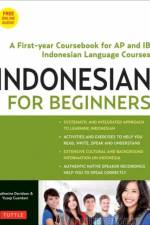
Selamat datang! Learn to read, write, and speak Indonesian! By completing the 12 lessons in Indonesian for Beginners, you will learn not only to understand, speak, read and write basic Indonesian, but also about many important aspects of Indonesia's amazingly diverse culture, people, and places. This book provides a gateway to understanding the Indonesian language and country, and helps you to apply what you learn in a way that is relevant, meaningful and fun. The course is structured around the concept of spending a year in Indonesiaexperiencing different seasonal events which bring the learner on a journey. In this way, the cultural and background information becomes a natural part of the understanding of the Indonesian language and helps you to place what you learn into context within a full narrative about life in Indonesia. Each chapter contains the following elements: An introduction with images and captions Grammar points A word bank presenting key vocabulary One or more sample conversations Listening practice and readings An "e;Indonesian and me"e; section that uses Indonesian to talk about yourself Key questions and statements Drills and exercises Indonesian for Beginners includes reading, writing and speaking tasks based on authentic real-life materials. While aimed at learners taking a classroom course, it can also be used by anyone studying Indonesian in other waysin a high school course or as a self-study book.
Today complex numbers have such widespread practical use--from electrical engineering to aeronautics--that few people would expect the story behind their derivation to be filled with adventure and enigma. In An Imaginary Tale, Paul Nahin tells the 2000-year-old history of one of mathematics' most elusive numbers, the square root of minus one, also known as i. He recreates the baffling mathematical problems that conjured it up, and the colorful characters who tried to solve them.In 1878, when two brothers stole a mathematical papyrus from the ancient Egyptian burial site in the Valley of Kings, they led scholars to the earliest known occurrence of the square root of a negative number. The papyrus offered a specific numerical example of how to calculate the volume of a truncated square pyramid, which implied the need for i. In the first century, the mathematician-engineer Heron of Alexandria encountered I in a separate project, but fudged the arithmetic; medieval mathematicians stumbled upon the concept while grappling with the meaning of negative numbers, but dismissed their square roots as nonsense. By the time of Descartes, a theoretical use for these elusive square roots--now called "e;imaginary numbers"e;--was suspected, but efforts to solve them led to intense, bitter debates. The notorious i finally won acceptance and was put to use in complex analysis and theoretical physics in Napoleonic times.Addressing readers with both a general and scholarly interest in mathematics, Nahin weaves into this narrative entertaining historical facts and mathematical discussions, including the application of complex numbers and functions to important problems, such as Kepler's laws of planetary motion and ac electrical circuits. This book can be read as an engaging history, almost a biography, of one of the most evasive and pervasive "e;numbers"e; in all of mathematics.Some images inside the book are unavailable due to digital copyright restrictions.
Following in the wake of his groundbreaking work War in the Age of Intelligent Machines, Manuel De Landa presents a brilliant, radical synthesis of historical development of the last thousand years. A Thousand Years of Nonlinear History sketches the outlines of a renewed materialist philosophy of history in the tradition of Fernand Braudel, Gilles Deleuze, and Felix Guattari, while engaging - in an entirely unprecedented manner - the critical new understanding of material processes derived from the sciences of dynamics. Working against prevailing attitudes that see history merely as the arena of texts, discourses, ideologies, and metaphors, De Landa traces the concrete movements and interplays of matter and energy through human populations in the last millennium. The result is an entirely novel approach to the study of human societies and their always mobile, semi-stable forms, cities, economies, technologies, and languages.De Landa attacks three domains that have given shape to human societies: economics, biology, and linguistics. In each case, De Landa discloses the self-directed processes of matter and energy interacting with the whim and will of human history itself to form a panoramic vision of the West free of rigid teleology and naive notions of progress and, even more important, free of any deterministic source for its urban, institutional, and technological forms. The source of all concrete forms in the West's history, rather, is shown to derive from internal morphogenetic capabilities that lie within the flow of matter-energy itself.A Swerve Edition.
A lavishly illustrated guide to the world's turtles that covers every family and genusTurtles of the World reveals the extraordinary diversity of these amazing reptiles. Characterized by the bony shell that acts as a shield to protect the softer body within, turtles are survivors from the time of the dinosaurs and are even more ancient in evolutionary terms than snakes and crocodilians. Of more than 350 species known today, some are highly endangered. In this beautiful guide, turtle families, subfamilies, and genera are illustrated with hundreds of color photographs. Each genus profile includes a population distribution map, a table of information, and commentary that includes notable characteristics and discussion of related species.More than 250 beautiful color photosEach profile features a distribution map, table of information, and commentaryBroad coverage includes every family and genus
A timely defense of liberalism that draws vital lessons from its greatest midcentury proponentsToday, liberalism faces threats from across the political spectrum. While right-wing populists and leftist purists righteously violate liberal norms, theorists of liberalism seem to have little to say. In Liberalism in Dark Times, Joshua Cherniss issues a rousing defense of the liberal tradition, drawing on a neglected strand of liberal thought.Assaults on liberalism-a political order characterized by limits on political power and respect for individual rights-are nothing new. Early in the twentieth century, democracy was under attack around the world, with one country after another succumbing to dictatorship. While many intellectuals dismissed liberalism as outdated, unrealistic, or unworthy, a handful of writers defended and reinvigorated the liberal ideal, including Max Weber, Raymond Aron, Albert Camus, Reinhold Niebuhr, and Isaiah Berlin-each of whom is given a compelling new assessment here.Building on the work of these thinkers, Cherniss urges us to imagine liberalism not as a set of policies but as a temperament or disposition-one marked by openness to complexity, willingness to acknowledge uncertainty, tolerance for difference, and resistance to ruthlessness. In the face of rising political fanaticism, he persuasively argues for the continuing importance of this liberal ethos.
THE INSTANT SUNDAY TIMES BESTSELLER'Anna's wise, uplifting and refreshingly honest words are what every woman needs to read right now' Fearne CottonYour worth never changed. Your awareness of it did.A strong understanding of self-worth is crucial to living an authentic and fulfilling life, yet so many of us have lost that sense of who we truly are and what we are worthy of. On the surface, this may look like low confidence, imposter syndrome, chronic busy-ness, exhaustion, overwhelm, fear or anxiety, but at the core, it's low self-worth.In her second book, Sunday Times bestselling author and psychotherapist Anna Mathur will set you on a journey towards greater self-worth. Anna will use her personal and professional insight to guide you to a place of balance that will allow you to recognise and appreciate your self-worth, build your self-esteem, grow in confidence and worry less about what other people think. Using Anna's own experience of embarking on this journey herself, and spending ten years facilitating her therapy clients to do the same, Know Your Worth will help you to understand why you feel the way you do, what perpetuates it and what the cost of low self-esteem has been for you. It will provide the coping mechanisms, habits and tips that will redirect your self-esteem on a healthy and fulfilling upward spiral and help you to escape the relentless desire to 'be better' and 'do more' with the realisation that perhaps you were actually far more acceptable than you first thought.
This textbook presents the modern history of psychology through a lively and engaging survey of eminent thinkers in the field. Covering 1850 to the present, with a new chapter on the late twentieth century and the cognitive revolution, this new edition also features up-to-date research and improved pedagogy.
The gripping new novel from the &i>Sunday Times&/i> bestselling author of &i>The Mercies, The Dance Tree&/i> is a transporting story of lust, family secrets and women under the eye of the Church.
An all-consuming tale of psychological suspense with a spectacular twist from the internationally bestselling author Alice Feeney
This is cutting-edge science packaged as a practical guide on how to flip anxiety on its head and harness it as a superpower - by world-renowned neuroscientist, Dr Wendy Suzuki.
Offers managers and professionals the fundamental information they need to stay competitive in a fast-moving world.
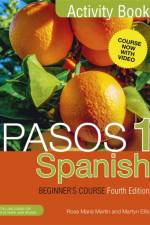
Pasos 1 is the total beginner Spanish course for classroom and home study, teaching you to speak, read, write and listen with accuracy and confidence.
Celebrate six decades of outrageous, unforgettable Lamborghini cars with this must-have volume featuring fascinating history and stunning photography. Sixty years ago, Ferruccio Lamborghini put the sports car world on notice with the introduction of his V-12-powered 350 GT. Just three years later, in 1966, Lamborghini stunned the automotive establishment with its introduction of the stunning Miura, the first mid-engine production car. Rivals at the 1966 Geneva Auto Show could only stare in wonder. Wrapped in a svelte Marcello Gandini–penned body and powered by a 350-horsepower V-12, the Miura instantly made every other sports car look antiquated, including those offered by Lamborghini’s Italian rival, Ferrari. It would be two years before Ferrari offered its own mid-engine reply in the form of the 206 Dino GT. For Lamborghini, there was the time before the Miura and the time after the Miura. It marked a sea change not only for the Sant’Agata manufacturer but for the sports car world broadly. The Supercar had arrived. In 1974, Lamborghini again shocked the automotive world with the mad Countach (an Italian expression one might utter at the sight of a beautiful woman), another Gandini masterpiece. Wide, low, and purposeful, the Countach completely redefined the supercar template, in the process becoming the poster car of choice for children of all ages the world over. As Supercars evolved to Hypercars, Audi acquired Lamborghini, giving new life to the firm and unleashing a series of amazing cars from the Murcielago to the Gallardo to the Aventador and Huracan. Today, there is even the all-purpose Urus SUV! In this richly detailed survey spanning 60 years of extreme performance, each of Lamborghini’s seminal cars is detailed and complemented by historic and commissioned photography and technical specifications. Captivating to read and beautiful to behold, Lamborghini Supercars: 60 Years belongs in every sports-car fan’s collection.
Abonner på vårt nyhetsbrev og få rabatter og inspirasjon til din neste leseopplevelse.
Ved å abonnere godtar du vår personvernerklæring.