




Gjør som tusenvis av andre bokelskere
Abonner på vårt nyhetsbrev og få rabatter og inspirasjon til din neste leseopplevelse.
Ved å abonnere godtar du vår personvernerklæring.Du kan når som helst melde deg av våre nyhetsbrev.

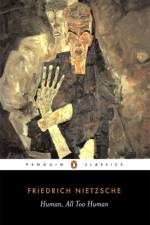
Written after Nietzsche had ended his friendship with Richard Wagner and had been forced to leave academic life through ill health, Human, All Too Human (1878) can be read as a monument to his personal crisis. It also marks the point when he matured as a philosopher, rejecting the German romanticism espoused by Wagner and Schopenhauer and instead returning to sources in the French Enlightenment. Here he sets out his unsettling views in a series of 638 stunning aphorisms - assessing subjects ranging from art to arrogance, boredom to passion, science to vanity and women to youth. This work also contains the seeds of concepts crucial to Nietzsche's later philosophy, such as the will to power and the need to transcend conventional Christian morality. The result is one of the cornerstones of his life's work.
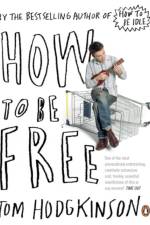
How to be Free is Tom Hodgkinson's manifesto for a liberated life.Modern life is absurd. How can we be free?If you've ever wondered why you bother to go to work, or why so much consumer culture is crap, then this book is for you. Looking to history, literature and philosophy for inspiration, Tom Hodgkinson provides a joyful blueprint for a simpler and freer way of life. Filled with practical tips as well as inspiring reflections, here you can learn how to throw off the shackles of anxiety, bureaucracy, debt, governments, housework, supermarkets, waste and much else besides.Are you ready to be free? Read this book and find out.'One of the most provocatively entertaining, creatively subversive and, frankly, essential manifestoes of this or any moment' Time Out'Crammed with laugh-out-loud jokes and witty put-downs . . . acts as a survival guide for everything from the government to housework. Random in its details, essential in its advice' KnaveAs a follow-up to his charming How to be Idle, Tom Hodgkinson offers nothing less than a manifesto of resistance to the modern world' GuardianTom Hodgkinson is the founder and editor of The Idler and the author of How to be Idle, How to be Free, The Idle Parent and Brave Old World. In spring 2011 he founded The Idler Academy in London, a bookshop, coffeehouse and cultural centre which hosts literary events and offers courses in academic and practical subjects - from Latin to embroidery. Its motto is 'Liberty through Education'. Find out more at www.idler.co.uk.
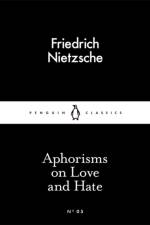
'We must learn to love, learn to be kind, and this from our earliest youth ... Likewise, hatred must be learned and nurtured, if one wishes to become a proficient hater'This volume contains a selection of Nietzsche's brilliant and challenging aphorisms, examining the pleasures of revenge, the falsity of pity, and the incompatibility of marriage with the philosophical life.Introducing Little Black Classics: 80 books for Penguin's 80th birthday. Little Black Classics celebrate the huge range and diversity of Penguin Classics, with books from around the world and across many centuries. They take us from a balloon ride over Victorian London to a garden of blossom in Japan, from Tierra del Fuego to 16th-century California and the Russian steppe. Here are stories lyrical and savage; poems epic and intimate; essays satirical and inspirational; and ideas that have shaped the lives of millions.Friedrich Nietzsche (1844-1900). Nietzsche's works available in Penguin Classics are A Nietzsche Reader, Beyond Good and Evil, Ecce Homo, Human, All Too Human, On the Genealogy of Morals, The Birth of Tragedy, The Portable Nietzsche, Thus Spoke Zarathustra, Twilight of Idols and Anti-Christ.
The Leviathan is the vast unity of the State. But how are unity, peace and security to be attained? Hobbes's answer is sovereignty, but the resurgence of interest today in Leviathan is due less to its answers than its methods. Hobbes sees politics as a science capable of the same axiomatic approach as geometry: he argues from first principles to human nature to politics. This book's appeal to the twentieth century lies not just in its elevation of politics to a science, but in its overriding concern for peace.
Imagine if The Hitchhiker's Guide to the Galaxy were a real, practical book about the mysteries of the universe . . .The Universe in Your Hand takes us on a wonder-filled journey to the surface of our dying sun, shrinks us to the size of an atom and puts us in the deathly grip of distant black holes. Along the way you might come to understand, really understand, the mind-bending science that underpins modern life, from quantum mechanics to Einstein's theory of general relativity.Through brilliant storytelling and humour rather than graphs and equations, internationally renowned astrophysicist Christophe Galfard has written an instant classic that brings the astonishing beauty of the universe to life - and takes us deep into questions about the beginning of time and the future of humanity.
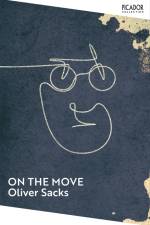
When Oliver Sacks was twelve years old, a perceptive schoolmaster wrote in his report: 'Sacks will go far, if he does not go too far'. It is now abundantly clear that Sacks has never stopped going. From its opening pages on his youthful obsession with motorcycles and speed, On the Move is infused with his restless energy. As he recounts his experiences as a young neurologist in the early 1960s, first in California and then in New York, where he discovered a long-forgotten illness in the back wards of a chronic hospital, as well as with a group of patients who would define his life, it becomes clear that Sacks's earnest desire for engagement has occasioned unexpected encounters and travels - sending him through bars and alleys, over oceans, and across continents.With unbridled honesty and humour, Sacks shows us that the same energy that drives his physical passions - bodybuilding, weightlifting, and swimming - also drives his cerebral passions. He writes about his love affairs, both romantic and intellectual, his guilt over leaving his family to come to America, his bond with his schizophrenic brother, and the writers and scientists - Thom Gunn, A. R. Luria, W. H. Auden, Gerald M. Edelman, Francis Crick - who influenced him.On the Move is the story of a brilliantly unconventional physician and writer - and of the man who has illuminated the many ways that the brain makes us human.
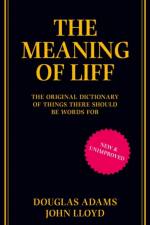
The Meaning of Liff has sold hundreds of thousands of copies since it was first published in 1983, and remains a much-loved humour classic. This edition has been revised and updated, and includes The Deeper Meaning of Liff, giving fresh appeal to Douglas Adams and John Lloyd's entertaining and witty dictionary. In life, there are hundreds of familiar experiences, feelings and objects for which no words exist, yet hundreds of strange words are idly loafing around on signposts, pointing at places. The Meaning of Liff connects the two. BERRIWILLOCK (n.) - An unknown workmate who writes 'All the best' on your leaving card. ELY (n.) - The first, tiniest inkling that something, somewhere has gone terribly wrong. GRIMBISTER (n.) - Large body of cars on a motorway all travelling at exactly the speed limit because one of them is a police car. KETTERING (n.) - The marks left on your bottom or thighs after sunbathing on a wickerwork chair. OCKLE (n.) - An electrical switch which appears to be off in both positions. WOKING (ptcpl.vb.) - Standing in the kitchen wondering what you came in here for.
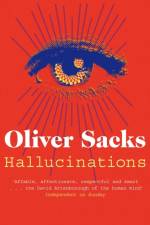
Have you ever seen something that wasn't really there? Heard someone call your name in an empty house? Sensed someone following you and turned around to find nothing? Hallucinations don't belong wholly to the insane. Much more commonly, they are linked to sensory deprivation, intoxication, illness, or injury. In some conditions, hallucinations can lead to religious epiphanies or even the feeling of leaving one's own body. Humans have always sought such life-changing visions, and for thousands of years have used hallucinogenic compounds to achieve them. In Hallucinations, with his usual elegance, curiosity, and compassion, Dr Oliver Sacks weaves together stories of his patients and of his own mind-altering experiences to illuminate what hallucinations tell us about the organization and structure of our brains, how they have influenced every culture's folklore and art, and why the potential for hallucination is present in us all, a vital part of the human condition.
The fourth volume of memoirs from the author who inspired the BBC series All Creatures Great and Small. Finally home from London after his wartime service in the RAF, James Herriot is settling back into life as a country vet. While the world has changed after the war, the blunt Yorkshire clients and menagerie of beasts with weird and wonderful ailments remain the same. But between his young son, Jimmy, trailing him around aping his every move, stubborn farmers refusing to try his 'new-fangled' treatments and a goat that has eaten 293 tomatoes, Darrowby is far from quiet. And with another baby on the way, life is about to get even more chaotic . . . Since they were first published, James Herriot's memoirs have sold millions of copies and entranced generations of animal lovers. Charming, funny and touching, The Lord God Made Them All is a heart-warming story of determination, love and companionship from one of Britain's best-loved authors.
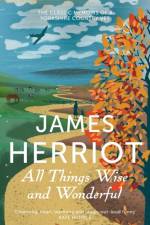
The third collection of memoirs from the author who inspired the BBC series All Creatures Great and Small. This omnibus edition comprises of Vets Might Fly and Vet in a Spin. Training as an RAF pilot in the smoke and bustle of London is a far cry from James Herriot's day job as a country vet in the Yorkshire Dales. And while he is keen to serve Queen and country, James cannot help but miss his life in Darrowby - despite frequent arguments between his colleagues, bad-tempered cattle and equally irritable farmers, and the continuing saga of Cedric the flatulent dog. But most of all he misses his wife Helen; pregnant with their first child. The question is constantly hanging over him - will he be going to war? And when will he get to go home? Since they were first published, James Herriot's memoirs have sold millions of copies and entranced generations of animal lovers. Charming, funny and touching, All Things Wise and Wonderful is a heart-warming story of determination, love and companionship from one of Britain's best-loved authors.
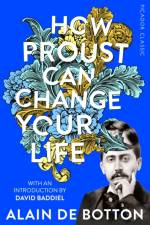
'What a marvellous book this is . . . de Botton dissects what [Proust] had to say about friendship, reading, looking carefully, paying attention taking your time, being alive and adds his own delicious commentary. The result is an intoxicating as it is wise, amusing as well as stimulating, and presented in so fresh a fashion as to be unique . . . I could not stop, and now much start all over again.' Brian Masters, Mail on Sunday 'De Botton not only has a complete understanding of Proust's life . . . but what is particularly charming about this small, readable book is its tongue-in-cheek benignity, its lightly held erudition and its generous way of lending itself to what is not only the greatest book of the century but also the darkest and the most eccentric' Edmund White, Observer 'It contains more human interest and play of fancy than most fiction . . . de Botton, in emphasizing Proust's healing, advisory aspects, does us the service of rereading him on our behalf, providing of that vast sacred lake a sweet and lucid distillation.' John Updike, New Yorker 'De Botton's little book is so charming, amusing and sensible that it may even itself change your life.' Allan Massie, Daily Telegraph 'This engaging book is one of the most entertaining pieces of literary criticism I have read in a long while.' Sunday Telegraph 'A very enjoyable book' Sebastian Faulks
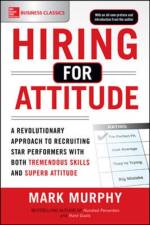
Build a high-performance workforce by abandoning skills-based hiring practices and focusing on employee attitude Hiring for Attitude offers a groundbreaking approach to recruiting, assessing, and selecting people with both tremendous skills but, more importantly, an attitude that aligns with the organization s culture. Murphy cites his own company s research and examines recent scientific studies about the practical effects a person s attitude has on the outcome of his or her job performance. Clear and practical lessons are illuminated by numerous case studies of organizations like Microchip, Southwest Airlines, and The Ritz-Carlton.
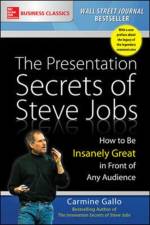
The Wall Street Journal Bestseller! Updated to include Steve Jobs's iPad and iPad2 launch presentations The Presentation Secrets of Steve Jobs reveals the operating system behind any great presentation and provides you with a quick-start guide to design your own passionate interfaces with your audiences. Cliff Atkinson, author of Beyond Bullet Points and The Activist Audience Former Apple CEO Steve Jobs s wildly popular presentations have set a new global gold standard and now this step-by-step guide shows you exactly how to use his crowd-pleasing techniques in your own presentations. The Presentation Secrets of Steve Jobs is as close as you'll ever get to having the master presenter himself speak directly in your ear. Communications expert Carmine Gallo has studied and analyzed the very best of Jobs's performances, offering point-by-point examples, tried-and-true techniques, and proven presentation secrets in 18 "e;scenes,"e; including: Develop a messianic sense of purpose Reveal the Conquering hero Channel your inner Zen Stage your presentation with props Make it look effortless With this revolutionary approach, you ll be surprised at how easy it is to sell your ideas, share your enthusiasm, and wow your audience the Steve Jobs way. No other leader captures an audience like Steve Jobs does and, like no other book, The Presentation Secrets of Steve Jobs captures the formula Steve uses to enthrall audiences. Rob Enderle, The Enderle Group Now you can learn from the best there is both Jobs and Gallo. No matter whether you are a novice presenter or a professional speaker like me, you will read and reread this book with the same enthusiasm that people bring to their iPods."e; David Meerman Scott, bestselling author of The New Rules of Marketing & PR and World Wide Rave
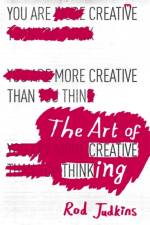
A scuba diving company faces bankruptcy because sharks have infested the area. Solution? Open the world's first extreme diving school.The Art of Creative Thinking reveals how we can transform ourselves, our businesses and our society through a deeper understanding of human creativity. Rod Judkins, of the world-famous St Martin's College of Art, has studied successful creative thinkers from every walk of life, throughout history. Drawing on an extraordinary range of reference points - from the Dada Manifesto to Nobel Prize Winning economists, from Andy Warhol's studio to Einstein's desk - he distils a lifetime's expertise into a succinct, surprising book that will inspire you to think more confidently and creatively.You'll realise why you should be happy when your train is cancelled; meet the most successful class in educational history (in which every single student won a Nobel prize); discover why graphic nudity during public speaking can be both a hindrance and surprisingly persuasive; and learn why, in the twenty-first century, it's technically illegal to be as good as Michelangelo.Be stubborn about compromise.Plan to have more accidents.Be mature enough to be childish.Contradict yourself more often.Discover the Art of Creative Thinking. *From the publishers of the international bestseller The Art of Thinking Clearly*
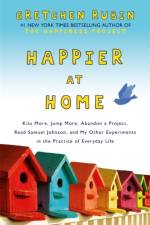
In the spirit of the #1 New York Times bestseller The Happiness Project, Gretchen Rubin embarks on a new project to make home a happier place. In The Happiness Project, she worked out general theories of happiness. Here she goes deeper on factors that matter for home, such as possessions, marriage, time and parenthood. How can she control the cubicle in her pocket? How might she spotlight her family's treasured possessions? And it really was time to replace that dud toaster. And what does she want from her home? A place that calms her, and energises her. A place that, by making her feel safe, will free her to take risks. Also, while Rubin wants to be happier at home, she wants to appreciate how much happiness is there already. So, starting in September (the new January), Rubin dedicates a school year - September through May - to making her home a place of greater simplicity, comfort and love. Each month, Rubin tackles a different theme as she experiments with concrete, manageable resolutions - and this time, she coaxes her family to try some resolutions, as well. With her signature blend of memoir, science, philosophy and experimentation, Rubin's passion for her subject jumps off the page, and reading just a few chapters of this book will inspire readers to find more happiness in their own lives.
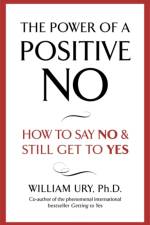
The most powerful word in the language is one that most people find difficult to say. Yet when we know how to use it correctly, it has the power to profoundly transform our lives. That word is 'No'.In Getting to Yes, William Ury helped millions of people across the world discover how to transform their working and personal relationships by saying Yes. In this wise and insightful 'prequel' to the international bestseller, Ury asserts that, although you may be able to say Yes, you cannot get to the right Yes until you know how to say No.Most of us are reluctant to say No when we fear the word could spoil relationships with bosses; lose the deal with clients or upset family members. This indispensable book will help readers know whether and how to say No and provides a simple, proven five-step solution and tried and tested techniques to tackle this everyday dilemma.
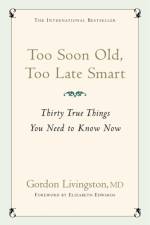
Dr Gordon Livingston has been a psychiatrist since the 1960s, and has heard from his patients the whole spectrum of those things in life that work and that don't work - and the limitless ways in which we are capable of inflicting unhappiness on ourselves. Out of this lifetime of experience he has extracted thirty bedrock truths, amongst them 'We are what we do', 'Only bad things happen quickly', 'We are afraid of the wrong things' and 'Be bold, and mighty forces will come to your aid'.Gordon believes that we all have a wonderful capacity to face loss, misfortune and regret, and that it is never too late to move beyond them and find greater happiness. This profound and incisive book of collected wisdoms and deceptively simple truths will encourage and inspire you to seek and recognise the best in your life - to realise that it is never too late to find your greatest happiness, and how to go about it.
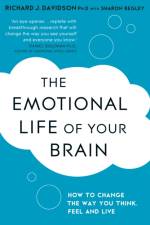
This groundbreaking book by a pioneer in neuroscience brings a new understanding of our emotions - why each of us responds so differently to the same life events and what we can do to change and improve our emotional lives.If you believe most self-help books, you would probably assume that we are all affected in the same way by events like grief or falling in love or being jilted and that only one process can help us handle them successfully.From thirty years of studying brain chemistry, Davidson shows just why and how we are all so different. Just as we all have our own DNA, so we each have our own emotional 'style' depending on our individual levels of dimensions like resilience, attention and self-awareness. Helping us to recognise our own emotional style, Davidson also shows how our brain patterns can change over our lives - and, through his fascinating experiments, what we can do to improve our emotional responses through, for example, meditation.Deepening our understanding of the mind-body connection - as well as conditions like autism and depression - Davidson stretches beyond mainstream psychology and neuroscience and expands our view of what it means to be human.
The problem of whether we should love ourselves - and if so how - has particular resonance within Christian thought and is an important yet underinvestigated theme in the writings of Soren Kierkegaard. In Works of Love, Kierkegaard argues that the friendships and romantic relationships which we typically treasure most are often merely disguised forms of 'selfish' self-love. Yet in this nuanced and subtle account, John Lippitt shows that Kierkegaard also provides valuable resources for responding to the challenge of how we can love ourselves, as well as others. Lippitt relates what it means to love oneself properly to such topics as love of God and neighbour, friendship, romantic love, self-denial and self-sacrifice, trust, hope and forgiveness. The book engages in detail with Works of Love, related Kierkegaard texts and important recent studies, and also addresses a wealth of wider literature in ethics, moral psychology and philosophy of religion.
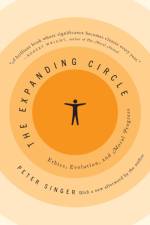
What is ethics? Where do moral standards come from? Are they based on emotions, reason, or some innate sense of right and wrong? For many scientists, the key lies entirely in biology--especially in Darwinian theories of evolution and self-preservation. But if evolution is a struggle for survival, why are we still capable of altruism? In his classic study The Expanding Circle, Peter Singer argues that altruism began as a genetically based drive to protect one's kin and community members but has developed into a consciously chosen ethic with an expanding circle of moral concern. Drawing on philosophy and evolutionary psychology, he demonstrates that human ethics cannot be explained by biology alone. Rather, it is our capacity for reasoning that makes moral progress possible. In a new afterword, Singer takes stock of his argument in light of recent research on the evolution of morality.
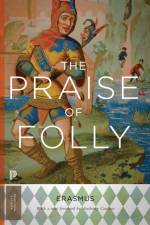
Desiderius Erasmus (1466-1536) was a Dutch humanist, scholar, and social critic, and one of the most important figures of the Renaissance. The Praise of Folly is perhaps his best-known work. Originally written to amuse his friend Sir Thomas More, this satiric celebration of pleasure, youth, and intoxication irreverently pokes fun at the pieties of theologians and the foibles that make us all human, while ultimately reaffirming the value of Christian ideals. No other book displays quite so completely the transition from the medieval to the modern world, and Erasmus's wit, wisdom, and critical spirit have lost none of their timeliness today.This Princeton Classics edition of The Praise of Folly features a new foreword by Anthony Grafton that provides an essential introduction to this iridescent and enduring masterpiece.
This is the most comprehensive anthology of Soren Kierkegaard's works ever assembled in English. Drawn from the volumes of Princeton's authoritative Kierkegaard's Writings series by editors Howard and Edna Hong, the selections represent every major aspect of Kierkegaard's extraordinary career. They reveal the powerful mix of philosophy, psychology, theology, and literary criticism that made Kierkegaard one of the most compelling writers of the nineteenth century and a shaping force in the twentieth. With an introduction to Kierkegaard's writings as a whole and explanatory notes for each selection, this is the essential one-volume guide to a thinker who changed the course of modern intellectual history. The anthology begins with Kierkegaard's early journal entries and traces the development of his work chronologically to the final The Changelessness of God. The book presents generous selections from all of Kierkegaard's landmark works, including Either/Or, Fear and Trembling, Works of Love, and The Sickness unto Death, and draws new attention to a host of such lesser-known writings as Three Discourses on Imagined Occasions and The Lily of the Field and the Bird of the Air. The selections are carefully chosen to reflect the unique character of Kierkegaard's work, with its shifting pseudonyms, its complex dialogues, and its potent combination of irony, satire, sermon, polemic, humor, and fiction. We see the esthetic, ethical, and ethical-religious ways of life initially presented as dialogue in two parallel series of pseudonymous and signed works and later in the "e;second authorship"e; as direct address. And we see the themes that bind the whole together, in particular Kierkegaard's overarching concern with, in his own words, "e;What it means to exist; . . . what it means to be a human being.? Together, the selections provide the best available introduction to Kierkegaard's writings and show more completely than any other book why his work, in all its creativity, variety, and power, continues to speak so directly today to so many readers around the world.
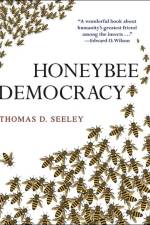
Honeybees make decisions collectively--and democratically. Every year, faced with the life-or-death problem of choosing and traveling to a new home, honeybees stake everything on a process that includes collective fact-finding, vigorous debate, and consensus building. In fact, as world-renowned animal behaviorist Thomas Seeley reveals, these incredible insects have much to teach us when it comes to collective wisdom and effective decision making. A remarkable and richly illustrated account of scientific discovery, Honeybee Democracy brings together, for the first time, decades of Seeley's pioneering research to tell the amazing story of house hunting and democratic debate among the honeybees. In the late spring and early summer, as a bee colony becomes overcrowded, a third of the hive stays behind and rears a new queen, while a swarm of thousands departs with the old queen to produce a daughter colony. Seeley describes how these bees evaluate potential nest sites, advertise their discoveries to one another, engage in open deliberation, choose a final site, and navigate together--as a swirling cloud of bees--to their new home. Seeley investigates how evolution has honed the decision-making methods of honeybees over millions of years, and he considers similarities between the ways that bee swarms and primate brains process information. He concludes that what works well for bees can also work well for people: any decision-making group should consist of individuals with shared interests and mutual respect, a leader's influence should be minimized, debate should be relied upon, diverse solutions should be sought, and the majority should be counted on for a dependable resolution. An impressive exploration of animal behavior, Honeybee Democracy shows that decision-making groups, whether honeybee or human, can be smarter than even the smartest individuals in them.
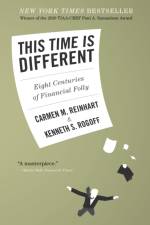
Throughout history, rich and poor countries alike have been lending, borrowing, crashing--and recovering--their way through an extraordinary range of financial crises. Each time, the experts have chimed, "e;this time is different"e;--claiming that the old rules of valuation no longer apply and that the new situation bears little similarity to past disasters. With this breakthrough study, leading economists Carmen Reinhart and Kenneth Rogoff definitively prove them wrong. Covering sixty-six countries across five continents, This Time Is Different presents a comprehensive look at the varieties of financial crises, and guides us through eight astonishing centuries of government defaults, banking panics, and inflationary spikes--from medieval currency debasements to today's subprime catastrophe. Carmen Reinhart and Kenneth Rogoff, leading economists whose work has been influential in the policy debate concerning the current financial crisis, provocatively argue that financial combustions are universal rites of passage for emerging and established market nations. The authors draw important lessons from history to show us how much--or how little--we have learned. Using clear, sharp analysis and comprehensive data, Reinhart and Rogoff document that financial fallouts occur in clusters and strike with surprisingly consistent frequency, duration, and ferocity. They examine the patterns of currency crashes, high and hyperinflation, and government defaults on international and domestic debts--as well as the cycles in housing and equity prices, capital flows, unemployment, and government revenues around these crises. While countries do weather their financial storms, Reinhart and Rogoff prove that short memories make it all too easy for crises to recur. An important book that will affect policy discussions for a long time to come, This Time Is Different exposes centuries of financial missteps.
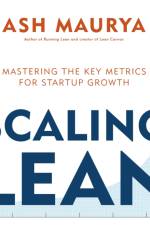
'A battle-tested approach to building companies that matter' - Eric Ries, author of The Lean StartupIs your 'big idea' worth pursuing? What if you could test your business model earlier in the process - before you've expended valuable time and resources?You've talked to customers. You've identified problems that need solving, and maybe even built a minimum viable product. But now there's a second bridge to cross. How do you tell whether your idea represents a viable business? Do you really have to go through the whole cycle of development, failure, iteration, tweak, repeat? Scaling Lean offers an invaluable blueprint for modelling startup success. You'll learn the essential metrics that measure the output of a working business model, give you the pulse of your company, communicate its health to investors, and enable you to make precise interventions when things go wrong.Ash Maurya, a serial entrepreneur and author of the startup cult classic Running Lean, pairs real-world examples of startups like Airbnb and Hubspot with techniques from the manufacturing world in this tacti cal handbook for scaling with maximum efficiency and efficacy. This is vital reading for any startup founder graduating from the incubator stage.
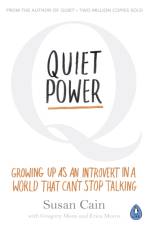
The highly anticipated follow-up to the sensational bestseller Quiet - empowering introverted children, teens and young adultsSusan Cain sparked a worldwide conversation with Quiet: The Power of Introverts in a World that Can't Stop Talking. She inspired millions of people, and permanently changed the way we see introverts - and the way introverts see themselves. Now she takes the Quiet Revolution to a younger audience.Childhood, adolescence and your early twenties are times wrought with insecurity and self-doubt. Your search for your place in the world can seem daunting. Focusing on the strengths and challenges of being introverted, Quiet Power is full of examples from school, family life and friendship, applying the breakthrough discoveries of Quiet to readers that so badly need them.This insightful, accessible and empowering book is eye-opening to extroverts and introverts alike. Unlock your hidden superpower and give yourself the tools to make a mark - in your own quiet way.
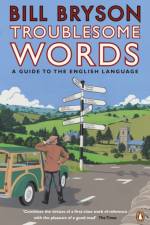
Troublesome Words is playful and riddlesome guide to the English language from the bestselling author of Notes from a Small Island and A Short History of Nearly Everything, Bill BrysonWhat is the difference between mean and median, blatant and flagrant, flout and flaunt? Is it whodunnit or whodunit? Do you know? Are you sure?With Troublesome Words, journalist and bestselling travel-writer Bill Bryson gives us a clear, concise and entertaining guide to the problems of English usage and spelling that has been an indispensable companion to those who work with the written word for over twenty years. So if you want to discover whether you should care about split infinitives, are cursed with an uncontrollable outbreak of commas or were wondering if that newsreader was right to say 'an historic day', this superb book is the place to find out.
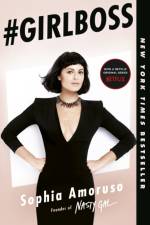
*UPDATED WITH A NEW INTRODUCTION. #GIRLBOSS NETFLIX ORIGINAL OUT NOW*In this New York Times bestselling sensation, founder and Executive Chairman of Nasty Gal Sophia Amoruso shares her story and inspires women everywhere to join the #GIRLBOSS movement.'#GIRLBOSS is more than a book . . . #GIRLBOSS is a movement' Lena Dunham'A millennial alternative to Lean In' New York Magazine'A compellingly motivational read' The Telegraph'The book you need in your life' Marie Claire *Winner of the 2014 Goodreads Choice Award for Best Business Book*In the space of ten years, Sophia Amoruso has gone from high-school dropout to founder and Executive Chairman of Nasty Gal, one of the fastest-growing retailers in the world. Sophia's never been a typical executive, or a typical anything, and she's written #GIRLBOSS for other girls like her: outsiders (and insiders) seeking a unique path to success.Filled with brazen wake-up calls, cunning and frank observations, and behind-the-scenes stories from Nasty Gal's meteoric rise, #GIRLBOSS covers a lot of ground. It proves that success doesn't come from where you went to college or how popular you were in school. Success is about trusting your instincts and following your gut, knowing which rules to follow and which to break.Inspiring, motivating and empowering, #GIRLBOSS will give you the kick up the ass you need to reach your potential.
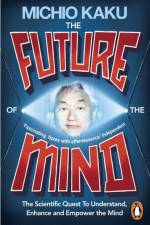
Penguin presents the unabridged, downloadable audiobook edition of The Future of the Mind by Michio Kaku, The international bestselling author of Physics of the Impossible. Read by the actor Feodor Chin. Recording memories, mind reading, videotaping our dreams, mind control, avatars, and telekinesis - no longer are these feats of the mind solely the province of overheated science fiction. As Michio Kaku reveals, not only are they possible, but with the latest advances in brain science and recent astonishing breakthroughs in technology, they already exist. In The Future of the Mind, the New York Times-bestselling author takes us on a stunning, provocative and exhilarating tour of the top laboratories around the world to meet the scientists who are already revolutionising the way we think about the brain - and ourselves.
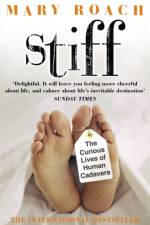
What happens to your body after you have died? Fertilizer? Crash Test Dummy? Human Dumpling? Ballistics Practise?Life after death is not as simple as it looks. Mary Roach's Stiff lifts the lid off what happens to our bodies once we have died. Bold, original and with a delightful eye for detail, Roach tells us everything we wanted to know about this new frontier in medical science. Interweaving present-day explorations with a history of past attempts to study what it means to be human Stiff is a deliciously dark investigations for readers of popular science as well as fans of the macabre
Abonner på vårt nyhetsbrev og få rabatter og inspirasjon til din neste leseopplevelse.
Ved å abonnere godtar du vår personvernerklæring.