














Gjør som tusenvis av andre bokelskere
Abonner på vårt nyhetsbrev og få rabatter og inspirasjon til din neste leseopplevelse.
Ved å abonnere godtar du vår personvernerklæring.Du kan når som helst melde deg av våre nyhetsbrev.

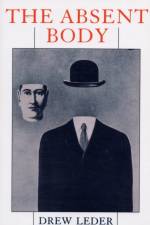
The body plays a central role in shaping our experience of the world. Why, then, are we so frequently oblivious to our own bodies? We gaze at the world, but rarely see our own eyes. We may be unable to explain how we perform the simplest of acts. We are even less aware of our internal organs and the physiological processes that keep us alive. In this fascinating work, Drew Leder examines all the ways in which the body is "absent"--forgotten, alien, uncontrollable, obscured. In part 1, Leder explores a wide range of bodily functions with an eye to structures of concealment and alienation. He discusses not only perception and movement, skills and tools, but a variety of "bodies" that philosophers tend to overlook: the inner body with its anonymous rhythms; the sleeping body into which we nightly lapse; the prenatal body from which we first came to be. Leder thereby seeks to challenge "primacy of perception." In part 2, Leder shows how this phenomenology allows us to rethink traditional concepts of mind and body. Leder argues that Cartesian dualism exhibits an abiding power because it draws upon life-world experiences. Descartes' corpus is filled with disruptive bodies which can only be subdued by exercising "disembodied" reason. Leder explores the origins of this notion of reason as disembodied, focusing upon the hidden corporeality of language and thought. In a final chapter, Leder then proposes a new ethic of embodiment to carry us beyond Cartesianism. This original, important, and accessible work uses examples from the author's medical training throughout. It will interest all those concerned with phenomenology, the philosophy of mind, or the Cartesian tradition; those workingin the health care professions; and all those fascinated by the human body.
A work of scientific and philosophical inquiry, in which, the authors track world myths to a common origin in early man's descriptions of cosmological activity, arguing that these remnants of ancient astronomy, suppressed by the Greeks and Romans and then forgotten, were really a form of pre-literate science.
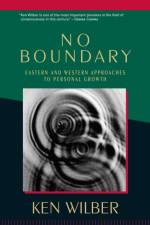
A simple yet comprehensive guide to the types of psychologies and therapies available from Eastern and Western sources. Each chapter includes a specific exercise designed to help the reader understand the nature and practice of the specific therapies. Wilber presents an easy-to-use map of human consciousness against which the various therapies are introduced and explained. This edition includes a new preface.
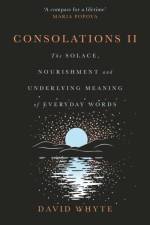
A revelatory read to reorientate your life, in Consolations II David Whyte explores the underlying meaning of 52 everyday words and invites reader to think more deeply about the choices that influence our lives
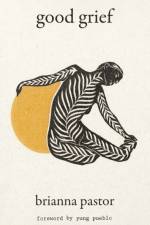
An expanded edition of the bestselling poetry collection Good Grief with over forty brand-new poems
Lonely Planet's Argentina is our most comprehensive guide that extensively covers all the country has to offer, with recommendations for both popular and lesser-known experiences. Marvel at Iguazu Falls, hike through Patagonia, and immerse yourself in the culture of Buenos Aires; all with your trusted travel companion.
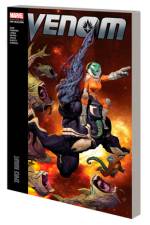
"Flash Thompson, Agent of the Cosmos! If Venom and his new symbiotic sidekick, Mania, survive a war to save Philly from underworld boss Lord Ogre, Flash will have to confront his past as a bully and make a momentous decision about his future! Taking on a new mission as a Space Knight, Venom swashbuckles his way across the universe, helping the helpless and punishing the violent -- until he's made to fight in an alien arena! Flash faces one surprising enemy when his symbiotic relationship with his Klyntar becomes one of hunter and prey - and then another as he returns to Earth just in time for Civil War II and a showdown with one of his oldest friends! Get ready for Venom vs. Spider-Man like you've never seen it before! "--
Harry Potter fans will find themselves immersed in the Wizarding World as they create dazzling scenes in this color-by-number book with more than 90 scenes to color!
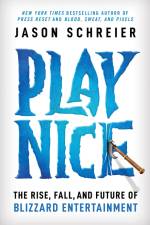
"For video game fans, the name Blizzard Entertainment was once synonymous with perfection. ... When Blizzard cancelled a buzzy project in 2013, it gave Bobby Kotick, the infamous CEO of corporate parent Activision, the excuse he needed to start cracking down on Blizzard's proud autonomy. Led by executives from McKinsey and Procter & Gamble, Activision began invading Blizzard from the inside. ... Based on firsthand interviews with more than 300 current and former employees, Play Nice chronicles the creativity, frustration, beauty, and betrayal across the epic 33-year saga of Blizzard Entertainment. From previously unrevealed stories of Blizzard's early culture, including fist fights and a hotel ban, to the full story of Titan, Blizzard's most high-profile canceled project, and the behind-the-scenes saga of how Blizzard executives battled their Activision overlords tooth and nail, this book explores the delight and despair of what it really means to 'bleed Blizzard blue'"--]cProvided by publisher.
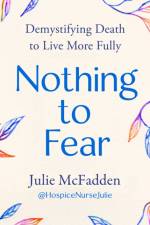
What if we didn't consider death the worst possible outcome? What if we discussed it honestly, embraced end-of-life care and prepared for the end of our lives with hope and acceptance?In this empathetic and knowledgeable guide, TikTok star Julie McFadden - known online as 'Hospice Nurse Julie' - shares the valuable lessons she's learned in her fifteen years as a palliative care nurse. Expertly weaving emotional insight with practical advice, you'll find out:which medical interventions help and which make things worsefacts and myths about hospice carethe most important conversations to have before you diethe many inexplicable and fascinating deathbed experiences people havehow to navigate the grieving journey, before and after deathSet to become a go-to resource for years to come, Nothing to Fear shows how a better death goes hand-in-hand with a better life.
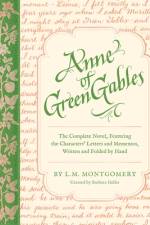
As you read, you will find pockets throughout containing replicas of 13 items from the story recreated with charming handwriting and loving attention to historical detail. Discover the notes passed between Anne and her bosom friend Diana in the Avonlea schoolhouse. From the masterful calligraphy to the painstaking attention to historical detail, and from the hand-folding of the letters, to the quality of the materials-each book is an object made by fans for fans. This edition offers an immersive experience of the story and makes for a truly lovely gift and keepsake
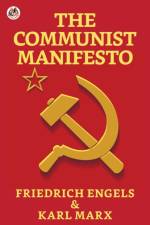
First published in 1848, "The Communist Manifesto" is a political pamphlet by German philosophers Karl Marx and Friedrich Engels, which initiated in one of the greatest movements of political change that the world has ever seen. At the heart of the economic writings of Marx and Engels is the materialist conception of history, or that productive capacity is the primary organizing factor of society. This conception gives rise to the fundamental inequality that exists between the socioeconomic classes. By controlling the means of production, the wealthy, or "bourgeoisie", gain a power over the working class, or "proletariat". The writings of Marx and Engels would brilliantly expose the causes of the vast division between socioeconomic classes that had existed throughout history. From its initial publication "The Communist Manifesto" was intended to help unite the working class in a common goal of forming a political party based on the philosophies of communism. To that aim, it was very successful and helped to unleash a wave of sweeping political change across the globe. This edition is printed on premium acid-free paper.
'One of the greatest, most radical public thinkers of our time. When the sun sets on the American empire, as it will, as it must, Noam Chomsky's work will survive' Arundhati RoyFrom one of the world's most prominent thinkers comes an urgent warning of the threat that US power poses to humanity's futureThe land of the free. The home of the brave. But what has America achieved in the aim of 'spreading democracy' - except wreak havoc across the globe and establish a reckless foreign policy that serves the interest of few and has endangered all too many?In this timely book, Noam Chomsky writing with Nathan J. Robinson, vividly traces America's pursuit of global domination, offering an incisive critique of the self-serving myths that dominant elites in the United States continue to push.Offering penetrating accounts of Washington's role in the Israeli-Palestinian conflict and the wars in Iraq and Afghanistan, they examine how interventions such as these have been justified with noble stories about humanitarian missions and benevolent intentions but are now driving us closer to wars with Russia and China.At once thorough and devastating, urgent and provocative, The Myth of American Idealism offers a highly readable entry to the conclusions Noam Chomsky has come to after a lifetime of thought and activism.'The west's most prominent critic of US imperialism . . . the closest thing in the English-speaking world to an intellectual superstar' Guardian
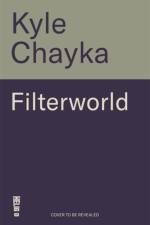
The early promise of a free Internet is long gone. Now, rather than allowing us a meaningful relationship with a range of content of our choosing, algorithms have not only removed genuine choice but de-texturized the world around us: smoothed its edges, planed down friction, and flattened differences. So coffee shops from Brooklyn to Beijing are inflected with a similar, 'Instagrammable' aesthetic. Airbnb rentals are decked out for their swipability factor as much as for their comfort. Spotify builds playlists that echo a category, looping back to music we've already heard before so as not to disrupt the flow. Netflix doesn't just make suggestions based on viewing histories but it actively changes the thumbnails to increase the chances we click on it.As Filterworld masterfully shows, culture itself has become algorithmic: a set of principles, a data rule, a line of code. And we interact with it in ever more passive ways. The result is not isolated echo chambers or a filter bubbles, but an all-encompassing Filterworld of the title. Kyle Chayka deliciously deconstructs this Filterworld: it shows us how technology has led us to this place and its effects on society and the individual, as well as how we might be able to remove the filter to gain liberation.
Abonner på vårt nyhetsbrev og få rabatter og inspirasjon til din neste leseopplevelse.
Ved å abonnere godtar du vår personvernerklæring.