
Norges billigste bøker
Om The Jewish Novel in the Ancient World

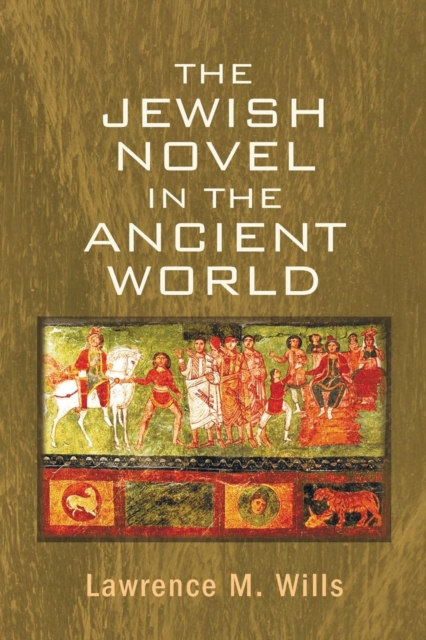
Lawrence M. Wills here traces the literary evolution of popular Jewish narratives written during the period 200 BCE-100 CE. In many ways, these narratives were similar to Greek and Roman novels of the same era, as well as to popular novels of indigenous peoples within the Roman Empire. Yet, as a group, they demonstrated a variety of novelistic innovations: the inclusion of adventurous episodes, passages of description and of dialogue, concern with psychological motivation, and the introduction of female characters. Wills focuses on five novels: Greek Esther, Greek Daniel, Judith, Tobit, and Joseph and Aseneth. Drawing on a wide range of theoretical works, he delineates the techniques and motifs of the Jewish novel, shows how the genre both initiated and distanced itself from nonfictional prose such as historical and philosophical writing, discusses its relation to Greco-Roman romance, and describes the social conditions governing its emergence and reception. Wills also places the novels in historical context, situating them between the Hebrew Bible, on the one hand, and subsequent developments in Jewish and Christian literature on the other. Wills sees the Jewish novel as a popular form of writing that provided amusement for an expanding audience of Jewish entrepreneurs, merchants, and bureaucrats. In an important sense, he maintains, it was a product of the ""novelistic impulse"": the impulse to transfer oral stories to a written medium to reach a more literate audience.

Vis mer
  • Språk:
  • Engelsk
  • ISBN:
  • 9781625648037
  • Bindende:
  • Paperback
  • Sider:
  • 296
  • Utgitt:
  • 11. mars 2015
  • Dimensjoner:
  • 150x226x18 mm.
  • Vekt:
  • 431 g.
  Gratis frakt
Leveringstid: 2-4 uker
Forventet levering: 27. mai 2026

Beskrivelse av The Jewish Novel in the Ancient World

Lawrence M. Wills here traces the literary evolution of popular Jewish narratives written during the period 200 BCE-100 CE. In many ways, these narratives were similar to Greek and Roman novels of the same era, as well as to popular novels of indigenous peoples within the Roman Empire. Yet, as a group, they demonstrated a variety of novelistic innovations: the inclusion of adventurous episodes, passages of description and of dialogue, concern with psychological motivation, and the introduction of female characters.
Wills focuses on five novels: Greek Esther, Greek Daniel, Judith, Tobit, and Joseph and Aseneth. Drawing on a wide range of theoretical works, he delineates the techniques and motifs of the Jewish novel, shows how the genre both initiated and distanced itself from nonfictional prose such as historical and philosophical writing, discusses its relation to Greco-Roman romance, and describes the social conditions governing its emergence and reception. Wills also places the novels in historical context, situating them between the Hebrew Bible, on the one hand, and subsequent developments in Jewish and Christian literature on the other.
Wills sees the Jewish novel as a popular form of writing that provided amusement for an expanding audience of Jewish entrepreneurs, merchants, and bureaucrats. In an important sense, he maintains, it was a product of the ""novelistic impulse"": the impulse to transfer oral stories to a written medium to reach a more literate audience.

Brukervurderinger av The Jewish Novel in the Ancient World


Finn lignende bøker
Boken The Jewish Novel in the Ancient World finnes i følgende kategorier:

Gjør som tusenvis av andre bokelskere

Abonner på vårt nyhetsbrev og få rabatter og inspirasjon til din neste leseopplevelse.