Norges billigste bøker

Social Simulation for a Crisis

Om Social Simulation for a Crisis

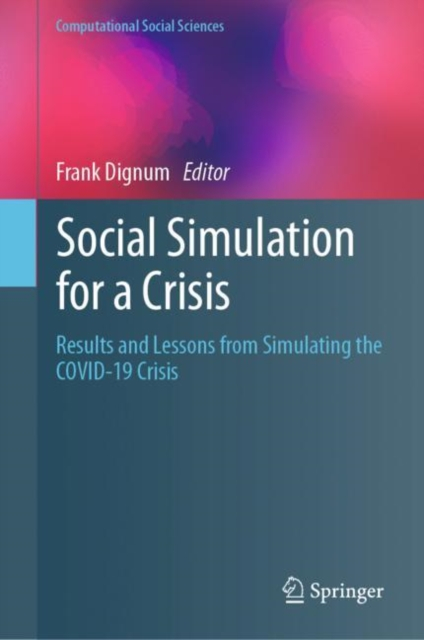
Simulating for a crisis is far more than creating a simulation of a crisis situation. In order for a simulation to be useful during a crisis, it should be created within the space of a few days to allow decision makers to use it as quickly as possible. Furthermore, during a crisis the aim is not to optimize just one factor, but to balance various, interdependent aspects of life. In the COVID-19 crisis, decisions had to be made concerning e.g. whether to close schools and restaurants, and the (economic) consequences of a 3 or 4-week lock-down had to be considered. As such, rather than one simulation focusing on a very limited aspect, a framework allowing the simulation of several different scenarios focusing on different aspects of the crisis was required. Moreover, the results of the simulations needed to be easily understandable and explainable: if a simulation indicates that closing schools has no effect, this can only be used if the decision makers can explain why this is the case. This book describes how a simulation framework was created for the COVID-19 crisis, and demonstrates how it was used to simulate a wide range of scenarios that were relevant for decision makers at the time. It also discusses the usefulness of the approach, and explains the decisions that had to be made along the way as well as the trade-offs. Lastly, the book examines the lessons learned and the directions for the further development of social simulation frameworks to make them better suited to crisis situations, and to foster a more resilient society.

Vis mer
  • Språk:
  • Engelsk
  • ISBN:
  • 9783030763961
  • Bindende:
  • Hardback
  • Sider:
  • 453
  • Utgitt:
  • 9. juni 2021
  • Utgave:
  • 12021
  • Dimensjoner:
  • 155x235x0 mm.
  • Vekt:
  • 863 g.
  Gratis frakt
Leveringstid: 2-4 uker
Forventet levering: 13. april 2026

Beskrivelse av Social Simulation for a Crisis

Simulating for a crisis is far more than creating a simulation of a crisis situation. In order for a simulation to be useful during a crisis, it should be created within the space of a few days to allow decision makers to use it as quickly as possible. Furthermore, during a crisis the aim is not to optimize just one factor, but to balance various, interdependent aspects of life. In the COVID-19 crisis, decisions had to be made concerning e.g. whether to close schools and restaurants, and the (economic) consequences of a 3 or 4-week lock-down had to be considered. As such, rather than one simulation focusing on a very limited aspect, a framework allowing the simulation of several different scenarios focusing on different aspects of the crisis was required. Moreover, the results of the simulations needed to be easily understandable and explainable: if a simulation indicates that closing schools has no effect, this can only be used if the decision makers can explain why this is the case. This book describes how a simulation framework was created for the COVID-19 crisis, and demonstrates how it was used to simulate a wide range of scenarios that were relevant for decision makers at the time. It also discusses the usefulness of the approach, and explains the decisions that had to be made along the way as well as the trade-offs. Lastly, the book examines the lessons learned and the directions for the further development of social simulation frameworks to make them better suited to crisis situations, and to foster a more resilient society.

Brukervurderinger av Social Simulation for a Crisis


Finn lignende bøker
Boken Social Simulation for a Crisis finnes i følgende kategorier:

Gjør som tusenvis av andre bokelskere

Abonner på vårt nyhetsbrev og få rabatter og inspirasjon til din neste leseopplevelse.
