
Norges billigste bøker

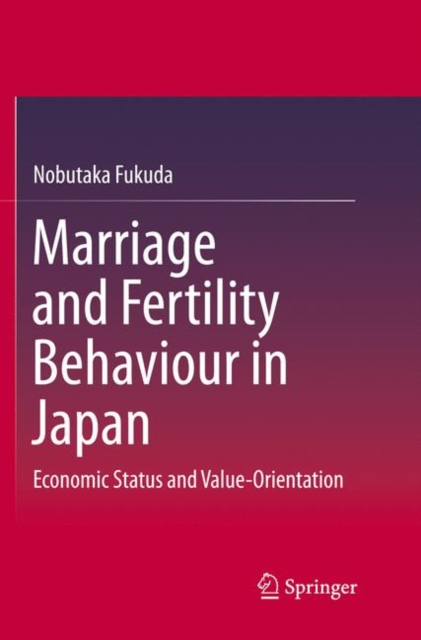
Marriage and Fertility Behaviour in Japan

- Economic Status and Value-Orientation

Om Marriage and Fertility Behaviour in Japan

This monograph examines the influence of ideational and socio-economic factors on Japanese marriage and fertility behaviour. It also investigates the historical change in attitudes toward partnership and family in Japan, which, if current trends continue, can lead to population shrinkage and an asymmetrical age structure. The author first details the differences between ideational and economic approaches. He examines these two behavioural models from a viewpoint of rational choice theory, which he then follows with a discussion on the influence of institutional contexts on matrimony and childbirth. Next, the book considers salient features of Japanese marriage behaviour, including the relation between these patterns and changes in society and the influence of marriage on attitudes toward partnership and family relations. Coverage then goes on to explore the influence of ideational factors on fertility and analyse the impact of childbirth on couples' attitudes. The author also investigates attitudinal changes between generations in Japan. He provides a theoretical review on the relation between socio-economic development and value-orientation as well as looks at the difference in attitudes from a viewpoint of cohorts and periods. Overall, the book presents an authoritative, theoretical and empirical analysis using data from panel and repeated cross-sectional surveys. Throughout, the author clearly identifies the sources of his data as well as the methods used in his analysis.

Vis mer
  • Språk:
  • Engelsk
  • ISBN:
  • 9789811091254
  • Bindende:
  • Paperback
  • Sider:
  • 183
  • Utgitt:
  • 31. mars 2018
  • Utgave:
  • 12016
  • Dimensjoner:
  • 155x235x0 mm.
  • Vekt:
  • 454 g.
  Gratis frakt
Leveringstid: 2-4 uker
Forventet levering: 2. april 2026

Beskrivelse av Marriage and Fertility Behaviour in Japan

This monograph examines the influence of ideational and socio-economic factors on Japanese marriage and fertility behaviour. It also investigates the historical change in attitudes toward partnership and family in Japan, which, if current trends continue, can lead to population shrinkage and an asymmetrical age structure.
The author first details the differences between ideational and economic approaches. He examines these two behavioural models from a viewpoint of rational choice theory, which he then follows with a discussion on the influence of institutional contexts on matrimony and childbirth. Next, the book considers salient features of Japanese marriage behaviour, including the relation between these patterns and changes in society and the influence of marriage on attitudes toward partnership and family relations. Coverage then goes on to explore the influence of ideational factors on fertility and analyse the impact of childbirth on couples' attitudes. The author also investigates attitudinal changes between generations in Japan. He provides a theoretical review on the relation between socio-economic development and value-orientation as well as looks at the difference in attitudes from a viewpoint of cohorts and periods. Overall, the book presents an authoritative, theoretical and empirical analysis using data from panel and repeated cross-sectional surveys. Throughout, the author clearly identifies the sources of his data as well as the methods used in his analysis.

Brukervurderinger av Marriage and Fertility Behaviour in Japan


Finn lignende bøker
Boken Marriage and Fertility Behaviour in Japan finnes i følgende kategorier:

Gjør som tusenvis av andre bokelskere

Abonner på vårt nyhetsbrev og få rabatter og inspirasjon til din neste leseopplevelse.