Norges billigste bøker

Hobbes and Galileo: Method, Matter and the Science of Motion

Om Hobbes and Galileo: Method, Matter and the Science of Motion

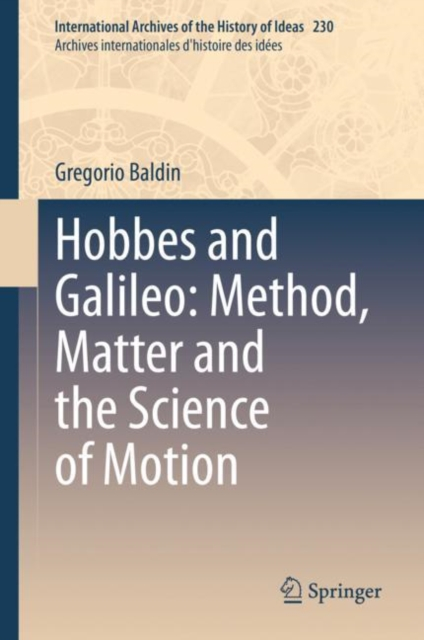
This book, translated from Italian, discusses the influence of Galileo on Hobbes¿ natural philosophy. In his De motu, loco et tempore or Anti-White (~ 1643), Thomas Hobbes describes Galileo as ¿the greatest philosopher of all times¿, and in De Corpore (1655), the Italian scientist is presented as the one who ¿opened the door of all physics, that is, the nature of motion.¿ The book gives a detailed analysis of Galileös legacy in Hobbes¿s philosophy, exploring four main issues: a comparison between Hobbes¿ and Mersenne¿s natural philosophies, the Galilean Principles of Hobbes¿ philosophical system, a comparison between Galileös momentum and Hobbes¿s conatus , and Hobbes¿ and Galileös theories of matter. The book also analyses the role played by Marin Mersenne, in spreading Galileös ideas in France, and as a discussant of Hobbes. It highlights the many aspects of Hobbes¿ relationship with Galileo: the methodological and epistemological elements, but also the conceptual and the lexical analogies in the field of physics, to arrive, finally, at a close comparison on the subject of the matter. From this analysis emerges a shared mechanical conception of the universe open and infinite, that replaces the Aristotelian cosmos, and which is populated by two elements only: matter and motion.

Vis mer
  • Språk:
  • Engelsk
  • ISBN:
  • 9783030414139
  • Bindende:
  • Hardback
  • Sider:
  • 216
  • Utgitt:
  • 16. april 2020
  • Utgave:
  • 12020
  • Dimensjoner:
  • 155x235x0 mm.
  • Vekt:
  • 530 g.
  Gratis frakt
Leveringstid: 2-4 uker
Forventet levering: 13. april 2026

Beskrivelse av Hobbes and Galileo: Method, Matter and the Science of Motion

This book, translated from Italian, discusses the influence of Galileo on Hobbes¿ natural philosophy. In his De motu, loco et tempore or Anti-White (~ 1643), Thomas Hobbes describes Galileo as ¿the greatest philosopher of all times¿, and in De Corpore (1655), the Italian scientist is presented as the one who ¿opened the door of all physics, that is, the nature of motion.¿ The book gives a detailed analysis of Galileös legacy in Hobbes¿s philosophy, exploring four main issues: a comparison between Hobbes¿ and Mersenne¿s natural philosophies, the Galilean Principles of Hobbes¿ philosophical system, a comparison between Galileös momentum and Hobbes¿s conatus , and Hobbes¿ and Galileös theories of matter. The book also analyses the role played by Marin Mersenne, in spreading Galileös ideas in France, and as a discussant of Hobbes. It highlights the many aspects of Hobbes¿ relationship with Galileo: the methodological and epistemological elements, but also the conceptual and the lexical analogies in the field of physics, to arrive, finally, at a close comparison on the subject of the matter. From this analysis emerges a shared mechanical conception of the universe open and infinite, that replaces the Aristotelian cosmos, and which is populated by two elements only: matter and motion.

Brukervurderinger av Hobbes and Galileo: Method, Matter and the Science of Motion


Finn lignende bøker
Boken Hobbes and Galileo: Method, Matter and the Science of Motion finnes i følgende kategorier:

Gjør som tusenvis av andre bokelskere

Abonner på vårt nyhetsbrev og få rabatter og inspirasjon til din neste leseopplevelse.
