Norges billigste bøker

Early Quakers and Islam

Om Early Quakers and Islam

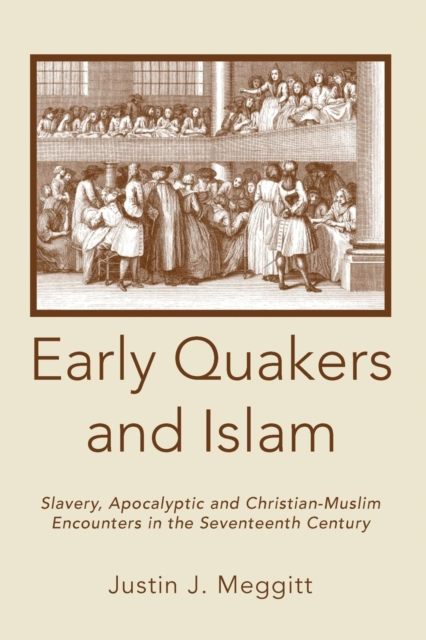
Early Quaker encounters with Muslims in the seventeenth century helped generate some of the most distinctive and, at times, sympathetic Christian responses to Islam found in the early modern era. Texts such as George Fox''s To the Great Turk (1680), in which he engaged in extensive, constructive exegesis of the Qur''an, demonstrate a conception of Islam and Muslims that disrupts many prevailing assumptions of the period. Some responses are all the more striking as they came about as a reaction to the enslavement of a number of Quakers by Muslims in North Africa, where, paradoxically, they often experienced religious freedom denied them at home. This study seeks to understand how and why this heterodox Christian sect created such unusual interpretations of Islam by analyzing the experience of these slaves and scrutinizing the distinctive, oppositional culture of the movement to which they belonged. The work has implications that go beyond the specific subject of study and raises questions about the role that such things as apocalypticism and sectarianism can play in interreligious encounters, and the analytical limitations of Orientalism in characterizing Christian representations of Islam in the early modern period.Justin Meggitt is University Senior Lecturer in the Study of Religion at the Institute of Continuing Education, University of Cambridge, and a Fellow of Wolfson College. He is also Visiting Researcher at the Department of Ethnology, History of Religions and Gender Studies, University of Stockholm.

Vis mer
  • Språk:
  • Engelsk
  • ISBN:
  • 9781498291941
  • Bindende:
  • Paperback
  • Sider:
  • 108
  • Utgitt:
  • 16. februar 2016
  • Dimensjoner:
  • 152x226x18 mm.
  • Vekt:
  • 399 g.
Leveringstid: 2-4 uker
Forventet levering: 25. mai 2026

Beskrivelse av Early Quakers and Islam

Early Quaker encounters with Muslims in the seventeenth century helped generate some of the most distinctive and, at times, sympathetic Christian responses to Islam found in the early modern era. Texts such as George Fox''s To the Great Turk (1680), in which he engaged in extensive, constructive exegesis of the Qur''an, demonstrate a conception of Islam and Muslims that disrupts many prevailing assumptions of the period. Some responses are all the more striking as they came about as a reaction to the enslavement of a number of Quakers by Muslims in North Africa, where, paradoxically, they often experienced religious freedom denied them at home. This study seeks to understand how and why this heterodox Christian sect created such unusual interpretations of Islam by analyzing the experience of these slaves and scrutinizing the distinctive, oppositional culture of the movement to which they belonged. The work has implications that go beyond the specific subject of study and raises questions about the role that such things as apocalypticism and sectarianism can play in interreligious encounters, and the analytical limitations of Orientalism in characterizing Christian representations of Islam in the early modern period.Justin Meggitt is University Senior Lecturer in the Study of Religion at the Institute of Continuing Education, University of Cambridge, and a Fellow of Wolfson College. He is also Visiting Researcher at the Department of Ethnology, History of Religions and Gender Studies, University of Stockholm.

Brukervurderinger av Early Quakers and Islam


Finn lignende bøker
Boken Early Quakers and Islam finnes i følgende kategorier:

Gjør som tusenvis av andre bokelskere

Abonner på vårt nyhetsbrev og få rabatter og inspirasjon til din neste leseopplevelse.
