








Gjør som tusenvis av andre bokelskere
Abonner på vårt nyhetsbrev og få rabatter og inspirasjon til din neste leseopplevelse.
Ved å abonnere godtar du vår personvernerklæring.Du kan når som helst melde deg av våre nyhetsbrev.

A visually stimulating journey for anyone interested in learning more about the world of the Bible.The Zondervan Illustrated Bible Dictionary offers a wealth of insight into the historical, chronological, archaeological, geographical, social, theological, and biographical aspects of the Bible. Through the articles, sidebars, charts, maps, and full-color images included in this volume, the text of the Old and New Testaments will come alive for you as never before. As a condensation of the Zondervan Pictorial Encyclopedia of the Bible, the information contained within this reference work is solid and biblically sound. The material is based completely on the NIV and cross-referenced to the King James Version.Features include:Over 7,200 entries with up-to-date scholarship, archaeological findings, and more75 full-color maps created with new mapping technologiesOver 500 full-color photographs, charts, and illustrationsUnderstanding the Bible can be difficult. The Zondervan Illustrated Bible Dictionary will help you make sense of the Bible's context, people, places, and objects so you can better understand and apply the scripture. Ideal for pastors, Sunday school teachers, students, and general Bible readers.
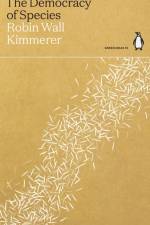
In twenty short books, Penguin brings you the classics of the environmental movement.In The Democracy of Species Robin Wall Kimmerer guides us towards a more reciprocal, grateful and joyful relationship with our animate earth, from the wild leeks in the field to the deer in the woods.Over the past 75 years, a new canon has emerged. As life on Earth has become irrevocably altered by humans, visionary thinkers around the world have raised their voices to defend the planet, and affirm our place at the heart of its restoration. Their words have endured through the decades, becoming the classics of a movement. Together, these books show the richness of environmental thought, and point the way to a fairer, saner, greener world.
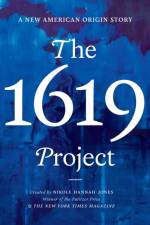
#1 NEW YORK TIMES BESTSELLER, NAMED ONE OF THE BEST BOOKS OF THE YEAR BY The Washington Post, NPR, Marie ClaireA dramatic expansion of a groundbreaking work of journalism and a profoundly revealing vision of the American past and present.In late August 1619, a ship arrived in the British colony of Virginia bearing a cargo of twenty to thirty enslaved people from Africa. Their arrival led to the barbaric and unprecedented system of American chattel slavery that would last for the next 250 years. This is sometimes referred to as the country's original sin, but it is more than that: It is the source of so much that still defines the United States.The New York Times Magazine's award-winning "e;1619 Project"e; issue reframed our understanding of American history by placing slavery and its continuing legacy at the center of our national narrative. This new book substantially expands on that work, weaving together eighteen essays that explore the legacy of slavery in present-day America with thirty-six poems and works of fiction that illuminate key moments of oppression, struggle, and resistance. The essays show how the inheritance of 1619 reaches into every part of contemporary American society, from politics, music, diet, traffic, and citizenship to capitalism, religion, and our democracy itself.This is a book that speaks directly to our current moment, contextualizing the systems of race and caste within which we operate today. It reveals long-glossed-over truths around our nation's founding and construction-and the way that the legacy of slavery did not end with emancipation, but continues to shape contemporary American life.Featuring contributions from: Leslie Alexander Michelle Alexander Carol Anderson Joshua Bennett Reginald Dwayne Betts Jamelle Bouie Anthea Butler Matthew Desmond Rita Dove Camille Dungy Cornelius Eady Eve L. Ewing Nikky Finney Vievee Francis Yaa Gyasi Forrest Hamer Terrance Hayes Kimberly Annece Henderson Jeneen Interlandi Honor e Fanonne Jeffers Barry Jenkins Tyehimba Jess Martha S. Jones Robert Jones, Jr. A. Van Jordan Ibram X. Kendi Eddie Kendricks Yusef Komunyakaa Kevin Kruse Kiese Laymon Trymaine Lee Jasmine Mans Terry McMillan Tiya Miles Wesley Morris Khalil Gibran Muhammad Lynn Nottage ZZ Packer Gregory Pardlo Darryl Pinckney Claudia Rankine Jason Reynolds Dorothy Roberts Sonia Sanchez Tim Seibles Evie Shockley Clint Smith Danez Smith Patricia Smith Tracy K. Smith Bryan Stevenson Nafissa Thompson-Spires Natasha Trethewey Linda Villarosa Jesmyn Ward
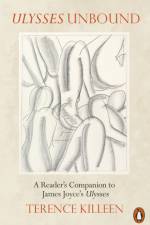
Ulysses is one of the foundational texts of modern literature, yet has a reputation for complexity and controversy. In Ulysses Unbound, Joyce expert Terence Killeen untangles this seemingly knotty classic to reveal the wonders beneath, in a clear and comprehensive guide which will provide new and vital insights for everyone from students to specialists.In this new edition, published to celebrate the centenary of Ulysses' first publication in 1922, Killeen seamlessly combines close literary analysis with a broad account of the novel's fascinating history, from its writing and publication to its long contemporary afterlife. We get under the skin of the text to discover the joys of Joyce's remarkable range of themes, styles and voices, as Killeen reanimates the real people who inspired many of the characters. Ulysses Unbound is an indispensable, illuminating and entertaining companion to one of the twentieth century's great works of art.With a foreword by Colm T ib n
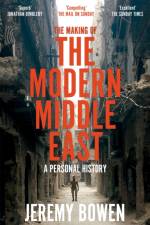
A vivid and authoritative account of the making of the modern Middle East, from the BBC's long-serving correspondent in the region.
&b>A breathtaking fantasy romance set in an Ottoman-inspired world of courtly conspiracies and chivalric fealty, as Prince Kadou and his bodyguard Evermer investigate a counterfeiting operation that could topple their empire.&/b>
As Dali's muse, Hitchcock's nightmare, and humble ingredient, the eternal egg weaves a fascinating tale back to antiquity. The first volume in TASCHEN's series with The Gourmand, sumptuously illustrated with exclusive photography and historic artworks, celebrates the link between food and art through original recipes and stories.
A Christian pathway into mindfulness, using the gospels, poetry and storytelling
The new book from Pete Greig - his first since 2007 - which continues the story of 24-7, the global prayer movement he founded, as begun in Red Moon Rising.
To Save Everything, Click Here, the new book by the acclaimed author of The Net Delusion, Evgeny Morozov, is a penetrating look at the shape of society in the digital age, of the direction in which the 21st Century may take us, and of the alternate paths we can still chooseOur society is at a crossroads. Smart technology is transforming our world, making many aspects of our lives more convenient, efficient and - in some cases - fun. Better and cheaper sensors can now be embedded in almost everything, and technologies can log the products we buy and the way we use them. But, argues Evgeny Morozov, technology is having a more profound effect on us: it is changing the way we understand human society.In the very near future, technological systems will allow us to make large-scale and sophisticated interventions into many more areas of public life. These are the discourses by which we have always defined our civilisation: politics, culture, public debate, morality, humanism. But how will these discourses be affected when we delegate much of the responsibility for them to technology? The temptation of the digital age is to fix everything - from crime to corruption to pollution to obesity - by digitally quantifying, tracking, or gamifiying behaviour. Yet when we change the motivations for our moral, ethical and civic behaviour, do we also change the very nature of that behaviour? Technology, Morozov proposes, can be a force for improvement - but only if we abandon the idea that it is necessarily revolutionary and instead genuinely interrogate why and how we are using it.From urging us to drop outdated ideas of the internet to showing how to design more humane and democratic technological solutions, To Save Everything, Click Here is about why we should always question the way we use technology.'A devastating expos of cyber-utopianism by the world's most far-seeing Internet guru' John Gray, author of Straw Dogs'Evgeny Morozov is the most challenging - and best-informed - critic of the Techno-Utopianism surrounding the Internet. If you've ever had the niggling feeling, as you spoon down your google, that there's no such thing as a free lunch, Morozov's book will tell you how you might end up paying for it' Brian Eno'This hard-hitting book argues people have become enslaved to the machines they use to communicate. It is incisive and beautifully written; whether you agree with Morozov or not, he will make you think hard' Richard Sennett, author of TogetherPraise for The Net Delusion:'Gleefully iconoclastic . . . not just unfailingly readable: it is also a provocative, enlightening and welcome riposte to the cyberutopian worldview' Economist'A passionate and heavily researched account of the case against the cyberutopians . . . only by becoming "e;cyberrealists"e; can we hope to make humane and effective policy' Bryan Appleyard, New Statesman'Piercing . . . convincing . . . timely' Financial TimesEvgeny Morozov is the author of The Net Delusion: The Dark Side of Internet Freedom (which was the winner of the 2012 Goldsmith Book Prize) and a contributing editor for The New Republic. Previously, he was a visiting scholar at Stanford University, a Scwhartz fellow at the New America Foundation, a Yahoo fellow at the Institute for the Study of Diplomacy at Georgetown, and a fellow at the Open Society Foundations. His monthly column on technology comes out in Slate, Corriere della Sera, El Pais, Frankfurter Allgemeine Zeitung and several other newspapers. He's also written for the New York Times, The Economist, the Wall Street Journal, the Financial Times and the London Review of Books.
A new field of counter-investigation across journalism, human rights, art and law
A radical new history of a dangerous idea
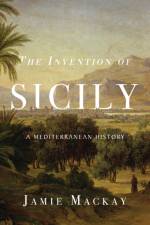
A rich and fascinating cultural history of the Mediterranean's enigmatic heart
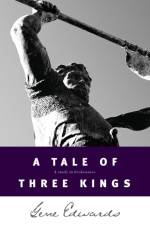
This best-selling tale is based on the biblical figures of David, Saul, and Absalom. For the many Christians who have experienced pain, loss, and heartache at the hands of other believers, this compelling story offers comfort, healing, and hope. Christian leaders and directors of religious movements throughout the world have recommended this simple, powerful, and beautiful story to their members and staff. You will want to join the thousands who have been profoundly touched by this incomparable story.
A war between China and the US would be catastrophic, deadly, and destructive. Unfortunately, it is no longer unthinkable.
Packed with more than 200 full-colour artworks and photographs of American, British, Canadian, Australian, French, Polish and other Western Allied nations tanks with exhaustive specifications, World War II Tanks: Western Allies 1939-45 is a key reference guide for military modellers and World War II enthusiasts.
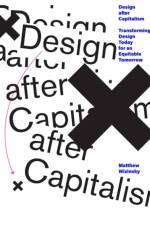
How design can transcend the logics, structures, and subjectivities of capitalism: a framework, theoretical grounding, and practical principles.The designed things, experiences, and symbols that we use to perceive, understand, and perform our everyday lives are much more than just props. They directly shape how we live. In Design after Capitalism, Matthew Wizinsky argues that the world of industrial capitalism that gave birth to modern design has been dramatically transformed. Design today needs to reorient itself toward deliberate transitions of everyday politics, social relations, and economies. Looking at design through the lens of political economy, Wizinsky calls for the field to transcend the logics, structures, and subjectivities of capitalism—to combine design entrepreneurship with social empowerment in order to facilitate new ways of producing those things, symbols, and experiences that make up everyday life. After analyzing the parallel histories of capitalism and design, Wizinsky offers some historical examples of anticapitalist, noncapitalist, and postcapitalist models of design practice. These range from the British Arts and Crafts movement of the nineteenth century to contemporary practices of growing furniture or biotextiles and automated forms of production. Drawing on insights from sociology, philosophy, economics, political science, history, environmental and sustainability studies, and critical theory—fields not usually seen as central to design—he lays out core principles for postcapitalist design; offers strategies for applying these principles to the three layers of project, practice, and discipline; and provides a set of practical guidelines for designers to use as a starting point. The work of postcapitalist design can start today, Wizinsky says—with the next project.
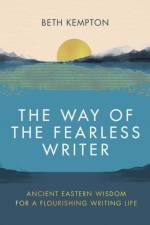
THE ARTIST'S WAY for writing, with a Zen twist and a dash of BIG MAGIC.
Abonner på vårt nyhetsbrev og få rabatter og inspirasjon til din neste leseopplevelse.
Ved å abonnere godtar du vår personvernerklæring.