





Gjør som tusenvis av andre bokelskere
Abonner på vårt nyhetsbrev og få rabatter og inspirasjon til din neste leseopplevelse.
Ved å abonnere godtar du vår personvernerklæring.Du kan når som helst melde deg av våre nyhetsbrev.

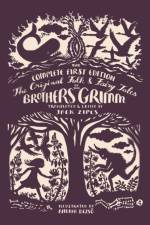
The original vision of Grimms' tales in English for the first timeWhen Jacob and Wilhelm Grimm published their Children's and Household Tales in 1812, followed by a second volume in 1815, they had no idea that such stories as "e;Rapunzel,"e; "e;Hansel and Gretel,"e; and "e;Cinderella"e; would become the most celebrated in the world. Yet few people today are familiar with the majority of tales from the two early volumes, since in the next four decades the Grimms would publish six other editions, each extensively revised in content and style. For the very first time, The Original Folk and Fairy Tales of the Brothers Grimm makes available in English all 156 stories from the 1812 and 1815 editions. These narrative gems, newly translated and brought together in one beautiful book, are accompanied by sumptuous new illustrations from award-winning artist Andrea Dezso.From "e;The Frog King"e; to "e;The Golden Key,"e; wondrous worlds unfold-heroes and heroines are rewarded, weaker animals triumph over the strong, and simple bumpkins prove themselves not so simple after all. Esteemed fairy tale scholar Jack Zipes offers accessible translations that retain the spare description and engaging storytelling style of the originals. Indeed, this is what makes the tales from the 1812 and 1815 editions unique-they reflect diverse voices, rooted in oral traditions, that are absent from the Grimms' later, more embellished collections of tales. Zipes's introduction gives important historical context, and the book includes the Grimms' prefaces and notes.A delight to read, The Original Folk and Fairy Tales of the Brothers Grimm presents these peerless stories to a whole new generation of readers.
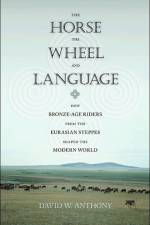
Roughly half the world's population speaks languages derived from a shared linguistic source known as Proto-Indo-European. But who were the early speakers of this ancient mother tongue, and how did they manage to spread it around the globe? Until now their identity has remained a tantalizing mystery to linguists, archaeologists, and even Nazis seeking the roots of the Aryan race. The Horse, the Wheel, and Language lifts the veil that has long shrouded these original Indo-European speakers, and reveals how their domestication of horses and use of the wheel spread language and transformed civilization. Linking prehistoric archaeological remains with the development of language, David Anthony identifies the prehistoric peoples of central Eurasia's steppe grasslands as the original speakers of Proto-Indo-European, and shows how their innovative use of the ox wagon, horseback riding, and the warrior's chariot turned the Eurasian steppes into a thriving transcontinental corridor of communication, commerce, and cultural exchange. He explains how they spread their traditions and gave rise to important advances in copper mining, warfare, and patron-client political institutions, thereby ushering in an era of vibrant social change. Anthony also describes his fascinating discovery of how the wear from bits on ancient horse teeth reveals the origins of horseback riding. The Horse, the Wheel, and Language solves a puzzle that has vexed scholars for two centuries--the source of the Indo-European languages and English--and recovers a magnificent and influential civilization from the past.
Fitztroy Maclean was one of the real-life inspirations for super-spy James Bond. After adventures in Soviet Russia before the war, Maclean fought with the SAS in North Africa in 1942. There he specialised in hair-raising commando raids behind enemy lines, including the daring and outrageous kidnapping of the German Consul in Axis-controlled Iraq.Maclean's extraordinary adventures in the Western Desert and later fighting alongside Tito's partisans in Yugoslavia are blistering reading and show what it took to be a British hero who broke the mould . . .
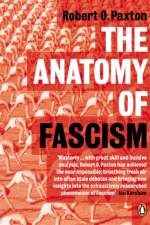
Fascism was the major political invention of the twentieth century and the source of much of its pain. How can we try to comprehend its allure and its horror? Is it a philosophy, a movement, an aesthetic experience? What makes states and nations become fascist?Acclaimed historian Robert O. Paxton shows that in order to understand fascism we must look at it in action - at what it did, as much as what it said it was about. He explores its falsehoods and common threads; the social and political base that allowed it to prosper; its leaders and internal struggles; how it manifested itself differently in each country - France, Britain, the low countries, Eastern Europe, even Latin America as well as Italy and Germany; how fascists viewed the Holocaust; and, finally, whether fascism is still possible in today's world.Offering a bold new interpretation of the fascist phenomenon, this groundbreaking book will overturn our understanding of twentieth-century history.
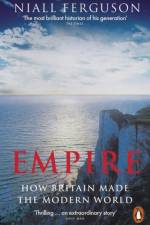
Niall Ferguson's acclaimed bestseller on the highs and lows of Britain's empireOnce vast swathes of the globe were coloured imperial red and Britannia ruled not just the waves, but the prairies of America, the plains of Asia, the jungles of Africa and the deserts of Arabia. Just how did a small, rainy island in the North Atlantic achieve all this? And why did the empire on which the sun literally never set finally decline and fall? Niall Ferguson's acclaimed Empire brilliantly unfolds the imperial story in all its splendours and its miseries, showing how a gang of buccaneers and gold-diggers planted the seed of the biggest empire in all history - and set the world on the road to modernity.'The most brilliant British historian of his generation ... Ferguson examines the roles of "e;pirates, planters, missionaries, mandarins, bankers and bankrupts"e; in the creation of history's largest empire ... he writes with splendid panache ... and a seemingly effortless, debonair wit' Andrew Roberts 'Dazzling ... wonderfully readable' New York Review of Books'A remarkably readable pr cis of the whole British imperial story - triumphs, deceits, decencies, kindnesses, cruelties and all' Jan Morris 'Empire is a pleasure to read and brims with insights and intelligence' Sunday Times
*WINNER OF THE 2017 PULITZER PRIZE FOR NON-FICTION* 'Beautifully written, thought-provoking, and unforgettable ... If you want a good understanding of how the issues that cause poverty are intertwined, you should read this book' Bill Gates, Best Books of 2017'Essential. A compelling and damning exploration of the abuse of one of our basic human rights: shelter.' Owen JonesArleen spends nearly all her money on rent but is kicked out with her kids in Milwaukee's coldest winter for years. Doreen's home is so filthy her family call it 'the rat hole'. Lamar, a wheelchair-bound ex-soldier, tries to work his way out of debt for his boys. Scott, a nurse turned addict, lives in a gutted-out trailer. This is their world. And this is the twenty-first century: where fewer and fewer people can afford a simple roof over their head.From abandoned slums to shelters, eviction courts to ghettoes, Matthew Desmond spent years living with and recording the stories of those struggling to survive - yet who won't give up. A work of love, care and humanity, Evicted reminds us why, without a home, nothing else is possible. It is one of the most necessary books of our time.'This is an extraordinary and crucial piece of work. Read it. Please, read it' - Adrian Nicole LeBlanc, author of Random Family 'Sensitive, achingly beautiful' - Robert D. Putnam, author of Our Kids
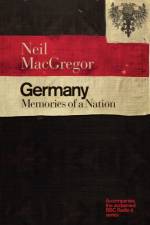
From Neil MacGregor, the author of A History of the World in 100 Objects, this is a view of Germany like no otherToday, as the dominant economic force in Europe, Germany looms as large as ever over world affairs. But how much do we really understand about it, and how do its people understand themselves?In this enthralling new book, Neil MacGregor guides us through the complex history, culture and identity of this most mercurial of countries by telling the stories behind 30 objects in his uniquely magical way. Beginning with the fifteenth-century invention of the Gutenberg press, MacGregor ventures beyond the usual sticking point of the Second World War to get to the heart of a nation that has given us Luther and Hitler, the Beetle and Brecht - and remade our world again and again. This is a view of Germany like no other.Neil MacGregor has been Director of the British Museum since August 2002. He was Director of the National Gallery in London from 1987 to 2002. His celebrated books include A History of the World in 100 Objects, now translated into more than a dozen languages and one of the top-selling titles ever published by Penguin Press, and Shakespeare's Restless World.
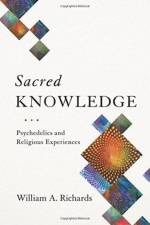
Sacred Knowledge is the first well-documented, sophisticated account of the effect of psychedelics on biological processes, human consciousness, and revelatory religious experiences. Based on nearly three decades of legal research with volunteers, William A. Richards argues that, if used responsibly and legally, psychedelics have the potential to assuage suffering and constructively affect the quality of human life.Richards's analysis contributes to social and political debates over the responsible integration of psychedelic substances into modern society. His book serves as an invaluable resource for readers who, whether spontaneously or with the facilitation of psychedelics, have encountered meaningful, inspiring, or even disturbing states of consciousness and seek clarity about their experiences. Testing the limits of language and conceptual frameworks, Richards makes the most of experiential phenomena that stretch our understanding of reality, advancing new frontiers in the study of belief, spiritual awakening, psychiatric treatment, and social well-being. His findings enrich humanities and scientific scholarship, expanding work in philosophy, anthropology, theology, and religious studies and bringing depth to research in mental health, psychotherapy, and psychopharmacology.
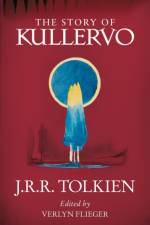
The world first publication of a previously unknown work of fantasy by J.R.R. Tolkien, which tells the powerful story of a doomed young man who is sold into slavery and who swears revenge on the magician who killed his father.Kullervo son of Kalervo is perhaps the darkest and most tragic of all J.R.R. Tolkien's characters. 'Hapless Kullervo', as Tolkien called him, is a luckless orphan boy with supernatural powers and a tragic destiny.Brought up in the homestead of the dark magician Untamo, who killed his father, kidnapped his mother, and who tries three times to kill him when still a boy, Kullervo is alone save for the love of his twin sister, Wanona, and guarded by the magical powers of the black dog, Musti. When Kullervo is sold into slavery he swears revenge on the magician, but he will learn that even at the point of vengeance there is no escape from the cruellest of fates.Tolkien wrote that The Story of Kullervo was 'the germ of my attempt to write legends of my own', and was 'a major matter in the legends of the First Age'; his Kullervo was the ancestor of Turin Turambar, tragic incestuous hero of The Silmarillion. In addition to being a powerful story in its own right, The Story of Kullervo - published here for the first time with the author's drafts, notes and lecture-essays on its source-work, The Kalevala, is a foundation stone in the structure of Tolkien's invented world.
For courses in International Economics, International Finance, and International TradeA balanced approach to theory and policy applicationsInternational Economics: Theory and Policy provides engaging, balanced coverage of the key concepts and practical applications of the two main topic areas of the discipline. For both international trade and international finance, an intuitive introduction to theory is followed by detailed coverage of policy applications. With this new tenth edition, the author team of Nobel Prize-winning economist Paul Krugman, renowned researcher Maurice Obstfeld, and Marc Melitz of Harvard University continues to set the standard for International Economics courses.This program provides a better teaching and learning experiencefor you and your students. It will help you to: Personalize learning with MyEconLab: This online homework, tutorial, and assessment program fosters learning and provides tools that help instructors to keep students on track. Reveal theory and applications of trade and finance via a unified structure: Balanced coverage of theory and applications aids student retention and highlights the relevance of course material. Give students learning tools to master course material: Numerous in-text learning resources engage students and encourage further exploration of course topics. Provide the most updated coverage: Thoroughly updated content ensures that students are up to date on key economics issues. Please note that the product you are purchasing does not include MyEconLab. MyEconLab Join over 11 million students benefiting from Pearson MyLabs. This title can be supported by MyEconLab, an online homework and tutorial system designed to test and build your understanding. Would you like to use the power of MyEconLab to accelerate your learning? You need both an access card and a course ID to access MyEconLab. These are the steps you need to take:1. Make sure that your lecturer is already using the system Ask your lecturer before purchasing a MyLab product as you will need a course ID from them before you can gain access to the system.2. Check whether an access card has been included with the book at a reduced cost If it has, it will be on the inside back cover of the book.3. If you have a course ID but no access code, you can benefit from MyEconLab at a reduced price by purchasing a pack containing a copy of the book and an access code for MyEconLab (ISBN:9781292074580)4. If your lecturer is using the MyLab and you would like to purchase the product...Go to www.myeconlab.com to buy access to this interactive study programme. For educator access, contact your Pearson representative. To find out who your Pearson representative is, visit www.pearsoned.co.uk/replocator
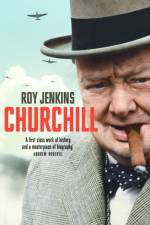
From the admiralty to the miner's strike, from the Battle of Britain to eventual victory over Nazi Germany, Churchill oversaw some of the most important events the world has ever seen. Winning the Nobel Prize in Literature for his personal writing and cautioning against a powerful Soviet Russia in his later years in office, his larger-than-life and complex personality has continued to fascinate writers and historians.In this comprehensive biography, Roy Jenkins faithfully presents these events, while also managing to convey the contradictions and quirks in Churchill's character. Weaving together in-depth analysis and brilliant historical research, Jenkins has succeeded in crafting this magnificent one-volume account packed with insights that only a fellow politician can convey. Bringing to life the statesman, writer, speaker and leader, Churchill is packed with insights into one of the most important figures of the twentieth century.
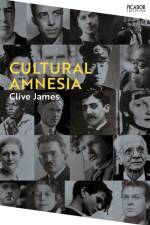
'In this book can be heard the merest edge of an enormous conversation. As they never were in life, we can imagine the speakers all gathered in some vast room, wearing name tags in case they don't recognize each other (although some recognize each other all too well, and avoid contact). My heroes and heroines are here. The reader will recognize some of their names, while other names will be more obscure. My intellectual betes noires are here too, and the same division might apply.' An almanac combining a comprehensive survey of modern culture with an annotated index of who-was-who and what-was-what, Cultural Amnesia is Clive James' unique take on the places and the faces that shaped the twentieth-century. From Anna Akhmatova to Stefan Zweig, via Charles de Gaulle, Hitler, Thomas Mann and Wittgenstein, this varied and unfailingly absorbing book is both story and history, both public memoir and personal record - and provides an essential field-guide to the vast movements of taste, intellect, politics and delusion that helped to prepare the times we live in now.
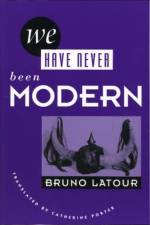
With the rise of science, we moderns believe, the world changed irrevocably, separating us forever from our primitive, premodern ancestors. But if we were to let go of this fond conviction, Bruno Latour asks, what would the world look like? His book, an anthropology of science, shows us how much of modernity is actually a matter of faith. What does it mean to be modern? What difference does the scientific method make? The difference, Latour explains, is in our careful distinctions between nature and society, between human and thing, distinctions that our benighted ancestors, in their world of alchemy, astrology, and phrenology, never made. But alongside this purifying practice that defines modernity, there exists another seemingly contrary one: the construction of systems that mix politics, science, technology, and nature. The ozone debate is such a hybrid, in Latour's analysis, as are global warming, deforestation, even the idea of black holes. As these hybrids proliferate, the prospect of keeping nature and culture in their separate mental chambers becomes overwhelming-and rather than try, Latour suggests, we should rethink our distinctions, rethink the definition and constitution of modernity itself. His book offers a new explanation of science that finally recognizes the connections between nature and culture-and so, between our culture and others, past and present. Nothing short of a reworking of our mental landscape. We Have Never Been Modern blurs the boundaries among science, the humanities, and the social sciences to enhance understanding on all sides. A summation of the work of one of the most influential and provocative interpreters of science, it aims at saving what is good and valuable in modernity and replacing the rest with a broader, fairer, and finer sense of possibility.
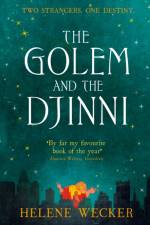
THESE NEWCOMERS ARE DIFFERENT. THEY WILL CHANGE EVERYTHING.For fans of The Essex Serpent and The Mermaid and Mrs Hancock.'By far my favourite book of of the year' Guardian'One of only two novels I've ever loved whose main characters are not human' Barbara KingsolverOne cold night, two newcomers emerge onto the streets of 1899 New York, and it is never the same again.But these two are more than strangers to this land, they are strangers to this world. From the depths of folkloric history come Chava the golem, a creature made of clay, brought to life by a disgraced rabbi and Ahmad, a djinni, born in the ancient Syrian desert and trapped in an old copper flask released accidentally by a tinsmith in a Lower Manhattan shop.Two companions who were never meant to be released, and never meant to meet. And when they do, their opposing natures will be sealed by a special bond, but one that is threatened by watching eyes, roaming owners and a misunderstanding world.A glittering gem of a novel, as spell-binding as it is compelling, The Golem and The Djinni asks us what we're made of and how we can break free.
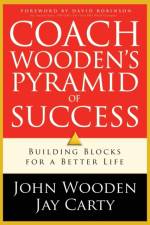
Legendary college basketball coach John Wooden and Jay Carty know that when it comes down to it, success is an equal opportunity player. Anyone can create it in his or her career, family, and beyond. Based on John Wooden's own method to victory, Coach Wooden's Pyramid of Success reveals that success is built block by block, where each block is a crucial principle contributing to lifelong achievement in every area of life. Each of these 32 daily readings takes an in-depth look at a single block of the pyramid, which when combined with the other blocks forms the structure of the pyramid of success. Join John Wooden and Jay Carty to discover the building blocks and key values--from confidence to faith--that have brought Coach to the pinnacle of success as a leader, a teacher, and a follower of God.
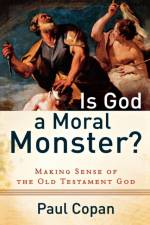
A recent string of popular-level books written by the New Atheists have leveled the accusation that the God of the Old Testament is nothing but a bully, a murderer, and a cosmic child abuser. This viewpoint is even making inroads into the church. How are Christians to respond to such accusations? And how are we to reconcile the seemingly disconnected natures of God portrayed in the two testaments?In this timely and readable book, apologist Paul Copan takes on some of the most vexing accusations of our time, including:God is arrogant and jealousGod punishes people too harshlyGod is guilty of ethnic cleansingGod oppresses womenGod endorses slaveryChristianity causes violenceand moreCopan not only answers God's critics, he also shows how to read both the Old and New Testaments faithfully, seeing an unchanging, righteous, and loving God in both.
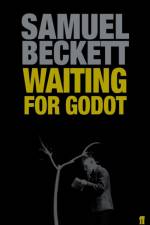
Subtitled 'A tragicomedy in two Acts', and famously described by the Irish critic Vivien Mercier as a play in which 'nothing happens, twice', En attendant Godot was first performed at the Theatre de Babylone in Paris in 1953. It was translated into English by Samuel Beckett, and Waiting for Godot opened at the Arts Theatre in London in 1955. 'Go and see Waiting for Godot. At the worst you will discover a curiosity, a four-leaved clover, a black tulip; at the best something that will securely lodge in a corner of your mind for as long as you live.' Harold Hobson, 7 August 1955'I told him that if by Godot I had meant God I would have said God, and not Godot. This seemed to disappoint him greatly.' Samuel Beckett, 1955
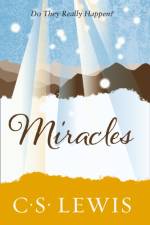
'The central miracle asserted by Christians is the Incarnation. They say that God became Man. Every other miracle prepares the way for this, or results from this.'This is the key statement of 'Miracles', in which C. S. Lewis shows that a Christian must not only accept but rejoice in miracles as a testimony of the unique personal involvement of God in his creation.Using his characteristic lucidity and wit to develop his argument, Lewis challenges the rationalists, agnostics and deists on their own grounds and provides a poetic and joyous affirmation that miracles really do occur in our everyday lives.
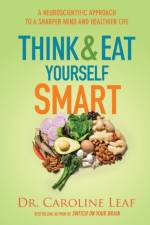
Science is beginning to understand that our thinking has a deep and complicated relationship with our eating. Our thoughts before, during, and after eating profoundly impact our food choices, our digestive health, our brain health, and more. Yet most of us give very little thought to our food beyond taste and basic nutritional content.In this revolutionary book, Dr. Caroline Leaf packs an incredible amount of information that will change readers' eating and thinking habits for the better. Rather than getting caught up in whether we should go raw or vegan, gluten-free or paleo, Leaf shows readers that every individual is unique, has unique nutritional needs, and has the power to impact their own health through the right thinking. There's no one perfect solution. Rather, she shows us how to change the way we think about food and put ourselves on the path towards health. Anyone who is tired of traditional diet plans that don't work, who struggles with emotional eating, or who simply isn't satisfied with their level of health will find in this book the key to discovering how they can begin developing a healthier body, brain, and spirit.
#1 New York Times bestselling author Joel Osteen encourages you to go beyond the ordinary and to discover the extraordinary life of blessings and success that God designed for you!
Madison Grant is largely forgotten today, but in the early 20th century, he was a leading environmentalist. He spearheaded the effort to save America's buffalo and majestic redwood trees. He might be considered a lion of progressivism if not for the fact that If he is known at all, it is due to his belief--shared by many, if not most, early 20th century progressives--that Darwinism logically, rationally, and morally entailed 'eugenics.' Grant firmly believed that if evolution were true, then it was obvious, if not self-evident, that the human species itself could be seen as manifesting evolutionary adaptations. Grant saw the different races and their respective (supposeedly unique) characteristics as illustrative of this viewpoint. He also felt it demonstrable that some of the 'races' were biologically inferior to others, at least in relation to being 'adapted' to 'modern society.' His book, "The Passing of the Great Race", expressed his deep concern that the biologically 'superior' (for example, northern Europeans) would be 'swamped' by the 'inferiors' (Slavs, 'negros', etc).This quote from the book will give the reader a glimpse into Madison Grant's mind: "Mistaken regard for what are believed to be divine laws and a sentimental belief in the sanctity of human life tend to prevent both the elimination of defective infants and the sterilization of such adults as are themselves of no value to the community. The laws of nature require the obliteration of the unfit and human life is valuable only when it is of use to the community or race."Far from being ostracized for such views, Grant was highly regarded, counting people like the progressive president of the United States, Theodore Roosevelt, as a friend. Not surprisingly, it is also reported that a certain man named Hitler would also resonate with Grant's conclusions.Having put it in these terms, it is perhaps not surprising at all that Madison Grant is not very well known today. He represents a blot on America and a blemish on a movement believed to be, and still construed as, champions of humanity.This edition is based on Grant's book as originally published in 1916. It contains the original charts and maps, and the maps are in full color.
Millions of readers have acquired the secrets of success through The Magic of Thinking Big. Achieve everything you always wanted: financial security, power and influence, the ideal job, satisfying relationships, and a rewarding, happy life.Set your goals high...then exceed them!Millions of people throughout the world have improved their lives using The Magic of Thinking Big. Dr. David J. Schwartz, long regarded as one of the foremost experts on motivation, will help you sell better, manage better, earn more money, and-most important of all-find greater happiness and peace of mind.The Magic of Thinking Big gives you useful methods, not empty promises. Dr. Schwartz presents a carefully designed program for getting the most out of your job, your marriage and family life, and your community. He proves that you don't need to be an intellectual or have innate talent to attain great success and satisfaction-but you do need to learn and understand the habit of thinking and behaving in ways that will get you there. This book gives you those secrets!Believe you can succeed and you will:-Cure yourself of the fear of failure-Think and dream creatively-You are what you think you are-Make your attitudes your allies-Learn how to think positively-Turn defeat into victory-Use goals to help you grow-Think like a leader
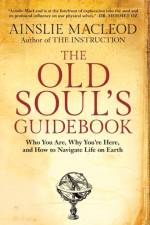
Everything you are-your personality, beliefs, aspirations, talents and fears-is the result of your soul's many incarnations. To help you tap into this wealth of past-life experience and dramatically increase your potential for success in this lifetime, past-life psychic and author Ainslie MacLeod offers THE OLD SOUL'S GUIDEBOOK: Who You Are, Why You're Here, and How to Navigate Life on Earth. Building on his award-winning books THE INSTRUCTION and THE TRANSFORMATION, Ainslie delivers unique insights and exercises to help you:¿ Understand why your destiny is so much more obvious than you think¿ Identify past-life sources of present-life issues like low self-esteem, unexplained ailments, and irrational fears¿ Escape the victimization trap through self-empowerment "Past lives explain everything," shares Ainslie. "Without knowing where you've been, you can never truly know where you're going. Understanding your soul's journey is the key to living a happier and more fulfilling life."
The Little Office is a liturgical devotion to the Blessed Virgin, in imitation of, and in addition to, the Divine Office. This pre-Vatican II edition is in both English and Latin. It also includes the prayers for the Carmelite feasts, the rubrics to be observed for its public recitation, and an act of consecration to Our Lady of Mount Carmel.
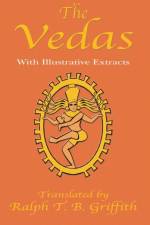
This book is a detailed overview of The Vedas, the holy book of the Hindus. The most important Hymns are quoted in full; extracts are also included from the Brahmanas, the part of the Rig Veda that that guides the Brahmans, the highest class of priests, in Vedic ceremonies. This is one of the oldest and most important of the world's holy books. It is primarily composed of hymns, poems, incantations and rituals from ancient India. Not only is this the "bible" of the Hindu religion, it also offers a unique snapshot of normal, everyday life in India as it occurred over four thousand years ago.
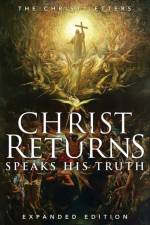
Kindle / eReader Versions available at ChristReturns.orgTHESE LETTERS are a MASTER'S COURSE.Expanded Edition Includes:Letter 1. Christ speaks of his reasons for returning to dictate these Letters.Says that mankind brings their own woes upon them through their thoughts and actions. Explains why his true mission on earth was not recorded properly. Says there is no such thing as 'sin against God'; neither is our true Source of Being understood. Describes his six weeks in the desert and what really took place - what he learnt and how the knowledge changed him from rebel to Master and Healer.Letter 2. Continues the story of his life on earth, his return to his mother in Nazareth and reception! His first public healing and the tremendous response. Choosing disciples. His true teachings.Letter 3. Continues life incidents, teachings, his awareness that his time on earth was to be cut short by crucifixion. The things he did to arouse the anger of the Jewish Religious Leaders. What really took place and was said at the 'Last supper', the disciples' attitudes, and the truth concerning his'ascension'.Letter 4. Christ gathers up the threads of his teachings in Palestine and says that he and Muhammad, Buddha and all other Masters have continued to develop spiritually until they have all ascended into CHRIST CONSCIOUSNESS. Christ speaks of the truth of the sexual relationship, saying that the attitude between men and women will eventually change. Spiritual progress will take place and children with new spiritual potential will be born.Letter 5 & 6. Christ begins to explain the true processes of creation. He touches on what science and religious doctrines have believed, rejects them and defines the TRUTH of BEING. He touches on the truth regarding the human ego, - the means of earthly individuality and therefore necessary, but also the source of all suffering.Letter 7. Christ describes the truth concerning the sexual act - what really takes place spiritually and physically. How children are born on different levels of consciousness. He explains men and women's place in the worldorder. Letter 8. Christ explains the reality of men and women, how to live withinthe LAWS of EXISTENCE and come into a state of harmonious blessed state of being in which all things are abundantly provided, health is restored, and joy becomes a natural state of mind. Every individual can reach this interior state of blessedness, and peace will then become the norm.Letter 9. Christ ties up loose ends of his other Letters and tells people plainly how to overcome the ego, gain true self-esteem and experience the joy of perfect inner peace. He touches on racism and a personal message of encouragement and love to all who are drawn to his Letters.16 ArticlesChrist Returns 2007 MessageChrist Returns 2014 MessageStudy Resources
El Doctor Frankl, psiquiatra y escritor, suele preguntar a sus pacientes aquejados de multiples padecimientos: Por que no se suicida usted? Y muchas veces, de las respuestas extrae una orientacion para la psicoterapia a aplicar: a este, lo que le ata a la vida son los hijos; al otro, un talento, una habilidad sin explotar; a un tercero, quizas, solo unos cuantos recuerdos que merece la pena rescatar del olvido. Tejer estas tenues hebras de vidas rotas en una urdimbre firme, coherente, significativa y responsable es el objeto con que se enfrenta la logoterapia. En esta obra, Viktor E. Frankl explica la experiencia que le llevo al descubrimiento de la logoterapia. Prisionero, durante mucho tiempo, en los desalmados campos de concentracion, el mismo sintio en su propio ser lo que significaba una existencia desnuda. Como pudo el que todo lo había perdido, que habia visto destruir todo lo que valia la pena, que padecio hambre, frio, brutalidades sin fin, que tantas veces estuvo a punto del exterminio, como pudo aceptar que la vida fuera digna de vivirla? El psiquiatra que personalmente ha tenido que enfrentarse a tales rigores merece que se le escuche, pues nadie como el para juzgar nuestra condicion humana sabia y compasivamente. Las palabras del doctor Frankl alcanzan un temple sorprendentemente esperanzador sobre la capacidad humana de trascender sus dificultades y descubrir la verdad conveniente y orientadora.
International Beauvoir scholars and renowned feminist phenomenologists from North America and Europe offer a unique look at one of the most outstanding existential-philosophical studies on age and aging.
Abonner på vårt nyhetsbrev og få rabatter og inspirasjon til din neste leseopplevelse.
Ved å abonnere godtar du vår personvernerklæring.