



























Gjør som tusenvis av andre bokelskere
Abonner på vårt nyhetsbrev og få rabatter og inspirasjon til din neste leseopplevelse.
Ved å abonnere godtar du vår personvernerklæring.Du kan når som helst melde deg av våre nyhetsbrev.

In this volume, Otto Saumarez Smith recounts the fraught history of the urban development of British city centres in the 1960s, uncovering the planning philosophy, and the political, cultural, and legislative background that created the conditions for these transformations to occur across the country.
Calling on more than 30 years of studying the Kurdish issue, numerous trips to the region, and many contacts among the Kurds, including almost all of their main leaders, Michael Gunter has written a short, but thorough history of the Kurds that is well documented, but very readable. This updated 2017 edition covers the latest events in Syria, Turkey and Iraq.
"Weimar Centennial edition with a new preface by the author."--Title page.
This study illuminates the social, political, economic, and religious lives of those to whom the apostle Paul wrote. It articulates a method for bringing together biblical texts with archaeological remains.
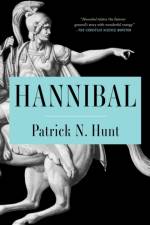
Hannibal is ';an exciting biography of one of history's greatest commandersa thrilling page-turner' (Kirkus Reviews, starred review) about the brilliant general who successfully crossed the Alps with his war elephants and brought Rome to its knees, and who is still regarded today as one of the greatest military strategists in history.Hannibal Barca of Carthage, born 247 BC, was one of the great generals of the ancient world. His father, Hamilcar, imposed Carthaginian rule over much of present-day Spain. After Hamilcar led the Carthaginian forces against Rome in the First Punic War, Hannibal followed in his father's footsteps. From the time he was a teenager, Hannibal fought against Rome. He is famed for leading Carthage's army across North Africa, into Spain, along the Mediterranean coast, and then crossing the Alps with his army and war elephants. Hannibal won victories in northern Italy by outmaneuvering his Roman adversaries and defeated a larger Roman army at the battle of Cannae in 216 BC. Unable to force Rome to capitulate, however, he was eventually forced to leave Italy and return to Carthage when a savvy Roman general named Scipio invaded North Africa. Hannibal and Scipio fought an epic battle at Zama, which Hannibal lost. Many Carthaginians blamed Hannibal, who was exiled until his death. Hannibal is still regarded as a military genius. Napoleon, George Patton, and Norman Schwarzkopf, Jr. are only some of the generals who studied and admired him. His strategy and tactics are still taught in military academies. ';With wonderful energyarcheologist and historian Patrick Hunt distills his survey of literature about the Second Punic War into a brightly dramatic story that covers virtually every anecdote connected with Hannibal' (The Christian Science Monitor). ';Hunt's story of the doomed general, whose exploits are more celebrated than those of his vanquishers, will appeal to any reader interested in military history or strategy' (Publishers Weekly).
The first book to foreground the voices and experiences of autistic trans people, this collection of interviews explores questions of identity and gender from a neurodiverse perspective and examines how this impacts family, work, healthcare and religion.
From beloved teacher and bestselling author Dallas Willard, an exploration of Psalm 23 and the secret of living a life of contentment, peace, and security.
All that is known is experiencing, and experiencing is not divided into one part (an inside self) that experiences and another part (an outside object, other, or world) that is experienced.
This text examines the meaning of material culture in relation to memory and death, from personal mementos through to public memorials. It asks why material objects commemorating the dead, in conjunction with their embedded social practices, have rarely been subjected to sustained analysis.
Sexting. Cyberbullying. Narcissism. People-and especially the media-are consumed by fears about the effect of social media on young people. We hear constantly about the dangers that lurk online, and about young people's seemingly pathological desire to share anything and everything about themselves with the entire world.
Abonner på vårt nyhetsbrev og få rabatter og inspirasjon til din neste leseopplevelse.
Ved å abonnere godtar du vår personvernerklæring.