
























Gjør som tusenvis av andre bokelskere
Abonner på vårt nyhetsbrev og få rabatter og inspirasjon til din neste leseopplevelse.
Ved å abonnere godtar du vår personvernerklæring.Du kan når som helst melde deg av våre nyhetsbrev.

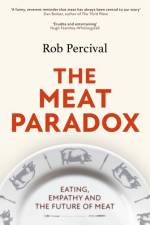
How will we eat a decade from now, or a century? Will we be eating meat?
While other children were devouring the works of Enid Blyton and Beatrix Potter, Carla Valentine was poring through the pages of Agatha Christie novels - and that early fascination lead to her job as a pathology technician working in mortuaries and trained in forensics. Nearly every Agatha Christie story involves one - or more commonly several - dead bodies, and for a young Carla, a curious child already fascinated with biology, these stories and these bodies were perfect puzzles. Of course Agatha herself didn't talk of 'forensics' which, in the way we use it now, but each tale she tells twists and turns with her expert weave of human observation, ingenuity and genuine science of the era. Through the medium of the 'whodunnit', Agatha Christie was a pioneer of forensic science, and in Murder Isn't Easy Carla illuminates all of the knowledge of one of our most beloved authors.
An original and timely guide to slowing down and reconnecting with ourselves, inspired by Japanese culture, wisdom and traditions - the perfect complement to Beth Kempton's bestselling Wabi Sabi.
INTRODUCED BY STUART EVERS: 'A genuine, fully fledged masterpiece of the twentieth century; one that remains just as terrifyingly relevant and truthful in the twenty-first'An existential, political, literary thriller first published in 1944, Transit explores the plight of the refugee with extraordinary compassion and insight. Having escaped from a Nazi concentration camp in Germany and a work camp in Rouen, the nameless narrator finds himself in the dusty seaport of Marseille. Along the way he was asked to deliver a letter to Weidel, a writer in Paris whom he discovered had killed himself as the Nazis entered the city. Now he is in search of the dead man's wife. He carries Weidel's suitcase, which contains an unfinished novel - and a letter securing Weidel a visa to escape France.Assuming the name Seidler - though the authorities think he is in fact Weidel - he goes from cafe to cafe looking for Marie, who is in turn anxiously searching for her husband. As Seidler converses with refugees over pizza and wine, their stories gradually break down his ennui, bringing him a deeper awareness of the transitory world they inhabit as they wait and wait for that most precious of possessions: transit papers.'This novel, completed in 1942, is in my opinion the most beautiful Seghers has written . . . almost flawless' - Heinrich Boll
An irresistible and charming celebration of the places, buildings and landscapes that underpin British identity.
God is in the business of fresh starts. Are you struggling with sadness, pain, or disappointment? If so, take heart. A new chapter awaits you.
The definitive account of an icon who shaped gender equality for all women. In this comprehensive, revelatory biography - fifteen years of interviews and research in the making - historian Jane Sherron De Hart explores the central experiences that crucially shaped Ginsburg's passion for justice, her advocacy for gender equality, and her meticulous jurisprudence. At the heart of her story and abiding beliefs was her Jewish background, specifically the concept of tikkun olam, the Hebrew injunction to 'repair the world', with its profound meaning for a young girl who grew up during the Holocaust and World War II. Ruth's journey began with her mother, who died tragically young but whose intellect inspired her daughter's feminism. It stretches from Ruth's days as a baton twirler at Brooklyn's James Madison High School to Cornell University to Harvard and Columbia Law Schools; to becoming one of the first female law professors in the country and having to fight for equal pay and hide her second pregnancy to avoid losing her job; to becoming the director of the ACLU's Women's Rights Project and arguing momentous anti-sex-discrimination cases before the US Supreme Court. All this, even before being nominated in 1993 to become the second woman on the Court, where her crucial decisions and dissents are still making history. Intimately, personably told, this biography offers unprecedented insight into a pioneering life and legal career whose profound impact will reverberate deep into the twenty-first century and beyond.
The Tibetan divination system called "Mo" has been relied upon for centuries to give insight into the future turns of events, undertakings, and relationships. It is a clear and simple method involving two rolls of a die to reveal one of the thirty-six possible outcomes described in the text. This Mo, which obtains its power from Manjushri, was developed by the great master Jamgön Mipham from sacred texts expounded by the Buddha.
This new edition makes Theodor Lessing's seminal work Der Judische Selbsthass accessible to English readers for the first time, supplemented with explanatory footnotes by translator Peter Appelbaum and illustrative essays by historian Sander L. Gilman and German scholar Paul Reitter.
Toward a Feminist Ethics of Nonviolence brings together major feminist thinkers to debate Cavarero's call for a postural ethics of nonviolence and a sociality rooted in bodily interdependence.
Abonner på vårt nyhetsbrev og få rabatter og inspirasjon til din neste leseopplevelse.
Ved å abonnere godtar du vår personvernerklæring.