



















Gjør som tusenvis av andre bokelskere
Abonner på vårt nyhetsbrev og få rabatter og inspirasjon til din neste leseopplevelse.
Ved å abonnere godtar du vår personvernerklæring.Du kan når som helst melde deg av våre nyhetsbrev.

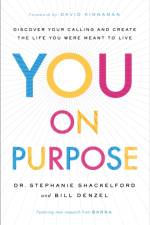
What should I do with my life? Whether you're just starting out on your journey or you've found yourself at a crossroads and feel the need to change direction, each of us wants to know what our purpose is on this earth. We want our work and our lives to have meaning and impact far beyond our immediate context. But how do you know what you were meant to do? And once you know . . . then what?Based solidly in the most up-to-date Barna research, You on Purpose offers you a clear and simple 4-step process for discovering and carrying out your calling with confidence:Define: set your intention for what you want to achieveDiscover: dig deep into who and where you areDecide: narrow your choices and zero in on your callingDo: start acting on your calling, one step at a timeEach chapter dismantles a common myth about calling, replacing it with truth born from solid, current research. If you long to discover your unique place in the world, this book will help you catch that vision and make a plan to pursue it.
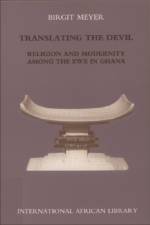
This book offers an ethnography of the emergence of a local Christianity and its relation to changing social, political and economic formations among the Peki Ewe in Ghana. Focusing on the Evangelical Presbyterian Church, which arose from encounters between the Ewe and German Piestist missionaries, the author examines recent conflicts leading to the secession of many pentecostally oriented members, which it places in a historical perspective. The main argument is that, for the Ewe, involvement with modernity goes hand in hand with new enchantment, rather than disenchantment, of the world. At the grassroots level, the study focuses on the image of the Devil, which the missionaries communicated to the Ewe through translation and which currently receives much attention in the Pentecostal churches. It is shown that this image played and still plays a crucial role in the local appropriation of Christianity, since diabolisation confirmed the existence of local gods and witchcraft and incorporated them into Christian belief as demons. Comparing the discourses and practices of mission and Pentecostal churches, the study reveals that the latter pay much more attention to Satan - especially through 'deliverance' rituals. Pentecostalism's increasing popularity thus stems from the fact that it ties into historically generated local understandings of Christianity, which, despite a declared dislike of non-Christian religious practices, stand much closer to Ewe religion than missionary Christianity. With its emphasis on the hybrid image of the Devil and people's obsessions with occult forces as a way to mediate the attractions and discontents of modernity, this book sheds light on a hitherto neglected dimension in studies of African Christianity.
These 31 summer scenes will delight colorists yearning for year-round sunshine! Original designs include seascapes, blooming gardens, and idyllic farm vistas as well as romantic picnics, sunsets, and a beach wedding.
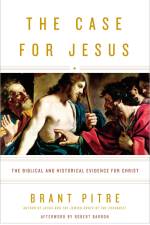
"This book will prove to be a most effective weapon… against the debunking and skeptical attitudes toward the Gospels that are so prevalent, not only in academe, but also on the street, among young people who, sadly, are leaving the Churches in droves." - Robert Barron, author of Catholicism For well over a hundred years now, many scholars have questioned the historical truth of the Gospels, claiming that they were originally anonymous. Others have even argued that Jesus of Nazareth did not think he was God and never claimed to be divine.In The Case for Jesus, Dr. Brant Pitre, the bestselling author of Jesus and the Jewish Roots of the Eucharist, goes back to the sources-the biblical and historical evidence for Christ-in order to answer several key questions, including: • Were the four Gospels really anonymous? • Are the Gospels folklore? Or are they biographies? • Were the four Gospels written too late to be reliable? • What about the so-called "Lost Gospels," such as "Q" and the Gospel of Thomas? • Did Jesus claim to be God? • Is Jesus divine in all four Gospels? Or only in John? • Did Jesus fulfill the Jewish prophecies of the Messiah? • Why was Jesus crucified? • What is the evidence for the Resurrection? As The Case for Jesus will show, recent discoveries in New Testament scholarship, as well as neglected evidence from ancient manuscripts and the early church fathers, together have the potential to pull the rug out from under a century of skepticism toward the traditional Gospels. Above all, Pitre shows how the divine claims of Jesus of Nazareth can only be understood by putting them in their ancient Jewish context.
Available Open Access under CC-BY-NC licence. Femicide, the killing of women and girls because of their gender, was until recently included in the category 'homicide', obscuring the special features of this social and gendered phenomenon. However, the majority of murders of women are perpetrated by men whom they know from family ties and are the result of intimate partner violence or so-called 'honour' killings. This book is the first one on femicide in Europe and presents the findings of a four-year project discussing various aspects of femicide. Written by leading international scholars with an interdiscplinary perspective, it looks at the prevention programmes and comparative quantitative and qualitative data collection, as well as the impact of culture. It proposes the establishment of a European Observatory on Femicide as a new direction for the future, showing the benefits of cross-national collaboration, united to prevent the murder of women and girls.
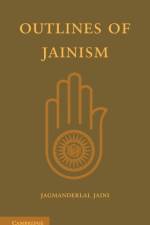
First published in 1940, as the second edition of a 1916 original, this book was written to provide an accessible English introduction to Jainism, incorporating discussion of its underlying philosophy and terminology. Written by a member of the Jain community, the text gives an insider's perspective on the religion, allowing for an intimate treatment of its various aspects, whilst also maintaining a non-doctrinaire approach. The author wrote the book in collaboration with the Jain Literature Society, who took responsibility for additional editorial work. A bibliography is also included. This book will be of value to anyone with an interest in perspectives on Jainism and Indian religion.
First published in 1882, Edward Shortland's study is an important account of Maori mythology, religion and concepts of authority. Shortland (1812-93), an English-born physician and ethnographer, first arrived in New Zealand in 1841 to work for the newly formed colonial government. He later served as a government interpreter, Sub-Protector of Aborigines, and Native Secretary during his time in New Zealand and spent much of his career interacting with Maori. This concise book is the result of years of careful research into Maori beliefs and customs, based on narratives and songs dictated to Shortland, or written down for him to translate. It includes a particularly detailed account of Maori cosmogony, lists of Maori vocabulary relating to kinship and to the spirit world, several karakia (prayers) and extensive notes on the naming and claiming of land and the Maori understanding of land tenure.
This is a simple, concise and authentic account of the life of the Prophet Muhammad by Sharif H. Banna. Many a book has been written on this subject but this unique book is ideal for teenagers, introducing them to the Sirah of the Final Prophet. The author wrote this book as a teenager and the narrative of the Prophet's life is interwoven with Quranic verses and stories. The language is easy to follow and it covers all major events in the Prophet's life. Many a book has been written on this subject but this unique work is characterised by the following:¿ Ideal for teenagers, introducing them to the Sirah of the Final Prophet¿ Usage of Arabic terminologies: Ibadah, Da'wah, Shirk and Ukhuwwah¿ Focuses on the Prophet's mission and methodology in establishing Islam¿ Comprehensive coverage of all major events¿ Simplicity of language and expression¿ Uses Quranic verses to supplement the manuscript
HANDBOOK OF ARCHAEOLOGICAL SCIENCESA modern and comprehensive introduction to methods and techniques in archaeologyIn the newly revised Second Edition of the Handbook of Archaeological Sciences, a team of more than 100 researchers delivers a comprehensive and accessible overview of modern methods used in the archaeological sciences. The book covers all relevant approaches to obtaining and analyzing archaeological data, including dating methods, quaternary paleoenvironments, human bioarchaeology, biomolecular archaeology and archaeogenetics, resource exploitation, archaeological prospection, and assessing the decay and conservation of specimens.Overview chapters introduce readers to the relevance of each area, followed by contributions from leading experts that provide detailed technical knowledge and application examples.Readers will also find:* A thorough introduction to human bioarchaeology, including hominin evolution and paleopathology* The use of biomolecular analysis to characterize past environments* Novel approaches to the analysis of archaeological materials that shed new light on early human lifestyles and societies* In-depth explorations of the statistical and computational methods relevant to archaeologyPerfect for graduate and advanced undergraduate students of archaeology, the Handbook of Archaeological Sciences will also earn a prominent place in the libraries of researchers and professionals with an interest in the geological, biological, and genetic basis of archaeological studies.
Immensely popular in nineteenth-century France, this substantial book went through five editions between 1818 and 1863. It is an A-Z encyclopedia of the occult sciences, listing notable practitioners and books, superstitions, demons, spirits and other phenomena associated with magic, divination, sooth-saying and the supernatural. Its author, the prolific Collin de Plancy (1794-1881), moved to Paris in 1812. He owned a bookshop and speculated in property, a venture which resulted in his exile to Brussels. In 1837, he returned to Paris, rejected his earlier anticlericalism, and converted to Catholicism. The preface to the 1845 edition of his Dictionnaire Infernal, reissued here, claims its purpose is to refute error, banish superstition, and explain literary symbols and imagery.Significantly, the preface and the book's concluding paragraph affirm the Church's role as a source of truth, and the book carries the approval of the archbishop of Paris.
A lively, informative, and engaging guide to gender by an author-illustrator who helps readers understand the multiplicity of answers to "What even is gender?"Queer, cisgender, transgender, nonbinary, androgynous, maverique, intergender, genderfluid. Louie and their cat (a.k.a. "Cat") take you on a journey through the world of gender-without claiming to have it all figured out or knowing the perfect definition for this widely complex subject. Gender is tricky to understand because it's a social construct intersecting with many other parts of our identity, including class, race, age, religion. For a long time, people thought of gender as binary: male/female, pirate/princess, sports/shopping. Now, we're starting to understand it's not that simple. That's what this book is about: figuring out what gender means, one human being at a time, and giving us new ways to let the world know who we are.Boy, girl, either/or, neither/nor, everything in between: gender is a spectrum, and it's hard to know where you fit, especially when your position isn't necessarily fixed-and the spectrum keeps expanding. That's where Rethinking Gender can help: it gives you a toolbox for empathy, understanding, and self-exploration. Louie's journey includes a deep dive into the historical context of LGBTQIA+ rights activism and the evolution of gender discourse, politics, and laws-but it also explores these ideas through the diversity of expressions and experiences of people today.In Rethinking Gender Louie offers a real-world take on what it means to be yourself, see yourself, and see someone else for who they are, too.
Instant Amazon Best Seller and Hot New ReleaseFor readers of Caste and Radical Dharma, an urgent call to action to end caste apartheid, grounded in Dalit feminist abolition and engaged Buddhism.“Dalit” is the name that we chose for ourselves when Brahminism declared us “untouchable.” Dalit means broken. Broken by suffering. Broken by caste: the world’s oldest, longest-running dominator system...yet although “Dalit” means broken, it also means resilient. Caste—one of the oldest systems of exclusion in the world—is thriving. Despite the ban on Untouchability 70 years ago, caste impacts 1.9 billion people in the world. Every 15 minutes, a crime is perpetrated against a Dalit person. The average age of death for Dalit women is just 39. And the wreckages of caste are replicated here in the U.S., too—erupting online with rape and death threats, showing up at work, and forcing countless Dalits to live in fear of being outed. Dalit American activist Thenmozhi Soundararajan puts forth a call to awaken and act, not just for readers in South Asia, but all around the world. She ties Dalit oppression to fights for liberation among Black, Indigenous, Latinx, femme, and Queer communities, examining caste from a feminist, abolitionist, and Dalit Buddhist perspective--and laying bare the grief, trauma, rage, and stolen futures enacted by Brahminical social structures on the caste-oppressed. Soundararajan’s work includes embodiment exercises, reflections, and meditations to help readers explore their own relationship to caste and marginalization—and to step into their power as healing activists and changemakers. She offers skills for cultivating wellness within dynamics of false separation, sharing how both oppressor and oppressed can heal the wounds of caste and transform collective suffering. Incisive and urgent, The Trauma of Caste is an activating beacon of healing and liberation, written by one of the world’s most needed voices in the fight to end caste apartheid.
100 of the most moving and inspiring poems of the last 200 years from around the world, a collection that will comfort and enthrall anyone trapped by grief or loneliness, selected by the award-winning, best-selling, and beloved author of How to Read a PoemImplicit in poetry is the idea that we are enriched by heartbreaks, by the recognition and understanding of suffering?not just our own suffering but also the pain of others. We are not so much diminished as enlarged by grief, by our refusal to vanish, or to let others vanish, without leaving a record. And poets are people who are determined to leave a trace in words, to transform oceanic depths of feeling into art that speaks to others.In 100 Poems to Break Your Heart, poet and advocate Edward Hirsch selects 100 poems, from the nineteenth century to the present, and illuminates them, unpacking context and references to help the reader fully experience the range of emotion and wisdom within these poems. For anyone trying to process grief, loneliness, or fear, this collection of poetry will be your guide in trying times.
Referenced in pop culture, and used to bolster success in business strategies, politics, football tournaments, and more, this ancient tome is a vital tool for anyone who wants to win.
Many of the earliest books, particularly those dating back to the 1900s and before, are now extremely scarce and increasingly expensive. We are republishing these classic works in affordable, high quality, modern editions, using the original text and artwork.
WINNER OF THE PULITZER PRIZE IN HISTORYWINNER OF THE LOS ANGELES TIMES BOOK PRIZE IN HISTORY“Full of…lively insights and lucid prose” (The Wall Street Journal) an epic, sweeping history of Cuba and its complex ties to the United States—from before the arrival of Columbus to the present day—written by one of the world’s leading historians of Cuba.
Abonner på vårt nyhetsbrev og få rabatter og inspirasjon til din neste leseopplevelse.
Ved å abonnere godtar du vår personvernerklæring.