













Gjør som tusenvis av andre bokelskere
Abonner på vårt nyhetsbrev og få rabatter og inspirasjon til din neste leseopplevelse.
Ved å abonnere godtar du vår personvernerklæring.Du kan når som helst melde deg av våre nyhetsbrev.

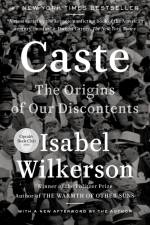
"In this brilliant book, Isabel Wilkerson gives us a masterful portrait of an unseen phenomenon in America as she explores, through an immersive, deeply researched narrative and stories about real people, how America today and throughout its history has been shaped by a hidden caste system, a rigid hierarchy of human rankings."--
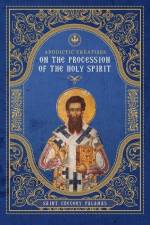
This towering figure of Orthodox spiritual life and teaching, the boast of Thessaloniki and spokesman for the Holy Mountain of Athos, is well known to students of Orthodox theology for his defense of the Hesychasts and exposition of the teaching of the Fathers on the Divine Energies and Theosis. What is not known, and with regard to which there is often great ignorance, even among Orthodox theologians in the West, is that the great hesychast was also a great defender of the Faith and Dogma of the Holy Trinity and a strident polemicist against the heresy of the filioque.Now the divine wisdom of the theologian of Grace applied and embraced by the Church for more than half a millennium is available in the English language for all lovers of the Holy Trinity to be edified and enlightened. For the first time, St. Gregory's masterpiece, Apodictic Treatises on the Procession of the Holy Spirit, is available in English."Having returned again to the queen of cities, he published his treatise in two books against the Latins on the procession of the Holy Spirit in a wonderful way. This treatise was something original and extraordinary; our Church had never seen anything like it before on the subject. Indeed, to tell the truth, without any dissemblance or pretense, it was such as to make all the treatises against the Latins before this one look like childish games and mere semblances of dialectical argument."- St. Philotheos Kokkinos, excerpt from Life of St. Gregory Palamas
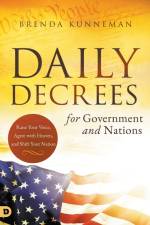
Raise Your Voice, Agree with Heaven, and Shift Your Nation!Do you feel overwhelmed and fearful about what is happening in your nation? The headlines and newsfeeds are bombarded with government corruption, scandal, celebration of immorality, violence, economic turbulence, and overall uncertainty. With each passing day, it feels like the swirl of chaos gets closer and closer to your door. Fear not-you are not powerless! You have a weapon that, if activated and used, can supernaturally shift the course of your nation, release righteousness into the streets, protect your children and grandchildren, prosper your finances, expose corruption in high places of government, and turn around even the most hopeless of situations. That weapon is your voice declaring the decrees of God!In Daily Decrees for Government and Nations, dynamic and world-renowned teacher Brenda Kunneman equips you with fresh, Holy Spirit-inspired decrees that have the power to shift nations, cancel chaos, and create a peaceful life for you, your family, and future generations.You will:Stop living in fear by making faith-filled, Bible-based decrees over your nation.Call forth God's ordained future by declaring the rule and reign of His Kingdom to influence the direction of your nation.Destroy the agenda of hell by making decrees that expose corruption, overturn unrighteous legislation, and flood the streets with Heaven's goodness.Prophesy revival and awakening over your nation, decreeing God's ultimate desire to fill your land with the outpouring of the Holy Spirit.Don't let hell shut you up! Without you, the powers of darkness will continue to ravage and destroy nations. But when you begin to boldly open your mouth, declaring the decrees of Heaven over the land, the floodgates of Heaven will open and the purposes of God will be released.
"Contains star charts and pictures, for all those who observe the night sky with unaided eyes, binoculars or telescopes. It is equally useful for beginners and experienced, old hands at astronomy."--
Collecting seven tales from classic penny publications including the story of Mrs. Lovett, the piemaking counterpart to Sweeney Todd, this volume features newly edited text and insights from Dr. Dittmer's research to revive a wild company of witches, femme fatales, and deadly criminals for a new generation of readers.
At that moment, in a flash that came like a shifting of her eyes, the world she looked at suffered a change... It was the same world, flat field for flat field and hill for hill; but radiant, vibrant, and, as it were, infinitely transparent. Tales of eternal damnation, love, sexuality, death and supernatural talents form the core of May Sinclair's essential and groundbreaking oeuvre. Literary and still thrilling today, her stories explore the strangeness at the heart of human experience and relationships, where the mundane and the everyday meets lurking, otherworldly weirdness. Including the contents of the classic collections Uncanny Stories (1923) and The Intercessor and Other Stories (1931), this new volume also features two rare strange tales from a third, lesser-known book which explore further facets of Sinclair's fascination with the uncanny.
RADIO 4 BOOK OF THE WEEKTHE NEW YORK TIMES BESTSELLER'I couldn't put it down. . . an important book, raw and simple enough that you can't help but feel it deeply' James Rebanks, author of The Shepherd's LifeTalented and ambitious, Monica Potts and her best friend, Darci, were both determined to make something of themselves. How did their lives turn out so different? Growing up gifted and working-class in the foothills of the Ozarks, Monica and Darci became fast friends. Bonding over a shared love of learning, they pored over the giant map in their classroom, tracing their fingers over the world that awaited them, vowing to escape their broken town. In the end, Monica left Clinton for university and fulfilled her dreams. Darci, along with many in their circle of friends, did not. Years later, working as a journalist covering poverty, Monica discovers what she already intuitively knew about the women in Arkansas. Their life expectancy had steeply declined -- the sharpest such fall in a century. As she returns to Clinton to report the story, she reconnects with Darci, and finds that her once talented and ambitious best friend is now a statistic: a single mother of two, addicted to meth, jobless and nearly homeless. Deeply aware that Darci's fate could have been hers, she retraces the moments in each of their lives that led such similar women toward such different destinies. Why did Monica make it out while Darci became ensnared in a cycle of poverty and opioid abuse? Gripping and unforgettable, The Forgotten Girls is a story of friendship and lost promise in 21st century America.
A collection of 445 exciting and accessible recipes that celebrate North Africa's vibrant and diverse food culture Life in North Africa heavily revolves around that most important of passions, food. Drawing on Berber, Arabic, and Ottoman influences as well as French, Spanish, and Italian ones, this gorgeous cookbook explores the culinary diversity of the Maghreb, a region that spans Morocco, Algeria, Tunisia, and Libya. With 445 delicious and authentic North African dishes that can easily be recreated at home, this treasure trove of a book reveals an exciting cuisine that is as varied and fascinating as the countries it covers. Irresistible recipes and stunning photography bring the region to life, from the Atlantic and Mediterranean coast in the west and the north, across farmland, orchards, plateaus carpeted in wheat, and mountain peaks, to the great Sahara in the south and east. A series of essays scattered throughout the book introduce key ingredients and cultural traditions, adding extra depth to Jeff Koehler's compelling introduction, which celebrates food culture in Morocco, Algeria, Tunisia, and Libya, as well as providing a brief history of North Africa itself. From griddled flatbreads and zesty salads to aromatic tagines, grilled meat and fish, and honey-rich pastries, The North African Cookboo k showcases an unprecedented and authoritative collection of traditional and contemporary recipes for the home cook from this most intriguing and varied of regions.
Security Studies: An Introduction, 4th edition, is the most comprehensive textbook available on the subject, providing students with in-depth coverage of traditional and critical approaches and an essential grounding in the debates, frameworks, and issues of the contemporary security agenda.
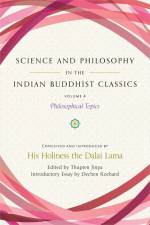
This fourth and final Science and Philosophy in the Indian Buddhist Classics volume provides, through extensive passages, a window into the works of the great thinkers from the flowering of philosophy in classical India.This is the second philosophy volume in the Science and Philosophy series. Whereas the first philosophy volume presented the views of the non-Buddhist and Buddhist schools in sequence, the present work selects specific topics for consideration, including the nature of the two truths, the analysis of self, the Yogacara explanation of reality, emptiness in the Madhyamaka tradition, a survey of logic and epistemology, and the Buddhist explanation of language and meaning. Like earlier volumes, it provides, through extensive extracts, a window into the works of the masters of the Nalanda tradition. The final section on language is particularly unique and largely crafted by Thupten Jinpa.
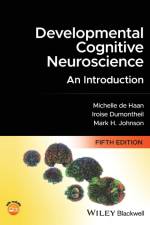
Landmark text focusing on the development of brain and behavior during infancy, childhood, and adolescenceDevelopmental Cognitive Neuroscience provides an accessible introduction to the main methods, theories, and empirical findings of developmental cognitive neuroscience. The focus is on human development from in utero to early adulthood, but key comparative work is also included. This new edition covers research in clinical/medical populations, educational applications and major advancements in methods and analysis, in particular with increasing longitudinal research focusing on understanding the mechanisms of cognitive development. It also contains a new chapter on global and cross-cultural perspectives outlining how developmental cognitive neuroscience has been applied in different settings and how techniques can be successfully adapted.The text features a variety of student-friendly features such as chapter-end discussion, applications of basic research, and introductions to key experimental methods. An accompanying related resource website for students and educators that includes a test bank of multiple choice questions is also provided.Other sample topics covered in Developmental Cognitive Neuroscience include:* Biology of change, methods, and populations, from gene to brain, building a brain, and vision, orienting, and attention* Perceiving and acting in a world of objects, learning, and long-term memory, language, and prefrontal cortex, working memory, and decision-making* Perceiving and acting in the social world, educational neuroscience, interactive specialization, and integrating development cognitive neuroscience* Mid-childhood and adolescent development, social cognition and neuroimaging, and broader cognitive neuroscience approaches and theoryWith expansive yet accessible coverage of the subject, Developmental Cognitive Neuroscience is an ideal resourcefor upper level undergraduate and early postgraduate readers. The text will further appeal to professionals in fields that have adopted developmental cognitive neuroscience approaches, such as education, clinical psychology, pediatric medicine and global health.
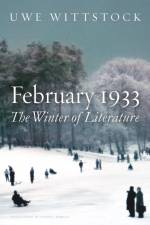
It all happened in a flash. February 1933 was the month in which the fate of German writers, as for so many others, was decided. In a tensely spun narrative, Uwe Wittstock tells the story of a demise which was predicted by some but also scarcely thought possible. He reveals how, in a matter of weeks, the glittering Weimar literary scene gave way to a long, dark winter, and how the net drew ever closer for Thomas Mann, Bertolt Brecht, Else Lasker-Schüler, Alfred Döblin, and countless others.Monday, January 30: Adolf Hitler is sworn in as Chancellor of Germany. Joseph Roth cannot wait any longer to learn what today's paper will report. He leaves for the station early in the morning and takes the train to Paris; bidding Berlin farewell comes naturally to him. Meanwhile, Thomas Mann barely spares a thought for politics during the next ten days, focusing instead on his forthcoming speech on Richard Wagner.Weaving an intimate portrait of the major figures whose lives he follows day by day, Wittstock shows how the landslide of events which immediately followed Hitler's victory spelled disaster for the country's literary elite. He resurrects the atmosphere of the times, marked by anxiety for many, by passivity and self-betrayal for some, and by grim determination for others. Who will applaud the new dictator, and who will flee, fearing for their life?Drawing on unpublished archival material, this important work is both a meticulous historical narrative and a timely reminder that we must remain vigilant in the face of the forces that threaten democracy, however distant the prospect of totalitarianism may seem.
Abonner på vårt nyhetsbrev og få rabatter og inspirasjon til din neste leseopplevelse.
Ved å abonnere godtar du vår personvernerklæring.