










Gjør som tusenvis av andre bokelskere
Abonner på vårt nyhetsbrev og få rabatter og inspirasjon til din neste leseopplevelse.
Ved å abonnere godtar du vår personvernerklæring.Du kan når som helst melde deg av våre nyhetsbrev.

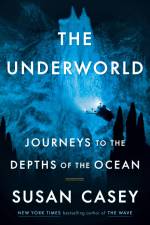
"From New York Times bestselling author Susan Casey, an awe-inspiring portrait of the mysterious world beneath the waves, and the men and women who seek to uncover its secrets For all of human history, the deep ocean has been a source of wonder and terror, an unknown realm that evoked a singular, compelling question: What's down there? Unable to answer this for centuries, people believed the deep was a sinister realm of fiendish creatures and deadly peril. But now, cutting-edge technologies allow scientists and explorers to dive miles beneath the surface, and we are beginning to understand this strange and exotic underworld: A place of soaring mountains, smoldering volcanoes, and valleys 7,000 feet deeper than Everest is high, where tectonic plates collide and separate, and extraordinary life forms operate under different rules. Far from a dark void, the deep is a vibrant realm that's home to pink gelatinous predators and shimmering creatures a hundred feet long and ancient animals with glass skeletons and sharks that live for half a millennium-among countless other marvels. Susan Casey is our premiere chronicler of the aquatic world. For The Underworld she traversed the globe, joining scientists and explorers on dives to the deepest places on the planet, interviewing the marine geologists, marine biologists, and oceanographers who are searching for knowledge in this vast unseen realm. She takes us on a fascinating journey through the history of deep-sea exploration, from the myths and legends of the ancient world to storied shipwrecks we can now reach on the bottom, to the first intrepid bathysphere pilots, to the scientists who are just beginning to understand the mind-blowing complexity and ecological importance of the quadrillions of creatures who live in realms long thought to be devoid of life. Throughout this journey, she learned how vital the deep is to the future of the planet, and how urgent it is that we understand it in a time of increasing threats from climate change, industrial fishing, pollution, and the mining companies that are also exploring its depths. The Underworld is Susan Casey's most beautiful and thrilling book yet, a gorgeous evocation of the natural world and a powerful call to arms"--
A brilliant new biography of Boris Johnson from his best biographer, Andrew Gimson
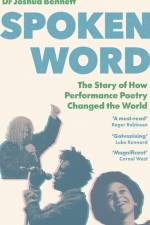
The powerful story of an art form that has transformed the cultural landscape, by an award-winning poet, professor, and slam champion. 'AN ENGAGING HISTORY' New York Times | 'A RICH HYBRID OF MEMOIR AND HISTORY' The New Yorker | 'A MUST-READ' Roger Robinson | 'GALVANISING' Luke Kennard | 'CAPTURES LIGHTNING IN A BOTTLE' Therí A. Pickens | 'MAGNIFICENT' Cornel WestIn 2009, at only twenty years old, Joshua Bennett was invited to recite a poem for President Barack Obama and First Lady Michelle Obama at the White House's Evening of Poetry, Music, and the Spoken Word. Spike Lee and Saul Williams were in the audience, and it turned out to be the very same event where Lin-Manuel Miranda first performed a work-in-progress that revolutionised musical theatre - Hamilton. Blending memoir and literary analysis, Bennett shows how a handful of visionaries altered modern culture. With passion, wit and erudition, he charts the history of spoken-word poetry, as well as his coming-of-age journey as a writer. From the early influence of Miguel Algarín and the Nuyorican Poets Café to Amanda Gorman's inauguration poem for President Joe Biden, he celebrates the contributions of legendary figures such as Ntozake Shange, Nikki Giovanni and Miguel Piñero, as well as how artists like MF DOOM, Jill Scott and Mos Def were inspired to develop their craft within their shared tradition. Spoken Word illuminates the profound influence that poetry has had everywhere melodious words are heard, from the West End to academia, from the podiums of political protest to cafés, from schools to rooms full of strangers all across the world.
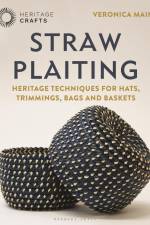
'A must-have for anyone interested in working with straw and an astonishing contribution to the preservation of this endangered craft.' Jay Blades MBE, Co-Chair of Heritage CraftsAn engaging makers' guide to the history and craft of straw plaiting, brimming with helpful step-by-step diagrams. Straw plaiting has been used to make accessories from hats and baskets to handbags, trimmings and homewares around the world for centuries. Once employing tens of thousands of people in the UK alone, the craft is now listed as Critically Endangered on Heritage Crafts' Red List.This book aims to change that, drawing on more than 50 previously unpublished patterns and techniques from around the world that will help you to unlock the history and preserve the skills of straw plaiting.For each pattern, follow the step-by-step diagrams and instructions and discover how they were developed whilst learning about materials, tools and preparation. Once familiar with the plaiting techniques - using straw as well as other materials - you will be able to develop your own skills, possibly blending in recycled materials, which are increasingly being used to produce beautiful and unique pieces.
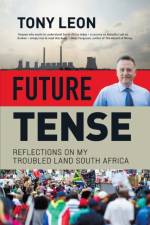
In his riveting new book, Future Tense, Tony Leon captures and analyses recent South African history, with a focus on the squandered and corrupted years of the past decade. With unique access and penetrating insight, Leon presents a portrait of today''s South Africa and prospects for its future, based on his political involvement over thirty years with the key power players: Cyril Ramaphosa, Jacob Zuma, Thabo Mbeki, Nelson Mandela and FW de Klerk. His close-up and personal view of these presidents and their history-making, and many encounters in the wider world, adds vivid colour of a country and planet in upheaval. Written during the first coronavirus lockdown, Future Tense examines the surge of the disease and the response, both of which have crashed the economy and its future prospects. As the founding leader of the Democratic Alliance, Leon also provides an insider view for the first time of the power struggles within that party, which saw the exit of its first black leader in 2019. There is every reason to fear for the future of South Africa but, as Leon argues, ''the hope for a better country remains an improbable, but not an impossible, dream''.
The last few decades have witnessed a stunning resurgence of philosophical interest in God and theology. Although much of this renaissance is focused on the rationality of theistic belief apart from evidence, there is a gathering movement in philosophical circles to re-establish natural theology's legitimacy in explaining God's existence.
New York Times bestselling author Lysa TerKeurst helps readers stop the dysfunction of unhealthy relationships by showing them biblical ways to set boundaries---and, when necessary, say goodbye---without losing the best of who they are.
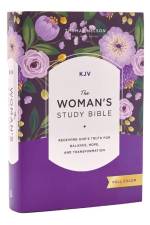
The bestselling study Bible designed by women specifically for women---now available in the beautiful and timeless King James translation.
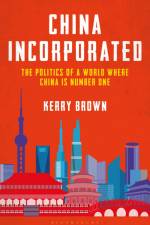
Is the West prepared for a world where power is shared with China? A world in which China asserts the same level of global leadership that the USA currently assumes? And can we learn to embrace Chinese political culture, as China learned to embrace ours?Here, one of the world's leading voices on China, Kerry Brown, takes us past the tired cliches and inside the Chinese leadership - as they lay out a roadmap for working in a world in which China shares dominance with the West.From how, and why, China as a dominant superpower has been inevitable for many years, to how the attempts to fight the old battles are over, Brown digs deeper into the problematic nature of China's current situation - its treatment of dissent, of Xinjiang, Hong Kong, and the severe limitations on its management of relations with other cultures and values. These issues impact the way the West sees China, China sees the West, and how both see themselves.There are obstacles to the West accepting a more prominent place for China in the world - but just because this will be a difficult process does not mean that it should not happen. As Kerry Brown writes: history is indeed ending, but not how the West thought it would.
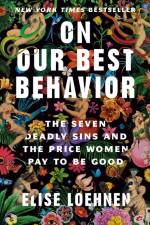
"We congratulate ourselves when we resist the donut in the office breakroom. We celebrate our restraint when we hold back from sending an email in anger. We feel virtuous when we wake up at dawn to get a jump on the day. We put others' needs ahead of our own and believe this makes us exemplary. In On Our Best Behavior, journalist Elise Loehnen explains that these impulses - often lauded as unselfish, distinctly feminine instincts - are actually ingrained in us by a culture that reaps the benefits, via an extraordinarily effective collection of mores known as the Seven Deadly Sins. Since being codified by the Christian church in the fourth century, the Seven Deadly Sins-pride, greed, lust, envy, gluttony, wrath, and sloth-have exerted insidious power. Even today, in our largely secular, patriarchal society, they continue to circumscribe women's behavior. For example, seeing sloth as sinful leads women to deny themselves rest; a fear of gluttony drives them to ignore their appetites; and an aversion to greed prevents them from negotiating for themselves and contributes to the 55 percent gender wealth gap"--
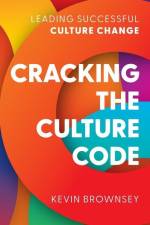
Cracking The Culture Code is a leader's handbook for kickstarting and implementing successful culture change while avoiding common pitfalls. Packed with real-life examples, this book will help you build the culture your organisation needs.
Despite repeated warnings from the White House, Russia's invasion of Ukraine in February 2022 shocked the world. Why did Putin start the war-and why has it unfolded in previously unimaginable ways? Ukrainians have resisted a superior military; the West has united, while Russia grows increasingly isolated.Serhii Plokhy, a leading historian of Ukraine and the Cold War, offers a definitive account of this conflict, its origins, course, and the already apparent and possible future consequences. Though the current war began eight years before the all-out assault-on February 27, 2014, when Russian armed forces seized the building of the Crimean parliament-the roots of this conflict can be traced back even earlier, to post-Soviet tensions and imperial collapse in the nineteenth and twentieth centuries. Providing a broad historical context and an examination of Ukraine and Russia's ideas and cultures, as well as domestic and international politics, Plokhy reveals that while this new Cold War was not inevitable, it was predictable.Ukraine, Plokhy argues, has remained central to Russia's idea of itself even as Ukrainians have followed a radically different path. In a new international environment defined by the proliferation of nuclear weapons, the disintegration of the post-Cold War international order, and a resurgence of populist nationalism, Ukraine is now more than ever the most volatile fault line between authoritarianism and democratic Europe.
Abonner på vårt nyhetsbrev og få rabatter og inspirasjon til din neste leseopplevelse.
Ved å abonnere godtar du vår personvernerklæring.