





Gjør som tusenvis av andre bokelskere
Abonner på vårt nyhetsbrev og få rabatter og inspirasjon til din neste leseopplevelse.
Ved å abonnere godtar du vår personvernerklæring.Du kan når som helst melde deg av våre nyhetsbrev.

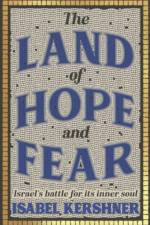
Deeply researched and comprehensive, The Land of Hope and Fear provides rich, revelatory, and even-toned insights into the history and nature of Israeli society and politics, on the country¿s seventy-fifth anniversary.Author has strong UK connections and is a highly credible commentator on what is inevitably a contentious set of subjects.
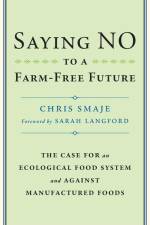
âEUR¿If you want real food, food security and a truly biodiverse countryside, please, please read this book.âEUR(TM) John Lewis-Stempel, author of Meadowland âEUR¿[A] timely response to those who are constructing a dystopia of farms without farmers, food without farms, while promoting more industrialisation of the food system.âEUR(TM) Vandana Shiva, activist and author of Terra VivaâEUR¿Brilliant and compelling âEUR¿ at once hopeful and persuasive about the future of food.âEUR(TM) Dan Barber, chef at Blue HillNamed the Inc. Non-Obvious Book Awards 'Best Books of 2023'Saying NO to a Farm-Free Future is a powerful and timely response to the ongoing search for our sustainable food future. In the face of ongoing food, energy and environmental crises, Chris Smaje, farmer and social scientist, has become one of the most prescient voices on the future of farming. In his new book, he explores the false promises and unconsidered consequences of food techno-solutions advocated by ecomodernists like George Monbiot, arguing that we should not divorce ourselves from rural living and must embrace a future that includes farming. Saying NO to a Farm-Free Future passionately argues for scaling up the pro-nature principles of low-energy, biodiverse and agroecological farming, and for putting the power back into the hands of small-scale farmers and producers, and the local communities that support them. âEUR¿A case for a rural agricultural landscape that delivers food without wrecking the planetâEUR(TM). Jake Fiennes, author of Land HealerâEUR¿Everyone in the food business needs to read this âEUR¿ lively and superbly written polemic.âEUR(TM) Joel Salatin, co-founder of Polyface Farm
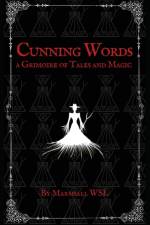
Cunning Words: a Grimoire of Tales and Magic is a book of witchcraft in three parts. Part I is a collection of stories that connect the seeker to folklore and tales inspired by witchery and lessons written within. Part II is a collection of rhymes that teach specific acts of witchcraft as well as recipes and petitions. Part III is a working guide on using the information provided to build upon your own personal practice as well as charms, rites, and curses extrapolated from the cunning tales.This book is for the most cunning and has been written for the beginner and adept alike. The tales within will introduce you to spirits old and new, the Three Mothers, the Three Wise Healers, The Seven Holy Siblings, and so much more.
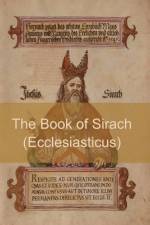
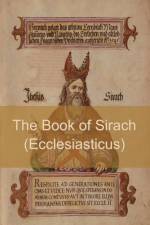
The Book of Sirach (Ecclesiasticus; abbreviated Ecclus.) is a Jewish work, originally in Hebrew, of ethical teachings, from approximately 200 to 175 BCE, written by the Judahite scribe Ben Sira of Jerusalem, on the inspiration of his father Joshua son of Sirach, sometimes called Jesus son of Sirach or Yeshua ben Eliezer ben Sira.In Egypt, it was translated into Greek by the author's unnamed grandson, who added a prologue. This prologue is generally considered the earliest witness to a canon of the books of the prophets, and thus the date of the text is the subject of intense scrutiny. The book itself is the largest wisdom book from antiquity to have survived. Although excluded from the Jewish canon, Sirach was read and quoted as authoritative from the beginning of the rabbinic period. There are numerous citations to Sirach in the Talmud and works of rabbinic literature (as "ספר בן סירא", e.g., Hagigah 13a, Niddah 16b; Ber. 11b). Some of those (Sanhedrin 100b) record an unresolved debate between R'Joseph and Abaye as to whether it is forbidden to read the book of Sirach, wherein Abaye repeatedly draws parallels between statements in Sirach cited by R'Joseph as objectionable and similar statements appearing in canonical books.Sirach may have been used as a basis for two important parts of the Jewish liturgy. In the Mahzor (High Holiday prayer book), a medieval Jewish poet may have used Sirach as the basis for a poem, Mar'e Kohen, in the Yom Kippur musaf ("additional") service for the High Holidays. Yosef Tabori questioned whether this passage in Sirach is referring at all to Yom Kippur, and thus argued it cannot form the basis of this poem. Some early 20th-century scholars also argued that the vocabulary and framework used by Sirach formed the basis of the most important of all Jewish prayers, the Amidah, but that conclusion is disputed as well.Current scholarship takes a more conservative approach. On one hand, scholars find that "Ben Sira links Torah and wisdom with prayer in a manner that calls to mind the later views of the Rabbis", and that the Jewish liturgy echoes Sirach in the "use of hymns of praise, supplicatory prayers and benedictions, as well as the occurrence of [Biblical] words and phrases [that] take on special forms and meanings." However, they stop short of concluding a direct relationship existed; rather, what "seems likely is that the Rabbis ultimately borrowed extensively from the kinds of circles which produced Ben Sira and the Dead Sea Scrolls ...." Some Christians regard the catalogue of famous men in Sirach as containing several messianic references. The first occurs during the verses on David. Sirach 47:11 reads "The Lord took away his sins, and exalted his power for ever; he gave him the covenant of kings and a throne of glory in Israel." This references the covenant of 2 Samuel 7, which pointed toward the Messiah. "Power" (Hebrew qeren) is literally translated as 'horn'. This word is often used in a messianic and Davidic sense (e.g. Ezekiel 29:21, Psalms 132:17, Zechariah 6:12, Jeremiah 33:15). It is also used in the Benedictus to refer to Jesus ("and has raised up a horn of salvation for us in the house of his servant David").Another verse (47:22) that Christians interpret messianically begins by again referencing 2 Samuel 7. This verse speaks of Solomon and goes on to say that David's line will continue forever. The verse ends stating that "he gave a remnant to Jacob, and to David a root of his stock." This references Isaiah's prophecy of the Messiah: "There shall come forth a shoot from the stump of Jesse, and a branch shall grow out of his roots"; and "In that day the root of Jesse shall stand as an ensign to the peoples; him shall the nations seek..." (Isaiah 11:1, 10). (wikipedia.org)
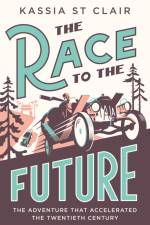
'An incredible and stirring story . . . a mix of competition, camaraderie as well as a larky sense of adventure . . . Down goes the flag. Smash goes the bottle. Shards of emerald glass and champagne spume catch the light. The race from Peking to Paris has begun' Spectator'And it's Go, Go, Go . . . A captivating history of a seemingly impossible journey and one of the most challenging endurance trials in the history of motoring . . . Skillful researcher and fine storyteller, St Clair's narrative is full of surprises . . . Fabulous . . . she hopes to follow Prince Borghese on his heroic journey and - if you share my absorbed interest in her adventurous narrative you may want to emulate her. See you there?' Miranda Seymour, Literary Review10 June 1907, Peking. Five cars set off in a desperate race across two continents on the verge of revolution.An Italian prince and his chauffeur, a French racing driver, a conman and various journalists battle over steep mountain ranges and across the arid vastness of the Gobi Desert. The contestants need teams of helpers to drag their primitive cars up narrow gorges, lift them over rough terrain and float them across rivers. Petrol is almost impossible to find, there are barely any roads, armed bandits and wolves lurk in the forests. Updates on their progress, sent by telegram, are eagerly devoured by millions in one of the first ever global news stories. Their destination: Paris. More than its many adventures, the Peking-to-Paris provided the impetus for profound change. The world of 1907 is poised between the old and the new: communist regimes will replace imperial ones in China and Russia; the telegraph is transforming modern communication and the car will soon displace the horse. In this book bestselling author Kassia St Clair traces the fascinating stories of two interlocking races - setting the derring-do (and sometimes cheating) of one of the world's first car races against the backdrop of a larger geopolitical and technological rush to the future, as the rivalry grows between countries and empires, building up to the cataclysmic event that changed everything - the First World War. The Race to the Future is the incredible true story of the quest against the odds that shaped the world we live in today.
'The 'Enfant terrible' of astrophysics . . . Loeb has a joy in conjecture and an omnivorous spirit of inquiry that are more reminiscent of 20th-century thinkers such as Freeman Dyson or Carl Sagan than most of his peers' The TimesCould we build space craft that could travel to distant stars? Could we augment human biology for spaceflight? Could the search for extraterrestrials be brought into the mainstream of scientific research?Avi Loeb tells us that in each case, the real question is not could we, but will we choose to? With an approach that is firmly grounded in cutting-edge science, he explores the potential for non-rocket space launch, deep space probes, and the technological preservation of human civilisation. He examines the evidence for UFOs and UAPs, and argues that the search for further evidence, using existing scientific technologies, is long overdue.Urgent and important, Noah's Spaceship is a mission statement and a blueprint for the future of humanity. Loeb explains why becoming interstellar is imperative for our civilization to survive - and how we can accomplish it.'One of the more imaginative and articulate scientists around' New York Times
The next title in Workman’s bestselling Paint by Sticker adult line, Paint by Sticker: Works of Art presents twelve stunning pieces by famous artists for you to complete, one sticker at a time. Peel the sticker, place the sticker, and watch your painting come to life. Degas, Van Gogh, Renoir, and . . . you! Sit down to paint your masterpiece—actually, twelve of them!—with Paint by Sticker: Works of Art, which includes everything you need to complete a dozen colorful, world-renowned paintings. And note—the cardstock pages are perforated, so the finished picture can easily be removed for framing, turning your home into a museum.
If you feel like you are stuck with narcissistic behaviors for the rest of your life. Think again... Because while no single book or even therapy session for that matter can completely remove all poisonous habits, this book will show you specific steps to lessen the extreme harshness of your self-loving personality traits. Decreasing Narssicism in people has been done countless times before and there is scientific evidence showing anyone who is willing to put in the work can create new healthy habits. Some of your past relationships may never be restored but your future relationships can absolutely go the way you want. While you may feel alone for having a narcissistic personality disorder or just narcissistic tendencies... About 1 in every 16 people (6.2%) of the population has it too. Here's just a fraction of what you'll discover inside this book:The different types of narcissism along the narcissistic spectrum Learning to fully engage in experiences with mindfulness techniques Daily practice exercises of gratitude that will let you have an attractive personality Healing relationships through self-compassion by focusing outwards instead of inwards Managing narcissism through cognitive behavioral therapy Discovery of trauma and healing childhood wounds And much, much more... This is not a 400 page book that you need a psychology degree to understand. Written in plain English and free from professional jargon. Every piece of psychological terminology is clearly defined inside.
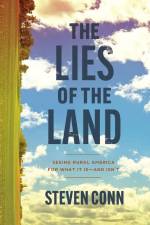
"There's no such thing as rural America. Or, rather, as Steven Conn argues, "rural America" is a phrase that has been made to mean so many things that it doesn't mean anything. In fact, he maintains, rural America--so often characterized as in crisis or in danger of being left behind--has been shaped by the same major forces as the rest of the country since at least the end of the Civil War: militarization, industrialization, corporatization, and suburbanization. Conn calls for us to dispense with the fantasies and visions that are often imposed on rural America, in the hopes of more productively addressing the real challenges facing all of America"--
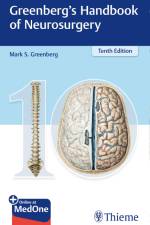
Preceded by Handbook of neurosurgery / Mark S. Greenberg. Ninth edition. [2020].
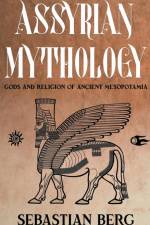
Like many other belief systems hailing from this region, Assyrian mythology had an incredibly long-standing effect on other cultures and religions. Flourishing between 1900 BCE to 650 CE, Assyria has unique historical significance in the scheme of Mesopotamian mythology. Some of the most indicative archeological evidence of the beliefs of Mesopotamian mythology comes from the ancient Assyrian territories. From the tablets and other forms of writing and art found in this region, scholars have established that Assyrian beliefs were laced with tales about powerful gods, goddesses, demigods, heroes, and mythical beings whose actions helped explain events that contradicted mundane reasoning and ideas.Given that the origins of Assyrian mythology can be traced back to the Near East, it's not surprising that the beliefs of this civilization also influenced the ancient Egyptian, Abrahamic, and Greek mythologies and traditions. And while the religion was almost suppressed by 500 C.E., devotees who became Assyrian Christians carried on some of their old habits. Because of this, the Assyrian beliefs can still influence the modern world, particularly some neo-pagan religions born in the early 20th century.
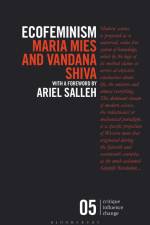
In this groundbreaking work, two world-renowned scholars argue that ecological destruction and industrial catastrophes constitute a direct threat to everyday life, the maintenance of which has been made the particular responsibility of women. In both industrialized societies and the developing countries, the new wars the world is experiencing, violent ethnic chauvinisms and the malfunctioning of the economy also pose urgent questions for ecofeminists. Is there a relationship between patriarchal oppression and the destruction of nature in the name of profit and progress? How can women counter the violence inherent in these processes? Should they look to a link between the women's movement and other social movements?Maria Mies and Vandana Shiva offer a thought-provoking analysis of these and many other issues from a unique North-South perspective. They critique prevailing economic theories, conventional concepts of women's emancipation, the myth of 'catching up' development, the philosophical foundations of modern science and technology, and the omission of ethics when discussing so many questions, including advances in reproductive technology and biotechnology.In constructing their own ecofeminist epistemology and methodology, these two internationally respected feminist environmental activists look to the potential of movements advocating consumer liberation and subsistence production, sustainability and regeneration. They argue for an acceptance of limits and reciprocity and a rejection of exploitation, the endless commoditization of needs, and violence.
The Book of Sirach (Ecclesiasticus ; abbreviated Ecclus.) is a Jewish work, originally in Hebrew, of ethical teachings, from approximately 200 to 175 BCE, written by the Judahite scribe Ben Sira of Jerusalem, on the inspiration of his father Joshua son of Sirach, sometimes called Jesus son of Sirach or Yeshua ben Eliezer ben Sira.In Egypt, it was translated into Greek by the author's unnamed grandson, who added a prologue. This prologue is generally considered the earliest witness to a canon of the books of the prophets, and thus the date of the text is the subject of intense scrutiny. The book itself is the largest wisdom book from antiquity to have survived. Although excluded from the Jewish canon, Sirach was read and quoted as authoritative from the beginning of the rabbinic period. There are numerous citations to Sirach in the Talmud and works of rabbinic literature (as "¿¿¿ ¿¿ ¿¿¿¿", e.g., Hagigah 13a, Niddah 16b; Ber. 11b). Some of those (Sanhedrin 100b) record an unresolved debate between R'Joseph and Abaye as to whether it is forbidden to read the book of Sirach, wherein Abaye repeatedly draws parallels between statements in Sirach cited by R'Joseph as objectionable and similar statements appearing in canonical books.Sirach may have been used as a basis for two important parts of the Jewish liturgy. In the Mahzor (High Holiday prayer book), a medieval Jewish poet may have used Sirach as the basis for a poem, Mar'e Kohen, in the Yom Kippur musaf ("additional") service for the High Holidays. Yosef Tabori questioned whether this passage in Sirach is referring at all to Yom Kippur, and thus argued it cannot form the basis of this poem. Some early 20th-century scholars also argued that the vocabulary and framework used by Sirach formed the basis of the most important of all Jewish prayers, the Amidah, but that conclusion is disputed as well.Current scholarship takes a more conservative approach. On one hand, scholars find that "Ben Sira links Torah and wisdom with prayer in a manner that calls to mind the later views of the Rabbis", and that the Jewish liturgy echoes Sirach in the "use of hymns of praise, supplicatory prayers and benedictions, as well as the occurrence of [Biblical] words and phrases [that] take on special forms and meanings." However, they stop short of concluding a direct relationship existed; rather, what "seems likely is that the Rabbis ultimately borrowed extensively from the kinds of circles which produced Ben Sira and the Dead Sea Scrolls ...." Some Christians regard the catalogue of famous men in Sirach as containing several messianic references. The first occurs during the verses on David. Sirach 47:11 reads "The Lord took away his sins, and exalted his power for ever; he gave him the covenant of kings and a throne of glory in Israel." This references the covenant of 2 Samuel 7, which pointed toward the Messiah. "Power" (Hebrew qeren) is literally translated as 'horn'. This word is often used in a messianic and Davidic sense (e.g. Ezekiel 29:21, Psalms 132:17, Zechariah 6:12, Jeremiah 33:15). It is also used in the Benedictus to refer to Jesus ("and has raised up a horn of salvation for us in the house of his servant David").Another verse (47:22) that Christians interpret messianically begins by again referencing 2 Samuel 7. This verse speaks of Solomon and goes on to say that David's line will continue forever. The verse ends stating that "he gave a remnant to Jacob, and to David a root of his stock." This references Isaiah's prophecy of the Messiah: "There shall come forth a shoot from the stump of Jesse, and a branch shall grow out of his roots"; and "In that day the root of Jesse shall stand as an ensign to the peoples; him shall the nations seek..." (Isaiah 11:1, 10). (wikipedia.org)
From Garrett M. Graff, the New York Times bestselling author of The Only Plane in the Sky and Raven Rock, a fascinating and eye-opening narrative history that uncovers the secrets of our government's decades-long quest to solve one of our most greatest mysteries: whether we are, in fact, alone in the universe.
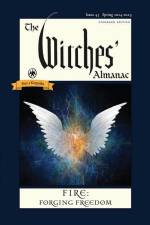
The Witches' Almanac is a sophisticated publication appealing to general readers as well as hard-core Wiccans. At one level, it is a pop reference that will fascinate anyone interested in folklore, mythology and culture, but at another, it is the most sophisticated annual guide available today for the mystic enthusiast. Founded in 1971 by Elizabeth Pepper, the art director of Gourmet magazine for many years, The Witches' Almanac is a witty, literate, and sophisticated publication that appeals to general reads as well as hard-core Wiccans. At one level, it is a pop reference that will fascinate anyone interested in folklore, mythology and culture, but at another, it is the most sophisticated and wide-ranging annual guide available today for the mystic enthusiast. Modeled after the Old Farmers' Almanac, it includes information related to the annual Moon Calendar (weather, forecasts, and horoscopes), as well as legends, rituals, herbal secrets, mystic incantations, interviews, and many a curious tale of good and evil. Although it is an annual publication, much of the content is both current and timeless--not specific to the date range of each issue. The theme of Issue 43 (Spring 2024 - Spring 2025) is Fire -- Forging Freedom. Also included are articles on: Geomancy The Lunar Nodes Azorean Folklore Kitchen Magic - Soul Cakes The Trickiest Toad The Orisha Obatala and much more.
"By weaving his experiences with information on the rise of anti-science sentiment, how it was funneled into a movement, and how it has become a tool of far-right political figures around the world, the author opens readers' eyes to the dangerous world it creates. Even as he paints a picture of the world under a shadow of aggressive ignorance, he demonstrates his innate optimism, offering suggestions for how science denial can be met by other active scientists"--
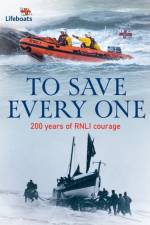
The remarkable 200-year history of The RNLI and their invaluable role in British Maritime history. A beautiful book of kindness, courage, and community to treasure for years to come.
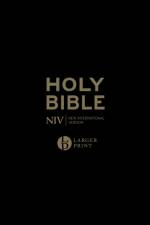
A smart black bonded leather Bible, with easy-to-read NIV text.
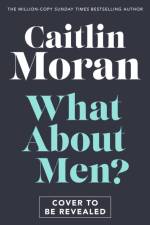
What About Men? is a captivating book penned by the acclaimed author, Caitlin Moran. Published by Ebury Publishing in the summer of 2023, this book has quickly gained recognition in its genre. Moran masterfully explores the complexities of modern manhood, challenging the societal norms and expectations that often restrict men. This book, with its insightful and thought-provoking narrative, is a must-read for anyone seeking to understand the intricate dynamics of masculinity in today's world. Published by Ebury Publishing, this book is a testament to Moran's astute observations and her ability to weave them into an engaging narrative. Don't miss out on this enlightening read.
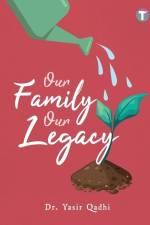
A family is an important unit in our life. In building this institution, marriage becomes a susceptible foundation that holds the family together. This comes with rights and responsibilities that we often neglect and take for granted.In Our Family Our Legacy, Dr Yasir Qadhi analyses the topic of a family institution by dissecting it into two dichotomous parts, which are spouses and children. In today's world where family and marriage institutions are becoming less and less favourable, the author highlights the significance of keeping them steady, by suggesting tips and ways in understanding your spouses and children, as a way to make them understand you as well. He also reiterates the rights and responsibilities that we all should take note of and adhere to for a sakinah, mawaddah and raḥmah marriage in which children will bloom.
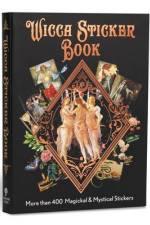
This sticker book features more than 400 beautiful and colorful Wiccan-themed artworks--both vintage and vintage-inspired. There are six categories of stickers--celestial sphere, mystical terra, witch's toolkit, symbols and sabbats, familiars and other creatures, and holistic witchery--each introduced by a poetic thematic quote. The stickers are perfect for decorating everything from stationery to scrapbooks, and they can be used to embellish notebooks, planners, gift boxes, and laptops, or to create artistic collages. And, the book itself can be enjoyed on its own as a beautiful objet d'art.
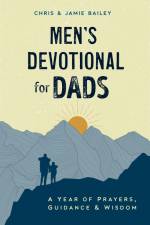
An accessible and easy-to-use men's devotional offering a year of scripture, prayers and wisdom.As a main supporter of their families, dads are pillars of strength. But sometimes they can get overwhelmed and stressed and require self-care. Men’s Devotional for Dads by authors and renowned Christian counselors Chris and Jamie Bailey, helps all dads lean on God for strength and wisdom for the journey of fatherhood and beyond.Men’s Devotional for Dads features:52 WEEKS OF PRAYERS AND DEVOTION: A selection of powerful scripture and God’s truths makes sure that dad is spiritually covered for the whole year. Anecdotes and cases of real dads provide guidance on refocusing on God. Each devotion offers a prayer for God’s strength, wisdom, and healing for all seasons of fatherhood.UPLIFTING AND INSPIRATIONAL AFFIRMATIONS: Each devotion starts with an affirmation that also serves as the devotional theme that reflects God’s truth PROFESSIONAL CHRISTIAN COUNSELORS: Chris and Jamie Bailey have been married for more than 28 years and are renowned in their community for helping Christian marriages thrive. Their clients include fathers, and they have helped many dads find their best selves through the grace of God. They both have their Master’s in Professional Counseling.
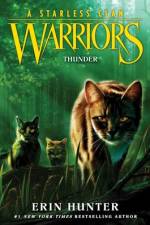
"Frostpaw was told to trust no cat, but a brutal attack has left her gravely injured, and she'll need to depend on someone. When help arrives in the form of a young warrior, she convinces him to protect her as she follows StarClan's cryptic directions toward the roots of RiverClan, where Riverstar has promised she'll find the answers she's been so desperately seeking. Back at the lake, the tension between ShadowClan and its neighbors might be easing, but the peace is fragile: until StarClan's chosen leader is found, the slightest push could lead the Clans back into outright war"--
Abonner på vårt nyhetsbrev og få rabatter og inspirasjon til din neste leseopplevelse.
Ved å abonnere godtar du vår personvernerklæring.