


Gjør som tusenvis av andre bokelskere
Abonner på vårt nyhetsbrev og få rabatter og inspirasjon til din neste leseopplevelse.
Ved å abonnere godtar du vår personvernerklæring.Du kan når som helst melde deg av våre nyhetsbrev.

Why are some parts of the world so rich and others so poor? Why did the Industrial Revolution--and the unprecedented economic growth that came with it--occur in eighteenth-century England, and not at some other time, or in some other place? Why didn't industrialization make the whole world rich--and why did it make large parts of the world even poorer? In A Farewell to Alms, Gregory Clark tackles these profound questions and suggests a new and provocative way in which culture--not exploitation, geography, or resources--explains the wealth, and the poverty, of nations. Countering the prevailing theory that the Industrial Revolution was sparked by the sudden development of stable political, legal, and economic institutions in seventeenth-century Europe, Clark shows that such institutions existed long before industrialization. He argues instead that these institutions gradually led to deep cultural changes by encouraging people to abandon hunter-gatherer instincts-violence, impatience, and economy of effort-and adopt economic habits-hard work, rationality, and education. The problem, Clark says, is that only societies that have long histories of settlement and security seem to develop the cultural characteristics and effective workforces that enable economic growth. For the many societies that have not enjoyed long periods of stability, industrialization has not been a blessing. Clark also dissects the notion, championed by Jared Diamond in Guns, Germs, and Steel, that natural endowments such as geography account for differences in the wealth of nations. A brilliant and sobering challenge to the idea that poor societies can be economically developed through outside intervention, A Farewell to Alms may change the way global economic history is understood.
Normal Accidents analyzes the social side of technological risk. Charles Perrow argues that the conventional engineering approach to ensuring safety--building in more warnings and safeguards--fails because systems complexity makes failures inevitable. He asserts that typical precautions, by adding to complexity, may help create new categories of accidents. (At Chernobyl, tests of a new safety system helped produce the meltdown and subsequent fire.) By recognizing two dimensions of risk--complex versus linear interactions, and tight versus loose coupling--this book provides a powerful framework for analyzing risks and the organizations that insist we run them. The first edition fulfilled one reviewer's prediction that it "e;may mark the beginning of accident research."e; In the new afterword to this edition Perrow reviews the extensive work on the major accidents of the last fifteen years, including Bhopal, Chernobyl, and the Challenger disaster. The new postscript probes what the author considers to be the "e;quintessential 'Normal Accident'"e; of our time: the Y2K computer problem.
The idea of human cruelty to animals so consumes novelist Elizabeth Costello in her later years that she can no longer look another person in the eye: humans, especially meat-eating ones, seem to her to be conspirators in a crime of stupefying magnitude taking place on farms and in slaughterhouses, factories, and laboratories across the world. Costello's son, a physics professor, admires her literary achievements, but dreads his mother's lecturing on animal rights at the college where he teaches. His colleagues resist her argument that human reason is overrated and that the inability to reason does not diminish the value of life; his wife denounces his mother's vegetarianism as a form of moral superiority. At the dinner that follows her first lecture, the guests confront Costello with a range of sympathetic and skeptical reactions to issues of animal rights, touching on broad philosophical, anthropological, and religious perspectives. Painfully for her son, Elizabeth Costello seems offensive and flaky, but--dare he admit it?--strangely on target. Here the internationally renowned writer J. M. Coetzee uses fiction to present a powerfully moving discussion of animal rights in all their complexity. He draws us into Elizabeth Costello's own sense of mortality, her compassion for animals, and her alienation from humans, even from her own family. In his fable, presented as a Tanner Lecture sponsored by the University Center for Human Values at Princeton University, Coetzee immerses us in a drama reflecting the real-life situation at hand: a writer delivering a lecture on an emotionally charged issue at a prestigious university. Literature, philosophy, performance, and deep human conviction--Coetzee brings all these elements into play. As in the story of Elizabeth Costello, the Tanner Lecture is followed by responses treating the reader to a variety of perspectives, delivered by leading thinkers in different fields. Coetzee's text is accompanied by an introduction by political philosopher Amy Gutmann and responsive essays by religion scholar Wendy Doniger, primatologist Barbara Smuts, literary theorist Marjorie Garber, and moral philosopher Peter Singer, author of Animal Liberation. Together the lecture-fable and the essays explore the palpable social consequences of uncompromising moral conflict and confrontation.
Cassandra, daughter of the King of Troy, is endowed with the gift of prophecy but fated never to be believed. After ten years of war, Troy has fallen to the Greeks, and Cassandra is now a prisoner, shackled outside the gates of Agamemnon's Mycenae. Through memories of her childhood and reflections on the long years of conflict, Cassandra pieces together the fall of her city. From a woman living in an age of heroes, here is the untold personal story overshadowed by the battlefield triumphs of Achilles and Hector. This stunning reimagining of the Trojan War is a rich and vivid portrayal of the great tragedy that continues to echo throughout history. 'A beautiful work.' - Bettany Hughes 'Cassandra is fierce and feverish poetry that engages with the ancient stories while also charting its own path. Filled with passionate and startling insight into human nature.' - Madeline Miller, author of The Song of Achilles 'Christa Wolf wrote books that crossed and overcame the divide of East and West, books that have lasted: the great, allegorical novels.' - Gunter Grass 'A sensitive writer of the purest water - an East German Virginia Woolf.' - Guardian 'One of the most prominent and controversial novelists of her generation.' - New York Review of Books
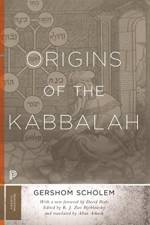
One of the most important scholars of our century, Gershom Scholem (1897-1982) opened up a once esoteric world of Jewish mysticism, the Kabbalah, to concerned students of religion. The Kabbalah is a rich tradition of repeated attempts to achieve and portray direct experiences of God: its twelfth-and thirteenth-century beginnings in southern France and Spain are probed in Origins of the Kabbalah, a work crucial in Scholem's oeuvre. The book is a contribution not only to the history of Jewish medieval mysticism but also to the study of medieval mysticism in general and will be of interest to historians and psychologists, as well as to students of the history of religion.
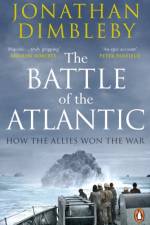
A gripping tale that transforms our understanding of the Second World WarThe Battle of the Atlantic was - though often overlooked - crucial to victory in the Second World War. If the German U-boats had prevailed, the maritime artery across the Atlantic would have been severed. Mass hunger would have consumed Britain, and the Allied armies would have been prevented from joining in the invasion of Europe. There would have been no D-Day.Through fascinating contemporary diaries and letters, from the leaders and from the sailors on all sides, Jonathan Dimbleby creates a thrilling narrative that uniquely places the campaign in the context of the entire Second World War. Challenging conventional wisdom on the use of intelligence and on Churchill's bombing campaign, The Battle of the Atlantic tells the epic story of the decisions that led to victory, and the horror and humanity of life on those perilous seas.
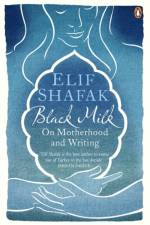
Black Milk is the affecting and beautifully written memoir on motherhood and writing by Turkey's bestselling female writer Elif Shafak, author of Honour, The Gaze and The Bastard of Istanbul which was long-listed for the Orange prize.Postpartum depression affects millions of new mothers every year, and- like most of its victims- Elif Shafak never expected to be one of them. But after the birth of her first child in 2006, the internationally bestselling Turkish author remembers how "e;for the first time my adult life . . . words wouldn't speak to me"e;. As her despair finally eased, Shafak sought to resuscitate her writing life by chronicling her own experiences.In her intimate memoir, she reveals how she struggled to overcome her depression and how literature provided the salvation she so desperately needed.'An intimate, affecting memoir . . . Her passion for literature is contagious, and her struggle with postpartum depression and writer's block reinforces how carefully all of us must tread. Beautifully rendered, Shafak's Black Milk is an epic poem to women everywhere' Colleen Mondor Elif Shafak is the acclaimed author of The Bastard of Istanbul and The Forty Rules of Love and is the most widely read female novelist in Turkey. Her work has been translated into more than thirty languages. She is a contributor for The Telegraph, Guardian and the New York Times and her TED talk on the politics of fiction has received 500 000 viewers since July 2010. She is married with two children and divides her time between Istanbul and London.
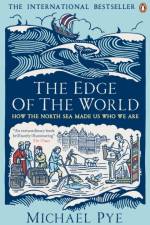
Featured in New York Times: 100 Notable Books of 2015Michael Pye's The Edge of the World is an epic adventure: from the Vikings to the Enlightenment, from barbaric outpost to global centre, it tells the amazing story of northern Europe's transformation by sea.'An utterly beguiling journey into the dark ages of the north sea. A complete revelation . . . Pye writes like a dream. Magnificent' Jerry Brotton, author of A History of the World in Twelve MapsThis is a story of saints and spies, of fishermen and pirates, traders and marauders - and of how their wild and daring journeys across the North Sea built the world we know.When the Roman Empire retreated, northern Europe was a barbarian outpost at the very edge of everything. A thousand years later, it was the heart of global empires and the home of science, art, enlightenment and money. We owe this transformation to the tides and storms of the North Sea.The water was dangerous, but it was far easier than struggling over land; so it was the sea that brought people together. Boats carried food and raw materials, but also new ideas and information. The seafarers raided, ruined and killed, but they also settled and coupled. With them they brought new tastes and technologies - books, clothes, manners, paintings and machines. In this dazzling historical adventure, we return to a time that is largely forgotten and watch as the modern world is born. We see the spread of money and how it paved the way for science. We see how plague terrorised even the rich and transformed daily life for the poor. We watch as the climate changed and coastlines shifted, people adapted and towns flourished. We see the arrival of the first politicians, artists, lawyers: citizens. From Viking raiders to Mongol hordes, Frisian fishermen to Hanseatic hustlers, travelling as far west as America and as far east as Byzantium, we see how the life and traffic of the seas changed everything.Drawing on an astonishing breadth of learning and packed with human stories and revelations, this is the epic drama of how we came to be who we are.'A closely-researched and fascinating characterisation of the richness of life and the underestimated interconnections of the peoples all around the medieval and early modern North Sea. A real page-turner' Chris Wickham, author of The Inheritance of Rome: A History of Europe from 400 to 1000'Elegant writing and extraordinary scholarship . . . Miraculous' Hugh Aldersey-Williams, author of Periodic Tales and Anatomies'Splendid. A heady mix of social, economic, and intellectual history, written in an engaging style. It offers a counterpoint to the many studies of the Mediterranean, arguing for the importance of the North Sea. Exciting, fun, and informative' Michael Prestwich, Professor of History, Durham UniversityMichael Pye has written eleven previous books, translated into eleven languages, including two British bestsellers and two New York Times Notable Books of the Year. He took a First and various prizes in Modern History at Oxford, and was then for many years a highly successful journalist, columnist and broadcaster in London and New York. He now lives between London and rural Portugal.
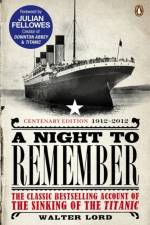
'There is no danger that Titanic will sink. The boat is unsinkable and nothing but inconvenience will be suffered by the passengers.' - Phillip Franklin, White Star Line Vice-PresidentOn April 15th, 1912, Titanic, the world's largest passenger ship, sank after colliding with an iceberg, claiming more than 1,500 lives. Walter Lord's classic bestselling history of the voyage, the wreck and the aftermath is a tour de force of detailed investigation and the upstairs/downstairs divide. A Night to Remember provides a vivid, gripping and deeply personal account of the 'unsinkable' Titanic's descent.WITH A NEW FOREWORD BY JULIAN FELLOWES
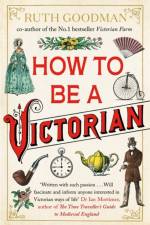
How to be a Victorian - travel back in time with the BBC's Ruth Goodman Step into the skin of your ancestors . . . We know what life was like for Victoria and Albert. But what was it like for a commoner like you or me? How did it feel to cook with coal and wash with tea leaves? Drink beer for breakfast and clean your teeth with cuttlefish? Dress in whalebone and feed opium to the baby? Catch the omnibus to work and do the laundry in your corset? Surviving everyday life came down to the gritty details, the small necessities and tricks of living . . .How To Be A Victorian by Ruth Goodman is a radical new approach to history; a journey back in time more intimate, personal and physical than anything before. It is one told from the inside out - how our forebears interacted with the practicalities of their world - and it is a history of those things that make up the day-to-day reality of life, matters so small and seemingly mundane that people scarcely mention them in their diaries or letters. Moving through the rhythm of the day, from waking up to the sound of a knocker-upper man poking a stick at your window, to retiring for nocturnal activities, when the door finally closes on twenty four hours of life, this astonishing guide illuminates the overlapping worlds of health, sex, fashion, food, school, work and play.If you liked A Time Traveller's Guide to Medieval England or 1000 Years of Annoying the French, you will love this book.Ruth Goodman is an independent scholar and historian, specialising in social and domestic history. She works with a wide range of museums and other academic institutions exploring the past of ordinary people and their activities. She has presented a number of BBC 2 television series, including Victorian Farm, Edwardian Farm and Wartime Farm. In each of these programs, she spent a year recreating life from a different period. As well as her involvement with the Farm series, Ruth makes frequent appearances on The One Show and Coast.
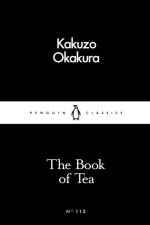
'Meanwhile, let us have a sip of tea. The afternoon glow is brightening the bamboos, the fountains are bubbling with delight, the soughing of the pines is heard in our kettle.'In this charming book from 1906, Okakura explores Zen, Taoism, Tea Masters and the significance of the Japanese tea ceremony.One of 46 new books in the bestselling Little Black Classics series, to celebrate the first ever Penguin Classic in 1946. Each book gives readers a taste of the Classics' huge range and diversity, with works from around the world and across the centuries - including fables, decadence, heartbreak, tall tales, satire, ghosts, battles and elephants.
Stefan Zweig based his biography of Marie Antoinette, who became the Queen of France when still a teenager, on her correspondence with both her mother and her great love the Count Axel von Fersen. Zweig analyses the chemistry of a woman's soul, from her intimate pleasures to her public suffering as a Queen under the weight of misfortune and history. Zweig describes Marie Antoinette in the king's bedroom, in the enchanted and extravagant world of the Trianon and with her children. He also gives an account of the Revolution, the Queen's resolve during the failed escape to Varennes, her imprisonment in the Conciergerie and her tragic end under the guillotine. This has been the definitive biography of Marie Antoinette since its publication, inspiring later biographers, including Antonia Fraser, and the recent film adaptation.
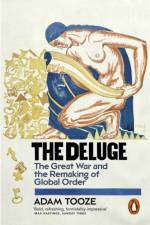
WINNER OF THE LOS ANGELES TIMES PRIZE FOR HISTORY FINANCIAL TIMES AND NEW STATESMAN BOOKS OF THE YEAR 2014On the centenary of the outbreak of the First World War, Deluge is a powerful explanation of why the war's legacy continues to shape our world - from Adam Tooze, the Wolfson Prize-winning author of The Wages of DestructionIn the depths of the Great War, with millions of dead and no imaginable end to the conflict, societies around the world began to buckle. As the cataclysmic battles continued, a new global order was being born.Adam Tooze's panoramic new book tells a radical, new story of the struggle for global mastery from the battles of the Western Front in 1916 to the Great Depression of the 1930s. The war shook the foundations of political and economic order across Eurasia. Empires that had lasted since the Middle Ages collapsed into ruins. New nations sprang up. Strikes, street-fighting and revolution convulsed much of the world. And beneath the surface turmoil, the war set in motion a deeper and more lasting shift, a transformation that continues to shape the present day: 1916 was the year when world affairs began to revolve around the United States. America was both a uniquely powerful global force: a force that was forward-looking, the focus of hope, money and ideas, and at the same time elusive, unpredictable and in fundamental respects unwilling to confront these unwished for responsibilities. Tooze shows how the fate of effectively the whole of civilization - the British Empire, the future of peace in Europe, the survival of the Weimar Republic, both the Russian and Chinese revolutions and stability in the Pacific - now came to revolve around this new power's fraught relationship with a shockingly changed world. The Deluge is both a brilliantly illuminating exploration of the past and an essential history for the present.
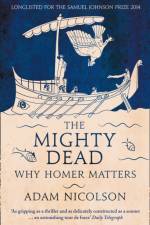
Longlisted for the 2014 Samuel Johnson Prize for Non-Fiction`A thrilling and complex book, enlarges our view of Homer ... There's something that hits the mark on every page' Claire Tomalin, Books of the Year, New StatesmanWhere does Homer come from? And why does Homer matter? His epic poems of war and suffering can still speak to us of the role of destiny in life, of cruelty, of humanity and its frailty, but why they do is a mystery. How can we be so intimate with something so distant?`The Mighty Dead' is a magical journey of discovery across wide stretches of the past, sewn together by some of the oldest stories we have - the great ancient poems of Homer and their metaphors of life and trouble. In this provocative and enthralling book, Adam Nicolson explains why Homer still matters and how these vital, epic verses - with their focus on the eternal questions about the individual versus the community, honour and service, love and war - tell us how we became who we are.
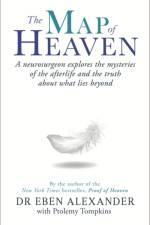
When Dr Eben Alexander wrote about his own startling near-death experience in Proof of Heaven, he was contacted by countless people from all walks of life. His story had touched them personally and they in turn had their own miraculous experiences of the afterlife to share with Eben. In The Map of Heaven, Eben recounts the astonishing stories he has heard on his travels, from near-death experiences and encounters with angelic beings to inspiring messages from departed loved ones. Each account helps us to understand just how vast the universe really is. Drawing on these accounts and lessons from religious leaders, philosophers and scientific investigations into the role of consciousness, Eben explores our true place in the universe and what exactly exists beyond death.
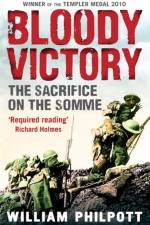
1 July 1916: the first day of the Battle of the Somme. The hot, hellish day in the fields of northern France that has dominated our perception of the First World War for just shy of a century. The shameful waste; the pointlessness of young lives lost for the sake of a few yards; the barbaric attitudes of the British leaders; the horror and ignominy of failure. All have occupied our thoughts for generations. Yet are we right to view the Somme in this way?Drawing on a vast number of sources such as letters, diaries and numerous archives, Bloody Victory describes in vivid detail the physical conditions, the combat and exceptional bravery against the odds but it also, uniquely, captures how the Somme defined the twentieth century in so many ways. This is an utterly gripping new analysis of one of the most iconic campaigns in history.
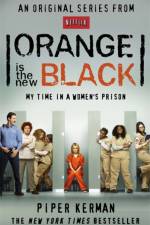
With her career, live-in boyfriend and loving family, Piper Kerman barely resembles the rebellious young woman who got mixed up with drug runners and delivered a suitcase of drug money to Europe over a decade ago. But when she least expects it, her reckless past catches up with her; convicted and sentenced to fifteen months at an infamous women's prison in Connecticut, Piper becomes inmate #11187-424. From her first strip search to her final release, she learns to navigate this strange world with its arbitrary rules and codes, its unpredictable, even dangerous relationships. She meets women from all walks of life, who surprise her with tokens of generosity, hard truths and simple acts of acceptance. Now an original comedy-drama series from Netflix, Piper's story is a fascinating, heartbreaking and often hilarious insight into life on the inside.
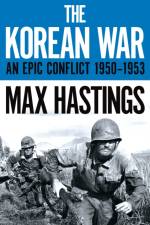
From Pan Military Classics, The Korean War by Max Hastings is the best narrative history of the conflict.On 25 June 1950 the invasion of South Korea by the Communist North launched one of the bloodiest conflicts of the last century. The seemingly limitless power of the Chinese-backed North was thrown against the ferocious firepower of the UN-backed South in a war that can be seen today as the stark prelude to Vietnam.Max Hastings drew on first-hand accounts of those who fought on both sides to produce this vivid and incisive reassessment of the Korean War, bringing the military and human dimensions into sharp focus. Critically acclaimed on publication, The Korean War remains the best narrative history of this conflict.
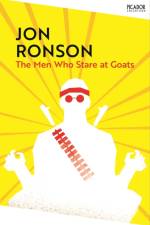
Often funny, sometimes chilling and always thought-provoking, journalist Jon Ronson's Sunday Times bestseller The Men Who Stare at Goats is a story so unbelievable it has to be true.In 1979 a secret unit was established by the most gifted minds within the US Army. Defying all known military practice - and indeed the laws of physics - they believed that a soldier could adopt a cloak of invisibility, pass cleanly through walls, and, perhaps most chillingly, kill goats just by staring at them. They were the First Earth Battalion. And they really weren't joking. What's more, they're back and fighting George Bush's War on Terror. Inspired the film starring George Clooney and Ewan McGregor.
Set fifteen years after the seismic events of Brilliance of the Moon, The Harsh Cry of the Heron is an elegiac and bittersweet successor to the bestselling series by Lian Hearn, Tales of the Otori.Their realm is held in balance by their union . . . Break that union and the Three Countries will fall apart. Otori Takeo and Kaede have ruled the Three Countries peacefully for over sixteen years, following the events laid out in the epic Tales of the Otori. They have three daughters: Shigeko, fifteen years old and heir to the Otori, and Maya and Miki, thirteen-year-old twins who have inherited the supernatural skills of their father. Kaede knows nothing of the prophecy that Takeo will die at the hands of his son and longs to give him a male child. Nor does she know of the boy he fathered sixteen years ago - a boy whose heart is filled with hatred and whose skills as a Ghostmaster give him the power to incite the dead. Takeo is determined that clan conflicts will never again ravage the Three Countries, but warriors are born to fight: the warlord Arai Zenko has deadly ambitions, the Emperor himself has challenged Takeo's rule and, despite a delicate truce between the deadly Tribe and the Otori, revenge still eats at the heart of renegade leader Kikuta Akio . . . Against these gathering threats Takeo draws strength from his love for Kaede, but even this is not beyond the reach of their enemies . . .
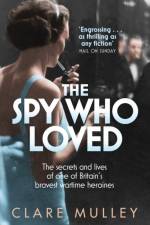
In June 1952, a woman was murdered by an obsessive colleague in a hotel in South Kensington. Her name was Christine Granville. That she died young was perhaps unsurprising, but that she had survived the Second World War was remarkable. The daughter of a feckless Polish aristocratic and his wealthy Jewish wife, she would become one of Britain's most daring and highly decorated secret agents. Having fled Poland on the outbreak of war, she was recruited by the intelligence services long before the establishment of the SOE, and took on mission after mission. She skied over the hazardous High Tatras into Poland, served in Egypt and North Africa and was later parachuted into Occupied France, where an agent's life expectancy was only six weeks. Her courage, quick wit and determination won her release from arrest more than once, and saved the lives of several fellow officers, including one of her many lovers, just hours before their execution by the Gestapo. More importantly, perhaps, the intelligence she gathered was a significant contribution to the Allied war effort and her success was reflected in the fact that she was awarded the George Medal, the OBE and the Croix de Guerre.
Understanding the modern city and the powerful forces within it is the life's work of Harvard urban economist Edward Glaeser, who at forty is hailed as one of the world's most exciting urban thinkers. Travelling from city to city, speaking to planners and politicians across the world, he uncovers questions large and small whose answers are both counterintuitive and deeply significant. Should New Orleans be rebuilt? Why can't my nephew afford an apartment in New York? Is London the new financial capital of the world? Is my job headed to Bangalore? In Triumph of the City, Glaeser takes us around the world and into the mind of the modern city - from Mumbai to Paris to Rio to Detroit to Shanghai, and to any number of points in between - to reveal how cities think, why they behave in the manners that they do, and what wisdom they share with the people who inhabit them. 'A masterpiece' Steven D. Levitt, co-author of Freakonomics 'A brilliant read: persuasive and provocative' Time Out 'Replete with lightly borne learning, this is a tremendous book' Bryan Appleyard, Literary Review 'Fascinating' Sunday Telegraph 'Comprehensive, compelling and strongly recommended"e; Tim Harford, author of The Undercover Economist and Adapt 'A hymn to the city' Metro
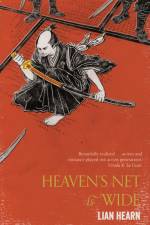
'A beautifully realized setting, action and romance played out across a couple of generations, a high-class voyage to the long ago and far away - Lian Hearn has written a saga that will continue to give pleasure to many.' - Ursula K. Le GuinThe Middle Country, home of the Otori clan is ruled by a benign but weak leader while in the East, the warrior-like Tohan are gathering power. On the plain of Yaegahara the clans clash in a bloody battle that leaves Otori Shigeru desperate for vengeance. Meanwhile, in a remote mountain village, a boy is born gifted with the supernatural skills of his father, once the deadliest assassin of the Tribe. Set in the years before the beginning of Across the Nightingale Floor, Heaven's Net is Wide by Lian Hearn is the first and last Tale, which both closes the circle and introduces new readers to the fantastical, beautiful and thrilling world of the Otori. It is an epic story of betrayal, revenge, magic and love.
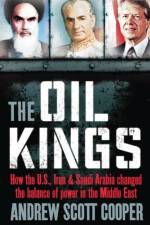
Oil Kings offers the first inside look at how an oil crisis was manipulated by Alan Greenspan, Donald Rumsfeld, and President Ford (hoping to secure his re-election), helping to precipitate the fall of the Shah of Iran in 1979. Andrew Scott Cooper reveals the fatal struggle between the "e;oil kings"e;, both Middle-Eastern and American, as they jockeyed for power, playing games that led directly to the rise of Iran's radical anti-American theocracy, which still exists today. An intrepid investigative reporter, Andrew Scott Cooper is the first to access newly declassified papers, and to interview key people who formulated US foreign poilicy in that period. Carefully connecting up the dots, he brilliantly reconstructs the history of that vexed decade when the modern world was changed forever.
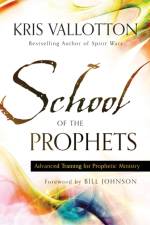
The Essential Guide for ProphetsMining from years on the frontlines of prophetic ministry, and overseeing the internationally renowned Bethel School of Supernatural Ministry, bestselling author Kris Vallotton takes you deep into the heart of one of the most crucial, compelling and controversial topics today: the office of prophet. In this definitive guide, Kris offers often-neglected foundational teaching and provides critical advanced training, including how to· discern your calling and grow in your gift· define your divinely appointed sphere of influence and depth of authority· recognize the six different types of prophets--and how to deal with false ones· navigate potential relational difficulties as you step into your gifting· understand the complex ways God communicates· prepare for the common, but dangerous, spiritual attacks prophets faceVallotton offers a balanced view of not only what modern-day prophets are, but also what they are not. You will come away empowered and equipped with the knowledge and skills needed for this beautiful, vital, supernatural ministry."The New Testament of Jesus Christ is a message of faith, hope and love. It is called the Good News. My friend and colleague Kris Vallotton is one of the best in the prophetic community to help shape, teach and model these 'Good News Prophets.' Thanks for honoring my generation's pioneering work and picking up the baton and carrying it forth!"--Dr. James Goll, founder, Encounters Network, Prayer Storm and GET eSchool"My friend Kris Vallotton has masterfully crafted this treatise, School of the Prophets, on the dynamics and framework of building a prophetic community in the 21st century. His life experience and seasoning in Christ have afforded the Spirit the opportunity to make him an influencer of influencers and a prophetic voice to the nations with a global footprint."--Mark J. Chironna, M.A., Ph.D.; Mark Chironna Ministries; Church on the Living Edge, Orlando, Florida"I love this book! As a person passionate to see the most desired gift in the New Testament (1 Corinthians 14:1) flourish all over the world, I would recommend this book wholesale. It clearly and biblically describes how to function in the New Testament gift of prophecy and articulates various kinds of biblical prophets. If one heeds its principles, it will give greater understanding and produce higher levels of maturity in prophetic ministry."--Stacey Campbell, founder, Canadian Prophetic Council; author, Ecstatic Prophecy"This is a must-read for all ministries. As an apostolic ministry, we recognize the gifts and callings that God has placed on the lives of those we pastor. Reading School of the Prophets has given us greater insight and understanding of how to help develop and prepare others to walk in their divine assignment. Kris Vallotton brings much clarity in what it means to be called in the office of a prophet and eliminates the fear of giving and receiving the prophetic."--Tony and Cynthia Brazelton, founders and pastors, Victory Christian Ministries International"Kris Vallotton's book reminds us that the heart of prophecy should be God's heart to build up, encourage and speak life. Kris goes through strategic and important teaching about prophecy versus the office of prophet, specifically in the context of the Church. I highly recommend this book and pray that it helps you to understand the prophetic and to 'call the gold' out of those around you."--Heidi Baker, Ph.D.; co-founder and director, Iris Global"As I read this book, I could hear the sound of an entire generation of voices emerge that will transform culture. Kris Vallotton is a father to these voices. School of the Prophets presents a practical methodology for prophetic community and a powerful manifesto for prophetic transformation in this generation."--Bob Hazlett, author, The Roar: God's Sound in a Raging World; Future Perspectives, New Haven, Connecticut
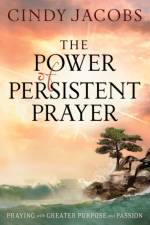
Cindy Jacobs, bestselling author and recognized leader in the worldwide prayer movement, brings her passionate message to all Christians who struggle with prayer or desire to be more effective prayer warriors. This powerful guide will answer such questions as, "Why does it take so long to receive answers to my prayers?" "How can I take my prayer life to the next level?" and many more. Whether they wonder why their prayers aren't answered, if God likes the way they pray, or if they are persistent enough in their prayers, Jacobs addresses these concerns and provides solid biblical answers. Written out of the crucible of her own deep prayer life, Jacobs starts with basic teaching and builds up to more in-depth topics, including fasting and spiritual warfare. Readers will come away with a fresh understanding of how to develop a strong, consistent prayer life and to discover the power of persistent prayer.
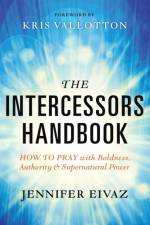
How to Pray with Boldness, Authority, and Supernatural PowerIn a world full of desperate need, we turn expectantly to prayer, hoping to witness the realities promised in Scripture. Most of us, however, seldom see the results we hope for. Why don't our prayers make more of a difference?Beginning with her own experiences of breakthrough, Jennifer Eivaz offers much-needed direction and the biblical context for prayer that does make a difference--explaining the intervention of angels and demons, prophetic manifestations, and much more. She helps believers take hold of their authority and spiritual giftings and use them in the battle for victory. The Kingdom principles and study questions will help every believer navigate the spiritual realm of prayer by using the tools that make it truly effective.
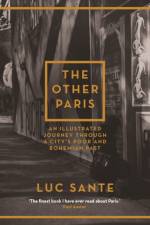
Paris, the City of Light. We think of it as the city of the Eiffel Tower and the Louvre, of white fa,ades, discreet traffic and well-mannered exchanges. But there was another Paris, hidden from view and virtually extinct today - the Paris of the working and criminal classes that shaped the city over the past two centuries. In the voices of Balzac and Hugo, assorted boulevardiers, barflies, rabble-rousers and tramps, Sante takes the reader on a vividjourney through the seamy underside of Paris: the improvised accommodations of the original bohemians; the flea markets, the rubbish tips, and the hovels. The Other Paris is a lively tour of labour conditions, prostitution, drinking, crime, and popular entertainment, of the reporters, r,aliste singers, pamphleteers, serial novelists, and poets who chronicled their evolution. It upends the story of the French capital, reclaiming the city from the bon vivants and the speculators, and lighting a candle to the works and days of the forgotten poor.
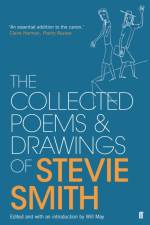
When Stevie Smith died in 1971 she was one of the twentieth-century's most popular poets; many of her poems have been widely anthologised, and 'Not Waving but Drowning' remains one of the nation's favourite poems to this day.Satirical, mischievous, teasing, disarming, her characteristically lightning-fast changes in tone take readers from comedy to tragedy and back again, while her line drawings are by turns unsettling and beguiling. In this wholly new edition of her work, Smith scholar Will May collects together the illustrations and poems from her original published volumes for the first time, recording fascinating details about their provenance, and describing the various versions Smith presented both on stage and page. Including over 500 works from Smith's 35-year career, The Collected Poems and Drawings of Stevie Smith is the essential edition of modern poetry's most distinctive voice.I was much further out than you thoughtAnd not waving but drowning.- 'Not Waving but Drowning'
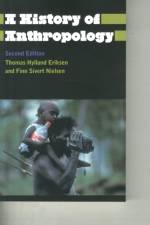
This is the first book to cover the entire history of social and cultural anthropology in a single volume. Beginning with a summary of the discipline in the nineteenth century, exploring major figures such as Morgan and Tylor, it goes on to provide a comprehensive overview of the discipline in the twentieth century.The bulk of the book is devoted to themes and controversies characteristic of post First World War anthropology, from structural functionalism via structuralism to hermeneutics, cultural ecology, discourse analysis and, most recently, globalization and postmodernism. The authors emphasise throughout the need to see changes in the discipline in a wider social, political and intellectual context. This is a timely, concise history of a major discipline, in an engaging and thought-provoking narrative, that will appeal to students of anthropology worldwide.
Abonner på vårt nyhetsbrev og få rabatter og inspirasjon til din neste leseopplevelse.
Ved å abonnere godtar du vår personvernerklæring.