




Gjør som tusenvis av andre bokelskere
Abonner på vårt nyhetsbrev og få rabatter og inspirasjon til din neste leseopplevelse.
Ved å abonnere godtar du vår personvernerklæring.Du kan når som helst melde deg av våre nyhetsbrev.

This forceful polemic explores the staggering human cost of the Industrial Revolution in Victorian England. Engels paints an unforgettable picture of daily life in the new industrial towns, and for miners and agricultural workers in a savage indictment of the greed of the bourgeoisie. His later preface, written for the first English edition of 1892 and included here, brought the story up to date in the light of forty years' further reflection.
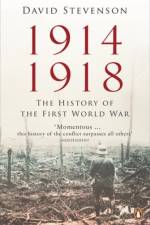
1914-1918, David Stevenson's history of the First World War, has been acclaimed as the definitive one-volume account of the conflictIn the summer of 1914 Europe exploded into a frenzy of mass violence. The war that followed had global repercussions, destroying four empires and costing millions of lives. Even the victorious countries were scarred for a generation, and we still today remain within the conflict's shadow. In this major analysis David Stevenson re-examines the causes, course and impact of this 'war to end war', placing it in the context of its era and exposing its underlying dynamics. His book provides a wide-ranging international history, drawing on insights from the latest research. It offers compelling answers to the key questions about how this terrible struggle unfolded: questions that remain disturbingly relevant for our own time.'It's harder to imagine a better single-volume comprehensive history of the conflict than this superb study' Ian Kershaw'Perhaps the best comprehensive one-volume history of the war yet written' New Yorker'David Stevenson is the real deal ... His defining characteristic is his outstanding rigour as an historian ... tremendously clever' Niall Ferguson'This history of the 1914-1918 conflict surpasses all others. It is tough, erudite and comprehensive' Independent
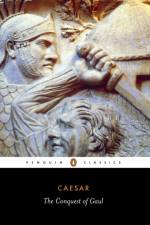
Between 58 and 50BC Caesar conquered most of the area now covered by France, Belgium and Switzerland, and twice invaded Britain. This is the record of his campaigns.Caesar's narrative offers insights into his military strategy & paints a fascinating picture of his encounters with the inhabitant of Gaul and Britain, as well as offering lively portraits of a number of key characters such as the rebel leaders and Gallic chieftains. This can also be read as a piece of political propaganda, as Caesar sets down his version of events for the Roman public, knowing that he faces civil war on his return to Rome.
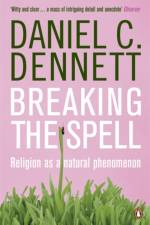
Few forces in the world are as potent as religion: it comforts people in their suffering and inspires them to both magnificent and terrible deeds. In this provocative and timely book, Daniel C. Dennett seeks to uncover the origins of religion and discusses how and why different faiths have shaped so many lives, whether religion is an addiction or a genuine human need, and even whether it is good for our health. Arguing passionately for the need to understand this multifaceted phenomenon, Breaking the Spell offers a truly original and comprehensive explanation for faith.
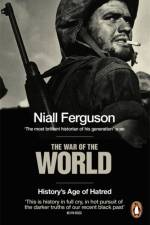
The world at the beginning of the 20th century seemed for most of its inhabitants stable and relatively benign. Globalizing, booming economies married to technological breakthroughs seemed to promise a better world for most people. Instead, the 20th century proved to be overwhelmingly the most violent, frightening and brutalized in history with fanatical, often genocidal warfare engulfing most societies between the outbreak of the First World War and the end of the Cold War. What went wrong? How did we do this to ourselves? The War of the World comes up with compelling, fascinating answers. It is Niall Ferguson s masterpiece.
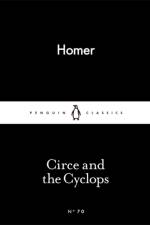
'You must be Odysseus, man of twists and turns...'The tales of Odysseus's struggle with a man-eating Cyclops and Circe, the beautiful enchantress who turns men into swine.Introducing Little Black Classics: 80 books for Penguin's 80th birthday. Little Black Classics celebrate the huge range and diversity of Penguin Classics, with books from around the world and across many centuries. They take us from a balloon ride over Victorian London to a garden of blossom in Japan, from Tierra del Fuego to 16th-century California and the Russian steppe. Here are stories lyrical and savage; poems epic and intimate; essays satirical and inspirational; and ideas that have shaped the lives of millions.Next to nothing is known about Homer's life. His works available in Penguin Classics are The Homeric Hymns, The Iliad and The Odyssey.
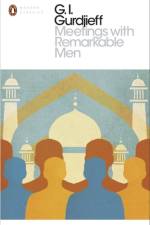
The exhilarating, life-affirming call to spiritual arms from world-renowned spiritual teacher G. I. Gurdjieff'Gurdjieff's voice is heard as a call.He calls because he suffers from the inner chaos in which we live.He calls to us to open our eyes.He asks us why we are here, what we wish for, what forces we obey. He asks us, above all, if we understand what we are . . .'Part adventure narrative, part travelogue, part spiritual guide, Meetings with Remarkable Men is suffused with Gurdjieff's unique perspective on life. With vivacity and charm, he organizes his account around portraits of the remarkable men and women who accompanied him through remote parts of the Near East and Central Asia, and who aided his search for hidden knowledge. Among them are Gurdjieff's own father (a traditional bard), a Russian prince dedicated to the search for Truth, a Christian missionary who entered a World Brotherhood deep in Asia, and a woman who escaped slavery to become a trusted member of Gurdjieff's group of fellow seekers.Meetings with Remarkable Men conveys a haunting sense of what it means to live fully - with conscience, with purpose and with heart.
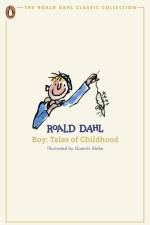
Penguin presents the audiobook edition of Boy by Roald Dahl, read by Dan Stevens. Throughout his young days at school and just afterwards, a number of things happened to Roald Dahl, which made such a tremendous impression he never forgot them. Boy is the remarkable story of Roald Dahls childhood; tales of exciting and strange things - some funny, some frightening, all true.
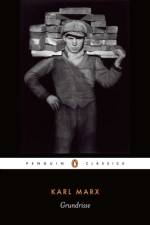
Written during the winter of 1857-8, the Grundrisse was considered by Marx to be the first scientific elaboration of communist theory. A collection of seven notebooks on capital and money, it both develops the arguments outlined in the Communist Manifesto (1848) and explores the themes and theses that were to dominate his great later work Capital. Here, for the first time, Marx set out his own version of Hegel's dialectics and developed his mature views on labour, surplus value and profit, offering many fresh insights into alienation, automation and the dangers of capitalist society. Yet while the theories in Grundrisse make it a vital precursor to Capital, it also provides invaluable descriptions of Marx's wider-ranging philosophy, making it a unique insight into his beliefs and hopes for the foundation of a communist state.
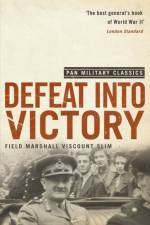
Field Marshal William Slim stands alongside Montgomery as the outstanding British field commander of World War II. Defeat Into Victory is his classic account of the Burma campaign: a story of retreat, attrition and final hard-fought victory over the Japanese. Told by a commander always at the centre of events, this is a narrative which captures both the high drama and the harsh reality of war.
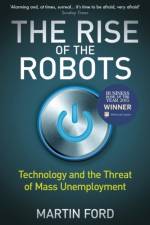
Intelligent algorithms are already well on their way to making white collar jobs obsolete: travel agents, data-analysts, and paralegals are currently in the firing line. In the near future, doctors, taxi-drivers and ironically even computer programmers are poised to be replaced by ';robots'. Without a radical reassessment of our economic and political structures, we risk the very implosion of the capitalist economy itself. In The Rise of the Robots, technology expert Martin Ford systematically outlines the achievements of artificial intelligence and uses a wealth of economic data to illustrate the terrifying societal implications. From health and education to finance and technology, his warning is stark all jobs that are on some level routine are likely to eventually be automated, resulting in the death of traditional careers and a hollowed-out middle class. The robots are coming and we have to decide now whether the future will bring prosperity or catastrophe.
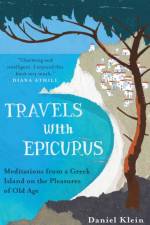
Our society worships at the fountain of youth. Each year, we seek to avert the arrival of old age using everything at our disposal, from extreme exercise and botox to pilates and cosmetic dentistry. But in the process, are we missing out on a distinct and extraordinarily valuable stage of life? Daniel Klein ponders whether it is better to be forever young or to grin toothlessly and live an authentic old age. He journeys to the Greek island of Hydra to discover the secrets of ageing happily. Drawing on the lives of octagenarian Greek locals, as well as philosophers ranging from Epicurus to Sartre, he uncovers the pleasures that are available only late in life. An escapist travel book, a witty meditation, and an optimistic guide to living well, this is a delightful jaunt through the terrain of old age, led by a funny and uniquely perceptive modern-day sage.
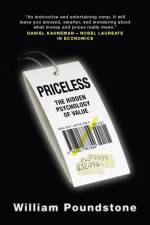
The first book to reveal how everday pricing strategies manipulate us Why do text messages cost money while emails are free? Why do cereal packets keep getting smaller? Why do department stores have a few extortionate goods that no one will buy? Why do so many prices end in 9?Why do text messages cost money while e-mails are free? How does Apple persuade people to pay for music instead of downloading it for nothing? In Priceless, bestselling author William Poundstone reveals how we perceive value and why businesses set the prices we pay. Rooted in the emerging field of behavioural decision theory, Poundstone reveals the secrets that multinationals - including Microsoft, Coca-Cola, Nestle, Nokia and Mercedes - are willing to pay millions for from so-called price consultants. Revealing how conventional economics gets it all wrong, this is a stunning expose of how irrational we all are and how global businesses are taking advantage.
'It isn't likely that this collection of journal entries will pass the censors. If it can't be published, I hope my friends will circulate it among themselves. I'll leave Vietnam tomorrow...' Thus Thich Nhat Hanh begins his 11 May 1966 journal entry. Since that time, he has been unable to return to his homeland but, now based in France, he has become one of the world's most respected spiritual leaders. Fragrant Palm Leaves reveals a vulnerable and questioning young man reflecting on the many difficulties he and his fellow monks faced in Vietnam trying to make Buddhism relevant to the people's needs. We follow him, in 1964, as he helps establish the movement known as 'engaged Buddhism': starting self-help villages, a new university, a Buddhist order and many other efforts for peace. Fragrant Palm Leaves is regarded by many Vietnamese as Thich Nhat Hanh's most endearing and stimulating book. It offers readers a glimpse into the mind of a great thinker and activist and shows how to live fully, with awareness, during a time of challenge and upheaval.
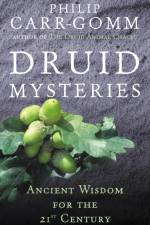
In this beautifully-written guide, Chief Druid Philip Carr-Gomm shows how the way of Druids can be followed today. He explains- The ancient history and inspiring beliefs of the ancient Druids- Druidic wild wisdom and their tree-, animal- and herb-lore- The mysteries of the Druids' seasonal celebrations- The Druids' use of magic and how their spirituality relates to paths such as WiccaThis guide will show how the wild wisdom of the Druids can help us to connect with our spirituality, our innate creativity, the natural world and our sense of ancestry. The life-enhancing beliefs and practices of this spiritual path have much to offer our 21st-century world.
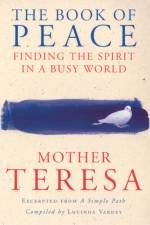
This little book collects together Mother Teresa's words of wisdom. Through simple prayers, meditations and insights, it offers us all a guide on the path to peace, whatever our faith, and speaks of the simple truths that transcend all boundaries. Warm, profound and yet very practical, The Book of Peace will provide a tremendous source of inspiration for you or someone you love. It is brimming with timeless messages for us all.
Pitched into the maelstrom of air fighting in the summer of 1940, twenty-four-year-old Gordon Olive barely lived to tell this extraordinary tale of courage and endurance. As Britain fought alone for its survival, 'the Few' of RAF Fighter Command took to the air grievously outnumbered, many reaching breaking point, exhausted physically and mentally by unreleting, intense combat. Gordon Olive flew the iconic Spitfire for over 125 missions above London and the south-east in the white heat of the aerial battle for supremacy of the skies. One of the most heavily engaged pilots of the Battle, he shot down ten enemy aircraft. This is his story of what it was like to dogfight with Messerschmitts at speeds of 400 mph, experiencing G forces close to blackout, at one moment to be drenched in sweat with exertion, the next to be freezing at 25,000 feet, to smell the cordite of your own fighter's machine guns and feel cannon shells explode against the back of your armoured seat. Illustrated in colour with forty unique paintings of the aerial battle of summer 1940 by the author.
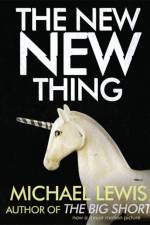
In the last years of the millennium, Michael Lewis, bestselling author of The Big Short and The Undoing Project, sets out to find the world's most important technology entrepreneur, the man who embodies the spirit of the coming age. He finds him in Jim Clark, the billionaire who founded Netscape and Silicon Graphics and who now aims to turn the healthcare industry on its head with his new billion-dollar project. Lewis accompanies Clark on the maiden voyage of his vast yacht and, on the sometimes hazardous journey, takes the reader on the ride of a lifetime through a landscape of geeks and billionaires. Through every brilliant anecdote and funny character sketch, Michael Lewis allows us an inside look at the world of the super-rich, whilst drawing a map of free enterprise in the twenty-first century.
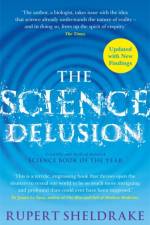
The science delusion is the belief that science already understands the nature of reality. The fundamental questions are answered, leaving only the details to be filled in. In this book, Dr Rupert Sheldrake, one of the world's most innovative scientists, shows that science is being constricted by assumptions that have hardened into dogmas. The sciences would be better off without them: freer, more interesting, and more fun. According to the dogmas of science, all reality is material or physical. The world is a machine, made up of dead matter. Nature is purposeless. Consciousness is nothing but the physical activity of the brain. Free will is an illusion. God exists only as an idea in human minds, imprisoned within our skulls. But should science be a belief-system, or a method of enquiry? Sheldrake shows that the materialist ideology is moribund; under its sway, increasingly expensive research is reaping diminishing returns. In the skeptical spirit of true science, Sheldrake turns the ten fundamental dogmas of materialism into exciting questions, and shows how all of them open up startling new possibilities.The Science Delusion will radically change your view of what is possible. and give you new hope for the world.
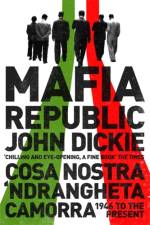
In MAFIA REPUBLIC, John Dickie, Professor of Italian Studies at University College, London and author of the international bestsellers COSA NOSTRA and MAFIA BROTHERHOODS, shows how the Italian mafias have grown in power and become more and more interconnected, with terrifying consequences. In 1946, Italy became a democratic Republic, thereby entering the family of modern western nations. But deep within Italy there lurked a forgotten curse: three major criminal brotherhoods, whose methods had been honed over a century of experience. As Italy grew, so did the mafias. Sicily's Cosa Nostra, the camorra from Naples, and the mysterious 'ndrangheta from Calabria stood ready to enter the wealthiest and bloodiest period of their long history.Italy made itself rich by making scooters, cars and handbags. The mafias carved out their own route to wealth through tobacco smuggling, construction, kidnapping and narcotics. And as criminal business grew exponentially, the mafias grew not just more powerful, but became more interconnected.By the 1980s, Southern Italy was on the edge of becoming a narco-state. The scene was set for a titanic confrontation between heroic representatives of the law, and mafiosi who could no longer tolerate any obstacle to their ambitions. This was a war for Italy's future as a civilized country. At its peak in 1992-93, the 'ndrangheta was beheading people in the street, and the Sicilian mafia murdered its greatest enemies, investigating magistrates Giovanni Falcone and Paolo Borsellino, before embarking on a major terrorist bombing campaign on the Italian mainland.Today, the long shadow of mafia history still hangs over a nation wracked by debt, political paralysis, and widespread corruption. While police put their lives on the line every day, one of Silvio Berlusconi's ministers said that Italy had to 'learn to live with the mafia'; suspicions of mafia involvement still surround some of the country's most powerful media moguls and politicians. The latest investigations show that its reach is astonishing: it controls much of Europe's wholesale cocaine trade, and representatives from as far away as Germany, Canada and Australia come to Calabria to seek authorisation for their affairs. Just when it thought it had finally contained the mafia threat, Italy is now discovering that it harbours the most global criminal network of them all.The Financial Times described John Dickie's MAFIA BROTHERHOODS as 'Powered by the sort of muscular prose that one associates with great detective fiction' and in MAFIA REPUBLIC John Dickie again marries outstanding scholarship with compelling storytelling.
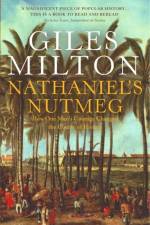
'To write a book that makes the reader sit in a trance, lost in his passionate desire to pack a suitcase and go to the fabulous place - that, in the end, is something one would give a sack of nutmeg for' Philip Hensher, The SpectatorIn 1616, an English adventurer, Nathaniel Courthope, stepped ashore on a remote island in the East Indies on a secret mission - to persuade the islanders of Run to grant a monopoly to England over their nutmeg, a fabulously valuable spice in Europe. This infuriated the Dutch, who were determined to control the world's nutmeg supply. For five years Courthope and his band of thirty men were besieged by a force one hundred times greater - and his heroism set in motion the events that led to the founding of the greatest city on earth.A beautifully told adventure story and a fascinating depiction of exploration in the seventeenth century, NATHANIEL'S NUTMEG sheds a remarkable light on history
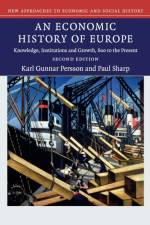
This revised and extended edition of the leading textbook on European economic history has been updated to take account of contemporary economic developments and the latest research and debates. A concise and accessible introduction that covers the full sweep of the European history, the book focuses on the interplay between the development of institutions and the generation and diffusion of knowledge-based technologies. With simple explanations of key economic principles, the book is an ideal introduction for students in history and economics. Revised textboxes and figures, an extensive glossary, suggestions for further reading and a suite of online resources lead students to a comprehensive understanding of the subject. New material covers contemporary economic developments such as the financial crises of 2007/2008, the Eurozone crisis, new trends in inequality and the austerity debates. This remains the only textbook students need to understand Europe's unique economic development and its global context.
Drawing on her own memory, her parents written reflections, interviews with contemporaries, and newly-available documents, former US Secretary of State and New York Times bestselling author Madeleine Albright recounts a tale that is by turns harrowing and inspiring.Before she turned twelve, Madeleine Albrights life was shaken by some of the most cataclysmic events of the 20th century: the Nazi invasion of her native Prague, the Battle of Britain, the attempted genocide of European Jewry, the allied victory in World War II, the rise of communism, and the onset of the Cold War. In Prague Winter, Albright reflects on her discovery of her familys Jewish heritage many decades after the war, on her Czech homelands tangled history, and on the stark moral choices faced by her parents and their generation. Often relying on eyewitness descriptions, she tells the story of how millions of ordinary citizens were ripped from familiar surroundings and forced into new roles as exile leaders and freedom fighters, resistance organizers and collaborators, victims and killers. These events of enormous complexity are shaped by concepts familiar to any growing child: fear, trust, adaptation, the search for identity, the pressure to conform, the quest for independence, and the difference between right and wrong.Prague Winteris an exploration of the past with timeless dilemmas in mind, a journey with universal lessons that is simultaneously a deeply personal memoir and an incisive work of history.Itserves as a guide to the future through the lessons of the past, as seen through the eyes of one of the international communitys most respected and fascinating figures. Albright and her familys experiences provide an intensely human lens through which to view the most political and tumultuous years in modern history.
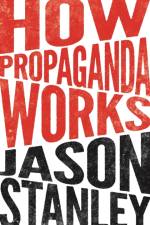
How propaganda undermines democracy and why we need to pay attentionOur democracy today is fraught with political campaigns, lobbyists, liberal media, and Fox News commentators, all using language to influence the way we think and reason about public issues. Even so, many of us believe that propaganda and manipulation aren't problems for us-not in the way they were for the totalitarian societies of the mid-twentieth century. In How Propaganda Works, Jason Stanley demonstrates that more attention needs to be paid. He examines how propaganda operates subtly, how it undermines democracy-particularly the ideals of democratic deliberation and equality-and how it has damaged democracies of the past.Focusing on the shortcomings of liberal democratic states, Stanley provides a historically grounded introduction to democratic political theory as a window into the misuse of democratic vocabulary for propaganda's selfish purposes. He lays out historical examples, such as the restructuring of the US public school system at the turn of the twentieth century, to explore how the language of democracy is sometimes used to mask an undemocratic reality. Drawing from a range of sources, including feminist theory, critical race theory, epistemology, formal semantics, educational theory, and social and cognitive psychology, he explains how the manipulative and hypocritical declaration of flawed beliefs and ideologies arises from and perpetuates inequalities in society, such as the racial injustices that commonly occur in the United States.How Propaganda Works shows that an understanding of propaganda and its mechanisms is essential for the preservation and protection of liberal democracies everywhere.
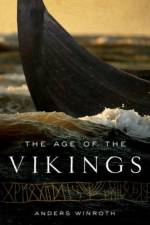
A major reassessment of the vikings and their legacyThe Vikings maintain their grip on our imagination, but their image is too often distorted by myth. It is true that they pillaged, looted, and enslaved. But they also settled peacefully and traveled far from their homelands in swift and sturdy ships to explore. The Age of the Vikings tells the full story of this exciting period in history. Drawing on a wealth of written, visual, and archaeological evidence, Anders Winroth captures the innovation and pure daring of the Vikings without glossing over their destructive heritage. He not only explains the Viking attacks, but also looks at Viking endeavors in commerce, politics, discovery, and colonization, and reveals how Viking arts, literature, and religious thought evolved in ways unequaled in the rest of Europe. The Age of the Vikings sheds new light on the complex society, culture, and legacy of these legendary seafarers.
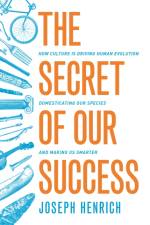
How our collective intelligence has helped us to evolve and prosperHumans are a puzzling species. On the one hand, we struggle to survive on our own in the wild, often failing to overcome even basic challenges, like obtaining food, building shelters, or avoiding predators. On the other hand, human groups have produced ingenious technologies, sophisticated languages, and complex institutions that have permitted us to successfully expand into a vast range of diverse environments. What has enabled us to dominate the globe, more than any other species, while remaining virtually helpless as lone individuals? This book shows that the secret of our success lies not in our innate intelligence, but in our collective brains-on the ability of human groups to socially interconnect and learn from one another over generations.Drawing insights from lost European explorers, clever chimpanzees, mobile hunter-gatherers, neuroscientific findings, ancient bones, and the human genome, Joseph Henrich demonstrates how our collective brains have propelled our species' genetic evolution and shaped our biology. Our early capacities for learning from others produced many cultural innovations, such as fire, cooking, water containers, plant knowledge, and projectile weapons, which in turn drove the expansion of our brains and altered our physiology, anatomy, and psychology in crucial ways. Later on, some collective brains generated and recombined powerful concepts, such as the lever, wheel, screw, and writing, while also creating the institutions that continue to alter our motivations and perceptions. Henrich shows how our genetics and biology are inextricably interwoven with cultural evolution, and how culture-gene interactions launched our species on an extraordinary evolutionary trajectory.Tracking clues from our ancient past to the present, The Secret of Our Success explores how the evolution of both our cultural and social natures produce a collective intelligence that explains both our species' immense success and the origins of human uniqueness.
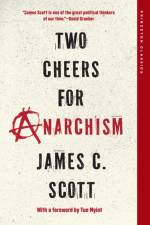
James Scott taught us what's wrong with seeing like a state. Now, in his most accessible and personal book to date, the acclaimed social scientist makes the case for seeing like an anarchist. Inspired by the core anarchist faith in the possibilities of voluntary cooperation without hierarchy, Two Cheers for Anarchism is an engaging, high-spirited, and often very funny defense of an anarchist way of seeing--one that provides a unique and powerful perspective on everything from everyday social and political interactions to mass protests and revolutions. Through a wide-ranging series of memorable anecdotes and examples, the book describes an anarchist sensibility that celebrates the local knowledge, common sense, and creativity of ordinary people. The result is a kind of handbook on constructive anarchism that challenges us to radically reconsider the value of hierarchy in public and private life, from schools and workplaces to retirement homes and government itself. Beginning with what Scott calls "e;the law of anarchist calisthenics,"e; an argument for law-breaking inspired by an East German pedestrian crossing, each chapter opens with a story that captures an essential anarchist truth. In the course of telling these stories, Scott touches on a wide variety of subjects: public disorder and riots, desertion, poaching, vernacular knowledge, assembly-line production, globalization, the petty bourgeoisie, school testing, playgrounds, and the practice of historical explanation. Far from a dogmatic manifesto, Two Cheers for Anarchism celebrates the anarchist confidence in the inventiveness and judgment of people who are free to exercise their creative and moral capacities.
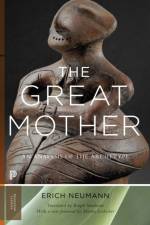
This landmark book explores the Great Mother as a primordial image of the human psyche. Here the renowned analytical psychologist Erich Neumann draws on ritual, mythology, art, and records of dreams and fantasies to examine how this archetype has been outwardly expressed in many cultures and periods since prehistory. He shows how the feminine has been represented as goddess, monster, gate, pillar, tree, moon, sun, vessel, and every animal from snakes to birds. Neumann discerns a universal experience of the maternal as both nurturing and fearsome, an experience rooted in the dialectical relation of growing consciousness, symbolized by the child, to the unconscious and the unknown, symbolized by the Great Mother.Featuring a new foreword by Martin Liebscher, this Princeton Classics edition of The Great Mother introduces a new generation of readers to this profound and enduring work.
Recent decades have seen a dramatic shift away from social forms of gambling played around roulette wheels and card tables to solitary gambling at electronic terminals. Slot machines, revamped by ever more compelling digital and video technology, have unseated traditional casino games as the gambling industry's revenue mainstay. Addiction by Design takes readers into the intriguing world of machine gambling, an increasingly popular and absorbing form of play that blurs the line between human and machine, compulsion and control, risk and reward.Drawing on fifteen years of field research in Las Vegas, anthropologist Natasha Dow Schull shows how the mechanical rhythm of electronic gambling pulls players into a trancelike state they call the "e;machine zone,"e; in which daily worries, social demands, and even bodily awareness fade away. Once in the zone, gambling addicts play not to win but simply to keep playing, for as long as possible--even at the cost of physical and economic exhaustion. In continuous machine play, gamblers seek to lose themselves while the gambling industry seeks profit. Schull describes the strategic calculations behind game algorithms and machine ergonomics, casino architecture and "e;ambience management,"e; player tracking and cash access systems--all designed to meet the market's desire for maximum "e;time on device."e; Her account moves from casino floors into gamblers' everyday lives, from gambling industry conventions and Gamblers Anonymous meetings to regulatory debates over whether addiction to gambling machines stems from the consumer, the product, or the interplay between the two.Addiction by Design is a compelling inquiry into the intensifying traffic between people and machines of chance, offering clues to some of the broader anxieties and predicaments of contemporary life. At stake in Schull's account of the intensifying traffic between people and machines of chance is a blurring of the line between design and experience, profit and loss, control and compulsion.
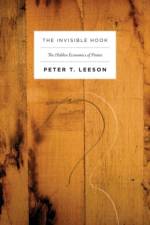
Pack your cutlass and blunderbuss--it's time to go a-pirating! The Invisible Hook takes readers inside the wily world of late seventeenth- and early eighteenth-century pirates. With swashbuckling irreverence and devilish wit, Peter Leeson uncovers the hidden economics behind pirates' notorious, entertaining, and sometimes downright shocking behavior. Why did pirates fly flags of Skull & Bones? Why did they create a "e;pirate code"e;? Were pirates really ferocious madmen? And what made them so successful? The Invisible Hook uses economics to examine these and other infamous aspects of piracy. Leeson argues that the pirate customs we know and love resulted from pirates responding rationally to prevailing economic conditions in the pursuit of profits. The Invisible Hook looks at legendary pirate captains like Blackbeard, Black Bart Roberts, and Calico Jack Rackam, and shows how pirates' search for plunder led them to pioneer remarkable and forward-thinking practices. Pirates understood the advantages of constitutional democracy--a model they adopted more than fifty years before the United States did so. Pirates also initiated an early system of workers' compensation, regulated drinking and smoking, and in some cases practiced racial tolerance and equality. Leeson contends that pirates exemplified the virtues of vice--their self-seeking interests generated socially desirable effects and their greedy criminality secured social order. Pirates proved that anarchy could be organized. Revealing the democratic and economic forces propelling history's most colorful criminals, The Invisible Hook establishes pirates' trailblazing relevance to the contemporary world.
Abonner på vårt nyhetsbrev og få rabatter og inspirasjon til din neste leseopplevelse.
Ved å abonnere godtar du vår personvernerklæring.