

Gjør som tusenvis av andre bokelskere
Abonner på vårt nyhetsbrev og få rabatter og inspirasjon til din neste leseopplevelse.
Ved å abonnere godtar du vår personvernerklæring.Du kan når som helst melde deg av våre nyhetsbrev.

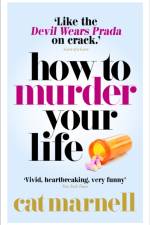
'I was twenty-six years old and an associate beauty editor at Lucky, one of the top fashion magazines in America. That s all that most people knew about me. But beneath the surface, I was full of secrets: I was a drug addict, for one. A pillhead. I was also an alcoholic-in-training who guzzled warm Veuve Clicquot after work alone in my boss s office with the door closed; a conniving and manipulative uptown doctor-shopper; a salami-and-provolone-puking bulimic who spent a hundred dollars a day on binge foods when things got bad (and they got bad often); a weepy, wobbly, wildly hallucination-prone insomniac; a tweaky self-mutilator; a slutty and self-loathing downtown party girl; and perhaps most of all a lonely weirdo. But, you know, I had access to some really fantastic self-tanner.'By the age of 15, Cat Marnell longed to work in the glamorous world of women's magazines - but was also addicted to the ADHD meds prescribed by her father. Within 10 years she was living it up in New York as a beauty editor at Cond Nast, with a talent for 'doctor-shopping' that secured her a never-ending supply of prescribed amphetamines. Her life had become a twisted merry-go-round of parties and pills at night, while she struggled to hold down her high-profile job during the day. Witty, magnetic and penetrating - prompting comparisons to Bret Easton Ellis and Charles Bukowski - Cat Marnell reveals essential truths about her generation, brilliantly uncovering the many aspects of being an addict with pin-sharp humour and beguiling style.'New York's enfant terrible...Her talent has resided in her uncanny ability to write about addiction from the untidy, unsafe, unhappy epicentre of the disease, rather than from some writerly remove.' Telegraph'I LOVE this book' Catriona Innes, Cosmopolitan Magazine UK'An unputdownable, brilliantly written rollercoaster' Shappi Khorsandi'Brilliantly written and harrowing and funny and honest' Louise France, The Times Magazine 'Easily one of the most anticipated memoirs of the year...[Marnell's] got an inimitable style (and oh my god, so many have tried) and a level of talent so high, it's impossible not to be rooting for her.' NYLON
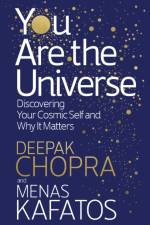
THE NEW YORK TIMES BESTSELLERIn this book, that combines cutting edge science with real world applications, Chopra and Kafatos redefine our nature of reality and what is possible.Here they ask 9 questions: What Came Before the Big Bang? Why Does the Universe Fit Together So Perfectly? Where Did Time Come From? What Is the Universe Made Of? Is There Design in the Universe?Is the Quantum World Linked to Everyday Life?Do We Live in a Conscious Universe?How Did Life First Begin? Does the brain create the mind?You Are The Universe offers answers that open up new possibilities for all of us to lead more fruitful, peaceful and successful lives.
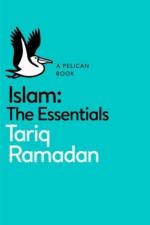
The essential introduction to Islam by a leading expertHardly a day goes by without mention of Islam. And yet, for most people, and in much of the world, Islam remains a little-known religion. Whether the issue is violence, terrorism, women's rights or slavery, Muslims are today expected to provide answers and to justify what Islam is - or is not. But little opportunity exists, either in the media or in society as a whole, to describe Islam: precisely the question this short and extremely accessible book sets out to answer. In simple, direct language it will introduce readers to Islam, to its spirituality, its principles, its rituals, its diversity and its evolution.
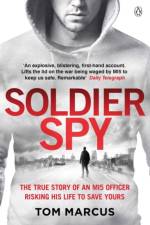
Penguin presents the unabridged, downloadable, audiobook edition of Soldier Spy by Tom Marcus, read by Jason Langley. In the boot were six homemade pipe bombs, all linked to detonate at the same time from a single call on a brand-new pay-as-you-go phone found on the target. Special Branch also found Chinese Type 56 assault rifles with eight full magazines full of ammunition. His target was a local school. He planned to attack two coaches of teenagers returning home after a school trip to France. Approximately sixty children, their accompanying teachers and their waiting parents. He was going to kill them all. My world was dark, no colour, no right or wrong and no back-up. People like me exist to fight those no one else dares face. I wasnt the last resort; I was the only option Tom Marcus was recruited by MI5 in the wake of the 7/7 attacks on London. After five years spent undercover as part of a covert British Army special operations unit he offered the Security Service the edge they so desperately needed. Following months of intensive training, Marcus was thrown into a world of relentless, unimaginable pressure; a never-ending struggle to prevent terrorist atrocities on our city streets, foil devastating strikes against the nations infrastructure, and keep our countrys secrets safe from foreign spies. Split second decisions carried life or death consequences. And not all his colleagues would survive the fight. In this explosive first-hand account, Soldier Spy lifts the lid on the war being waged by MI5 to keep us safe in our towns and cities for the first time; a blistering, visceral insight into life on the front line against terror, revealed in never-before-seen detail. It was a job which would inevitably exact a heavy price. But when it came down to it, Marcus knew he didnt have a choice. Some people join the service out of a sense of duty, some out of wanting to do some good by removing the evil. I did it because its all I knew. Im a hunter of people and Im damn good at it.
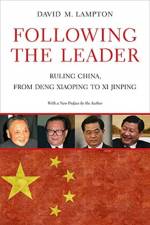
With unique access to Chinese leaders at all levels of the party and government, best-selling author David M. Lampton tells the story of China's political elites from their own perspectives. Based on over five hundred interviews, Following the Leader offers a rare glimpse into how the attitudes and ideas of those at the top have evolved over the past four decades. Here China's rulers explain their strategies and ideas for moving the nation forward, share their reflections on matters of leadership and policy, and discuss the challenges that keep them awake at night. As the Chinese Communist Party installs its new president, Xi Jinping, for a presumably ten-year term, questions abound. How will the country move forward as its explosive rate of economic growth begins to slow? How does it plan to deal with domestic and international calls for political reform and to cope with an aging population, not to mention an increasingly fragmented bureaucracy and society? In this insightful book we learn how China's leaders see the nation's political future, as well as about its global strategic influence.
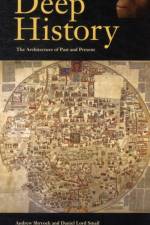
Humans have always been interested in their origins, but historians have been reluctant to write about the long stretches of time before the invention of writing. In fact, the deep past was left out of most historical writing almost as soon as it was discovered. This breakthrough book, as important for readers interested in the present as in the past,brings science into history to offer a dazzling new vision of humanity across time. Team-written by leading experts in a variety of fields, it maps events, cultures, and eras across millions of years to present a new scale for understanding the human body, energy and ecosystems, language, food, kinship, migration, and more. Combining cutting-edge social and evolutionary theory with the latest discoveries about human genes, brains, and material culture, Deep History invites scholars and general readers alike to explore the dynamic of connectedness that spans all of human history.With Timothy Earle, Gillian Feeley-Harnik, Felipe Fernandez-Armesto, Clive Gamble, April McMahon, John C. Mitani, Hendrik Poinar, Mary C. Stiner, and Thomas R. Trautmann
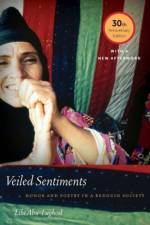
First published in 1986, Lila Abu-Lughod's Veiled Sentiments has become a classic ethnography in the field of anthropology. During the late 1970s and early 1980s, Abu-Lughod lived with a community of Bedouins in the Western Desert of Egypt for nearly two years, studying gender relations, morality, and the oral lyric poetry through which women and young men express personal feelings. The poems are haunting, the evocation of emotional life vivid. But Abu-Lughod's analysis also reveals how deeply implicated poetry and sentiment are in the play of power and the maintenance of social hierarchy. What begins as a puzzle about a single poetic genre becomes a reflection on the politics of sentiment and the complexity of culture. This thirtieth anniversary edition includes a new afterword that reflects on developments both in anthropology and in the lives of this community of Awlad Ali Bedouins, who find themselves increasingly enmeshed in national political and social formations. The afterword ends with a personal meditation on the meaningfor all involvedof the radical experience of anthropological fieldwork and the responsibilities it entails for ethnographers.
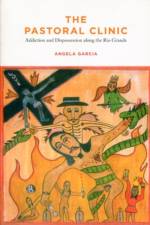
The Pastoral Clinic takes us on a penetrating journey into an iconic Western landscape-northern New Mexico's Espanola Valley, home to the highest rate of heroin addiction and fatal overdoses in the United States. In a luminous narrative, Angela Garcia chronicles the lives of several Hispano addicts, introducing us to the intimate, physical, and institutional dependencies in which they are entangled. We discover how history pervades this region that has endured centuries of material and cultural dispossession, and we come to see its heroin problem as a contemporary expression of these conditions, as well as a manifestation of the human desire to be released from them. Lyrically evoking the Espanola Valley and its residents through conversations, encounters, and recollections, The Pastoral Clinic is at once a devastating portrait of addiction, a rich ethnography of place, and an eloquent call for a new ethics of care.
Charles Tilly, in this eloquent manifesto, presents a powerful new approach to the study of persistent social inequality. How, he asks, do long-lasting, systematic inequalities in life chances arise, and how do they come to distinguish members of different socially defined categories of persons? Exploring representative paired and unequal categories, such as male/female, black/white, and citizen/noncitizen, Tilly argues that the basic causes of these and similar inequalities greatly resemble one another. In contrast to contemporary analyses that explain inequality case by case, this account is one of process. Categorical distinctions arise, Tilly says, because they offer a solution to pressing organizational problems. Whatever the "e;organization"e; is-as small as a household or as large as a government-the resulting relationship of inequality persists because parties on both sides of the categorical divide come to depend on that solution, despite its drawbacks. Tilly illustrates the social mechanisms that create and maintain paired and unequal categories with a rich variety of cases, mapping out fertile territories for future relational study of durable inequality.
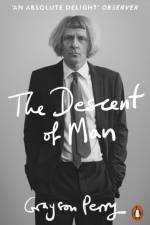
'Grayson Perry for King and Queen of England' Caitlin MoranGrayson Perry has been thinking about masculinity - what it is, how it operates, why little boys are thought to be made of slugs and snails - since he was a boy. Now, in this funny and necessary book, he turns round to look at men with a clear eye and ask, what sort of men would make the world a better place, for everyone?What would happen if we rethought the old, macho, outdated version of manhood, and embraced a different idea of what makes a man? Apart from giving up the coronary-inducing stress of always being 'right' and the vast new wardrobe options, the real benefit might be that a newly fitted masculinity will allow men to have better relationships - and that's happiness, right?Grayson Perry admits he's not immune from the stereotypes himself - as the psychoanalysts say, 'if you spot it, you've got it' - and his thoughts on everything from power to physical appearance, from emotions to a brand new Manifesto for Men, are shot through with honesty, tenderness and the belief that, for everyone to benefit, upgrading masculinity has to be something men decide to do themselves. They have nothing to lose but their hang-ups.
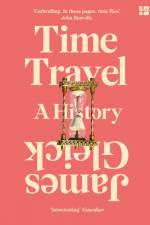
From the acclaimed author of The Information and Chaos, a mind-bending exploration of time travel: its subversive origins, its evolution in literature and science, and its influence on our understanding of time itself. Gleick's story begins at the turn of the twentieth century with the young H. G. Wells writing and rewriting the fantastic tale that became his first book, an international sensation, The Time Machine. A host of forces were converging to transmute the human understanding of time, some philosophical and some technological - the electric telegraph, the steam railroad, the discovery of buried civilisations, and the perfection of clocks. Gleick tracks the evolution of time travel as an idea in the culture - from Marcel Proust to Doctor Who, from Woody Allen to Jorge Luis Borges. He explores the inevitable looping paradoxes and examines the porous boundary between pulp fiction and modern physics. Finally, he delves into a temporal shift that is unsettling our own moment: the instantaneous wired world, with its all-consuming present and vanishing future.
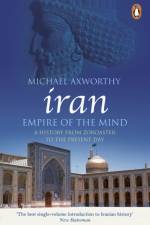
Iran often appears in the media as a hostile and difficult country. But beneath the headlines there is a fascinating story of a nation of great intellectual variety and depth, and enormous cultural importance. A nation whose impact has been tremendous, not only on its neighbours in the Middle East but on the world as a whole and through ideas and creativity rather than by the sword. From the time of the prophet Zoroaster, to the powerful ancient Persian Empires, to the revolution of 1979, the hostage crisis and current president Mahmud Ahmadinejad a controversial figure within as well as outside the country Michael Axworthy traces a vivid, integrated account of Iran s past. He explains clearly and carefully both the complex succession of dynasties that ruled ancient Iran and the surprising ethnic diversity of the modern country, held together by a common culture. With Iran again the focus of the world s attention, and questions about the country s disposition and intentions pressing, Iran: Empire of the Mind is an essential guide to understanding a complicated land.
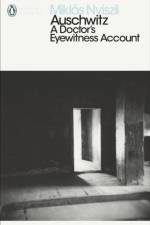
When the Nazis invaded Hungary in 1944, they sent virtually the entire Jewish population to Auschwitz. A Hungarian Jew and a medical doctor, Dr. Miklos Nyiszli was spared from death for a grimmer fate: to perform "e;scientific research"e; on his fellow inmates under the supervision of the infamous "e;Angel of Death"e;: Dr. Josef Mengele. Nyiszli was named Mengele's personal research pathologist. Miraculously, he survived to give this terrifying and sobering account of the terror of Auschwitz. This new Penguin Modern Classics edition contains an introduction by Richard Evans.
On Christmas Day 1066, William, duke of Normandy was crowned in Westminster, the first Norman king of England. It was a disaster: soldiers outside, thinking shouts of acclamation were treachery, torched the surrounding buildings. To later chroniclers, it was an omen of the catastrophes to come.During the reign of William the Conqueror, England experienced greater and more seismic change than at any point before or since. Marc Morris's concise and gripping biography sifts through the sources of the time to give a fresh view of the man who changed England more than any other, as old ruling elites were swept away, enemies at home and abroad (including those in his closest family) were crushed, swathes of the country were devastated and the map of the nation itself was redrawn, giving greater power than ever to the king. When, towards the end of his reign, William undertook a great survey of his new lands, his subjects compared it to the last judgement of God, the Domesday Book. England had been transformed forever.
Eight generations of the greatest and worst kings and queens that this country has ever seen - from the White Ship to the Lionheart, bad King John to the Black Prince and John of Gaunt - this is the dynasty that invented England as we still know it today - great history to appeal to readers of Ken Follet, Bernard Cornwell, Tom HollandEngland's greatest royal dynasty, the Plantagenets, ruled over England through eight generations of kings. Their remarkable reign saw England emerge from the Dark Ages to become a highly organised kingdom that spanned a vast expanse of Europe. Plantagenet rule saw the establishment of laws and creation of artworks, monuments and tombs which survive to this day, and continue to speak of their sophistication, brutality and secrets.Dan Jones brings you a new vision of this battle-scarred history. From the Crusades, to King John's humbling over Magna Carta and the tragic reign of the last Plantagenet, Richard II - this is a blow-by-blow account of England's most thrilling age.
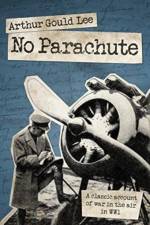
This account of the Great War puts you right in the actionfrom one of the fighter pilots of the Royal Flying Corps. From the young airmen who took their frail machines high above the trenches of World War I and fought their foes in single combat, there emerged a renowned company of brilliant acesamong them Ball, Bishop, McCudden, Collishaw, and Mannockwhose legendary feats have echoed down half a century. But behind the elite pilots in the Royal Flying Corps, there were many hundreds of airmen who flew their hazardous daily sorties in outdated planes without ever achieving fame. Here is the story of one of these unknown flyersa story based on letters written in the day, telling of a young pilot's progress from fledgling to seasoned fighter. His descriptions of air fighting, sometimes against the Richthofen Circus, of breathless dogfights between Sopwith Pup and Albatros, are among the most vivid and immediate to come out of World War I. Arthur Gould Lee, who rose to the rank of air vice-marshal and also authored the classic Open Cockpit, brilliantly conveys the immediacy of air war, the thrills and the terror, in this honest and timeless account.
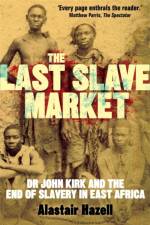
John Kirk was the only companion of explorer David Livingstone to emerge untainted from the disastrous, tragic expedition up the Zambezi river between 1859 and 1863. Three years later, Kirk returned to Africa, to the notorious island of Zanzibar, ancient post of the slave trade between Africa and the Middle East.Half a century after the abolition of slavery in Britain, slave traffi cking persisted on Africa's east coast, apparently tolerated and even connived with by parts of the British Empire in the Indian Ocean. Kirk, appointed as medical officer to the British Consulate in Zanzibar, could do nothing.This extraordinary and controversial book brings Kirk's years in Zanzibar to life. The horrors of the overland passage from the interior, and the Zanzibar slave market itself, are vividly described, together with Kirk's final, bitter conflict with Livingstone, who blamed Kirk for his own failings. But it was Kirk's success in closing down the slave trade on the island which made him famous across the world. Using private diaries and papers, a long forgotten Victorian hero and an extraordinary chapter in British history are revived in detail.
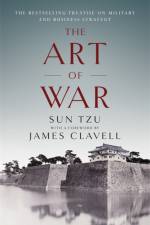
Sun Tzu was one of the greatest army generals who ever lived. He wrote The Art of War in the fifth century BC and yet his words are still resoundingly relevant to our modern lives. His writings on aspects of warfare from the laying of plans to the tactics and psychology of manoeuvering an army, to the proper use of spies, resonate for us in today's world of cut-throat, ruthless business. With James Clavell's insightful foreword and notes, this classic is widely seen as a necessity on the bookshelf of military leaders and boardroom executives alike.
Militant Modernism is a defence against Modernism's many detractors. It looks at design, film and architecture - especially architecture - and pursues the notion of an evolved modernism that simply refuses to stop being necessary. Owen Hatherley gives us new ways to look at what we thought was familiar - Bertolt Brecht, Le Corbusier, even Vladimir Mayakovsky. Through Hatherley's eyes we see all of the quotidian modernists of the 20th century - lesser lights, too - perhaps understanding them for the first time. Whether we are looking at Britain's brutalist aesthetics, Russian Constructivism, or the Sexpol of Wilhelm Reich, the message is clear. There is no alternative to Modernism.
24 years after the fall of the Berlin Wall, Europe is as divided as ever. The passengers of the low-budget airlines go east for stag parties, and they go West for work; but the East stays East, and West stays West. Caricatures abound - the Polish plumber in the tabloids, the New Cold War in the broadsheets and the endless search for the new Berlin for hipsters. Against the stereotypes, Agata Pyzik peers behind the curtain to take a look at the secret histories of Eastern Europe (and its tortured relations with the West). Neoliberalism and mass migration, post-punk and the Bowiephile obsession with the Eastern Bloc, Orientalism and self-colonization, the emancipatory potentials of Socialist Realism, the possibility of a non-Western idea of modernity and futurism, and the place of Eastern Europe in any current revival of the idea of communism all are much more complex and surprising than they appear. Poor But Sexy refuses both a dewy-eyed Ostalgia for the good old days and the equally desperate desire to become a normal part of Europe, reclaiming instead the idea an Other Europe.
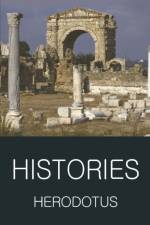
Translated with Notes by George Rawlinson. With an Introduction by Tom Griffith.Herodotus (c480-c425) is 'The Father of History' and his Histories are the first piece of Western historical writing. They are also the most entertaining.Why did Pheidippides run the 26 miles and 385 yards (or 42.195 kilometres) from Marathon to Athens? And what did he do when he got there? Was the Battle of Salamis fought between sausage-sellers? Which is the oldest language in the world? Why did Leonidas and his 300 Spartans spend the morning before the battle of Thermopylae combing their hair? Why did every Babylonian woman have to sit in the Temple of Aphrodite until a man threw a coin into her lap, and how long was she likely to sit there? And what is the best way to kill a crocodile?This wide-ranging history provides the answers to all these fascinating questions as well as providing many fascinating insights into the Ancient World.
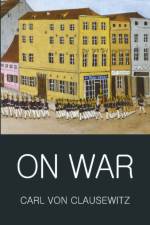
Translated by J.J. Graham, revised by F.N. Maude Abridged and with an Introduction by Louise Willmot.On War is perhaps the greatest book ever written about war. Carl von Clausewitz, a Prussian soldier, had witnessed at first hand the immense destructive power of the French Revolutionary armies which swept across Europe between 1792 and 1815. His response was to write a comprehensive text covering every aspect of warfare.On War is both a philosophical and practical work in which Clausewitz defines the essential nature of war, debates the qualities of the great commander, assesses the relative strengths of defensive and offensive warfare, and - in highly controversial passages - considers the relationship between war and politics. His arguments are illustrated with vivid examples drawn from the campaigns of Frederick the Great and Napoleon Bonaparte.For the student of society as well as the military historian, On War remains a compelling and indispensable source.
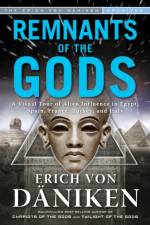
We live in an age of information. But there are things in our prehistory "e;about which we do not have the faintest idea,"e; writes best-selling author Erich von Daniken in his gripping new book, REMNANTS OF THE GODS. Stone structures erected by master builders, mysterious underground complexes, geometrically aligned stone circles, the breathtaking pyramids of Egypt - who built them? And, perhaps more importantly, where did these builders obtain such incredible knowledge? Erich von Dniken shows in detail how whole countries were surveyed thousands of years ago. Hundreds of Stone Age holy places are located at equal distances from one another, forming giant squares and triangles. How was all of this possible? Classic archaeology provides no answers to these questions. Worse still, it doesn't even appear to be interested. Are we all threatening to become "e;camp followers of disinterest,"e; as Erich asks? Featuring more than 160 colour photos and illustrations, Erich reveals the secrets of "e;impossible buildings"e; in Europe and the Mediterranean region, describes "e;crazy facts"e; and relentlessly exposes false doctrines. REMNANTS OF THE GODS will make even strident sceptics reconsider what they think they know of the past.
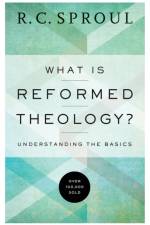
What Do the Five Points of Calvinism Really Mean?Many have heard of Reformed theology, but may not be certain what it is. Some references to it have been positive, some negative. It appears to be important, and they'd like to know more about it. But they want a full, understandable explanation, not a simplistic one.What Is Reformed Theology? is an accessible introduction to beliefs that have been immensely influential in the evangelical church. In this insightful book, R. C. Sproul walks readers through the foundations of the Reformed doctrine and explains how the Reformed belief is centered on God, based on God's Word, and committed to faith in Jesus Christ. Sproul explains the five points of Reformed theology and makes plain the reality of God's amazing grace.
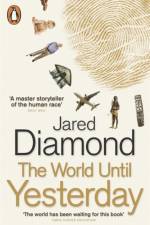
From the author of No.1 international bestseller Collapse, a mesmerizing portrait of the human past that offers profound lessons for how we can live todayVisionary, prize-winning author Jared Diamond changed the way we think about the rise and fall of human civilizations with his previous international bestsellers Guns, Germs and Steel and Collapse. Now he returns with another epic - and groundbreaking - journey into our rapidly receding past. In The World Until Yesterday, Diamond reveals how traditional societies around the world offer an extraordinary window onto how our ancestors lived for the majority of human history - until virtually yesterday, in evolutionary terms - and provide unique, often overlooked insights into human nature. Drawing extensively on his decades working in the jungles of Papua New Guinea, Diamond explores how tribal societies approach essential human problems, from childrearing to conflict resolution to health, and discovers we have much to learn from traditional ways of life. He unearths remarkable findings - from the reason why modern afflictions like diabetes, obesity and Alzheimer's are virtually non-existent in tribal societies to the surprising benefits of multilingualism. Panoramic in scope and thrillingly original, The World Until Yesterday provides an enthralling first-hand picture of the human past that also suggests profound lessons for how to live well today. Jared Diamond is the Pulitzer Prize-winning author of the seminal million-copy-bestseller Guns, Germs, and Steel, which was named one of TIME's best non-fiction books of all time, and Collapse, a #1 international bestseller. A professor of geography at UCLA and noted polymath, Diamond's work has been influential in the fields of anthropology, biology, ornithology, ecology and history, among others.
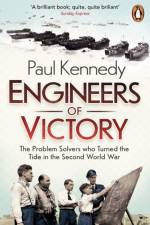
From Paul Kennedy, author of The Rise and Fall of the Great Powers, one of the most acclaimed history books of recent decades, Engineers of Victory is a new account of how the tide was turned against the Nazis by the Allies in the Second World War. In January 1943 Churchill and Roosevelt and the Combined Chiefs of Staff met in Casablanca to review the western Allies' war aims and strategy. They realised that to attain their ultimate aim of 'unconditional surrender' they would have to achieve some formidable objectives - win control of the Atlantic sea-lanes and command of the air over the whole of West-Central Europe, work out how to land on an enemy-held shore so that Continental Europe could be retaken, how to blunt the Nazi blitzkrieg that a successful invasion would undoubtedly provoke, and finally how to 'hop' across the islands of the Pacific to assault the Japanese mainland. Eighteen months later on, as Paul Kennedy writes, 'these operational aims were either accomplished or close to being so.' The history of the Second World War is often told as a grand narrative. The focus of this book, by contrast, is on the problem-solvers - Major-General Perry Hobart, who invented the 'funny tanks' which flattened the curve on the D-Day beaches; Flight Lieutenant Ronnie Harker 'the man who put the Merlin in the Mustang'; Captain 'Johnny' Walker, the convoy captain who worked out how to sink U-boats with a 'creeping barrage'. The result is a fresh perspective on the greatest, conflict in human history.Paul Kennedy is one of the world's best-selling and most influential historians. He is the author or editor of nineteen books, including The Rise and Fall of the Great Powers, which has been translated into over twenty languages, Preparing for the Twenty-First Century, The Parliament of Man and the now classic Rise and Fall of British Naval Mastery.
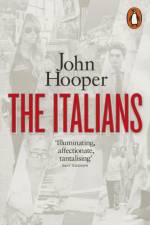
'Hooper has written a fascinating, affectionate and well-researched study that delivers the tantalising flavour of a country as hot, cold, bitter and sweet as an affogato' The Telegraph'This portrait of a nation is required reading for anyone heading to a Tuscan villa or Puglian beach this summer' Financial TimesSublime and maddening, fascinating yet baffling, Italy is a country of endless paradox and seemingly unanswerable riddles. John Hooper's marvellously entertaining and perceptive book is the ideal companion for anyone seeking to understand contemporary Italy and the unique character of the Italians. Looking at the facts that lie behind - and often belie - the stereotypes, his revealing book sheds new light on many aspects of Italian life: football and Freemasonry, sex, symbolism and the reason why Italian has twelve words for a coat hanger, yet none for a hangover.
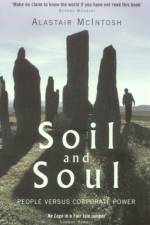
It is easy to feel helpless in the face of the torrent of information about environmental catastrophes taking place all over the world. In this powerful and provocative book, Scottish writer and campaigner Alastair McIntosh shows how it is still possible for individuals and communities to take on the might of corporate power and emerge victorious. As a founder of the Isle of Eigg Trust, McIntosh helped the beleaguered residents of Eigg to become the first Scottish community ever to clear their laird from his own estate. And plans to turn a majestic Hebridean mountain into a superquarry were overturned after McIntosh persuaded a Native American warrior chief to visit the Isle of Harris and testify at the government inquiry. This extraordinary book weaves together theology, mythology, economics, ecology, history, poetics and politics as the author journeys towards a radical new philosophy of community, spirit and place. His daring and imaginative responses to the destruction of the natural world make Soil and Soul an uplifting, inspirational and often richly humorous read.
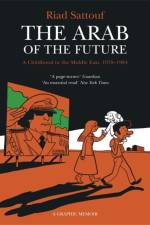
VOLUME 1 IN THE UNFORGETTABLE STORY OF AN EXTRAORDINARY CHILDHOODThe Arab of the Future tells the unforgettable story of Riad Sattouf's childhood, spent in the shadows of three dictators - Muammar Gaddafi, Hafez al-Assad, and his father.A GUARDIAN BOOK OF THE YEAR | AN OBSERVER GRAPHIC BOOK OF THE YEAR | A NEW YORK TIMES CRITICS' TOP BOOK OF THE YEAR'I tore through it... The most enjoyable graphic novel I've read in a while' Zadie Smith'I joyously recommend this book to you' Mark Haddon'Riad Sattouf is one of the great creators of our time' Alain De Botton'Beautifully-written and drawn, witty, sad, fascinating... Brilliant' Simon Sebag MontefioreIn a striking, virtuoso graphic style that captures both the immediacy of childhood and the fervour of political idealism, Riad Sattouf recounts his nomadic childhood growing up in rural France, Gaddafi's Libya, and Assad's Syria - but always under the roof of his father, a Syrian Pan-Arabist who drags his family along in his pursuit of grandiose dreams for the Arab nation.Riad, delicate and wide-eyed, follows in the trail of his mismatched parents: his mother, a bookish French student, is as modest as his father is flamboyant. Venturing first to the Great Socialist People's Libyan Arab State and then joining the family tribe in Homs, Syria, they hold fast to the vision of the paradise that always lies just around the corner. And hold they do, though food is scarce, children kill dogs for sport, and with locks banned, the Sattoufs come home one day to discover another family occupying their apartment. The ultimate outsider, Riad, with his flowing blond hair, is called the ultimate insult... Jewish. And in no time at all, his father has come up with yet another grand plan, moving from building a new people to building his own great palace.Brimming with life and dark humour, The Arab of the Future reveals the truth and texture of one eccentric family in an absurd Middle East, and also introduces a master cartoonist in a work destined to stand alongside Maus and Persepolis.Translated by Sam Taylor.'ENGROSSING' New York Times'A PAGE TURNER' Guardian'MARVELLOUS... BEGS TO BE READ IN ONE LONG SITTING' Herald'AN OBJECT OF CONSENSUAL RAPTURE' New Yorker'ONE OF THE GREATEST CARTOONISTS OF HIS GENERATION' Le Monde
Abonner på vårt nyhetsbrev og få rabatter og inspirasjon til din neste leseopplevelse.
Ved å abonnere godtar du vår personvernerklæring.