






Gjør som tusenvis av andre bokelskere
Abonner på vårt nyhetsbrev og få rabatter og inspirasjon til din neste leseopplevelse.
Ved å abonnere godtar du vår personvernerklæring.Du kan når som helst melde deg av våre nyhetsbrev.

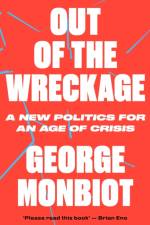
What does the good life-and the good society-look like in the twenty-first century?
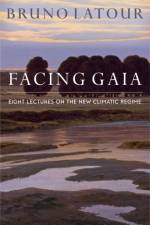
The emergence of modern sciences in the seventeenth century profoundly renewed our understanding of Nature. For the last three centuries new ideas of Nature have been continuously developed by theology, politics, economics, and science, especially the sciences of the material world.
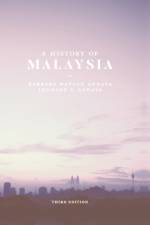
First published in 1982, this text is widely regarded as a leading general history of the country.
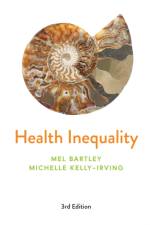
At a time when social inequalities are increasing at an alarming rate, this new edition of Mel Bartley's popular book is a vital resource for understanding the extent of health inequalities and why they are proving to be persistent despite decades of growing knowledge and policies on the issue.
How Parisian women loved, lived and died in the 1940s - under Occupation and then after Liberation.
Life and leadership lessons from the Special Forces, accompanying the Channel 4 series SAS: Who Dares Wins.
John Kiszely draws on his own experience in the military to assess the ignominious failure of the British campaign in Norway in 1940. The result helps us to understand not only the outcome of the Norwegian campaign but also why more recent military campaigns have found success so elusive.
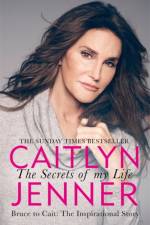
In her new memoir, Caitlyn Jenner chronicles her life as Bruce and her brave transition into womanhood.
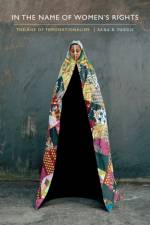
Sara R. Farris examines the calls for gender equality from an unlikely collection of European right-wing nationalist political parties, neoliberals, and some feminist theorists and policymakers, showing how their exploitation of feminist ideals justifies anti-Islam and anti-immigrant rhetoric and policies.
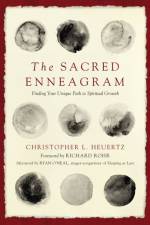
Answering more than "what is the enneagram?" The Sacred Enneagram uncovers how to use one of the most profound personality tools for personal and spiritual growth. Chris Heuertz will help you discover how to awaken your identity, grow with God, and become who you are designed to be.
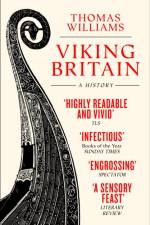
A new narrative history of the Viking Age, interwoven with exploration of the physical remains and landscapes that the Vikings fashioned and walked: their rune-stones and ship burials, settlements and battlefields.
A natural history of the coyote-whose success story and adaptability mirror humanity's own
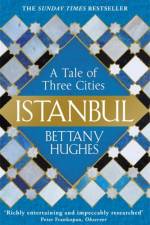
A biography of one of the world's greatest cities - Byzantium, Constantinople, Istanbul
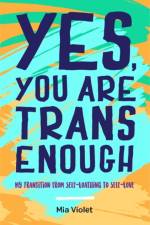
With entertaining anecdotes and thoughtful observations, this memoir depicts the realities of being a trans woman - from bullying and botched coming out attempts to self-acceptance and love - whilst exploring the inaccuracies of trans representation and confront what the media has gotten wrong.
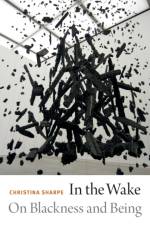
Using the multiple meanings of "wake" to illustrate the ways Black lives are determined by slavery's afterlives, Christina Sharpe weaves personal experiences with readings of literary and artistic representations of Black life and death to examine what survives in the face of insistent violence and the possibilities for resistance.
Matthew Qvortrup's definitive and insightful biography of Angela Merkel is essential reading for anyone interested in current affairs, the fate of Europe, or simply the story of a truly remarkable woman.
SHORTLISTED FOR THE ORWELL PRIZE 2017 'The best political book of the year' Andrew Marr 'A superb work of storytelling and reporting. Sets new benchmark for the writing of contemporary political history' Andrew Sparrow, Guardian The only book to tell the full story of how and why Britain voted to leave the EU.
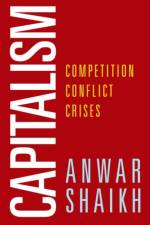
In Capitalism, Anwar Shaikh demonstrates that most of the central propositions of economic analysis can be derived without any reference to hyperrationality, optimization, perfect competition, perfect information, representative agents or so-called rational expectations.
The concept of intersectionality has become a hot topic in academic and activist circles alike.
In The Slow Professor, Maggie Berg and Barbara K. Seeber discuss how adopting the principles of the Slow movement in academic life can counter the erosion of humanistic education.
Abonner på vårt nyhetsbrev og få rabatter og inspirasjon til din neste leseopplevelse.
Ved å abonnere godtar du vår personvernerklæring.