Norges billigste bøker
Om Wine and Conversation

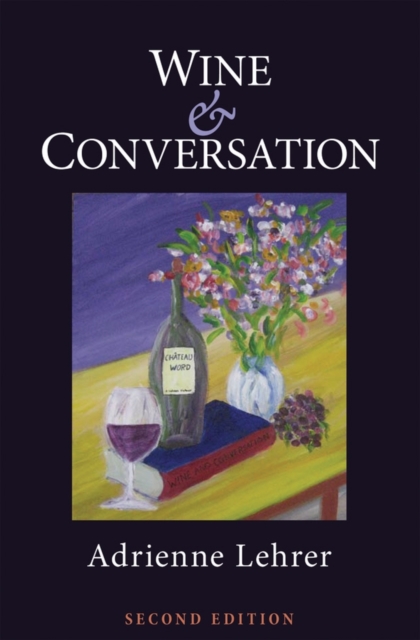
The vocabulary of wine is large and exceptionally vibrant — from straight-forward descriptive words like "sweet" and "fragrant", colorful metaphors like "ostentatious" and "brash", to the more technical lexicon of biochemistry. The world of wine vocabulary is growing alongside the current popularity of wine itself, particularly as new words are employed by professional wine writers, who not only want to write interesting prose, but avoid repetition andcliché. The question is, what do these words mean? Can they actually reflect the objective characteristics of wine, and can two drinkers really use and understand these words in the same way? In this second edition of Wine and Conversation, linguist Adrienne Lehrer explores whether or not wine drinkers (both novices and experts) can in fact understand wine words in the same way. Her conclusion, based on experimental results, is no. Even though experts do somewhat better than novices in some experiments, they tend to do well only on wines on which they are carefully trained and/or with which they are very familiar. Does this mean that the elaborate language we use todescribe wine is essentially a charade? Lehrer shows that although scientific wine writing requires a precise and shared use of language, drinking wine and talking about it in casual, informal setting with friends is different, and the conversational goals include social bonding as well as communicatinginformation about the wine. Lehrer also shows how language innovation and language play, clearly seen in the names of new wines and wineries, as well as wine descriptors, is yet another influence on the burgeoning and sometimes whimsical world of wine vocabulary.

Vis mer
  • Språk:
  • Engelsk
  • ISBN:
  • 9780195307948
  • Bindende:
  • Paperback
  • Sider:
  • 336
  • Utgitt:
  • 23. april 2009
  • Utgave:
  • 2
  • Dimensjoner:
  • 215x140x24 mm.
  • Vekt:
  • 414 g.
  Gratis frakt
Leveringstid: 2-4 uker
Forventet levering: 28. mai 2026

Beskrivelse av Wine and Conversation

The vocabulary of wine is large and exceptionally vibrant — from straight-forward descriptive words like "sweet" and "fragrant", colorful metaphors like "ostentatious" and "brash", to the more technical lexicon of biochemistry. The world of wine vocabulary is growing alongside the current popularity of wine itself, particularly as new words are employed by professional wine writers, who not only want to write interesting prose, but avoid repetition andcliché. The question is, what do these words mean? Can they actually reflect the objective characteristics of wine, and can two drinkers really use and understand these words in the same way? In this second edition of Wine and Conversation, linguist Adrienne Lehrer explores whether or not wine drinkers (both novices and experts) can in fact understand wine words in the same way. Her conclusion, based on experimental results, is no. Even though experts do somewhat better than novices in some experiments, they tend to do well only on wines on which they are carefully trained and/or with which they are very familiar. Does this mean that the elaborate language we use todescribe wine is essentially a charade? Lehrer shows that although scientific wine writing requires a precise and shared use of language, drinking wine and talking about it in casual, informal setting with friends is different, and the conversational goals include social bonding as well as communicatinginformation about the wine. Lehrer also shows how language innovation and language play, clearly seen in the names of new wines and wineries, as well as wine descriptors, is yet another influence on the burgeoning and sometimes whimsical world of wine vocabulary.

Brukervurderinger av Wine and Conversation


Finn lignende bøker
Boken Wine and Conversation finnes i følgende kategorier:

Gjør som tusenvis av andre bokelskere

Abonner på vårt nyhetsbrev og få rabatter og inspirasjon til din neste leseopplevelse.
