
Norges billigste bøker

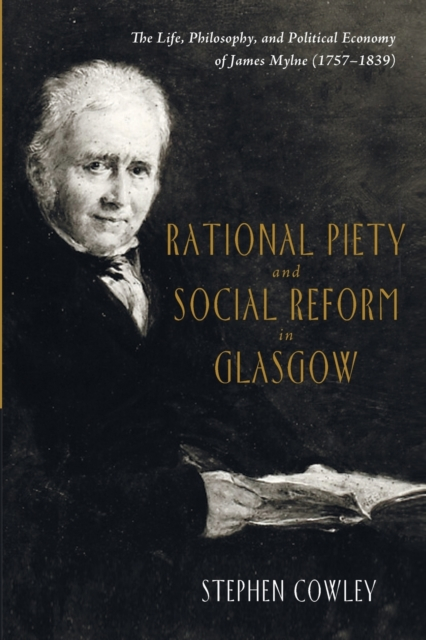
Rational Piety and Social Reform in Glasgow

Om Rational Piety and Social Reform in Glasgow

James Mylne (1757-1839) taught moral philosophy and political economy in Glasgow from 1797 to the mid-1830s. Rational Piety and Social Reform in Glasgow offers readers Mylne's biography, a summary of his lectures on moral philosophy and political economy, several interpretative essays, and a collation of his introductory lecture. Mylne's moral philosophy lectures cover the intellectual and active powers of man and offer an account of his duties to God, neighbor, and self. He diverges from the ""moral sense"" and ""common sense"" traditions associated with Francis Hutcheson and Thomas Reid in Glasgow. He reinstates reason as the guiding principle of conscience and argues for utility as the predominant criterion of morality. Mylne was also active among the Whig ""friends of Mr. Fox"" and in the Glasgow Reform Association, for his theory of the sovereignty of reason drove his view of political reform and the concept of value in his lectures on political economy. In a criticism of Adam Smith, Mylne interprets use-value as prior to exchange value, founding it in lawful desires identifiable by a merchant community. Mylne's political opinions and activity among local political reformers and literary societies exemplify the Glasgow Whig tradition.

Vis mer
  • Språk:
  • Engelsk
  • ISBN:
  • 9781625649973
  • Bindende:
  • Paperback
  • Sider:
  • 316
  • Utgitt:
  • 12. juni 2015
  • Dimensjoner:
  • 153x229x22 mm.
  • Vekt:
  • 434 g.
  Gratis frakt
Leveringstid: 2-4 uker
Forventet levering: 27. mai 2026

Beskrivelse av Rational Piety and Social Reform in Glasgow

James Mylne (1757-1839) taught moral philosophy and political economy in Glasgow from 1797 to the mid-1830s. Rational Piety and Social Reform in Glasgow offers readers Mylne's biography, a summary of his lectures on moral philosophy and political economy, several interpretative essays, and a collation of his introductory lecture.
Mylne's moral philosophy lectures cover the intellectual and active powers of man and offer an account of his duties to God, neighbor, and self. He diverges from the ""moral sense"" and ""common sense"" traditions associated with Francis Hutcheson and Thomas Reid in Glasgow. He reinstates reason as the guiding principle of conscience and argues for utility as the predominant criterion of morality.
Mylne was also active among the Whig ""friends of Mr. Fox"" and in the Glasgow Reform Association, for his theory of the sovereignty of reason drove his view of political reform and the concept of value in his lectures on political economy. In a criticism of Adam Smith, Mylne interprets use-value as prior to exchange value, founding it in lawful desires identifiable by a merchant community. Mylne's political opinions and activity among local political reformers and literary societies exemplify the Glasgow Whig tradition.

Brukervurderinger av Rational Piety and Social Reform in Glasgow


Finn lignende bøker
Boken Rational Piety and Social Reform in Glasgow finnes i følgende kategorier:

Gjør som tusenvis av andre bokelskere

Abonner på vårt nyhetsbrev og få rabatter og inspirasjon til din neste leseopplevelse.