Norges billigste bøker

OMICS-Based Approaches in Plant Biotechnology

Om OMICS-Based Approaches in Plant Biotechnology

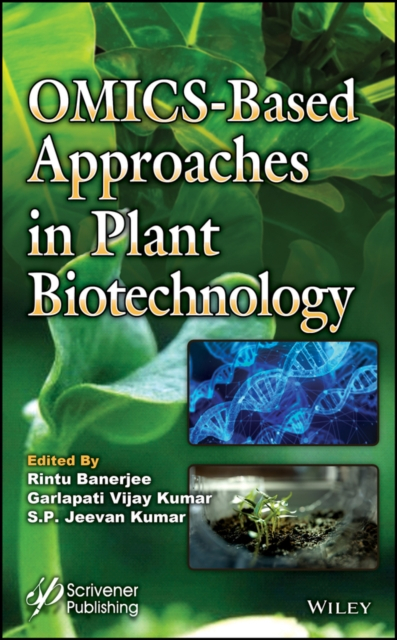
The book provides a detailed description of how OMICS can help crop science and horticulture to enhance crop yields, resistance and nutritional values. Burgeoning world population, decreased water supply and land resources, coupled with climate change, result in severe stress conditions which is a great threat to the global food supply. To meet these challenges, exploring OMICS technologies could lead to improved yields of cereals, tubers and grasses that may ensure food security. Improvement of yields through crop improvement and biotechnological means are the need-of-the-hour, and the current book "OMICS-Based Approaches in Plant Biotechnology", reviews the advanced concepts on breeding strategies, OMICS technologies (genomics, transcriptomics and metabolomics) and bioinformatics that help to glean the potential candidate genes/molecules to address unsolved problems related to plant and agricultural crops. The first six chapters of the book are focused on genomics and cover sequencing, functional genomics with examples on insecticide resistant genes, mutation breeding and miRNA technologies. Recent advances in metabolomics studies are elucidated in the next 3 chapters followed by 5 chapters on bioinformatics and advanced techniques in plant biotechnology and crop breeding. Audience The information contained in the volume will help plant breeders, plant biotechnologists, plant biochemists, agriculture scientists and researchers as well as policy makers in using this applied research to focus on better crop breeding and stress adaptation strategies.

Vis mer
  • Språk:
  • Engelsk
  • ISBN:
  • 9781119509936
  • Bindende:
  • Hardback
  • Sider:
  • 348
  • Utgitt:
  • 5. mars 2019
  • Dimensjoner:
  • 10x10x10 mm.
  • Vekt:
  • 454 g.
  Gratis frakt
Leveringstid: 2-4 uker
Forventet levering: 25. mars 2026

Beskrivelse av OMICS-Based Approaches in Plant Biotechnology

The book provides a detailed description of how OMICS can help crop science and horticulture to enhance crop yields, resistance and nutritional values. Burgeoning world population, decreased water supply and land resources, coupled with climate change, result in severe stress conditions which is a great threat to the global food supply. To meet these challenges, exploring OMICS technologies could lead to improved yields of cereals, tubers and grasses that may ensure food security. Improvement of yields through crop improvement and biotechnological means are the need-of-the-hour, and the current book "OMICS-Based Approaches in Plant Biotechnology", reviews the advanced concepts on breeding strategies, OMICS technologies (genomics, transcriptomics and metabolomics) and bioinformatics that help to glean the potential candidate genes/molecules to address unsolved problems related to plant and agricultural crops. The first six chapters of the book are focused on genomics and cover sequencing, functional genomics with examples on insecticide resistant genes, mutation breeding and miRNA technologies. Recent advances in metabolomics studies are elucidated in the next 3 chapters followed by 5 chapters on bioinformatics and advanced techniques in plant biotechnology and crop breeding. Audience The information contained in the volume will help plant breeders, plant biotechnologists, plant biochemists, agriculture scientists and researchers as well as policy makers in using this applied research to focus on better crop breeding and stress adaptation strategies.

Brukervurderinger av OMICS-Based Approaches in Plant Biotechnology


Finn lignende bøker
Boken OMICS-Based Approaches in Plant Biotechnology finnes i følgende kategorier:

Gjør som tusenvis av andre bokelskere

Abonner på vårt nyhetsbrev og få rabatter og inspirasjon til din neste leseopplevelse.
