
Norges billigste bøker

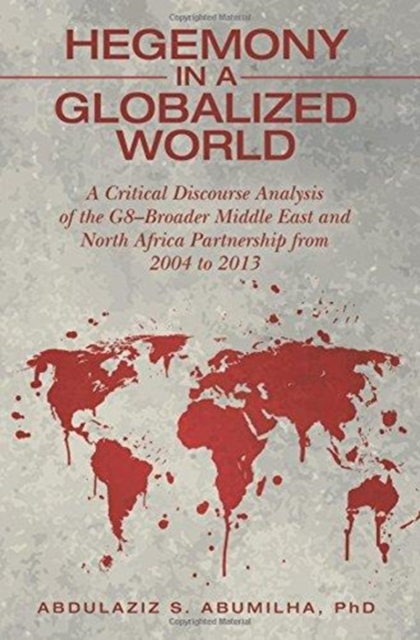
Hegemony in a Globalized World

- A Critical Discourse Analysis of the G8-Broader Middle East and North Africa Partnership from 2004 to 2013

Om Hegemony in a Globalized World

For many marginalized countries across the Middle East and North Africa, globalization is heralded as a way to address educational, political, and social challenges. Yet in response to this globalization, nations are faced with reform choices that do not necessarily respond to local needs. And in the end, globalization is often code for westernization, where countries are forced to abandon their own unique cultures for a Western social, economic, educational, and political hegemony. Hegemony in a Globalized World examines the types of hegemony and its effects by addressing political, social, and educational ramifications. It scrutinizes the political, educational, and social history of the Kingdom of Saudi Arabia and uses the kingdom as an example for the region because of its political influence on the region. The author engages in a critical analysis of globalization and the tools thereof to highlight the advantages and disadvantages of globalization to marginalized countries, focusing on the spread of the English language in marginalized communities and the status of the Arabic language in both lexical and mental dimensions. Why are globalization and westernization virtually synonymous when it comes to reform in the Middle East and North Africa? Why do we trust the West and dismiss the Rest? And will the Rest ever be independent to decide for itself? To answer these questions, it takes highlighting the power of hegemony that marginalized people specifically adhere to, consciously or unconsciously.

Vis mer
  • Språk:
  • Engelsk
  • ISBN:
  • 9781480862203
  • Bindende:
  • Paperback
  • Sider:
  • 216
  • Utgitt:
  • 2. mai 2018
  • Dimensjoner:
  • 152x229x12 mm.
  • Vekt:
  • 322 g.
Leveringstid: 2-4 uker
Forventet levering: 25. mai 2026

Beskrivelse av Hegemony in a Globalized World

For many marginalized countries across the Middle East and North Africa, globalization is heralded as a way to address educational, political, and social challenges. Yet in response to this globalization, nations are faced with reform choices that do not necessarily respond to local needs. And in the end, globalization is often code for westernization, where countries are forced to abandon their own unique cultures for a Western social, economic, educational, and political hegemony.
Hegemony in a Globalized World examines the types of hegemony and its effects by addressing political, social, and educational ramifications. It scrutinizes the political, educational, and social history of the Kingdom of Saudi Arabia and uses the kingdom as an example for the region because of its political influence on the region. The author engages in a critical analysis of globalization and the tools thereof to highlight the advantages and disadvantages of globalization to marginalized countries, focusing on the spread of the English language in marginalized communities and the status of the Arabic language in both lexical and mental dimensions.
Why are globalization and westernization virtually synonymous when it comes to reform in the Middle East and North Africa? Why do we trust the West and dismiss the Rest? And will the Rest ever be independent to decide for itself? To answer these questions, it takes highlighting the power of hegemony that marginalized people specifically adhere to, consciously or unconsciously.

Brukervurderinger av Hegemony in a Globalized World


Finn lignende bøker
Boken Hegemony in a Globalized World finnes i følgende kategorier:

Gjør som tusenvis av andre bokelskere

Abonner på vårt nyhetsbrev og få rabatter og inspirasjon til din neste leseopplevelse.