Norges billigste bøker

Heat and Mass Transfer Studies on Different Leather Materials

Om Heat and Mass Transfer Studies on Different Leather Materials

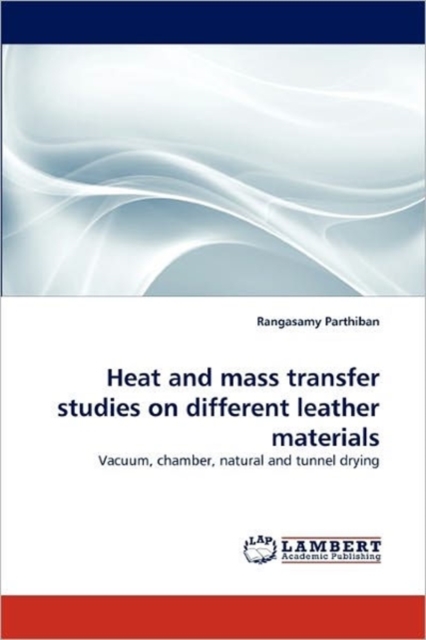
Leather is an important economic commodity. The feel of the leather invariably decides the quality of the leather. The rate and mode of drying alters the physico-mechanical properties of the leather significantly. Typically, in leather manufacture wet leathers with about 70% moisture levels are subjected to mechanical squeezing operation, samming, for removal of freely held water before subjecting to conventional drying processes to produce leathers with 15¿ 20% moisture. Experiments are conducted to gain a clear picture of how drying variable affects the mechanical properties of dried leathers. Shorter drying time and proper initial water content are favorable conditions to produce stronger and softer leather. Possibility have been explored of using mass quantity such as drying rate to generalize relationship between drying variables and mechanical properties. From the experiments, it can be concluded that by vacuum drying process stronger and softer leather can be achieved, which will have high tensile strength, grain crack strength and tongue tear strength. Further they would not undergo any wear and tear during finishing processes.

Vis mer
  • Språk:
  • Engelsk
  • ISBN:
  • 9783844399127
  • Bindende:
  • Paperback
  • Sider:
  • 120
  • Utgitt:
  • 23. mai 2011
  • Dimensjoner:
  • 152x229x7 mm.
  • Vekt:
  • 186 g.
  Gratis frakt
Leveringstid: 2-4 uker
Forventet levering: 16. mars 2026

Beskrivelse av Heat and Mass Transfer Studies on Different Leather Materials

Leather is an important economic commodity. The feel of the leather invariably decides the quality of the leather. The rate and mode of drying alters the physico-mechanical properties of the leather significantly. Typically, in leather manufacture wet leathers with about 70% moisture levels are subjected to mechanical squeezing operation, samming, for removal of freely held water before subjecting to conventional drying processes to produce leathers with 15¿ 20% moisture. Experiments are conducted to gain a clear picture of how drying variable affects the mechanical properties of dried leathers. Shorter drying time and proper initial water content are favorable conditions to produce stronger and softer leather. Possibility have been explored of using mass quantity such as drying rate to generalize relationship between drying variables and mechanical properties. From the experiments, it can be concluded that by vacuum drying process stronger and softer leather can be achieved, which will have high tensile strength, grain crack strength and tongue tear strength. Further they would not undergo any wear and tear during finishing processes.

Brukervurderinger av Heat and Mass Transfer Studies on Different Leather Materials


Finn lignende bøker
Boken Heat and Mass Transfer Studies on Different Leather Materials finnes i følgende kategorier:

Gjør som tusenvis av andre bokelskere

Abonner på vårt nyhetsbrev og få rabatter og inspirasjon til din neste leseopplevelse.
