Norges billigste bøker

Function-Based Spatiality and the Development of Korean Communities in Japan

- A Complex Adaptive Systems Theory Approach

Om Function-Based Spatiality and the Development of Korean Communities in Japan

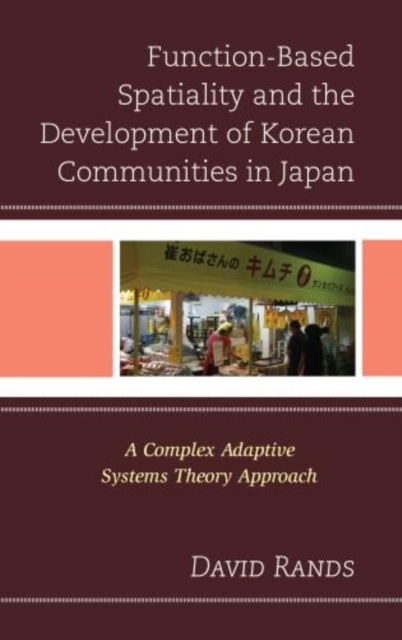
Function-Based Spatiality and the Development of Korean Communities in Japan utilizes the theoretical model of complex adaptive systems and introduces the concept of function-based spatiality to investigate the roles of the urban environments of Tokyo and Osaka in the development of Korean communities in Japan. Analysis of distinct Korean communities allows for the examination of urban factors of each city which contributed to the patterns of Korean immigration and community formation. By utilizing a comparative narrative of the two cities, distinctions between the organic growth of Osaka and the planned city of Tokyo are illuminated. Additionally, the discussion utilizes the concept of function-based spatiality to show how each city interacted with its surrounding regional, national, and global spheres. The functions of Tokyo, as a gateway to Western modernization and center of the Japanese state, shaped the interactions with Korean immigrants. Likewise, OsakaΓÇÖs functions as a center of mercantilism and second city played a large role in how Koreans were incorporated into the urban ethnoscapes. Taken together, these two examples provide insight to the dynamics of urban systems on the development of immigrant communities.

Vis mer
  • Språk:
  • Engelsk
  • ISBN:
  • 9780739173688
  • Bindende:
  • Hardback
  • Sider:
  • 202
  • Utgitt:
  • 21. mai 2014
  • Dimensjoner:
  • 231x163x18 mm.
  • Vekt:
  • 458 g.
  Gratis frakt
Leveringstid: 2-4 uker
Forventet levering: 25. mai 2026

Beskrivelse av Function-Based Spatiality and the Development of Korean Communities in Japan

Function-Based Spatiality and the Development of Korean Communities in Japan utilizes the theoretical model of complex adaptive systems and introduces the concept of function-based spatiality to investigate the roles of the urban environments of Tokyo and Osaka in the development of Korean communities in Japan. Analysis of distinct Korean communities allows for the examination of urban factors of each city which contributed to the patterns of Korean immigration and community formation. By utilizing a comparative narrative of the two cities, distinctions between the organic growth of Osaka and the planned city of Tokyo are illuminated. Additionally, the discussion utilizes the concept of function-based spatiality to show how each city interacted with its surrounding regional, national, and global spheres. The functions of Tokyo, as a gateway to Western modernization and center of the Japanese state, shaped the interactions with Korean immigrants. Likewise, OsakaΓÇÖs functions as a center of mercantilism and second city played a large role in how Koreans were incorporated into the urban ethnoscapes. Taken together, these two examples provide insight to the dynamics of urban systems on the development of immigrant communities.

Brukervurderinger av Function-Based Spatiality and the Development of Korean Communities in Japan


Finn lignende bøker
Boken Function-Based Spatiality and the Development of Korean Communities in Japan finnes i følgende kategorier:

Gjør som tusenvis av andre bokelskere

Abonner på vårt nyhetsbrev og få rabatter og inspirasjon til din neste leseopplevelse.
