














Gjør som tusenvis av andre bokelskere
Abonner på vårt nyhetsbrev og få rabatter og inspirasjon til din neste leseopplevelse.
Ved å abonnere godtar du vår personvernerklæring.Du kan når som helst melde deg av våre nyhetsbrev.

A Different Kind of Light is a series of essays about living in Israel the year I turned nineteen. The title references the strange, mystical quality of light in Tzfat, mountain town in the north of Israel. But I almost gave this book the same title as one of the central chapters, 'American on the Roadside," which tells the story of how I was left for dead during a training exercise of one of the Israeli Air Force's top rescue teams. It's true. They forgot me, dead on the side of the road. You can't make this kind of stuff up. I didn't make any of it up, actually. This book is nonfiction. The September after I graduated high school, I didn't go to college. I went to Israel instead, on a program called the Young Judaea Year Course in Israel, and I learned to live in a way that I had never seen people live where I grew up in small town America. This book is a series of vignettes about that life I had in Israel for a year, and about the life that memories have on their own when you let them. It's about Israel, the way I saw it at age 18, fresh from Hershey, Pennsylvania. And the way I see it now, five years later. Some of these stories deal with falling in love, and with growing up one way or another, because those are some of the things teenagers have trouble avoiding, and I ran smack into them the year after high school. Some of the pieces are about war, because even though no one dared to use the word, I lived in the middle of one in Israel. There are pieces about the desert and desertion and markets and magic and all the people that I met that year and the ways they travel with me even today. And Hebrew is sprinkled throughout the essays, because Hebrew travels with me too. Generally, these pieces run in chronological order. The book begins with my departure from Hershey in September and moves through the autumn in the crumbling city of Tiberias, traveling and settling into the life of a blond girl in a Middle Eastern country. The stories follow the winter weeks I spent on Army bases and my early spring working on a kibbutz south of the Sea of Galilee. And finally the narrative lands in Jerusalem in the late spring and early summer, when Israelis celebrated their Independence Day between suicide bombings and I stood on the beach in Tel Aviv saying goodbye. Then there's an epilogue, of course. And this is part of what I wrote there:When I came back from Year Course I could not talk about it. I didn't know what to say. People would exclaim, 'You were in Israel! How was that?" And I had an answer that was no answer at all: 'It was a trip!" I'd smile with the right side of my mouth, lift my right eyebrow, and shrug my right shoulder. And I could tell some stories. The way they left me dead on the beach. Nightlife in Tel Aviv with Harvey. Adventures to the shuk with Deborah. Eddie. But the stories were just pieces, are still just pieces, of an entire year of living. These stories are true, but they're not the truth, and now that I put them all together, I see that year is not quite the puzzle I thought it was, because some edges are ragged, and some bits overlap, and there is still so much empty space in between. Asiti chayim ba'aretz. I really lived in Israel. All year long.There was poetry in my life the year I lived in Israel. This is how I wrote it down.
I have toyed and struggled with the thought of compiling this book for a long time; almost 35 years, in fact. Since graduating from West Point in 1974, I have visited over forty countries in my military and business career. Everywhere I've been I have looked for articles or stories that I could include in this book. Many short stories came from friends and sources marked '-Unknown.'This book is dedicated to young people everywhere and written for their benefit. I realize that many young people today would rather buy a CD or DVD rather than a guidebook or an owner's manual- a book about how to improve their lives from just an average Joe. Some young people will only get this book if a parent, grandparent, aunt, uncle or probation officer gives it to them as a gift. I hope it is a gift worth keeping and sharing.Today, young people struggle with finding good examples of role models. My first role model was David Cortez while attending Rhodes Junior High School in San Antonio, Texas. David was a ninth grader and our Student Council President. He helped me with my successful 'political' campaign to be the next Student Council Secretary. I thought David 'walked on water.' David came from a strong family. He was smart, athletic, and good-looking. He had a beautiful girlfriend. David's story has a sad ending. He went on to Jefferson High, where he also excelled. He married his girlfriend- the girl of his dreams. A few years later, she tragically died in a car accident. Not much later in life, David, still a widower, died of a mysterious illness, leaving behind two young daughters.This book is about making the world a better place by showing you examples and ways to be a better, more productive, more caring person and citizen. It's about many of life's experiences and encompasses recurring themes and the more recurring in this book; the more important I view them in the development of a young person. To some the sequence may seem chaotic, but life is also at times confusing and disorganized. And not everything will go your way. Life's not fair. I had fun compiling this book, but I also cried and laughed. I hope that everyone reading this book will find at least one single passage or story that will cause them to reflect on it by saying, "I needed to read this today!" Please enjoy.
Through a Glass Darkly tells the story of Ron Hennessey, an Iowa farmer who returned from the Korean War to discover that farming no longer held much allure. Hennessey joined a Catholic missionary society and after nine years of study was ordained a priest and sent to Guatemala. The book describes Hennessey's conversion from being an unapologetic patriot from America's heartland to a staunch opponent of Ronald Reagan's policies in Central America - policies that occasionally threatened Hennessey's life. Hennessey's story has a subtext: America's ideals of freedom, democracy, and progress-with-justice have been violated abroad by one U.S. president after another.
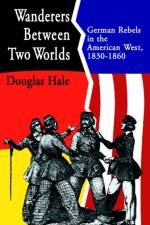
Wanderers Between Two Worlds:German Rebels in the American West, 1830-1860by Douglas HaleIn the 1830s a small band of visionary university students launched an audacious, but abortive, rebellion against the German Confederation in an effort to achieve unity and freedom for their country. Their bungled revolt was quickly crushed, and the idealistic youth found themselves branded as traitors and pursued as outlaws. "Wanderers Between Two Worlds" traces the extraordinary intertwined lives of seven of the German student revolutionaries who escaped imprisonment only by flight to the American West.Leaving behind a legacy in Germany's quest for freedom that would not be fulfilled for another 150 years, these urbane and educated exiles arrived in the United States in time to share in the most dramatic episodes of the age: wilderness adventures on the Santa Fe and Oregon Trails; the Texas Revolution against Mexico; the Mexican War; the California Gold Rush; the mounting conflict over slavery; and the inexorable thrust of American power to the Pacific.The United States offered these young men a broad and uncrowded stage upon which to display their talents. Gustav Koerner became a leading Illinois politician while Georg Engelmann emerged as the premier botanist of the American West. Ferdinand Lindheimer was an influential spokesman among the German settlers in Texas. Adolph Wislizenus explored the Rockies and northern Mexico and led in the establishment of the St. Louis scientific community. Gustav Bunsen perished in the Texas Revolution, while his brother Georg achieved considerable influence as a pioneer educator. Theodor Engelmann published the first German newspaper in Illinois.Historian Douglas Hale captures the drama and adventure of their lives in both the Old Country and the New. "Wanders Between Two Worlds" is an engaging and accessible saga that acquaints readers with a long-neglected chapter in the history of German democracy and the impact of German-Americans in the development of Illinois, Missouri, and Texas. Hale combines scrupulous attention to accuracy with a lucid and readable style that ventures beyond historical narrative to engage the reader in the personalities and experiences of the individuals involved.
Abonner på vårt nyhetsbrev og få rabatter og inspirasjon til din neste leseopplevelse.
Ved å abonnere godtar du vår personvernerklæring.