













Gjør som tusenvis av andre bokelskere
Abonner på vårt nyhetsbrev og få rabatter og inspirasjon til din neste leseopplevelse.
Ved å abonnere godtar du vår personvernerklæring.Du kan når som helst melde deg av våre nyhetsbrev.

""This volume of rare sermons and documents makes an unprecedented contribution to our understanding of the 'New England Theology' as it emerged from Jonathan Edwards and continued through Edwards Amasa Park. The introduction, prepared by two seasoned Edwards scholars, represents an acute and thought-provoking analysis of the intellectual and rheological underpinnings of the New England Theology. A rich, absorbing, and always engaging collection, this volume will be of great interest to Edwards scholars and general readers alike.""--Harry S. Stout, Yale University""One of the problems in studying American theology in the eighteenth and nineteenth century is that many of the sources are not easily available. The New England Theology is a marvelous anthology of central writings. Aficionados may quibble because some valuable material was left out, but this is a great collection. The introductions and editorial work of the editors are also helpful and fair minded.""--Bruce Kucklick, University of Pennsylvania""This volume, collecting the major representative writings of the American disciples of Jonathan Edwards, is the first of its kind and long overdue. In the hands of Sweeney and Guelzo, the 'New Divinity' movement emerges here as a grand story, told in the medium of theology that both reflected and shaped the new republic.""--Kenneth P. Minkema, Yale University""Although both historians and the general public have become increasingly fascinated by Jonathan Edwards, many know little about the thinkers who tried to carry on his legacy. Douglas Sweeney and Allen Guelzo should be commended for assembling a marvelous collection of writings.""--Catherine A. Brekus, University of Chicago Divinity School""In these judicious selections accompanied by crisp and illuminating introductions, Sweeney and Guelzo ably identify the vitality and scope of the New England Theology. If you want to know something of the flavor and substance of America's first indigenous theology, this volume is the place to begin.""--David W. Kling, University of Miami""This collection of the New England Theology's primary texts clearly reveals both the continuing presence of Edwardsean thought and the diversity of its expression in the century following Jonathan Edwards's death.""--Ava Chamberlain, Wright State UniversityDouglas A. Sweeney (PhD, Vanderbilt University) is Associate Professor and Chair of the Church History and the History of Christian Thought department and Director of the Center for Theological Understanding at Trinity Evangelical Divinity School. Allen C. Guelzo (PhD, University of Pennsylvania) is the Henry R. Luce Professor of the Civil War Era and Director of the Civil War Era Studies program at Gettysburg College.
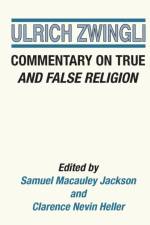
Next to Luther himself, Ulrich Zwingli (1484-1531) was probably the most important and certainly the most influential of the early Protestant reformers. His Commentary on True and False Religion, addressed to King Francis I of France and published by the printer Froschauer in Zurich in 1525, contrasted what Zwingli regarded as the true religion of the Protestants, grounded in Scripture, with the false religion of tradition and reason advocated by the opponents of the Reformation. In twenty-nine chapters Zwingli discussed all of the principal topics of Christian theology, from the meaning of the word ""religion"" itself to the role and place of images in Christian worship. All the disputed issues of the early Reformation--the doctrine of Church and ministry, baptism, penance, eucharist, the nature of civil authority--are explained lucidly and concisely. The Commentary makes clear not only the grounds for Zwingli''s break with the medieval Catholic tradition in which he had been raised but also the nature of his disagreements with Erasmus, Luther, and the Swiss Anabaptists. The result is the most significant dogmatic work which Zwingli ever wrote and the most important systematic statement of Reformed theology before Calvin''s Institutes.
Here is a wise, radical, and illuminating book on the obstacles that a rigid interpretation of orthodox christological doctrines presents to dialogue with persons of other faiths. One Christ--Many Religions examines religious pluralism today and, in the light of its implications for the global community, suggests the contours of a revised christology more credible to Christians and their neighbors of other faiths.Samartha argues that the problem with the christological dogmas of the first Ecumenical Councils is not their truth so much as their interpretation, and the un-Christian zealotry they seem to engender in Christians. Sensitive to charges of sentiments of racial and cultural superiority that stem from Christians believing themselves uniquely authorized agents of God, Samartha challenges us to admit the truth of these accusations, and to revise our understanding of Jesus. Without such christological revisions, Samartha fears, Christianity may cease to be Christian, may become enfeebled in the pursuit of justice for the oppressed, alienated from the deeper challenge of Jesus, sealed off from the truths of other religions, and, ultimately, may be barred from experiencing the rich and mysterious encounter of God.""A decisively valuable contribution . . . Samartha, who knows both Western and Indian religious thought in depth, has given us a book accessible yet impressive in its scholarship. It distills the wisdom of a long life spent in the pursuit of a christology that overcomes the problems of Christian exclusivism and is faithful to the way taught by Jesus . . . a book of subtlety and grace, theologically credible, spiritually satisfying, and pastorally helpful."" --Tissa Balasurlya, O.M.I. Center for Society and Religion, Sri Lanka""I recommend this book not because it has neat answers to complicated problems that confront Christian tradition in this day of religious pluralism, but because it makes readers reflect on how they themselves should explore these problems.""--Joseph M. Kitagawa, University of Chicago Divinity SchoolS. J. Samartha has lectured and served as director at Karnataka Theological College, United Theological College, and Serampore College in India. The first director of the Dialogue Programme of the World Council of Churches in Geneva, he now teaches at the South Asia Theological Research Institute, Bangalore. His books include Hindu Response to the Unbound Christ, The Other Side of the River, and The Search for New Hermeneutics in Asian Christian Theology.
Henry Barclay Swete (1835-1917) was Regius Professor of Divinity at Cambridge for twenty-five years. Swete is well known and respected for the extensive range of his biblical and patristic studies and for his careful and exact scholarship.
The intention of Ancient Texts and Translations (ATT) is to make available a variety of ancient documents and document collections to a broad range of readers. The series will include reprints of long out-of- print volumes, revisions of earlier editions, and completely new volumes. The understanding of ancient societies depends upon our close reading of the documents, however fragmentary, that have survived. --K. C. Hanson Series Editor
J. Rendel Harris (1852-1941) was educated at Clare College, Cambridge. He taught at Johns Hopkins University, Haverford College, and Leiden University. He was renowned for his acquisition and interpretation of ancient manuscripts.
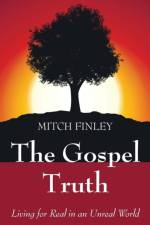
How can a Christian live authentically in a world that values appearances? What does Jesus say about living a life characterized by honesty and hope? Mitch Finley sheds light on the spiritual values of the New Testament and shows how they help us become what we really are: free. Here is a path to freedom and assurance for every Christian.Mitch Finley is the author of more than thirty books on themes of interest to Catholic readers, including It''s Not the Same Without You: Coming Home to the Catholic Church, The Rosary Handbook, and Key Moments in Church History. He earned a BA in Religious Studies from Santa Clara University and an MA in Theology from Marquette University. To learn more visit www.mitchandkathyfinley.com.
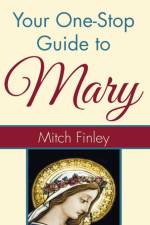
IF YOU WANT TO KNOW MORE ABOUT MARY, THIS IS THE PLACE TO START.Mary, the Mother of Jesus, occupies a unique place in all of history. God chose her to be the mother of the Word, His only Son. And over the centuries Catholics have come to honor her as the Mother of God and the Mother of the Church. In Your One-Stop Guide to Mary, Mitch Finley has given us a concise but complete picture of the Blessed Virgin Mary, tracing her story from Scripture through the centuries. He describes her titles, informs us about Marian doctrines, explains her place in the liturgy and tells us about her apparitions. If you want to know more about Mary and understand her role in the divine plan, this book is the place to start.""In this attractive work Mitch Finley looks at Catholic devotion to and veneration of Mary as it has lived and continues to live in many and varied ways in the mind and heart of God''s people. An excellent and significant tool for faith development.""William H. Shannon, Professor Emeritus of Religious Studies, Nazareth College, and author of Silent Lamp: The Thomas Merton StoryMitch Finley is the author of more than 30 books on themes of interest to Catholic readers, including It''s Not the Same Without You: Coming Home to the Catholic Church, The Rosary Handbook, and Key Moments in Church History. He earned a B.A. in Religious Studies from Santa Clara University and an M.A. in Theology from Marquette University. To learn more visit www.mitchandkathyfinley.com.
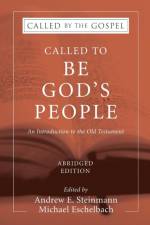
Called to Be God''s People is an introduction to the Old Testament designed for those who wish to have a comprehensive guide to the contents, theology, and important passages of the Old Testament. Written from a Lutheran perspective, this book is especially designed for those within that tradition and others who seek a guide to the canonical books of the Old Testament that consciously presents the Scriptures'' message of Law and Gospel as well as the traditional Christian messianic understanding of Moses and the Prophets that points to Jesus as the fulfillment of God''s promises to Israel.This book is an ideal condensed handbook for university students and other Christian adults who seek to expand their knowledge of the background, content, and message of the Old Testament and its importance for Christian faith and life. It introduces important background information on each book of the Old Testament along with a general discussion of contents and theology. Included are illustrations, maps, tables, charts and sidebars. A concluding chapter on the centuries between the Old and New Testaments overlaps with a similar treatment contained in the New Testament volume in this series, Called by the Gospel, allowing for a smooth transition to the study of the rest of the Christian Scriptures.Andrew E. Steinmann is Distinguished Professor of Theology and Hebrew at Concordia University, Chicago. He is the author of several books, including The Oracles of God: The Old Testament Canon; Is God Listening?: Making Prayer a Part of Your Life; Fundamental Biblical Aramaic; Intermediate Hebrew Grammar and forthcoming commentaries on Proverbs and Daniel in the Concordia Commentary Series.Michael Eschelbach is Professor of Theology at Concordia University, Irvine, California. He is the author of Has Joab Foiled David? A Literary Study of the Importance of Joab''s Character in Relation to David.Curtis Giese Giese is Professor of Theology at Concordia University, Austin, Texas. He is author of the commentary on Jude in the Concordia Commentary Series.Paul Puffe is Professor of Theology and Hebrew at Concordia University, Austin, Texas.
According to John Hick''s model of religious pluralism, all the world''s great religions present equally valid ways of understanding and responding to the same ultimate Reality. This book offers an exposition of, and critical response to, Hick''s model. Following an introductory chapter that surveys dominant approaches to religious diversity, the rise and development of Hick''s pluralist interpretation of religions is traced. Finally, a critical assessment of Hick''s mature pluralist model is offered. The conclusion: Hick''s model is ultimately unsuccessful in overcoming the pluralist''s most difficult conceptual problem, namely providing an adequate account of the fact that the world''s religions understand the divine Reality in often contradictory ways. Ultimately, Hick''s own solution threatens two of his long-cherished goals: a robust religious realism and a tradition-neutral religious pluralism.""In this very valuable book, Paul Eddy explores some alternatives to pluralism, the origins and development of Hick''s pluralistic hypothesis, and numerous objections to this hypothesis. Eddy''s book is essential reading for anyone with a serious interest in these topics.""--Robert McKim, Professor of Religion and of Philosophy, University of Illinois at Urbana-ChampaignPaul Rhodes Eddy is Professor of Biblical and Theological Studies at Bethel University in St. Paul, Minnesota. He has coauthored and edited a number of books, including The Jesus Legend: A Case for the Historical Reliability of the Synoptic Jesus Tradition; Across the Spectrum: Understanding Issues in Evangelical Theology; and The Historical Jesus: Five Views.
On February 5, 2000, the Institute of Mennonite Studies held a conference at Associated Mennonite Biblical Seminary entitled ""Without Spot or Wrinkle: Reflecting Theologically on the Nature of the Church."" This conference gave attention to ecclesiology, in direct response to challenges that Mennonite church bodies in Canada and the United States have been facing in recent times.The phrase ""without spot or wrinkle"" comes from Ephesians 5:27, a text addressing relationships between husbands and wives within the Christian household. Historically it has also come to symbolize what Mennonites have sometimes believed about the nature of the church. Anabaptists, and Mennonites who came after them, have often maintained that the true church is a gathering of reborn and spiritually regenerated Christians called to be a community free from moral failure. At present, however, some Mennonites are questioning elements of this conceptual legacy, and, in light of personal failings and hurtful church schisms, are expressing doubts about its practical adequacy and theological tenability.The essays in this book do not provide a unified argument. What the authors have in common is concern for the church and commitment to faithfulness. Readers are invited to reflect on the issues and make their own assessments.Karl Koop, PhD, is Assistant Professor of Theology and Anabaptist-Mennonite Studies at Associated Mennonite Biblical Seminary and Associate Director of the Institute of Mennonite Studies.Mary H. Schertz, PhD, is Professor of New Testament at Associated Mennonite Biblical Seminary and Director of the Institute of Mennonite Studies.
Our prayers should go as deep as our souls.Spiritual disciplines are simply ways to open ourselves to God. They help us become aware of the many ways God speaks to us and provide us with ways to respond to God. This book explores and explains how the historical disciplines and perspectives of the Christian faith can deepen both our walk with God and our community with othersIn today''s society we ore often handicapped in our spiritual growth by too narrow a horizon when it comes to spiritual practices. Each generation suffers a kind of collective amnesia, forgetting the practices and perspectives that nourished countless followers of Christ in centuries past. Rediscovering these skills is one way to respond to our culture''s--and our own--deep spiritual hunger.While it is seemingly preposterous for us to suppose we can interact with the God of this universe, Scripture repeatedly invites us to do that very thing. Prayer is not a minor idea tucked into the cracks of the text; it is central, normative, and expected. Why is it, then, that our prayers are so often dry and difficult?In Meditative Prayer, you''ll discover those ways of prayer that make use of your mind and imagination, that address your needs as well as strengthen your spirit. By drawing from a number of different sources--from Scripture, from wise men and women who have gone before, and from one another--this study guide will enable your soul to drink deeply from the inexhaustible well of prayer. Though you can use this guide for a personal journey of prayer, it is ideally suited for exploration with a small group of like-minded friends.Richard Peace, PhD, holds the Robert Boyd Munger Chair as Professor of Evangelism and Spiritual Formation at Fuller Theological Seminary. He is the author of numerous books, including Noticing God.
A new way to read the Bible.Spiritual disciplines are simply ways to open ourselves to God. They help us become aware of the many ways God speaks to us and provide us with ways to respond to God. This book explores and explains how the historical disciplines and perspectives of the Christian faith can deepen both our walk with God and our community with others.Reading the Bible is something that most of us are familiar with. Some even do it regularly. But do we really think about how we read and respond to Scripture? How deeply do we allow ourselves to be impacted by it?Contemplative Bible reading (or lectio divina, as it is often called) is an ancient method of approaching Scripture. Consisting of four parts, this method begins with the selected biblical passage and moves to meditating, praying, and contemplating what God is revealing through the Bible.Many of us tend to think of meditation as something done individually, but reflecting on Scripture in a small group invites us to act and encourages us to share with others how God is calling us to respond.Contemplative Bible Reading examines this spiritual discipline and invites your small group to approach Scripture in a new and challenging way. By exploring different passages and learning to hear God''s voice in them, this guide will help you meditate and act on the truth of the Bible.Richard Peace, PhD, holds the Robert Boyd Munger Chair as Professor of Evangelism and Spiritual Formation at Fuller Theological Seminary. He is the author of numerous books, including Noticing God.
The Journey into God challenges the adequacy of the biomedical model alone in addressing the symptoms and causes of physical and mental illness. While allowing that the biomedical has its place in the treatment of disease, Dr. Kenneth Bakken argues persuasively that there are untapped resources for health and wholeness in Christian faith and practice. He invites the reader into the way of theosis, the transformation of the person in union with the divine. Opening the mystic heart of Christianity, The Journey into God gives individual Christians and the Christian communities of faith a trusty map for traversing the shifting spiritual terrain of health and wholeness issues in the twenty-first centuryThe Most Rev. Dr. Kenneth L. Bakken is a physician, public health scientist, and Bishop in the Augustana Catholic Church (Lutheran). He is also the founder of and a staff physician for the holistic rehabilitation program for the treatment of patients with Fibromyalgia Syndrome at Bayview Medical Clinic in Tacoma, Washington (www.bayviewmedical.org).Dr. Bakken is president of HealthVision International and is known internationally for his passionate conferences, retreats, and lectures in promoting the renewal of the health and healing ministry of the Church.
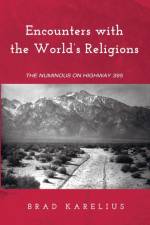
A spectacular stretch of earth, the Eastern Sierra region of California reveals volcanic reefs, desert sand dunes, majestic mountains, and snow-fed lakes and rivers. Drawing on forty years of college teaching on the world's religions, Professor Brad Karelius is your guide, uncovering deep spiritual dimensions in this achingly beautiful place. This book shares crystallizations of religious wisdom collected through the ages, and finely tuned descriptions of holy sites, which you may visit, that will draw you deeper in your personal encounters with world spiritualities.""The book is a lovely weaving together of Brad's experience and erudition, the personal and the interreligious. From the opening pages regarding his son, it has an intimate and even confessional quality to it. I am sure it will be much appreciated.""--Francis X. Clooney, Director, Center for the Study of World Religion, Harvard Divinity School""The phrase 'World's Religions' conjures up a global, rather theoretical discussion of the Big Five of Judaism, Christianity, Islam, Buddhism, and Hinduism. We anticipate . . . they will 'clash.' None of that here! Here we get the self-disclosing, self-giving witness of Brad: priest, poet, observer, witness lover of the earth, sinner, lover of his son Eric, expansive believer. . . .[O]ne is struck by Brad's modesty [and] his courage in truth-telling. His book is a generous invitation to all of us . . . to find our True Self."" --Walter Brueggemann, Professor of Old Testament, Columbia Theological Seminary""As I began to read, I was fascinated by the rhythm of the words and the ideas they evoked. Slowly, words and ideas gave way to feelings; then, feelings to simply being present to my own surroundings. I suspect that this is part of what Karelius intends. This is a book that insists on savoring, and persists in rewarding us when we do.""--Denise Carmody, Jesuit Chair of Religious Studies, Santa Clara University""In the great American tradition of road books, Brad Karelius has written a lovely little memoir whose title might be On the Road with the World's Great Religions. Take it along on your next road trip, read a chapter each night (they're short), and see if you don't like where it takes you.""--Jack Miles, General Editor, The Norton Anthology of World ReligionsBrad Karelius is Associate Professor of Philosophy at Saddleback College, Mission Viejo, California, and an Episcopal priest in the Diocese of Los Angeles. He is author of The Spirit in the Desert: Pilgrimages to Sacred Sites in the Owens Valley (2009), and Home Is Right Here (2014).
While debates abound today over the cost, purpose, and effectiveness of higher education, often lost in this conversation is a critical question: Should higher education attempt to shape students' moral and spiritual character in any systematic manner as in the past, or focus upon equipping students with mere technical knowledge?Faith, Freedom, and Higher Education argues that Christianity can still play an important role in contemporary American higher education. George M. Marsden, D. G. Hart, and George H. Nash, among its authors, analyze the debate over the secularization of the university and the impact of liberal Protestantism and fundamentalism on the American academy during the twentieth century. Contributors also assess how the ideas of Dorothy Sayers, C. S. Lewis, Wendell Berry, and Allan Bloom can be used to improve Christian higher education. Finally, the volume examines the contributions Christian faith can make to collegiate education and outlines how Christian institutions can preserve their religious mission while striving for academic excellence.
This book illuminates the experiential and theocentric dimensions of holiness theology. It acknowledges two strands of thought in current holiness theology--Wesley's Christian perfection and entire sanctification as propagated in the early days of the American Holiness Movement. It honors the contribution of both these strands by identifying the deep harmony in the holiness message of John Wesley and Phineas Bresee. Using insights from Wesley and Bresee, the author develops a paradigm for holiness theology from the standpoint of its transcendent goal. Called into Communion explicates entire sanctification as revelatory and salvific, a necessary threshold experience for complete openness to God. This approach illuminates the rootedness of holiness theology in the triune fellowship of holy love. The communion perspective affirms holiness theology as the underlying theological principle for a missional ecclesiology since participation in God characterizes the church as a doxological fellowship of holy love and determines the church's redemptive action. Seminarians and pastors will find in this book a new perspective on the holiness message. It extends the horizon of reflection to the grace that seeks out and enables human partners for a transformative fellowship of genuine reciprocity with God.
The Iraq War caused emotional, physical, psychiatric, relational, and spiritual challenges to an untold number of military reservists and their families. This book takes you through the war's critical stages of pre-deployment, deployment, and post-deployment. Reservists' families, usually living far from military bases with professional staffing, are often among the most affected wounded of the Iraq War. Injured reservists often return home to discover that civilian medical resources are insufficient and civic organizations unequipped to help manage the range of combat-related wounds and psychiatric trauma, especially post-traumatic stress disorder and traumatic brain injury. The lack of needed services causes alienation between reservists and their families in relation to the civilian communities in which they live. Using a practical theological method, this book analyzes the various impacts of the Iraq War and recommends a soul care approach for chaplains and pastors to use in support of reservists and their families suffering from their experiences of the Iraq War, and to guide any persons interested in participating in such support.
Taking its cue from Mark Nation's regret that John Howard Yoder refrained from a fuller engagement with the Western philosophical tradition, this book is an effort to explore the possibilities inherent in that conversation. It develops a dialogue between Yoder and the French philosopher Emmanuel Levinas. The placement of Yoder's work alongside of Levinas' conception of otherness cashes out the embedded hope in Nation's remarks by demonstrating the continuing relevancy of Yoder's thought for current Christian sociopolitical discourse. This book is especially aimed at those who seek to continue exploring the themes and ideas of John Howard Yoder.
James Mylne (1757-1839) taught moral philosophy and political economy in Glasgow from 1797 to the mid-1830s. Rational Piety and Social Reform in Glasgow offers readers Mylne's biography, a summary of his lectures on moral philosophy and political economy, several interpretative essays, and a collation of his introductory lecture. Mylne's moral philosophy lectures cover the intellectual and active powers of man and offer an account of his duties to God, neighbor, and self. He diverges from the ""moral sense"" and ""common sense"" traditions associated with Francis Hutcheson and Thomas Reid in Glasgow. He reinstates reason as the guiding principle of conscience and argues for utility as the predominant criterion of morality.Mylne was also active among the Whig ""friends of Mr. Fox"" and in the Glasgow Reform Association, for his theory of the sovereignty of reason drove his view of political reform and the concept of value in his lectures on political economy. In a criticism of Adam Smith, Mylne interprets use-value as prior to exchange value, founding it in lawful desires identifiable by a merchant community. Mylne's political opinions and activity among local political reformers and literary societies exemplify the Glasgow Whig tradition.
Universal Salvation is a hotly debated doctrine today among Christians. In The Renewal of All Things Waldron Scott argues that it provides a more relevant and more effective basis for Christian mission in a globalized, pluralistic, and postmodern world than does the contemporary model.
Mitch Finley's warmhearted recollection of growing up Catholic is more than nostalgia. It's a mixture of fond memories, gentle humor, and lasting gratitude for what he learned in Catholic schools--simple and profound lessons that gave him a solid foundation for living in times marked by turmoil and change. The lessons he writes about include:Life Is Worth Living;The World Deserves Our Attention;Life Needs Prayer Like a Tree Needs Water;Everybody Has a Vocation;The Universe Is Sacramental;God Loves Everybody the Same;Nobody's Perfect;Jesus Is with Us;And Everybody Has a Guardian Angel.One need not be Catholic to enjoy this gentle celebration of truths that last. Mitch Finley's journey is one that each of us has taken--and continues to take--in our own way. His joyful reminder is simply cause for more gratitude and plenty of delight.
This is a book that tries to help church members step back and see the bigger picture. An effective pastoral relationship is more like a couple who loves to dance together or a band that plays wonderful music. If we spend too much time on the details, without remembering that we want to dance and sing, our church will not have much to offer to Gospel ministry.This book, then, seeks to blaze a new trail for churches who want to thrive in authentic, faithful ministry with their pastor. In other words, it is a book for churches who want to get along with their pastor. It is a book for church deacons, elders, and other officers who recognize that a healthy, trusting, respectful relationship between pastor and congregation becomes the foundation for the church's vitality. It is a book designed to give you the tools you need to help your pastor become the best pastor that she or he can be with you.Statistics show that approximately thirteen hundred American pastors unwillingly leave their congregations each month. These sudden changes have negative long-term effects on both the pastor and the congregation. Thompson believes it is extremely important to find practical, easy-to-understand ways to train pastors and churches on how to approach disagreement much more constructively, and shows how to do so in this new book.
""A vision is not a mission statement,"" declares George Thompson. In the throes of establishing their congregational identity, many church leaders resort to developing a mission statement which gets put in a file drawer and forgotten until the next budget review. The problem is that mission statements focus on concrete achievements; a vision, in contrast, establishes the larger picture of aim, broad purpose, and hopes.In Futuring Your Church, church leaders explore the congregation's heritage, its current context, and its theological bearings. From the insights gleaned, members can discern what God is currently calling their own church to do in this time and place. Once this vision is found, Thompson provides a simple organization model for applying the vision--for making it work. A practical, helpful tool for futuring authentic ministry.
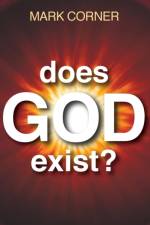
Do people talking about God know what they are talking about? Are they all talking about the same thing? How do different religions approach the existence of God? Can God's existence be proved? And even if it can, is God necessarily good?Does God Exist? sets out to provide a lively and readable introduction to the main issues of theism and atheism. Taking care to avoid theological jargon, Mark Corner provides a fresh look at the question that has always been at the very root of philosophy. His arguments provoke further interest as a source of new ideas.
When your faith no longer works, and the catch phrases and Christianese that got you to where you are cannot take you past your current crisis, what do you do? Is doubt okay? Is it okay for Christians to struggle with what they believe? Is it okay to question God? This book takes an honest and in-depth look at faith crises experiences from interviews with sixty people, and five biblical narratives, addressing head-on the issues of doubt and times of questioning one's faith. Shaken Faith outlines a biblical perspective and a fresh way of viewing doubt, the questions Christians experience in their faith, and faith crisis moments.In order for faith to be real, it must be challenged and shaken, so that the depth of the faith can be rooted in an unshakable God.
Abonner på vårt nyhetsbrev og få rabatter og inspirasjon til din neste leseopplevelse.
Ved å abonnere godtar du vår personvernerklæring.