










Gjør som tusenvis av andre bokelskere
Abonner på vårt nyhetsbrev og få rabatter og inspirasjon til din neste leseopplevelse.
Ved å abonnere godtar du vår personvernerklæring.Du kan når som helst melde deg av våre nyhetsbrev.

Public schools across the nation have turned to the criminal justice system as a gold standard of discipline. As public schools and offices of justice have become collaborators in punishment, rates of African American suspension and expulsion have soared, dropout rates have accelerated, and prison populations have exploded. Nowhere, perhaps, has the War on Crime been more influential in broadening racialized academic and socioeconomic disparity than in New Orleans, Louisiana, where in 2002 the criminal sheriff opened his own public school at the Orleans Parish Prison. ';The Prison School,' as locals called it, enrolled low-income African American boys who had been removed from regular public schools because of nonviolent disciplinary offenses, such as tardiness and insubordination. By examining this school in the local and national context, Lizbet Simmons shows how young black males are in the liminal state of losing educational affiliation while being caught in the net of correctional control. In The Prison School, she asks how schools and prisons became so intertwined. What does this mean for students, communities, and a democratic society? And how do we unravel the ties that bind the racialized realities of school failure and mass incarceration?
LGBT activism is often imagined as a self-contained struggle, inspired by but set apart from other social movements.Lavender and Redrecounts a far different story: a history of queer radicals who understood their sexual liberation as intertwined with solidarity against imperialism, war, and racism. This politics was born in the late 1960s but survived well past Stonewall, propelling a gay and lesbian left that flourished through the end of the Cold War. The gay and lesbian left found its center in the San Francisco Bay Area, a place where sexual self-determination and revolutionary internationalism converged. Across the 1970s, its activists embraced socialist and women of color feminism and crafted queer opposition to militarism and the New Right. In the Reagan years, they challenged U.S. intervention in Central America, collaborated with their peers in Nicaragua, and mentored the first direct action against AIDS. Bringing together archival research, oral histories, and vibrant images, Emily K. Hobsonrediscovers the radical queer past for a generation of activists today.
Neighboring communities who once lived together in peace have committed some of the most disturbing genocidal violence in recent decades: ethnic cleansing in the former Yugoslavia; the slaughter of Tutsis in Rwanda; or Sunni-versus-Shia violence in today's Iraq. As these instances illustrate, lethal violence does not always come at the hands of outsiders or foreignersit can come just as easily from someone who was once considered a friend. Employing a multisited, multivocal approach to ethnography, Killing Your Neighbors examines how peaceful neighbors become involved in lethal violence. It engages with a set of interlocking case studies in northern Kenya, focusing on sometimes-peaceful, sometimes violent interactions between Samburu herders and neighboring groups, interweaving Samburu narratives of key violent events with the narratives of neighboring groups on the other side of the same encounters. The book is, on one hand, an ethnography of particular people in a particular place, vividly portraying the complex and confusing dynamics of interethnic violence through the lives, words and intimate experiences of individuals variously involved in and affected by these conflicts. At the same time, the book aims to use this particular case study to illustrate how the dynamics in northern Kenya provides comparative insights to well-known, compelling contexts of violence around the globe.
During the period from Rome's Stone Age beginnings on the Tiber River to its conquest of the Italian peninsula in 264 B.C., the Romans in large measure developed the social, political, and military structure that would be the foundation of their spectacular imperial success. In this comprehensive and clearly written account, Gary Forsythe draws extensively from historical, archaeological, linguistic, epigraphic, religious, and legal evidence as he traces Rome's early development within a multicultural environment of Latins, Sabines, Etruscans, Greeks, and Phoenicians. His study charts the development of the classical republican institutions that would eventually enable Rome to create its vast empire, and provides fascinating discussions of topics including Roman prehistory, religion, and language. In addition to its value as an authoritative synthesis of current research, A Critical History of Early Rome offers a revisionist interpretation of Rome's early history through its innovative use of ancient sources. The history of this period is notoriously difficult to uncover because there are no extant written records, and because the later historiography that affords the only narrative accounts of Rome's early days is shaped by the issues, conflicts, and ways of thinking of its own time. This book provides a groundbreaking examination of those surviving ancient sources in light of their underlying biases, thereby reconstructing early Roman history upon a more solid evidentiary foundation.
Paul Bontemps decided to move his family to Los Angeles from Louisiana in 1906 on the day he finally submitted to a strictly enforced Southern custom-he stepped off the sidewalk to allow white men who had just insulted him to pass by. Friends of the Bontemps family, like many others beckoning their loved ones West, had written that Los Angeles was "e;a city called heaven"e; for people of color. But just how free was Southern California for African Americans? This splendid history, at once sweeping in its historical reach and intimate in its evocation of everyday life, is the first full account of Los Angeles's black community in the half century before World War II. Filled with moving human drama, it brings alive a time and place largely ignored by historians until now, detailing African American community life and political activism during the city's transformation from small town to sprawling metropolis. Writing with a novelist's sensitivity to language and drawing from fresh historical research, Douglas Flamming takes us from Reconstruction to the Jim Crow era, through the Great Migration, the Roaring Twenties, the Great Depression, and the build-up to World War II. Along the way, he offers rich descriptions of the community and its middle-class leadership, the women who were front and center with men in the battle against racism in the American West. In addition to drawing a vivid portrait of a little-known era, Flamming shows that the history of race in Los Angeles is crucial for our understanding of race in America. The civil rights activism in Los Angeles laid the foundation for critical developments in the second half of the century that continue to influence us to this day.
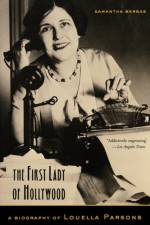
Hollywood celebrities feared her. William Randolph Hearst adored her. Between 1915 and 1960, Louella Parsons was America's premier movie gossip columnist and in her heyday commanded a following of more than forty million readers. This first full-length biography of Parsons tells the story of her reign over Hollywood during the studio era, her lifelong alliance with her employer, William Randolph Hearst, and her complex and turbulent relationships with such noted stars, directors, and studio executives as Orson Welles, Joan Crawford, Louis B. Mayer, Ronald Reagan, and Frank Sinatra-as well as her rival columnists Hedda Hopper and Walter Winchell. Loved by fans for her "e;just folks,"e; small-town image, Parsons became notorious within the film industry for her involvement in the suppression of the 1941 film Citizen Kane and her use of blackmail in the service of Hearst's political and personal agendas. As she traces Parsons's life and career, Samantha Barbas situates Parsons's experiences in the broader trajectory of Hollywood history, charting the rise of the star system and the complex interactions of publicity, journalism, and movie-making. Engagingly written and thoroughly researched, The First Lady of Hollywood is both an engrossing chronicle of one of the most powerful women in American journalism and film and a penetrating analysis of celebrity culture and Hollywood power politics.
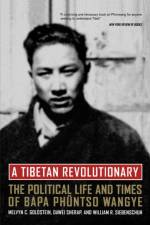
This is the as-told-to political autobiography of Phuntso Wangye (Phunwang), one of the most important Tibetan revolutionary figures of the twentieth century. Phunwang began his activism in school, where he founded a secret Tibetan Communist Party. He was expelled in 1940, and for the next nine years he worked to organize a guerrilla uprising against the Chinese who controlled his homeland. In 1949, he merged his Tibetan Communist Party with Mao's Chinese Communist Party. He played an important role in the party's administrative organization in Lhasa and was the translator for the young Dalai Lama during his famous 1954-55 meetings with Mao Zedong. In the 1950s, Phunwang was the highest-ranking Tibetan official within the Communist Party in Tibet. Though he was fluent in Chinese, comfortable with Chinese culture, and devoted to socialism and the Communist Party, Phunwang's deep commitment to the welfare of Tibetans made him suspect to powerful Han colleagues. In 1958 he was secretly detained; three years later, he was imprisoned in solitary confinement in Beijing's equivalent of the Bastille for the next eighteen years. Informed by vivid firsthand accounts of the relations between the Dalai Lama, the Nationalist Chinese government, and the People's Republic of China, this absorbing chronicle illuminates one of the world's most tragic and dangerous ethnic conflicts at the same time that it relates the fascinating details of a stormy life spent in the quest for a new Tibet.
By joining a diaspora, a society may begin to change its religious, ethnic, and even racial identifications by rethinking its "e;pasts."e; This pioneering multisite ethnography explores how this phenomenon is affecting the remarkable religion of the Garifuna, historically known as the Black Caribs, from the Central American coast of the Caribbean. It is estimated that one-third of the Garifuna have migrated to New York City over the past fifty years. Paul Christopher Johnson compares Garifuna spirit possession rituals performed in Honduran villages with those conducted in New York, and what emerges is a compelling picture of how the Garifuna engage ancestral spirits across multiple diasporic horizons. His study sheds new light on the ways diasporic religions around the world creatively plot itineraries of spatial memory that at once recover and remold their histories.
This engaging book chronicles the first classes on the art and industry of cinema and the colorful pioneers who taught, wrote, and advocated on behalf of the new art form. Using extensive archival research, Dana Polan looks at, for example, Columbia University's early classes on Photoplay Composition; lectures at the New School for Social Research by famed movie historian Terry Ramsaye; the film industry's sponsorship of a business course on film at Harvard; and attempts by the Academy of Motion Picture Arts and Sciences to create programs of professionalized education at the University of Southern California, Stanford, and elsewhere. Polan examines a wide range of thinkers who engaged with the new art of film, from Marxist Harry Alan Potamkin to sociologist Frederic Thrasher to Great Books advocates Mortimer Adler and Mark Van Doren.
Volume XIII contains three of Dryden's Plays, along with accompanying scholarly appartus: All for Love, Oedipus, and Troilus and Cressida.
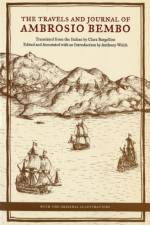
In 1671, Ambrosio Bembo, a young nobleman bored with everyday life in Venice, decided to broaden his knowledge of the world through travel. That August he set off on a remarkable, occasionally hazardous, four-year voyage to Syria, Turkey, Iraq, Iran, and the Portuguese colonies of western India. His journal, now translated into English for the first time, is the most important new European travel account of western Asia to be published in the past hundred years. It opens an extraordinary perspective on the Near East and India at a time when few Europeans traveled to these lands. Keenly observed and engagingly written, Bembo's vivid account is filled with a high sense of adventure and curiosity and provides intriguing descriptions of people, landscapes, food, fashion, architecture, customs, cities, commerce, and more. Presented here with the original illustrations and with a rich introduction and annotations, this lively and important historical document is at last available to scholars, students, and armchair travelers alike.
Evangelical Protestantism has arguably become the fastest-growing religion in South America, if not the world. For converts, it emphasizes self-discipline and provides a network of communal support, which together have helped many overcome substance abuse, avoid crime and violence, and resolve relationship problems. But can people simply decide to believe in a religion because of the benefits it reportedly delivers? Based on extensive fieldwork among Pentecostal men in Caracas, Venezuela, this rich urban ethnography seeks an explanation for the explosion of Evangelical Protestantism, unraveling the cultural and personal dynamics of Evangelical conversion to show how and why these men make the choice to convert, and how they come to have faith in a new system of beliefs and practices.
In this vivid ethnography, Harri Englund investigates how ideas of freedom impede struggles against poverty and injustice in emerging democracies. Reaching beyond a narrow focus on the national elite, Prisoners of Freedom shows how foreign aid and human rights activism hamper the pursuit of democratic citizenship in Africa. The book explores how activists' aspirations of self-improvement, pursued under harsh economic conditions, find in the human rights discourse a new means to distinguish oneself from the poor masses. Among expatriates, the emphasis on abstract human rights avoids confrontations with the political and business elites. Drawing on long-term research among the Malawian poor, Englund brings to life the personal circumstances of Malawian human rights activists, their expatriate benefactors, and the urban and rural poor as he develops a fresh perspective on freedom-one that recognizes the significance of debt, obligation, and civil virtues.
The Friday Masowe apostolics of Zimbabwe refer to themselves as "e;the Christians who don't read the Bible."e; They claim they do not need the Bible because they receive the Word of God "e;live and direct"e; from the Holy Spirit. In this insightful and sensitive historical ethnography, Matthew Engelke documents how this rejection of scripture speaks to longstanding concerns within Christianity over mediation and authority. The Bible, of course, has been a key medium through which Christians have recognized God's presence. But the apostolics perceive scripture as an unnecessary, even dangerous, mediator. For them, the materiality of the Bible marks a distance from the divine and prohibits the realization of a live and direct faith. Situating the Masowe case within a broad comparative framework, Engelke shows how their rejection of textual authority poses a problem of presence-which is to say, how the religious subject defines, and claims to construct, a relationship with the spiritual world through the semiotic potentials of language, actions, and objects. Written in a lively and accessible style, A Problem of Presence makes important contributions to the anthropology of Christianity, the history of religions in Africa, semiotics, and material culture studies.
Proud to Be an Okie brings to life the influential country music scene that flourished in and around Los Angeles from the Dust Bowl migration of the 1930s to the early 1970s. The first work to fully illuminate the political and cultural aspects of this intriguing story, the book takes us from Woody Guthrie's radical hillbilly show on Depression-era radio to Merle Haggard's "e;Okie from Muskogee"e; in the late 1960s. It explores how these migrant musicians and their audiences came to gain a sense of identity through music and mass media, to embrace the New Deal, and to celebrate African American and Mexican American musical influences before turning toward a more conservative outlook. What emerges is a clear picture of how important Southern California was to country music and how country music helped shape the politics and culture of Southern California and of the nation.
Volume XI contains three of Dryden's Plays, along with accompanying scholarly appartus: The Conquest of Granada, Marriage A-la-Mode, and The Assignation.
This collection of correspondence between Clemens and Rogers may be thought of as a continuation of Mark Twains Letters to His Publishers, 1867-1894, edited by Hamlin Hill. It completes the story begun there of Samuel Clemenss business affairs, especially insofar as they concern dealings with publishers; and it documents Clemenss progress from financial disaster, with the Paige typesetter and Webster & Company, to renewed prosperity under the steady, skillful hand of H. H. Rogers.But Clemens's correspondence with Rogers reveals more than a business relationship. It illuminates a friendship which Clemens came to value above all others, and it suggests a profound change in his patterns of living. He who during the Hartford years had been a devoted family man, content with a discrete circle of intimates, now became again (as he had been during the Nevada and California years) a man among sporting men, enjoying prizefights and professional billiard matches in public, andin privatelong days of poker, gruff jest, and good Scotch whisky aboard Rogers's magnificent yacht.
This collection of prose writing from the pen of Dryden dates from 1668 to 1691, and contains work that the editors describe as "e;a sampler of Dryden as biographer-historian, political commentator, religious controversialist, literary polemicist, literary theorist, and practical critic. Among the works contained here is his "e;Essay of Dramatick Poesie."e;
Volume VIII contains three of Dryden's Plays, along with accompanying scholarly appartus: Wild Gallant, Rival Ladies, and Indian Queen.
Chateaubriand was the giant of French literature in the early nineteenth century. Drawing on eighteenth-century English romanticists, on explorers in America, and on Goethe's Werther, he had a profound effect on French writers from Victor Hugo and Lamartine to George Sand and Flaubert. A quixotic and paradoxical personality, he combined impressive careers as a brilliant prose-poet, a spiritual guide, a high-ranking diplomat, and an enterprising lover.Atala and Rene are his two best-known works, reflecting not only his own joys, aspirations, and despair, but the emerging tastes of a new literary era. Atala is the passionate and tragic love story of a young Indian couple wandering in the wilderness, enthralled by the beauties of nature, drawn to a revivified Christianity by its esthetic charm and consoling beneficence, and finally succumbing to the cruelty of fate. Perhaps even more than Werther or Childe Harold, Rene embodies the romantic hero, and is not wholly foreign to the disorientation of youth today. Solitary, mysterious, ardent, and poetic, he is in open revolt against a society whose values he rejects. Withough question this archetype played a large part in determining the course of French literature up to the 1850's.
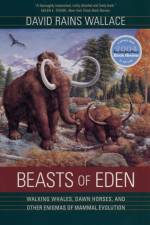
Mammals first evolved at about the same time as dinosaurs, and their story is perhaps the more fascinating of the two-in part because it is also our own story. In this literate and entertaining book, eminent naturalist David Rains Wallace brings the saga of ancient mammals to a general audience for the first time. Using artist Rudolph Zallinger's majestic The Age of Mammals mural at the Peabody Museum as a frame for his narrative, Wallace deftly moves over varied terrain-drawing from history, science, evolutionary theory, and art history-to present a lively account of fossil discoveries and an overview of what those discoveries have revealed about early mammals and their evolution. In these pages we encounter towering mammoths, tiny horses, giant-clawed ground sloths, whales with legs, uintatheres, zhelestids, and other exotic extinct creatures as well as the scientists who discovered and wondered about their remains. We meet such memorable figures as Georges Cuvier, Richard Owen, Edward D. Cope, George Gaylord Simpson, and Stephen Jay Gould and learn of their heated disputes, from Cuvier's and Owen's fights with early evolutionists to present controversies over the Late Cretaceous mass extinction. Wallace's own lifelong interest in evolution is reflected in the book's evocative and engaging style and in the personal experiences he expertly weaves into the tale, providing an altogether expansive perspective on what Darwin described as the "e;grandeur"e; of evolution.
It was the age of exploration, the age of empire and conquest, and human beings were extending their reach-and their numbers-as never before. In the process, they were intervening in the world's natural environment in equally unprecedented and dramatic ways. A sweeping work of environmental history, The Unending Frontier offers a truly global perspective on the profound impact of humanity on the natural world in the early modern period. John F. Richards identifies four broadly shared historical processes that speeded environmental change from roughly 1500 to 1800 c.e.: intensified human land use along settlement frontiers; biological invasions; commercial hunting of wildlife; and problems of energy scarcity. The Unending Frontier considers each of these trends in a series of case studies, sometimes of a particular place, such as Tokugawa Japan and early modern England and China, sometimes of a particular activity, such as the fur trade in North America and Russia, cod fishing in the North Atlantic, and whaling in the Arctic. Throughout, Richards shows how humans-whether clearing forests or draining wetlands, transporting bacteria, insects, and livestock; hunting species to extinction, or reshaping landscapes-altered the material well-being of the natural world along with their own.
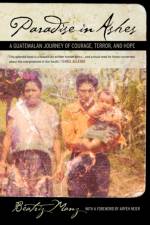
Paradise in Ashes is a deeply engaged and moving account of the violence and repression that defined the murderous Guatemalan civil war of the 1980s. In this compelling book, Beatriz Manz-an anthropologist who spent over two decades studying the Mayan highlands and remote rain forests of Guatemala-tells the story of the village of Santa Maria Tzeja, near the border with Mexico. Manz writes eloquently about Guatemala's tortured history and shows how the story of this village-its birth, destruction, and rebirth-embodies the forces and conflicts that define the country today. Drawing on interviews with peasants, community leaders, guerrillas, and paramilitary forces, Manz creates a richly detailed political portrait of Santa Maria Tzeja, where highland Maya peasants seeking land settled in the 1970s. Manz describes these villagers' plight as their isolated, lush, but deceptive paradise became one of the centers of the war convulsing the entire country. After their village was viciously sacked in 1982, desperate survivors fled into the surrounding rain forest and eventually to Mexico, and some even further, to the United States, while others stayed behind and fell into the military's hands. With great insight and compassion, Manz follows their flight and eventual return to Santa Maria Tzeja, where they sought to rebuild their village and their lives.
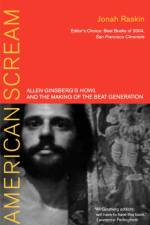
Written as a cultural weapon and a call to arms, Howl touched a raw nerve in Cold War America and has been controversial from the day it was first read aloud nearly fifty years ago. This first full critical and historical study of Howl brilliantly elucidates the nexus of politics and literature in which it was written and gives striking new portraits of Allen Ginsberg, Jack Kerouac, and William Burroughs. Drawing from newly released psychiatric reports on Ginsberg, from interviews with his psychiatrist, Dr. Philip Hicks, and from the poet's journals, American Scream shows how Howl brought Ginsberg and the world out of the closet of a repressive society. It also gives the first full accounting of the literary figures-Eliot, Rimbaud, and Whitman-who influenced Howl, definitively placing it in the tradition of twentieth-century American poetry for the first time. As he follows the genesis and the evolution of Howl, Jonah Raskin constructs a vivid picture of a poet and an era. He illuminates the development of Beat poetry in New York and San Francisco in the 1950s--focusing on historic occasions such as the first reading of Howl at Six Gallery in San Francisco in 1955 and the obscenity trial over the poem's publication. He looks closely at Ginsberg's life, including his relationships with his parents, friends, and mentors, while he was writing the poem and uses this material to illuminate the themes of madness, nakedness, and secrecy that pervade Howl.A captivating look at the cultural climate of the Cold War and at a great American poet, American Scream finally tells the full story of Howl-a rousing manifesto for a generation and a classic of twentieth-century literature.
In 1991 Ruth Reichl, then a Los Angeles Times food writer, observed that much of the style now identified with California cuisine, and with nouvelle cuisine du Mexique, was practiced by Encarnacion Pinedo a century earlier. A landmark of American cuisine first published in 1898 as El cocinero espanol (The Spanish Cook), Encarnacion's Kitchen is the first cookbook written by a Hispanic in the United States, as well as the first recording of Californio food-Mexican cuisine prepared by the Spanish-speaking peoples born in California. Pinedo's cookbook offers a fascinating look into the kitchens of a long-ago culture that continues to exert its influence today. Of some three hundred of Pinedo's recipes included here-a mixture of Basque, Spanish, and Mexican-many are variations on traditional dishes, such as chilaquiles, chiles rellenos, and salsa (for which the cook provides fifteen versions). Whether describing how to prepare cod or ham and eggs (a typical Anglo dish labeled "e;huevos hipocritas"e;), Pinedo was imparting invaluable lessons in culinary history and Latino culture along with her piquant directions. In addition to his lively, clear translation, Dan Strehl offers a remarkable view of Pinedo's family history and of the material and literary culture of early California cooking. Prize-winning journalist Victor Valle puts Pinedo's work into the context of Hispanic women's testimonios of the nineteenth century, explaining how the book is a deliberate act of cultural transmission from a traditionally voiceless group.
This thought-provoking book, the first of its kind in the English language, reexamines the fifty-year-old nation of Israel in terms of its origins as a haven for a persecuted people and its evolution into a multi- cultural society. Arguing that the mono-cultural regime built during the 1950s is over, Baruch Kimmerling suggests that the Israeli state has divided into seven major cultures. These seven groups, he contends, have been challenging one other for control over resource distribution and the identity of the polity. Kimmerling, one of the most prominent social scientists and political analysts of Israel today, relies on a large body of sociological work on the state, civil society, and ethnicity to present an overview of the construction and deconstruction of the secular-Zionist national identity. He shows how Israeliness is becoming a prefix for other identities as well as a legal and political concept of citizen rights granted by the state, though not necessarily equally to different segments of society.
Why do life-saving prescription drugs cost so much? Drug companies insist that prices reflect the millions they invest in research and development. In this gripping expose, Merrill Goozner contends that American taxpayers are in fact footing the bill twice: once by supporting government-funded research and again by paying astronomically high prices for prescription drugs. Goozner demonstrates that almost all the important new drugs of the past quarter-century actually originated from research at taxpayer-funded universities and at the National Institutes of Health. He reports that once the innovative work is over, the pharmaceutical industry often steps in to reap the profit. Goozner shows how drug innovation is driven by dedicated scientists intent on finding cures for diseases, not by pharmaceutical firms whose bottom line often takes precedence over the advance of medicine. A university biochemist who spent twenty years searching for a single blood protein that later became the best-selling biotech drug in the world, a government employee who discovered the causes for dozens of crippling genetic disorders, and the Department of Energy-funded research that made the Human Genome Project possible--these engrossing accounts illustrate how medical breakthroughs actually take place. The $800 Million Pill suggests ways that the government's role in testing new medicines could be expanded to eliminate the private sector waste driving up the cost of existing drugs. Pharmaceutical firms should be compelled to refocus their human and financial resources on true medical innovation, Goozner insists. This book is essential reading for everyone concerned about the politically charged topics of drug pricing, Medicare coverage, national health care, and the role of pharmaceutical companies in developing countries.
The deep relationship between the United States and Mexico has had repercussions felt around the world. This sweeping and unprecedented chronicle of the economic and social connections between the two nations opens a new window onto history from the Civil War to today and brilliantly illuminates the course of events that made the United States a global empire. The Mexican Revolution, Manifest Destiny, World War II, and NAFTA are all part of the story, but John Mason Hart's narrative transcends these moments of economic and political drama, resonating with the themes of wealth and power. Combining economic and historical analysis with personal memoirs and vivid descriptions of key episodes and players, Empire and Revolution is based on substantial amounts of previously unexplored source material. Hart excavated recently declassified documents in the archives of the United States government and traveled extensively in rural Mexico to uncover the rich sources for this gripping story of 135 years of intervention, cooperation, and corruption.Beginning just after the American Civil War, Hart traces the activities of an elite group of financiers and industrialists who, sensing opportunities for wealth to the south, began to develop Mexico's infrastructure. He charts their activities through the pivotal regime of Porfirio Diaz, when Americans began to gain ownership of Mexico's natural resources, and through the Mexican Revolution, when Americans lost many of their holdings in Mexico. Hart concentrates less on traditional political history in the twentieth century and more on the hidden interactions between Americans and Mexicans, especially the unfolding story of industrial production in Mexico for export to the United States. Throughout, this masterful narrative illuminates the development and expansion of the American railroad, oil, mining, and banking industries. Hart also shows how the export of the "e;American Dream"e; has shaped such areas as religion and work attitudes in Mexico.Empire and Revolution reveals much about the American psyche, especially the compulsion of American elites toward wealth, global power, and contact with other peoples, often in order to "e;save"e; them. These characteristics were first expressed internationally in Mexico, and Hart shows that the Mexican experience was and continues to be a prototype for U.S. expansion around the world. His work demonstrates the often inconspicuous yet profoundly damaging impact of American investment in the underdeveloped countries of Latin America, Asia, and Africa. Empire and Revolution will be the definitive book on U.S.-Mexico relations and their local and global ramifications.
This highly accessible, engagingly written book exposes the underbelly of California's Silicon Valley, the most successful high-technology region in the world, in a vivid ethnographic study of Mexican immigrants employed in Silicon Valley's low-wage jobs. Christian Zlolniski's on-the-ground investigation demonstrates how global forces have incorporated these workers as an integral part of the economy through subcontracting and other flexible labor practices and explores how these labor practices have in turn affected working conditions and workers' daily lives. In Zlolniski's analysis, these immigrants do not emerge merely as victims of a harsh economy; despite the obstacles they face, they are transforming labor and community politics, infusing new blood into labor unions, and challenging exclusionary notions of civic and political membership. This richly textured and complex portrait of one community opens a window onto the future of Mexican and other Latino immigrants in the new U.S. economy.
Meticulously researched and beautifully written, Fit to Be Citizens? demonstrates how both science and public health shaped the meaning of race in the early twentieth century. Through a careful examination of the experiences of Mexican, Japanese, and Chinese immigrants in Los Angeles, Natalia Molina illustrates the many ways local health officials used complexly constructed concerns about public health to demean, diminish, discipline, and ultimately define racial groups. She shows how the racialization of Mexican Americans was not simply a matter of legal exclusion or labor exploitation, but rather that scientific discourses and public health practices played a key role in assigning negative racial characteristics to the group. The book skillfully moves beyond the binary oppositions that usually structure works in ethnic studies by deploying comparative and relational approaches that reveal the racialization of Mexican Americans as intimately associated with the relative historical and social positions of Asian Americans, African Americans, and whites. Its rich archival grounding provides a valuable history of public health in Los Angeles, living conditions among Mexican immigrants, and the ways in which regional racial categories influence national laws and practices. Molina's compelling study advances our understanding of the complexity of racial politics, attesting that racism is not static and that different groups can occupy different places in the racial order at different times.
Abonner på vårt nyhetsbrev og få rabatter og inspirasjon til din neste leseopplevelse.
Ved å abonnere godtar du vår personvernerklæring.