















Gjør som tusenvis av andre bokelskere
Abonner på vårt nyhetsbrev og få rabatter og inspirasjon til din neste leseopplevelse.
Ved å abonnere godtar du vår personvernerklæring.Du kan når som helst melde deg av våre nyhetsbrev.

"From its origins in the 1670s through the French Revolution, serious opera in France was associated with the power of the absolute monarchy, and its ties to the crown remain at the heart of our understanding of this opera tradition (especially its foremost genre, the tragãaedie en musique). In Opera and the Political Imaginary in Old Regime France, however, Olivia Bloechl reveals another layer of French opera's political theater. The make-believe worlds on stage, she shows, involved not just fantasies of sovereign rule but also aspects of government. Plot conflicts over public conduct, morality, security, and law thus appear side-by-side with tableaus hailing glorious majesty. What's more, opera's creators dispersed sovereign-like dignity and powers well beyond the genre's larger-than-life rulers and gods, to its lovers, magicians, and artists. This speaks to the genre's distinctive combination of a theological political vocabulary with a concern for mundane human capacities, which is explored here for the first time. By looking at the political relations among opera characters and choruses in recurring scenes of mourning, confession, punishment, and pardoning, we can glimpse a collective political experience underlying, and sometimes working against, ancienrãaegime absolutism. Through this lens, French opera of the period emerges as a deeply conservative, yet also more politically nuanced, genre than previously thought." --Amazon.com.
This book explores how and when biology emerged as a science in Germany. Beginning with the debate about organism between Georg Ernst Stahl and Gottfried Leibniz at the start of the eighteenth century, John Zammito traces the development of a new research program, culminating in 1800, in the formulation of developmental morphology. He shows how over the course of the century, naturalists undertook to transform some domains of natural history into a distinct branch of natural philosophy, which attempted not only to describe but to explain the natural world and became, ultimately, the science of biology.
"This book is an introduction to Buddhism told as the story of the Korean pilgrim Hyecho, who traveled through the Buddhist world during its eighth-century golden age. Lopez tells the story of Hyecho's journey, along the way introducing key elements of Buddhism--its basic doctrines, monastic institutions, relationship to Islam, and importance of pilgrimage.
Towards a Final Story is the first history of the modern scientific epic. These epic stories pull together our knowledge of the universe, uniting material and biological origins, from beginning to end. The authors of these epics--among them Carl Sagan, E.O. Wilson, and Steven Weinberg--saw their task as providing an integrated schema that would not only bring together but also go beyond the particular scientific results and disciplines available as they wrote their histories. Nasser Zakariya traces how such epic stories could achieve what they claimed, how they inhabit culture and politics, and how they arrived at the present moment from a period in the previous century when inquiries into ultimate origins were regarded by many as unscientific and unanswerable. These prominent, popular historical narratives of science are important forms of knowledge in their own right. They expose what science means in the wider culture and at the same time focus attention on the near paradoxical nature of a universal history narrated by humanity for humanity.
Over the course of the fifteenth century, the Low Countries transformed Europe's economic, political and cultural life. Innovative and influential cultural practices emerged across the region in flourishing courts, towns, religious houses, guilds and confraternities. Whether in visual culture, music, devotional practice, or communal rituals, the thriving cultures of the Low Countries wrestled with time, both through explicit measurement and reflection, and in the rhythms of social and religious life. This book offers a deeper understanding of how time was structured and experienced by different constituencies through a series of detailed readings of diverse cultural objects and practices, ranging from woodcuts and painted altarpieces, to early print books, and to the use of polyphony in the liturgy. Individual chapters are devoted to life in the university towns of Louvain and Ghent, the liturgical rituals at Cambrai Cathedral, and the rich pageantry that marked the courts of Philip the Good and the new Burgundian rulers. What emerges is a complex temporal landscape in which devotional and secular practices and experiences merged into a new "fullness of time."
The evangelical embrace of conservatism is a familiar feature of the contemporary political landscape. What's less well-known, however, is that the connection predates the Reagan revolution, going all the way back to the Depression and World War II. Evangelical businessmen at the time were quite active in opposing the New Deal--on both theological and economic grounds--and in doing so claimed a place alongside other conservatives in the public sphere. Like previous generations of devout laymen, they self-consciously merged their religious and business lives, financing and organizing evangelical causes with the kind of visionary pragmatism that they practiced in the boardroom. In God's Businessmen, Sarah Ruth Hammond explores not only these men's personal trajectories but also those of the service clubs and other institutions that, like them, believed that businessmen were God's instrument for the Christianization of the world. Hammond presents a capacious portrait of the relationship between the evangelical business community and the New Deal--and in doing so makes important contributions to American religious history, business history, and the history of the American state.
"This dynamic entry in the burgeoning field of environmental humanities is built around fifteen objects that represent the scope and peril of the Anthropocene--among them a monkey wrench, a jar of beach sand, a Blackberry, a mirror, and a cryogenic freezer box. The objects are framed by six more expansive essays reflecting on the meanings of the Anthropocene for scholarship and the world ..."--Provided by publisher.
"Nature has placed Man under the governance of two sovereign masters, pain and pleasure" (Jeremy Bentham, 1789). How should we act, tossed about as we are by these two? Should we, as the utilitarian would have it, maximize pleasure for the greatest number? This elegant intellectual and cultural history traces the birth of utilitarian thinking in the seventeenth century to today's evolutionary theory, economics, and neuroscience, fields that have recently been drawn together, once again, under the banner of utility. The author is attentive not only to its subtle reach but also to the single moment when, with the dawn of informed consent in medical research, an anti-utilitarian attention to autonomy briefly surfaced. This is an important book about the rise, fall, resurrection--and dangers--of utilitarian reasoning in medicine.
In his edited collection Writing the World of Policing: The Difference Ethnography Makes, renowned anthropologist-sociologist Didier Fassin brings together some of the greatest minds in the social sciences to reflect on the question of urban policing in disadvantaged neighborhoods worldwide. The aim of the volume is both to show how ethnography can illuminate the role of policing in society as well as to show how an attention to law enforcement can alter and provoke the practice of ethnography itself. Spanning five continents and tackling such concepts as accountability, complicity, morality, detention, alibi, and others, this volume is bound to become one of the major statements on a topic of increasing interest. Structured around three sections--position, observation, and description--the book mirrors the process of the ethnographic method itself, taking us deep within each local context it investigates while never losing sight of the global relevance of crime, law, and the exercise of power inherent to both.
Keller examines architecture's fascination with quasi-automatic design methods in the 1960s and 1970s. Influenced by postwar developments in electronic computing, as well as by the rise of structuralist and poststructuralist thinking, architects and theorists began to radically reformulate how architecture could be created. Various approaches flourished, and despite differences, they all advocated a shift away from the architect's personal intuition toward the use of external tools and processes typically considered objective, logical, or natural, and therefore--in some way--automatic.
Providing a sweeping millennium-plus history of the learned book in the West, John Willinsky puts current debates over intellectual property into context, asking what it is about learning that helped to create the concept even as it gave the products of knowledge a different legal and economic standing than other sorts of property. Willinsky begins with Saint Jerome in the fifth century, then traces the evolution of reading, writing, and editing practices in monasteries, schools, universities, and among independent scholars through the medieval period and into the Renaissance. He delves into the influx of Islamic learning and the rediscovery of classical texts, the dissolution of the monasteries, and the founding of the Bodleian Library before finally arriving at John Locke, whose influential lobbying helped bring about the first copyright law, the Statute of Anne of 1710. Willinsky's bravura tour through this history shows that learning gave rise to our idea of intellectual property while remaining distinct from, if not wholly uncompromised by, the commercial economy that this concept inspired, making it clear that today's push for marketable intellectual property threatens the very nature of the quest for learning on which it rests.
This book explores an alternative way of learning and understanding theorized in Germany in the late nineteenth century. "Kinaesthetic knowing"--knowing through the experience of the entire body rather than just through an artificial, steady gaze-- evolved from a rich nexus of discovery involving science, medicine, philosophy, motion studies, photography and other new technologies, and the arts. It became an important aspect of design education in Germany leading to modern architecture as practiced at the Bauhaus in the Twenties and Thirties. Techniques used in this alternative way of knowing at the design schools included comparative looking, emotional/affective response, using the body freely in drawing and not worrying about exact imitation, and manipulating traditional rules of composition. Along the way, we encounter Heinrich Wolfflin, Hermann Obrist, Laszlo Moholy-Nagy, and many more. The Bauhaus material is good and rich: particularly impressive is the pedagogical information that has generally been overlooked by other researchers.
What should serve as money, who should control its creation and circulation, and according to what rules? For more than two hundred years, the "money question" shaped American social thought, becoming a central subject of political debate and class conflict. Sovereign of the Market reveals how and why this happened. Jeffrey Sklansky's wide-ranging study comprises three chronological parts devoted to major episodes in the career of the money question. First, the fight over the innovation of paper money in colonial New England. Second, the battle over the development of commercial banking in the new United States. And third, the struggle over the national banking system and the international gold standard in the late nineteenth century. Each section explores a broader problem of power that framed each conflict in successive phases of capitalist development: circulation, representation, and association. The three parts also encompass intellectual biographies of opposing reformers for each period, shedding new light on the connections between economic thought and other aspects of early American culture. The result is a fascinating, insightful, and deeply considered contribution to the history of capitalism.
Looking Forward puts some new spins on the old saying, "the future lies ahead." Pietruska's book is a history of forecasting in the United States from the 1860s to the1920s that reveals how methods of forecasting and ideas about uncertainty changed as institutions and individuals reckoned with what novelist Edward Bellamy noted as the "specter of Uncertainty" in the late 19th century. In that context, prediction became a ubiquitous scientific, economic, and cultural practice, and forecasts, accurate or not, offered illusions of control over one's future in what William Dean Howells recognized as the "economic chance-world" emerging at this time. Pietruska examines controversies over the production, circulation, and contestation of crop estimates, weather forecasts, economic predictions, and the predictions of fortune-tellers in order to uncover the social lives of forecasts that Americans used to mitigate risk in daily life. The book's overarching argument revises historians' understanding of the late nineteenth and early twentieth centuries as a "search for order" by demonstrating that a search for predictability yielded just the opposite: acceptance of the economic and cultural uncertainties of modern life. The search for order and the forces of chance and contingency may seem at odds, but Pietruska reconciles the two frameworks by recasting the 1860s to the 1920s as a period in which government bureaucracies, information networks, and professional forecasters came to accommodate the very uncertainties they had originally sought to conquer. As a cultural history of scientific and popular forecasting from the Civil War to World War I, this book grapples directly with a profound issue: how do we produce knowledge about the future?
Centuries after his death, al-Ghazali remains one of the most influential figures of the Islamic intellectual tradition. Although he is best known for his Incoherence of the Philosophers, Moderation in Belief is his most profound work of philosophical theology. In it, he offers what scholars consider to be the best defense of the Ash'arite school of Islamic theology that gained acceptance within orthodox Sunni theology in the twelfth century, though he also diverges from Ash'arism with his more rationalist approach to the Quran. Together with The Incoherence of the Philosophers, Moderation in Belief informs many subsequent theological debates, and its influence extends beyond the Islamic tradition, informing broader questions within Western philosophical and theological thought. The first complete English-language edition of Moderation in Belief, this new annotated translation by Aladdin M. Yaqub draws on the most esteemed critical editions of the Arabic texts and offers detailed commentary that analyzes and reconstructs the arguments found in the work's four treatises. Explanations of the historical and intellectual background of the texts also enable readers with a limited knowledge of classical Arabic to fully explore al-Ghazali and this foundational text for the first time. With the recent resurgence of interest in Islamic philosophy and the conflict between philosophy and religion, this new translation will be a welcome addition to the scholarship.
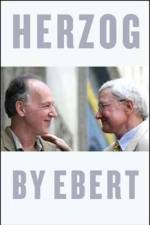
At the time of his death in 2013, Roger Ebert was arguably the most influential writer about movies in the United States. He had been film critic for the "Chicago Sun-Times" for over 45 years, reviewing more movies than any other critic active during that time and pioneering in both television reporting and reviewing. In 1975 he was the first film critic to win the Pulitzer Prize for criticism. Among the film directors who started working at about the same time Ebert started writing for the "Sun-Times," two inspired a particularly intense devotion. One was Martin Scorsese, the subject of "Scorsese by Ebert" (published in 2008). The other was Werner Herzog--Ebert first saw one of his films at the New York Film Festival in 1968. This volume gathers together all Ebert's reviews of individual films (as well as longer pieces he wrote for "The Great Movies" series), free-wheeling interviews, and essays in which he discusses various aspects of Herzog's achievement. It also includes a longer interview/discussion with Herzog at Facet's Multimedia in 1979 ("Images at the Horizon"), which offers fascinating details about Herzog's early career. Herzog himself has contributed a Foreword in which he discusses their long relationship. As one of the readers of the manuscript noted, "'Herzog by Ebert' documents a unique and productive relationship between a filmmaker and a film critic. Anyone who watches Herzog's films will surely benefit from Ebert's insights." It will be an essential book for all who admire Herzog's (and Ebert's) work.
Mixed feelings, Daniel Gross reminds us, are at the heart of Jane Austen's novel, Sense and Sensibility. We think we know what "mixed feelings" means, like a recipe: combine two parts a feeling like gratitude, one part happiness, a dash of resentment, and you get something like Elinor. But mixed feelings in the novel and beyond, Gross insists, are poorly served by this dis-equilibrium model; in fact mixed feelings are a matter of negotiated circumstances where feelings may be at odds as they converge on character. Hence the significance of literature and particularly the sentimental novel as a cross-disciplinary research domain, where this kind of rhetorical situation is exquisitely detailed. Gross gets considerable play out of Jane Austin as one of his research arenas, while at the same time referencing the sciences of situated emotion and behavioral economics to offer a new way of understanding mixed feelings as rhetorically situated. While that is but one thrust among several here, Gross explores at the same time a methodological opportunity at the interface of science and the humanities, beyond recent work in "Cognitive Approaches to Literature," which as he sees it tends to proceed unecologically (uncontextually) toward theory of mind. In contrast to his previous landmark study The Secret History of Emotion, here Gross carves out a space for cross-disciplinary work on emotion with a "situated emotion" critique of the basic emotions program, a "situated cognition" critique of computational psychology, and a critique of evolutionary psychology from many angles including cognitive scientific. The outcome is collaborative work across the sciences and humanities, where uncomfortable situations provide a paradigm for study. New insight into brain-body-world dynamics may yet arise from experiments in neuroscience and the situational concerns of the humanities, and the two-cultures divide may dissolve when shared phenomena like human emotions are treated with the diversity of methods and cross-disciplinary conversation their complexity deserves.
This multidisciplinary volume, the first of its kind, presents an account of China's contemporary transformation via one of its most important yet overlooked cities: Shenzhen, located just north of Hong Kong. In recent decades, Shenzhen has transformed from an experimental site for economic reform into a dominant city at the crossroads of the global economy. The first of China's special economic zones, Shenzhen is today a UNESCO City of Design and the hub of China's emerging technology industries. Bringing China studies into dialogue with urban studies, the contributors explore how the post-Mao Chinese appropriation of capitalist logic led to a dramatic remodeling of the Chinese city and collective life in China today. These essays show how urban villages and informal institutions enabled social transformation through cases of public health, labor, architecture, gender, politics, education, and more. Offering scholars and general readers alike an unprecedented look at one of the world's most dynamic metropolises, this collective history uses the urban case study to explore critical problems and possibilities relevant for modern-day China and beyond.
Abonner på vårt nyhetsbrev og få rabatter og inspirasjon til din neste leseopplevelse.
Ved å abonnere godtar du vår personvernerklæring.