















Gjør som tusenvis av andre bokelskere
Abonner på vårt nyhetsbrev og få rabatter og inspirasjon til din neste leseopplevelse.
Ved å abonnere godtar du vår personvernerklæring.Du kan når som helst melde deg av våre nyhetsbrev.

An English lit account of how contemplation worked for medieval audiences and how works were presented to readers at the time to aid them in achieving a contemplative state.
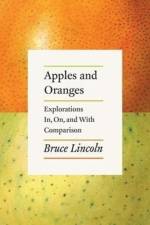
Lincoln mounts an argument for the value of comparison, which is often derided as limited and limiting; instead, he shows how carefully considered comparisons can illuminate both subjects.
Between 1949 and 1955, the State Department pushed for an international fisheries policy grounded in maximum sustainable yield (MSY). This title reveals that the fallibility of MSY lies at its very inception - as a tool of government rather than science. It charts the history of US fisheries science using MSY.
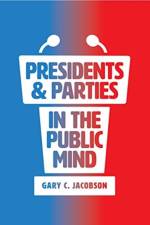
Jacobson draws on survey data from the past seven administrations to show that the expansion of the executive branch in the twentieth century that gave presidents a greater role in national government also gave them an enlarged public presence, magnifying their role as the parties' public voice and face.
Examines the pervasive expectation of continual "innovation" in the business sector.
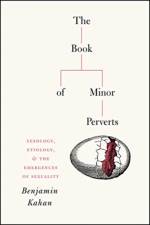
A historical, scientific, and political analysis of how sexuality is represented at the intersection of queer studies, modernist studies, American studies, history of sexuality, and medical humanities.
A very close look at language and landscape design in the eighteenth and early nineteenth centuries, looking at how the word "approach" changed from a verb to a noun, coming to denote the drive up to an estate.
"This work looks into the Colombian government's efforts to demobilize rebel FARC fighters and transform them into the entrepreneurial subjects and consumer citizens. Anthropologist Alexander Fattal shows how the market has become one of the principal grounds on which counterinsurgency warfare is waged in Colombia."--Supplied by publisher.
An account of the creation of the property market in modern Britain, which had not known a robust market in property as a truly separate, tradeable good before, but instead had seen it as part of a complicated web of social and political obligation and power.
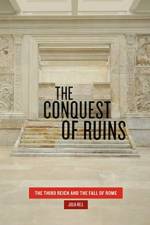
Hell shows how the Third Reich was inspired by the Roman Empire--but, weirdly, more by its ruins than its heights, seeing in them a mark of its greatness and lasting legacy.
The first collection in English of the writings of Russian conceptual artist Ilya Kabakov, a leading figure in the avant garde in the 1960s and '70s and a major influence on artists today.
Abonner på vårt nyhetsbrev og få rabatter og inspirasjon til din neste leseopplevelse.
Ved å abonnere godtar du vår personvernerklæring.