













Gjør som tusenvis av andre bokelskere
Abonner på vårt nyhetsbrev og få rabatter og inspirasjon til din neste leseopplevelse.
Ved å abonnere godtar du vår personvernerklæring.Du kan når som helst melde deg av våre nyhetsbrev.

Fungi range from being microscopic, single-celled yeasts to multicellular and heterotrophic in nature. Fungal communities have been found in vast ranges of environmental conditions. They can be associated with plants epiphytically, endophytically, or rhizospherically. Extreme environments represent unique ecosystems that harbor novel biodiversity of fungal communities. Interest in the exploration of fungal diversity has been spurred by the fact that fungi perform numerous functions integral in sustaining the biosphere, ranging from nutrient cycling to environmental detoxification, which involves processes like augmentation, supplementation, and recycling of plant nutrients - a particularly important process in sustainable agriculture. Fungal communities from natural and extreme habitats help promote plant growth, enhance crop yield, and enhance soil fertility via direct or indirect plant growth promoting (PGP) mechanisms of solubilization of phosphorus, potassium, and zinc, production of ammonia, hydrogen cyanides, phytohormones, Fe-chelating compounds, extracellular hydrolytic enzymes, and bioactive secondary metabolites. These PGP fungi could be used as biofertilizers, bioinoculants, and biocontrol agents in place of chemical fertilizers and pesticides in eco-friendly manners for sustainable agriculture and environments. Along with agricultural applications, medically important fungi play a significant role for human health. Fungal communities are useful for sustainable environments as they are used for bioremediation which is the use of microorganisms' metabolism to degrade waste contaminants (sewage, domestic, and industrial effluents) into non-toxic or less toxic materials by natural biological processes. Fungi could be used as mycoremediation for the future of environmental sustainability. Fungi and fungal products have the biochemical and ecological capability to degrade environmental organic chemicals and to decrease the risk associated with metals, semi-metals, and noble metals either by chemical modification or by manipulating chemical bioavailability. The two volumes of Recent Trends in Mycological Research aim to provide an understanding of fungal communities from diverse environmental habitats and their potential applications in agriculture, medical, environments and industry. The books are useful to scientists, researchers, and students involved in microbiology, biotechnology, agriculture, molecular biology, environmental biology and related subjects.
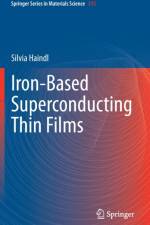
This book provides a modern introduction to the growth, characterization, and physics of iron-based superconducting thin films. Iron pnictide and iron chalcogenide compounds have become intensively studied key materials in condensed matter physics due to their potential for high temperature superconductivity. With maximum critical temperatures of around 60 K, the new superconductors rank first after the celebrated cuprates, and the latest announcements on ultrathin films promise even more. Thin film synthesis of these superconductors began in 2008 immediately after their discovery, and this growing research area has seen remarkable progress up to the present day, especially with regard to the iron chalcogenides FeSe and FeSe1-xTex, the iron pnictide BaFe2-xCoxAs2 and iron-oxyarsenides.This essential volume provides comprehensive, state-of-the-art coverage of iron-based superconducting thin films in topical chapters with detailed information on thin film synthesis and growth, analytical film characterization, interfaces, and various aspects on physics and materials properties. Current efforts towards technological applications and functional films are outlined and discussed. The development and latest results for monolayer FeSe films are also presented. This book serves as a key reference for students, lecturers, industry engineers, and academic researchers who would like to gain an overview of this complex and growing research area.
This book uses an innovative interdisciplinary approach to explain how communication is a necessary condition for diplomacy in a digital and relationship-driven world.
This book constitutes the proceedings of the XV Multidisciplinary International Congress on Science and Technology (CIT 2020), held in Quito, Ecuador, on 26-30 October 2020, proudly organized by Universidad de las Fuerzas Armadas ESPE in collaboration with GDEON.
This book offers the first in-depth enquiry into the origins of 135 Indigenous Australian objects acquired by the Royal Navy between 1795 and 1855 and held now by the British Museum.
This book constitutes the proceedings of the XV Multidisciplinary International Congress on Science and Technology (CIT 2020), held in Quito, Ecuador, on 26-30 October 2020, proudly organized by Universidad de las Fuerzas Armadas ESPE in collaboration with GDEON.
This book presents essential data on the geology of the Puchezh-Katunki crater - an early Jurassic crater located on the East European Platform, with an impact structure that is ca.
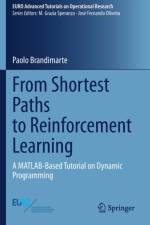
Dynamic programming (DP) has a relevant history as a powerful and flexible optimization principle, but has a bad reputation as a computationally impractical tool.
This volume provides comprehensible, strength-based perspectives on contemporary research and practice related to navigating mistakes, errors and failures across cultures.
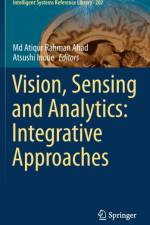
This book serves as the first guideline of the integrative approach, optimal for our new and young generations. Recent technology advancements in computer vision, IoT sensors, and analytics open the door to highly impactful innovations and applications as a result of effective and efficient integration of those. Such integration has brought to scientists and engineers a new approach ¿the integrative approach. This offers far more rapid development and scalable architecting when comparing to the traditional hardcore developmental approach.Featuring biomedical and healthcare challenges including COVID-19, we present a collection of carefully selective cases with significant added- values as a result of integrations, e.g., sensing with AI, analytics with different data sources, and comprehensive monitoring with many different sensors, while sustaining its readability.
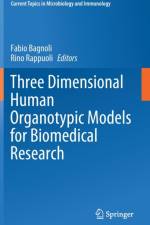
This edited volume discusses the application of very diverse human organotypic models in major areas of biomedical research.
This is followed by a summary in chapter four about the recent progress on defining the roles of the Slit-Robo signaling in bone metabolism and the possible roles of the interaction between Robo and neural epidermal growth factor-like proteins.
In a previous book (Marine Animal Forests, the ecology of benthic biodiversity hotspots), several aspects of the MAFs were described and discussed, building the basis for a holistic approach with the aim of putting these shallow and deep sea ecosystems under a common umbrella.
This book constitutes the refereed proceedings of the Third International Conference on Distributed Artificial Intelligence, DAI 2021, held in Shanghai, China, in December 2021.The 15 full papers presented in this book were carefully reviewed and selected from 31 submissions.
The five-volume set IFIP AICT 630, 631, 632, 633, and 634 constitutes the refereed proceedings of the International IFIP WG 5.7 Conference on Advances in Production Management Systems, APMS 2021, held in Nantes, France, in September 2021.*The 378 papers presented were carefully reviewed and selected from 529 submissions.
This book is primarily designed to serve as a textbook for undergraduate students of electrical, electronics, and computer engineering, but can also be used for primer courses across other disciplines of engineering and related sciences.
This introductory section is followed by papers on algebraic logic and lattice theory, papers on the complexity of proofs, and papers on philosophical logic and history of logic.
This book thus makes an important contribution to the analysis of post-migrant realities in Europe and the ways in which they are defined by imperial legacies, punitive migration regimes, the culturalization of mainstream politics, and the discursive construction of a European Other.
This unique and pioneering book critically appraises current work from both the cognitive science of religion and the evolutionary study of religion.
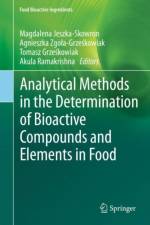
Most bioactive compounds have antioxidant activity, particularly tocochromanols, phenolics (flavonoids and phenolic acids), methylxantines and capsaicinoids.
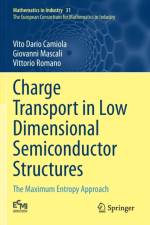
This book offers, from both a theoretical and a computational perspective, an analysis of macroscopic mathematical models for description of charge transport in electronic devices, in particular in the presence of confining effects, such as in the double gate MOSFET.
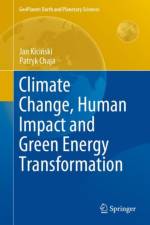
This book indicates the most optimal solutions for the growing civilization problem related to climate change that takes place more and more rapidly on our planet. It is divided into two parts: In the first part, the authors - based on the available analyses and reports on climate change taking place on Earth - present their own point of view in relation to the above issue, while trying to find answers to the following questions:· Why is it so difficult to admit that humans are responsible for the ongoing climate change?· Will climate change destroy life on Earth?· Can science and modern technologies stop this process?In the second part of the book, the authors propose a solution for the advancing climate change, regarding the reduction of CO2 emissions coming mainly from the energy sector. On the basis of scientific achievements and implementations of research institutions in Poland, especially the Institute of Fluid-Flow Machinery of the Polish Academy of Sciences in Gdansk, the book proposes directions of development of the energy transformation in Poland and other countries for which fossil fuels currently make a large contribution to the energy production process and are the main emitter of CO2 to the atmosphere. The book is addressed to citizens, ecologists, climatologists as well as politicians and experts responsible for shaping the climate and energy policy of the country level and also the world.
An introduction and three chapters, Joyce in Zurich, Zurich in Joyce and Zurich after Joyce, are followed by sixty alphabetically ordered articles on people, places, institutions and events relevant to Joyce during his time in Zurich.
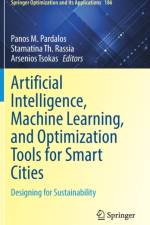
This volume offers a wealth of interdisciplinary approaches to artificial intelligence, machine learning and optimization tools, which contribute to the optimization of urban features towards forming smart, sustainable, and livable future cities.Special features include:New research on the design of city elements and smart systems with respect to new technologies and scientific thinkingDiscussions on the theoretical background that lead to smart cities for the futureNew technologies and principles of research that can promote ideas of artificial intelligence and machine learning in optimized urban environmentsThe book engages students and researchers in the subjects of artificial intelligence, machine learning, and optimization tools in smart sustainable cities as eminent international experts contribute their research results and thinking in its chapters. Overall, its audience can benefit from a variety of disciplines including, architecture, engineering, physics, mathematics, computer science, and related fields.
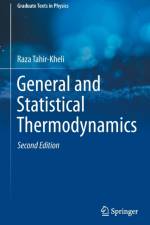
This textbook provides comprehensive information on general and statistical thermodynamics. In turn, the main part of the book focuses on in-depth discussions of the concepts and laws of thermodynamics, van der Waals, Kelvin and Claudius theories, ideal and real gases, thermodynamic potentials, phonons and all related aspects.
This book provides the conceptual foundation of security risk assessment and thereby enables reasoning about risk from first principles.
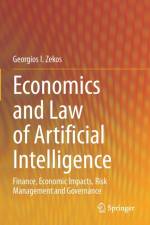
In the second part, the author presents the law of AI, covering topics such as the law of electronic technology, legal issues, AI and intellectual property rights, and legalizing AI.
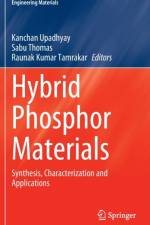
The book provides a general classification of hybrid materials, wherein inorganic materials modified by organic moieties are distinguished from organic materials or matrices modified by inorganic constituents.
One of the most exciting developments in the field of bacterial pathogenesis in recent years is the discovery that many pathogens utilize complex nanomachines to deliver bacterially encoded effector proteins into eukaryotic and prokaryotic target cells to modulate a variety of cellular functions for the pathogen's benefit.
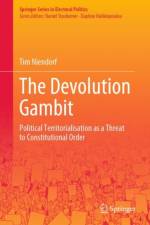
This book examines the increasing territorialisation of party competition and the relaxation of unitarian rule through devolution, presenting a long-term analysis of electoral developments in the United Kingdom since the end of the Second World War.
Abonner på vårt nyhetsbrev og få rabatter og inspirasjon til din neste leseopplevelse.
Ved å abonnere godtar du vår personvernerklæring.