




Gjør som tusenvis av andre bokelskere
Abonner på vårt nyhetsbrev og få rabatter og inspirasjon til din neste leseopplevelse.
Ved å abonnere godtar du vår personvernerklæring.Du kan når som helst melde deg av våre nyhetsbrev.

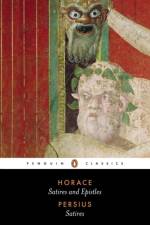
The Satires of Horace (65-8 BC), written in the troubled decade ending with the establishment of Augustus' regime, provide an amusing treatment of men's perennial enslavement to money, power, glory and sex. Epistles I, addressed to the poet's friends, deals with the problem of achieving contentment amid the complexities of urban life, while Epistles II and the Ars Poetica discuss Latin poetry - its history and social functions, and the craft required for its success. Both works have had a powerful influence on later Western literature, inspiring poets from Ben Jonson and Alexander Pope to W. H. Auden and Robert Frost. The Satires of Persius (AD 34-62) are highly idiosyncratic, containing a courageous attack on the poetry and morals of his wealthy contemporaries - even the ruling emperor, Nero.
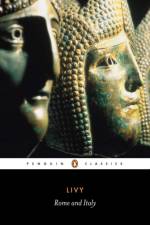
Books VI-X of Livy's monumental work trace Rome's fortunes from its near collapse after defeat by the Gauls in 386 bc to its emergence, in a matter of decades, as the premier power in Italy, having conquered the city-state of Samnium in 293 bc. In this fascinating history, events are described not simply in terms of partisan politics, but through colourful portraits that bring the strengths, weaknesses and motives of leading figures such as the noble statesman Camillus and the corrupt Manlius vividly to life. While Rome's greatest chronicler intended his history to be a memorial to former glory, he also had more didactic aims - hoping that readers of his account could learn from the past ills and virtues of the city.
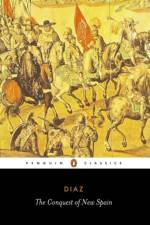
Vivid, powerful and absorbing, this is a first-person account of one of the most startling military episodes in history: the overthrow of Montezuma's doomed Aztec Empire by the ruthless Hernan Cortes and his band of adventurers. Bernal D az del Castillo, himself a soldier under Cortes, presents a fascinatingly detailed description of the Spanish landing in Mexico in 1520 and their amazement at the city, the exploitation of the natives for gold and other treasures, the expulsion and flight of the Spaniards, their regrouping and eventual capture of the Aztec capital.
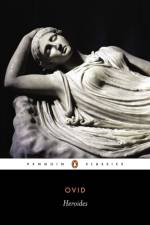
In the twenty-one poems of the Heroides, Ovid gave voice to the heroines and heroes of epic and myth. These deeply moving literary epistles reveal the happiness and torment of love, as the writers tell of their pain at separation, forgiveness of infidelity or anger at betrayal. The faithful Penelope wonders at the suspiciously long absence of Ulysses, while Dido bitterly reproaches Aeneas for too eagerly leaving her bed to follow his destiny, and Sappho - the only historical figure portrayed here - describes her passion for the cruelly rejecting Phaon. In the poetic letters between Paris and Helen the lovers seem oblivious to the tragedy prophesied for them, while in another exchange the youthful Leander asserts his foolhardy eagerness to risk his life to be with his beloved Hero.
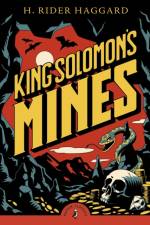
Three men trek to the remote African interior in search of a lost friend - and reach, at the end of a perilous journey, an unknown land cut off from the world, where terrible dangers threaten anyone who ventures near the spectacular diamond mines of King Solomon...
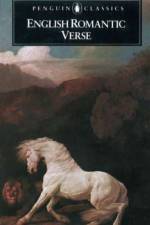
English Romantic poetry from its beginnings and its flowering to the first signs of its decadence. Nearly all the famous pi ces de r sistance will be found here - 'Intimations of Immortality', 'The Ancient Mariner', 'The Tyger', excerpts from 'Don Juan' - as well as some less familiar poems. As far as possible the poets are arranged in chronological order, and their poems in order of composition, beginning with eighteenth-century precursors such as Gray, Cowper, Burns and Chatterton. Naturally most space has been given over to the major Romantics - Blake, Wordsworth, Coleridge, Byron, Shelley, Clare and Keats - although their successors, poets such as Beddoes and Poe, are included too, as well as early poems by Tennyson and Browning. In an excellent introduction David Wright discusses the Romantics as a historical phenomenon, and points out their central ideals and themes.
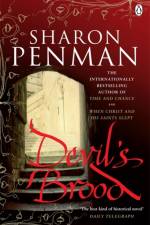
In this gripping tale of passion, politics and conflict, King Henry II finds himself brutally betrayed by his wife Eleanor and three eldest sons when they enter into a rebellion against him. Aligning themselves with Henry's most bitter enemy, King Louis of France, their treacherous actions will have devastating consequences as they bring about the downfall of a brilliant man and a powerful empire.In Devil's Brood, the compelling story of Henry and Eleanor's once great love affair is explored in an uniquely vivid way. What twists of fate turn love to hatred? What points of principle and ambition cause these two icons to struggle for power, leaving their family tragically divided and their turbulent marriage finished in all but name?Sharon Penman's glorious trilogy reaches its spellbinding conclusion.
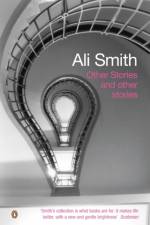
A wildly inventive collection of fiction from the MAN BOOKER PRIZE-SHORTLISTED and BAILEYS PRIZE-WINNING author of How to be both and the critically acclaimed Seasonal quartet'She's a genius, genuinely modern in the heroic, glorious sense' Alain de Botton'I take my hat off to Ali Smith. Her writing lifts the soul' Evening Standard
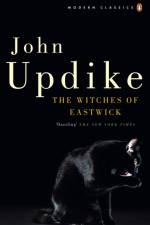
The air of Eastwick breeds witches - women whose powerful longings can stir up thunderstorms and fracture domestic peace. Jane, Alexandra and Sukie, divorced and dangerous, have formed a coven. Into the void of Eastwick breezes Darryl Van Horne, a charismatic magus of a man who entrances the trio, luring them to his mansions...
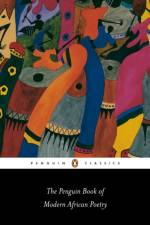
'Poetry, always foremost of the arts in traditional Africa, has continued to compete for primacy against the newer forms of prose fiction and theatre drama.' This wonderfully comprehensive anthology of African poetry has been expanded to include ninety-nine poets from twenty-seven countries, thirty-one of whom appear for the first time. Equally wide-ranging is the content of the poetry itself: war songs and political protests jostle with poems about human love, African nature and the surprises that life offers; all are represented in these rich and colourful pages.
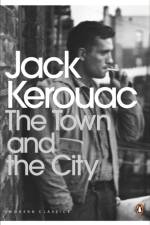
'It is the sum of myself, as far as the written word can go' Kerouac on THE TOWN AND THE CITY Kerouac's debut novel is a great coming of age story which can be read as the essential prelude to his later classics. Inspired by grief over his father's death and gripped by determination to write the Great American Novel, he draws largely on his own New England childhood.
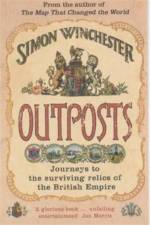
The reissue of a Simon Winchester classicIn 1985 Simon Winchester, struck by a sudden need to discover exactly what was left of the British Empire travelled 100,000 miles back and forth from Antarctica to the Caribbean to visit the far-flung islands that are all that remain of what once made Britain great. His adventures in these distant and forgotten ends of the earth make compelling and often funny reading. With a new introduction and additional material in many of the chapters, this revised edition tells us what has happened while the author's been away.
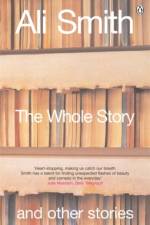
A vitally alive and ever-surprising collection of stories from the MAN BOOKER PRIZE-SHORTLISTED and WOMEN'S PRIZE-WINNING author of How to be both and the critically acclaimed Seasonal quartet'Bold and sensitive. Smith's prose is a joy' Independent'Captures quiet epiphanies of the extraordinary in the mundane' Sunday Times'These stories fizz with life' The Times Literary Supplement Individually lucid and luminous, these tales resonate subtly together. In examining the distances and connections between ourselves and others, expertly inching us closer to the bone, Ali Smith's storytelling has never seemed so necessary, so moving or so joyous.
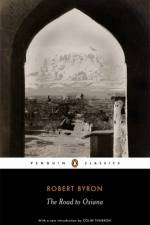
In 1933 Robert Byron began a journey through the Middle East via Beirut, Jerusalem, Baghdad, and Teheran to Oxiana--the country of the Oxus, the ancient name for the river Amu Darya which forms part of the border between Afghanistan and the Soviet Union. The Road to Oxiana offers not only a wonderful record of his adventures, but also a rare account of the architectural treasures of a region now inaccessible to most Western travelers.
Bartolom de Las Casas was the first and fiercest critic of Spanish colonialism in the New World. An early traveller to the Americas who sailed on one of Columbus's voyages, Las Casas was so horrified by the wholesale massacre he witnessed that he dedicated his life to protecting the Indian community. He wrote A Short Account of the Destruction of the Indies in 1542, a shocking catalogue of mass slaughter, torture and slavery, which showed that the evangelizing vision of Columbus had descended under later conquistadors into genocide. Dedicated to Philip II to alert the Castilian Crown to these atrocities and demand that the Indians be entitled to the basic rights of humankind, this passionate work of documentary vividness outraged Europe and contributed to the idea of the Spanish 'Black Legend' that would last for centuries.
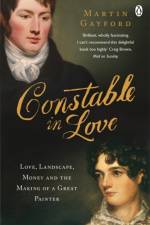
When John Constable fell in love with Maria Bicknell, granddaughter of a Suffolk country neighbour, he little knew how long it would take to make her his wife. The impediment to their marriage was simple: 'that necessary article cash'. He was a painter without sufficient funds to support the daughter of a prominent London lawyer, and both he and her grandfather, the formidable (and sometimes comical) Rector of East Bergholt, disapproved of the match. It would be seven long, difficult years before they could marry, but in that time he would become one of the greatest painters of the nineteenth century.Martin Gayford writes superbly about Constable's early years as a painter and Maria and John's correspondence provides the lively backdrop to the story; one of lovers' tiffs, London versus country life, encounters with Turner, Byron and Wordsworth, royal scandals and rivalries at the Royal Academy. All the time, John Constable battles to become a painter who can earn his living and win Maria's hand.
The story of Christ s crucifixion and subsequent resurrection is the rock of faith on which Christianity is founded. But on what evidence is the most miraculous phenomenon in religious history based? World-famous Biblical scholar Geza Vermes has studied all the evidence that still remains, over two thousand years after Jesus Christ was reported to have risen from the dead. Examining the Jewish Bible, the New Testament and other accounts left to us, as well as contemporary attitudes to the afterlife, he takes us through each episode with a historian s focus: the crucifixion, the treatment of the body, the statements of the women who found the empty tomb, and the visions of Christ by his disciples. Unravelling the true meaning conveyed in the Gospels, the Acts and St Paul, Vermes shines new light on the developing faith in the risen Christ among the first followers of Jesus.
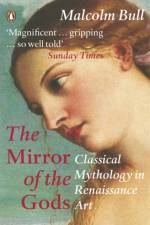
Perhaps the single most revolutionary aspect of the Renaissance was the re-emergence of the gods and goddesses of antiquity. In the midst of Christian Europe, artists began to decorate luxury goods with scandalous stories from classical mythology, and rulers to identify themselves with the deities of ancient religion. The resulting fusion of erotic fantasy and political power changed the course of Western art and produced many of its most magical and subversive works.The first book ever to survey this extraordinary phenomenon in its entirety, The Mirror of the Gods takes the story from the Renaissance to the Baroque. Each chapter focuses on a particular god (Diana, Apollo, Hercules, Venus, Bacchus, Jupiter) and recounts the tales about that deity, not as they appear in classical literature but as they were re-created by artists such as Botticelli, Titian, Bernini and Rembrandt. And yet this is not a book simply about painting and sculpture. It is an attempt to re-imagine the entire designed world of the Renaissance, where the gods also appeared in carnival floats and in banquet displays, and entertained the public in the form of snow men and fireworks. This rich and original new portrait of the Renaissance will ensure that readers never see the period in quite the same way again.
There can be no doubt that Jesus, 'a religious genius' as Geza Vermes describes him, lived and taught in Palestine some 2000 years ago. The influence he has had is incalculable. How though can we distinguish between the doctrines shaped to the needs of the burgeoning Christian church and the original views laid out by Jesus himself? How can we dig back through the additions, misinterpretations and confusions of later writers and two millennia of tradition to get back to the authentic gospel of Jesus? In his new book, Vermes subjects all the sayings of Jesus to brilliantly informed scrutiny. The result is a book of unique value and novelty--scraping aside the accretions of centuries to come as close as we can hope to be to the true Jesus.
During his life Jesus did not view himself as divine, nor did his disciples. In THE CHANGING FACES OF JESUS the great scholar Vermes works back through successively earlier accounts of the life of Christ to finally reveal the true, historical figureof Jesus hidden beneath the Gospels: a Palestinian charismatic convinced he had an essential role to play in bringing about the kingdom of God.
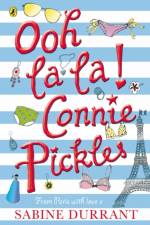
Connie Pickles is fulfilling her destiny. She's in Paris, and she has big plans. She will fall in love with someone other than William. She will find her long lost grandparents. She will become tr s chic. But sometimes even destiny doesn't go to plan . . .Sabine Durrant has the laugh-out-loud humour of Louise Rennison, the sharp perception of Anne Fine and the instant girl-appeal of a younger Bridget Jones. Perfect for girls aged 11+.
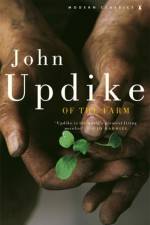
Of the Farm recounts Joey Robinson's visit to the farm where he grew up and where his mother now lives alone. Accompanied by his newly acquired second wife, Peggy, and an eleven-year-old stepson, Joey spends three days reassessing and evaluating the course his life has run. But for Joey and Peggy, the delicate balance of love and sex is threatened by a dangerous new awareness.
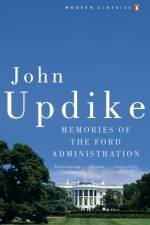
When a history professor - Alfred Clayton, the hero of John Updike's fifteenth novel - is asked to record his impressions of the Ford Administration, he recalls a turbulent piece of personal history as well: his unfinished book on 19th-century president James Buchanan.
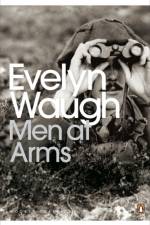
Guy Crouchback, determined to get into the war, takes a commission in the Royal Corps of Halberdiers. His spirits high, he sees all the trimmings but none of the action. And his first campaign, an abortive affair on the West African coastline, ends with an escapade which seriously blots his Halberdier copybook. Men at Arms is the first book in Waugh s brilliant trilogy, Sword of Honour, which chronicles the fortunes of Guy Crouchback. The second and third volumes, Officers and Gentlemen and Unconditional Surrender, are also published in Penguin. Sword of Honour has recently been made into a television drama series, with screenplay by William Boyd.
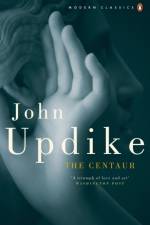
In a small Pennsylvania town in the late 1940s, schoolteacher George Caldwell yearns to find some meaning in his life. Alone with his teenage son for three days in a blizzard, Caldwell sees his son grow and change as he himself begins to lost touch with his life. Interwoven with the myth of Chiron, the noblest centaur, and his own relationship to Prometheus, The Centaur is one of John Updike's most brilliant and unusual novels.
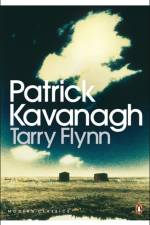
A man's mother can be a terrible burden sometimes. For Tarry Flynn - poet, farmer and lover-from-afar of beautiful young virgins - the responsibility of family, farm, poetic inspiration and his own unyielding lust is a heavy one. The only solution is to rise above all - or escape over the nearest horizon. Like The Green Fool, his autobiography, Patrick Kavanagh's Tarry Flynn is an idyllic and beautifully evocative account of life as it was lived in Ireland earlier this century.
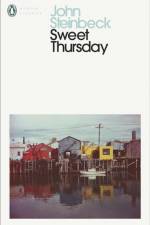
In Monterey, on the California Coast, Sweet Thursday is what they call the day after Lousy Wednesday, which is one of those days that's just naturally bad. Returning to the scene of CANNERY ROW, the weedy lots, junk heaps and flop houses of Monterey, Steinbeck once again brings to life the denizens of a netherworld of laughter and tears. The book is in many ways a statement about Steinbeck's greatest theme: the common bonds of humanity and love which make goodness and happiness possible.
In September 2005, Alex Kapranos began writing about what he ate while touring the world with the rock band Franz Ferdinand. The writing is as much about where he eats and the people he eats with as the unusual flavours he tastes on the road. Whether it s munching donuts with cops in Brooklyn, swallowing bull s balls with the band in Buenos Aires or queuing for a saveloy in South Shields, these are surprising and vivid snapshots of life on the road. Funny, poignant, sickening or sexual depending on the situation, the material, both new and previously published in the Guardian, is fascinating and entertaining.
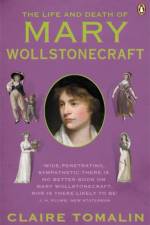
The Life and Death of Mary Wollstonecraft is the acclaimed bestselling biography by Claire TomalinWinner of the Whitbread First Book PrizeWitty, courageous and unconventional, Mary Wollstonecraft was one of the most controversial figures of her day. She published A Vindication of the Rights of Women; travelled to revolutionary France and lived through the Terror and the destruction of the incipient French feminist movement; produced an illegitimate daughter; and married William Godwin before dying in childbed at the age of thirty-eight. Often embattled and bitterly disappointed, she never gave up her radical ideas or her belief that courage and honesty would triumph over convention.'Tomalin is a most intelligent and sympathetic biographer, aware of her impetuous subject's many failings, yet with the perception to present her greatness fairly. She writes well and wittily' Daily Telegraph'A vivid evocation not only of what Mary went through but also of how women lived in the second part of the eighteenth century. Most of all, however, Tomalin makes Mary Wollstonecraft unforgettable' Evening StandardFrom the acclaimed author of Samuel Pepys: The Unequalled Self, Charles Dickens: A Life and The Invisible Woman, this celebrated biography is the definitive account of Mary Wollstonecraft's life.Claire Tomalin is the award-winning author of eight highly acclaimed biographies, including: The Life and Death of Mary Wollstonecraft; Shelley and His World; Katherine Mansfield: A Secret Life; The Invisible Woman: The Story of Nelly Ternan and Charles Dickens; Mrs Jordan's Profession; Jane Austen: A Life; Samuel Pepys: The Unequalled Self; Thomas Hardy: The Time-Torn Man and, most recently, Charles Dickens: A Life. A former literary editor of the New Statesman and the Sunday Times, she is married to the playwright and novelist Michael Frayn.
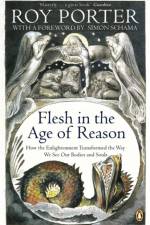
'As an introduction to early modern thinking and the impact of past ideas on present lives, this book can find few equals and no superiors. Porter is a witty, humane writer with an extraordinary vocabulary and a sparkling sense of fun. Whether he is quoting from obscure medical texts or analysing scabrous diaries, dishing the dirt on long-dead bigwigs or evoking sympathy for human suffering, his grasp is masterly and his erudition appealing. I wish I could read it again for the first time: you can.' Times Educational Supplement, Book of the Week In this startlingly brilliant sequel to the prize-winning ENLIGHTENMENT Roy Porter completes his lifetime's work, offering a magical, enthusiastic and charming account of the writings of some of the most attractive figures ever to write English.
Abonner på vårt nyhetsbrev og få rabatter og inspirasjon til din neste leseopplevelse.
Ved å abonnere godtar du vår personvernerklæring.