












Gjør som tusenvis av andre bokelskere
Abonner på vårt nyhetsbrev og få rabatter og inspirasjon til din neste leseopplevelse.
Ved å abonnere godtar du vår personvernerklæring.Du kan når som helst melde deg av våre nyhetsbrev.

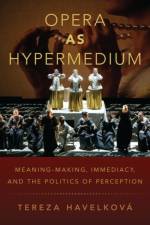
Drawing on the concept of hypermediacy from media studies, this book situates opera within the larger context of contemporary media practices, and particularly those that play up the multiplicity, awareness and enjoyment of media. It is driven by the underlying question of what politics of representation and perception opera performs within this context. This entails approaching operas as audiovisual events (rather than works or texts) and paying attention to whatthey do by visual means, along with the operatic music and singing. The book concentrates on events that foreground their use of media and technology, drawing attention to opera''s inherently hypermedial aspects. It works with the recognition that such events nevertheless engender powerful effects ofimmediacy, which are not contingent on illusionism or the seeming transparency of the medium. It analyzes how effects like presence, liveness and immersion are produced, contesting some critical claims attached to them. It also sheds light on how these effects, often perceived as visceral or material in nature, are related to the production of meaning in opera. The discussion pertains to contemporary pieces such as Louis Andriessen and Peter Greenaway''s Rosa and Writing toVermeer, as well as productions of the canonical repertory such as Wagner''s Ring Cycle by Robert Lepage at the Met and La Fura dels Baus in Valencia.
This volume introduces readers to classical Chinese literature from its beginnings (ca. 10th century BCE) to the tenth century BCE through a conceptual framework centered on textual production and transmission. It focuses on recuperating historical perspectives for the period it surveys, and attempts to draw connections between the past and present.
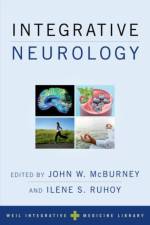
Dementia, Parkinson''s Disease, headache, and neuropathy are all conditions for which narrowly focused medical interventions all too often fall short. The first book in its field, Integrative Neurology synthesizes complementary modalities with state-of-the-art medical treatment to offer a new vision for neurological care. The authors begin by looking inward at the crisis of stress and burnout that confronts all of medicine, but neurology in particular. Itgoes on to provide a selective yet in-depth review of important topics in neurological practice from the perspective of integrative medicine. Taking an evidence based approach throughout, chapters cover chronic diseases such as Multiple Sclerosis, Dementia, and Parkinson''s Disease. The volume also addressclinical issues such as headache, traumatic brain injury, navigating the endocannabinoid system and aging, nutrition and stroke, neuropathy, toxins and neurodevelopment, as well as the modalities of Ayurvedic Medicine and acupuncture.Integrative medicine is defined as a healing-oriented medicine that takes account of the whole person (body, mind, and spirit) as well as all aspects of lifestyle. It emphasizes the therapeutic relationship and makes use of appropriate therapies, both conventional and alternative. Series editor Andrew Weil, MD is Professor and Director of the Arizona Center for Integrative Medicine at the University of Arizona. Dr. Weil''s program was the first such academic program in the US, and its statedgoal is "to combine the best ideas and practice of conventional and alternative medicine into cost effective treatments without embracing alternative practices uncritically."
Lethal Autonomous Weapons explores the moral and legal issues associated with the design, development, and deployment of lethal autonomous weapons. This volume brings together some of the most prominent academics and academic-practitioners in the lethal autonomous weapons space and seeks to return some balance to the debate.
It is often assumed that modern democratic government has a special link with Christianity or was made possible due to Christianity. As a challenge to this belief and echoing a long-held assumption in the republican tradition, Hannah Arendt once remarked that "Washington''s and Napoleon''s heroes were named Moses and David." In this book, Miguel Vatter reconstructs the political theology of German Jewish philosophers during the twentieth century and their attempts tobring together the Biblical teachings on politics with the Greek and Roman traditions of political philosophy. Developed alongside modern experiences with anti-Semitism, the rise of Zionism, and the return of charismatic authority in mass societies, Jewish political theology in the twentieth century advances the radical hypothesis that the messianic idea of God''s Kingdom correlates with a post-sovereignty, anarchist political condition of non-domination. Importantly, Jewish philosophers combined this messianic form of democracy with the ideal of cosmopolitan constitutionalism, which is itself based onthe identity of divine law and natural law. This book examines the paradoxical unity of anarchy and rule of law in the democratic political theology developed by Hermann Cohen, Franz Rosenzweig, Gershom Scholem, Leo Strauss, and Hannah Arendt. Critical of the Christian theological underpinnings of modern representative political institutions, this group of highly original thinkers took up the banner of Philo''s project to unify Greek philosophy with Judaism, and rejected the separation between faith and reason, as well as the divisionbetween Biblical revelation and pagan philosophy. The Jewish political theology they developed stands for the idea that human redemption is inseparable from the redemption of nature. Living Law offers an alternative genealogy of political theology that challenges the widespread belief that modernrepublican political thought is derived from Christian sources.
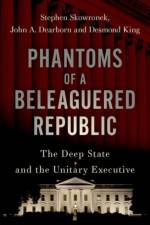
A powerful dissection of one of the fundamental problems in American governance today: the clash between presidents determined to redirect the nation through ever-tighter control of administration and an executive branch still organized to promote shared interests in steady hands, due deliberation, and expertise.President Trump pitted himself repeatedly against the institutions and personnel of the executive branch. In the process, two once-obscure concepts came center stage in an eerie faceoff. On one side was the specter of a "Deep State" conspiracyΓÇöadministrators threatening to thwart the will of the people and undercut the constitutional authority of the president they elected to lead them. On the other side was a raw personalization of presidential power, one that a theory of "the unitaryexecutive" gussied up and allowed to run roughshod over reason and the rule of law. The Deep State and the unitary executive framed every major contest of the Trump presidency. Like phantom twins, they drew each other out.These conflicts are not new. Stephen Skowronek, John A. Dearborn, and Desmond King trace the tensions between presidential power and the depth of the American state back through the decades and forward through the various settlements arrived at in previous eras. Phantoms of a Beleaguered Republic is about the breakdown of settlements and the abiding vulnerabilities of a Constitution that gave scant attention to administrative power. Rather than simply dump on Trump, the authors providea richly historical perspective on the conflicts that rocked his presidency, and they explain why, if left untamed, the phantom twins will continue to pull the American government apart.
Drawing on recent psychological research, this book proposes a new and clear definition of "style" and provides a systematic theoretical account of style in relation to cognitive and affective science. Patrick Hogan uses rich examples from literature, film, and graphic fiction to explain the narrative, thematic, and emotional functions of style in narrative.
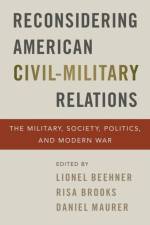
This book explores contemporary civil-military relations in the United States. Much of the canonical literature on civil-military relations was either written during or references the Cold War, while other major research focuses on the post-Cold War era, or the first decade of the twenty-first century. A great deal has changed since then.This book considers the implications for civil-military relations of many of these changes. Specifically, it focuses on factors such as breakdowns in democratic and civil-military norms and conventions; intensifying partisanship and deepening political divisions in American society; as well as new technology and the evolving character of armed conflict. Chapters are organized around the principal actors in civil-military relations, and the book includes sections on the military, civilianleadership, and the public. It explores the roles and obligations of each. The book also examines how changes in contemporary armed conflict influence civil-military relations. Chapters in this section examine the cyber domain, grey zone operations, asymmetric warfare and emerging technology. The book thusbrings the study of civil-military relations into the contemporary era, in which new geopolitical realities and the changing character of armed conflict combine with domestic political tensions to test, if not potentially redefine, those relations.
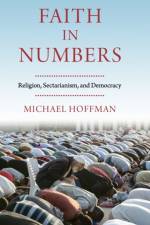
Why does religion sometimes increase support for democracy and sometimes do just the opposite? In Faith in Numbers, political scientist Michael Hoffman presents a theory of religion, group interest, and democracy. Focusing on communal religion, he demonstrates that the effect of communal prayer on support for democracy depends on the interests of the religious group in question. For members of groups who would benefit from democracy, communal prayerincreases support for democratic institutions; for citizens whose groups would lose privileges in the event of democratic reforms, the opposite effect is present. Using a variety of data sources, Hoffman illustrates these claims in multiple contexts. He places particular emphasis on his study of Lebanon and Iraq, twocountries in which sectarian divisions have played a major role in political development, by utilizing both existing and original surveys. By examining religious and political preferences among both Muslims and non-Muslims in several religiously diverse settings, Faith in Numbers shows that theological explanations of religion and democracy are inadequate. Rather, it demonstrates that religious identities and sectarian interests play a major part in determining regime preferences and illustrates how Islam in particular can be mobilized for both pro- and anti-democratic purposes. It finds that Muslim religious practice isnot necessarily anti-democratic; in fact, in a number of settings, practicing Muslims are considerably more supportive of democracy than their secular counterparts. Theological differences alone do not determine whether members of religious groups tend to support or oppose democracy; rather, theirparticipation in communal worship motivates them to view democracy through a sectarian lens.
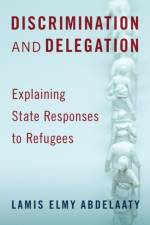
What explains the variety of responses that states adopt toward different refugee groups? In this book, Lamis Elmy Abdelaaty asks why states sometimes assert their sovereignty vis-à-vis refugee rights and at other times seemingly cede it by delegating refugee oversight to the United Nations. Including three in-depth case studies of asylum policies in Egypt, Turkey, and Kenya, Discrimination and Delegation argues that foreign policy and ethnic identity,more so than resources, humanitarianism, or labor skills, shape reactions to refugees.
This book explores contemporary civil-military relations in the United States. Much of the canonical literature on civil-military relations was either written during or references the Cold War, while other major research focuses on the post-Cold War era, or the first decade of the twenty-first century. A great deal has changed since then.This book considers the implications for civil-military relations of many of these changes. Specifically, it focuses on factors such as breakdowns in democratic and civil-military norms and conventions; intensifying partisanship and deepening political divisions in American society; as well as new technology and the evolving character of armed conflict. Chapters are organized around the principal actors in civil-military relations, and the book includes sections on the military, civilianleadership, and the public. It explores the roles and obligations of each. The book also examines how changes in contemporary armed conflict influence civil-military relations. Chapters in this section examine the cyber domain, grey zone operations, asymmetric warfare and emerging technology. The book thusbrings the study of civil-military relations into the contemporary era, in which new geopolitical realities and the changing character of armed conflict combine with domestic political tensions to test, if not potentially redefine, those relations.
Based in the idea that social phenomena are best studied through the lens of different disciplinary perspectives, Empty Churches studies the growing number of individuals who no longer affiliate with a religious tradition. Co-editors Jan Stets, a social psychologist, and James Heft, a historian of theology, bring together leading scholars in the fields of sociology, developmental psychology, gerontology, political science, history, philosophy, and pastoraltheology.The scholars in this volume explore the phenomenon by drawing from each other''s work to understand better the multi-faceted nature of non-affiliation today. They explore the complex impact that non-affiliation has on individuals and the wider society, and what the future looks like for religion in America. The book also features insightful perspectives from parents of young adults and interviews with pastors struggling with this issue who address how we might address this trend. EmptyChurches provides a rich and thoughtful analysis on non- affiliation in American society from multiple scholarly perspectives. The increasing growth of non-affiliation threatens the vitality and long-term stability of religious institutions, and this book offers guidance on maintaining the commitment andcommunity at the heart of these institutions.
Based in the idea that social phenomena are best studied through the lens of different disciplinary perspectives, Empty Churches studies the growing number of individuals who no longer affiliate with a religious tradition. Co-editors Jan Stets, a social psychologist, and James Heft, a historian of theology, bring together leading scholars in the fields of sociology, developmental psychology, gerontology, political science, history, philosophy, and pastoraltheology.The scholars in this volume explore the phenomenon by drawing from each other''s work to understand better the multi-faceted nature of non-affiliation today. They explore the complex impact that non-affiliation has on individuals and the wider society, and what the future looks like for religion in America. The book also features insightful perspectives from parents of young adults and interviews with pastors struggling with this issue who address how we might address this trend. EmptyChurches provides a rich and thoughtful analysis on non- affiliation in American society from multiple scholarly perspectives. The increasing growth of non-affiliation threatens the vitality and long-term stability of religious institutions, and this book offers guidance on maintaining the commitment andcommunity at the heart of these institutions.
Scholarship on immigration to America is a coin with two sides: it asks both how America changed immigrants, and how they changed America. Were the immigrants uprooted from their ancestral homes, leaving everything behind, or were they transplanted, bringing many aspects of their culture with them? Although historians agree with the transplantation concept, the notion of the melting pot, which suggests a complete loss of the immigrant culture, persists in the publicmind. The Oxford Handbook of American Immigration and Ethnicity bridges this gap and offers a comprehensive and nuanced survey of American racial and ethnic development, assessing the current status of historical research and simultaneously setting the goals for future investigation.Early immigration historians focused on the European migration model, and the ethnic appeal of politicians such as Fiorello La Guardia and James Michael Curley in cities with strong ethno-political histories like New York and Boston. But the story of American ethnicity goes far beyond Ellis Island. Only after the 1965 Immigration Act and the increasing influx of non-Caucasian immigrants, scholars turned more fully to the study of African, Asian and Latino migrants to America.This Handbook brings together thirty eminent scholars to describe the themes, methodologies, and trends that characterize the history and current debates on American immigration. The Handbook''s trenchant chapters provide compelling analyses of cutting-edge issues including identity, whiteness, borders and undocumented migration, immigration legislation, intermarriage, assimilation, bilingualism, new American religions, ethnicity-related crime, and pan-ethnic trends. They also explore the mythof "model minorities" and the contemporary resurgence of anti-immigrant feelings. A unique contribution to the field of immigration studies, this volume considers the full racial and ethnic unfolding of the United States in its historical context.
In Musical Motives, author Brent Auerbach look at the ways that motives-or the small-scale pitch and rhythm shapes ever-present in music-tie musical compositions together, and why we remember some more than others.
This book provides a history of the Canada-United States border from 1775 until 1939, highlighting the formation of each nation state, the role Indigenous people had in the development of the international boundary, and the impact the border had on Indigenous people, European settlers, Chinese migrants, and African Americans.
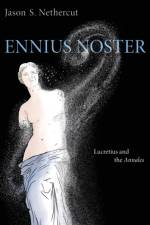
Contrary to critical consensus, Jason S. Nethercut argues that throughout the De Rerum Natura, Lucretius' use of Ennius' Annales as a formal model for a long discursive poem in epic meter was neither inevitable nor predictable, and was in fact used to dismantle the values for which Ennius stood.
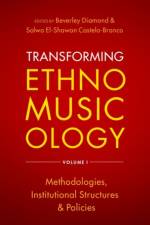
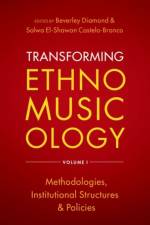
This two-volume collection transforms our understanding of the discipline of ethnomusicology by exploring how ethnomusicologists can contribute to positive social and environmental change within institutional frameworks. The first volume focuses on ethical practice and collaboration and offers strategies for promoting institutional and methodological change.
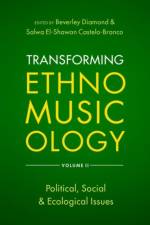
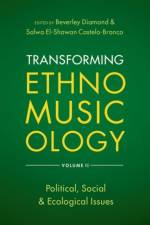
This two-volume collection transforms our understanding of the discipline of ethnomusicology by exploring how ethnomusicologists can contribute to positive social and environmental change within institutional frameworks. The second volume focuses on the intersection of ecological and social issues and features a variety of Indigenous perspectives
This two-volume collection transforms our understanding of the discipline of ethnomusicology by exploring how ethnomusicologists can contribute to positive social and environmental change within institutional frameworks. The first volume focuses on ethical practice and collaboration and offers strategies for promoting institutional and methodological change.
When Near Becomes Far explores the representations and depictions of old age in the rabbinic Jewish literature of late antiquity (150-600 CE). Through close literary readings and cultural analysis, the book reveals the gaps and tensions between idealized images of old age on the one hand, and the psychologically, physiologically, and socially complicated realities of aging on the other hand. The authors argue that while rabbinic literature presents a numberof prescriptions related to qualities and activities that make for good old age, the respect and reverence that the elderly should be awarded, and harmonious intergenerational relationship, it also includes multiple anecdotes and narratives that portray aging in much more nuanced and poignant ways. These anecdotes and narratives relate, alongside fantasies about blissful or unnoticeable aging, a host of fears associated with old age: from the loss of physical capability and beauty to the loss of memory and mental acuity, and from marginalization in the community to being experienced as a burden by one''s children. Each chapter of the book focuses on a different aspect of aging in the rabbinic world: bodily appearance and sexuality, family relations, intellectual and cognitive prowess,honor and shame, and social roles and identity. As the book shows, in their powerful and sensitive treatments of aging, rabbinic texts offer some of the richest and most audacious observations on aging in ancient world literature, many of which still resonate today.
This two-volume collection transforms our understanding of the discipline of ethnomusicology by exploring how ethnomusicologists can contribute to positive social and environmental change within institutional frameworks. The second volume focuses on the intersection of ecological and social issues and features a variety of Indigenous perspectives
A Sweet Penance of Music offers a comprehensive view of music and musicians in 18th century Santiago de Chile, drawing from historical documents and musical scores to bring to life music's significance in settings ranging from cathedrals to public celebrations.
Alban Berg (1885-1935), a student of Arnold Schoenberg and one of the most prominent composers of the Second Viennese School, is counted among the pioneers of twelve-tone serialism. His circle included not only the musicians of the Wiener modern but also prominent literary and artistic figures from Vienna''s brilliant fin-de-siècle. In his short lifetime he composed two ground-breaking operas, Wozzeck and Lulu, as well as chamber works,songs, and symphonic compositions. His final completed work, the deeply moving and elegiac Violin Concerto, is performed by leading soloists across the world.This new life-and-works study from authors Bryan R. Simms and Charlotte Erwin delivers a fresh perspective formed from comprehensive study of primary sources that reveal the forces that shaped Berg''s personality, career, and artistic outlook. One such force was Berg''s wife, Helene Nahowski Berg, and the book provides a unique assessment of her role in the composer''s life and work, as well as her later quest to shape his artistic legacy in the forty-one years of her widowhood. The authorspresent insightful analysis of all of Berg''s major works, bringing into play Berg''s own analyses of the music, many of which have not been considered in existing scholarship. Berg is an accessible and all-encompassing resource for all readers who wish to learn about the life and music of this composer, oneof the great figures in modern music.
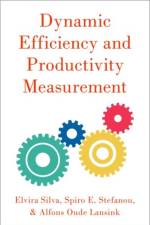
A systematic treatment of dynamic decision making and performance measurementModern business environments are dynamic. Yet, the models used to make decisions and quantify success within them are stuck in the past. In a world where demands, resources, and technology are interconnected and evolving, measures of efficiency need to reflect that environment.In Dynamic Efficiency and Productivity Measurement, Elvira Silva, Spiro E. Stefanou, and Alfons Oude Lansink look at the business process from a dynamic perspective. Their systematic study covers dynamic production environments where current production decisions impact future production possibilities. By considering practical factors like adjustments over time, this book offers an important lens for contemporary microeconomic analysis. Silva, Stefanou, and Lansink develop theanalytical foundations of dynamic production technology in both primal and dual representations, with an emphasis on directional distance functions. They cover concepts measuring the production structure (economies of scale, economies of scope, capacity utilization) and performance (allocative, scale and technicalinefficiency, productivity) in a methodological and comprehensive way.Through a unified approach, Dynamic Efficiency and Productivity Measurement offers a guide to how firms maximize potential in changing environments and an invaluable contribution to applied microeconomics.
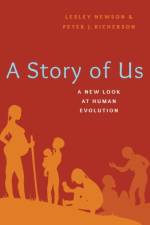
It''s time for a story of human evolution that goes beyond describing "ape-men" and talks about what women and children were doing.In a few decades, a torrent of new evidence and ideas about human evolution has allowed scientists to piece together a more detailed understanding of what went on thousands and even millions of years ago. We now know much more about the problems our ancestors faced, the solutions they found, and the trade-offs they made. The drama of their experiences led to the humans we are today: an animal that relies on a complex culture. We are a species that can ΓÇö and does ΓÇö rapidly evolvecultural solutions as we face new problems, but the intricacies of our cultures mean that this often creates new challenges.Our species'' unique capacity for culture began to evolve millions of years ago, but it only really took off in the last few hundred thousand years. This capacity allowed our ancestors to survive and raise their difficult children during times of extreme climate chaos. Understanding how this has evolved can help us understand the cultural change and diversity that we experience today.Lesley Newson and Peter Richerson, a husband-and-wife team based at the University of California, Davis, began their careers with training in biology. The two have spent years ΓÇö together and individually ΓÇö researching and collaborating with scholars from a wide range of disciplines to produce a deep history of humankind. In A Story of Us, they present this rich narrative and explain how the evolution of our genes relates to the evolution of our cultures. Newson andRicherson take readers through seven stages of human evolution, beginning seven million years ago with the apes that were the ancestors of humans and today''s chimps and bonobos. The story ends in the present day and offers a glimpse into the future.
The Midwest experienced an upheaval over labor rights beginning in the winter of 2011. For most commentators, the fallout in the Midwest and unions'' weak showing in the 2016 presidential election a few years later was just more evidence of labor''s emaciated state.In Heartland Blues, Marc Dixon provides a new perspective on union decline by revisiting the labor movement at its historical peak in the late 1950s. Drawing on social movement theories and archival materials, he analyzes campaigns over key labor policies as they were waged in the heavily unionized states of Indiana, Ohio and Wisconsin-the very same states at the center of more recent battles over labor rights. He shows how many of the key ingredients necessary for less powerful groupsto succeed, including effective organization and influential political allies, were not a given for labor at the time, but instead varied in important ways across the industrial heartland. Thus, the labor movement''s social and political isolation and their limited responses to employer mobilization became adeath knell in the ensuing decades, as unions sought organizational and legislative remedies to industrial decline and the rising anti-union tide.Showing how labor rights have been challenged in significant ways in the industrial Midwest in the 1950s, Heartland Blues both identifies enduring problems for labor and forces scholars to look beyond size when seeking clues to labor''s failures and successes.
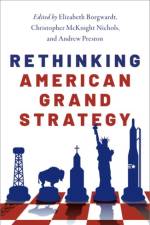
A comprehensive rethinking about the nature of American grand strategy in the past, present, and future.
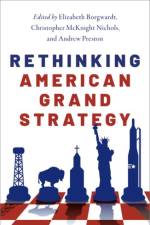
A comprehensive rethinking about the nature of American grand strategy in the past, present, and future.
This Handbook explains how music contributes to the advertising that the public encounters on a daily basis. Chapters examine how the soundtracks of promotional messages originate, how we might interpret the meanings behind the music, and how commercial messages influence us through music.
Abonner på vårt nyhetsbrev og få rabatter og inspirasjon til din neste leseopplevelse.
Ved å abonnere godtar du vår personvernerklæring.