



















Gjør som tusenvis av andre bokelskere
Abonner på vårt nyhetsbrev og få rabatter og inspirasjon til din neste leseopplevelse.
Ved å abonnere godtar du vår personvernerklæring.Du kan når som helst melde deg av våre nyhetsbrev.

They usually start out as ordinary people, doing their best to deal with mixed messages in a complex world. What they donOt realize is that they may be the target of a violent system that is building an obedient workforce. One day theyOre enjoying a few laughs with buddies, and seemingly the next day, they wake up as human killing machines. And they allowed it to happen. Addressing one of the most serious threats to the world today, Human Killing Machines applies the model of systematic indoctrination to case studies of brutality in Iran, Nazi Germany, Al Qaeda, and Abu Ghraib. The book reveals how these transformations take place_how systems redefine morality to turn ordinary people into torturers, terrorists, and genocidal killers. Analyzing the key differences between these cases also helps to identify the safeguards which limit violence. Lankford demonstrates the weaknesses of indoctrination, the ways heroic individuals have resisted its influence, and the potential for countermeasures. Based on these examples, he offers recommendations for how we can begin to reform the U.S. military and increase its accountability, reduce Al Qaeda terroristsO commitment to their missions, and spark an awakening in Iran so that the oppressive regime goes out with a whimper_not with a bang.
Exclusive social clubs are traditionally an important site for the consolidation of upper-class power. Wealth, Whiteness, and the Matrix of Privilege shows that while the particulars of admission have changed, these clubs remain socially significant incubators. Having interviewed typically inaccessible members of exclusive clubs in the Northeast, Jessica Holden Sherwood reports and analyzes what they have to say about who is in, who is out, and why. The members talk frankly about their exclusiveness based on money and style, but they are quick to point out that ethnically-based exclusion is a thing of the past. Club members also address the status of their women members, which is at times distinctly second-class. The talk of country club members is shown to draw on elements in popular discourse. And even if it's not their intention, as club members exclude and account for their exclusion, they contribute to reproducing class, race, and gender inequalities.
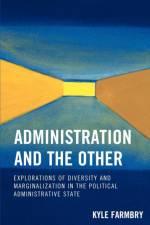
Administration and the Other examines the social construction of groups of people and resultant policy impacts in the discourse of the American Republic from before its founding to the present. The book suggests that from pre-revolutionary interactions between early colonialists and Native Americans to recent immigration debates, discourse on The Other has resulted in the development of policies that have led to further marginalization, community division, and harm to scores of innocents within the public sphere. Ultimately,Administration and the Other examines the construction of The Other from a sociological and historical framework to engage students and scholars of political and administrative processes in using the often unspoken history of the field, as part of a larger historical framework, to explore how policy has been shaped in relation to marginalized communities. By presenting elements of history that are frequently not entered into the administrative and political discourse, the book aims to frame a conversation that might lead to the integration of thoughts about the often marginalized Other into discussions of policy-making and policy-implementation processes.
Byzantine Rome and the Greek Popes examines the scope and extent to which the East influenced Rome and the Papacy following the Justinian Reconquest of Italy in the middle of the sixth century through the pontificate of Zacharias and the collapse of the exarchate of Ravenna in 752. A combination of factors resulted in the arrival of significant numbers of easterners in Rome, and those immigrants had brought with them a number of eastern customs and practices previously unknown in the city. Greek influence became apparent in art, religious ceremonial and liturgics, sacred music, the rhetoric of doctrinal debate, the growth of eastern monastic communities, and charitable institutions, and the proliferation of the cults of eastern saints and ecclesiastical feast days and, in particular, devotion to the Theotokos or Mother of God. From the late seventh to the middle of the eighth century, eleven of the thirteen Roman pontiffs were the sons of families of eastern provenance. While conceding that over the course of the seventh century Rome indeed experienced the impact of an important Greek element, some scholars of the period have insisted that the degree to which Rome and the Papacy were 'orientalized' has been exaggerated, while others argue that the extent of their 'byzantinization' has not been fully appreciated. The question has also been raised as to whether Rome's oriental popes were responsible for sowing the seeds of separatism from Byzantium and laying the foundation for a future papal state, or whether they were loyal imperial subjects ever steadfast politically, although not always so in matters of the faith, to the reigning sovereign in Constantinople. Finally, there is the important issue of whether one could still speak of a single and undivided imperium Roman christianum in the seventh and early eighth centuries or whether the concept of imperial unity in the epoch following Gregory the Great was a quaint and fanciful fiction as East and West, ignoring and misunderstanding one another, began to go their separate ways. Byzantine Rome and the Greek Popes provides a guide through this complicated and often contradictory history.
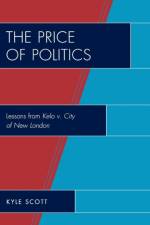
This book makes the unconventional claim that all of the rights in the U.S. Constitution are unified since they are derived from the same sources. Using the U.S. Supreme Court's controversial decision of Kelo v. City of New London to explore one of the most important constitutional questions of our time, this book reaches across disciplines and subfields to bring forth an innovative understanding of rights. The book derives its understanding of rights from historical sources and philosophical texts which then serve as the basis for the empirically backed claim that rights in U.S. have been sacrificed for partisan gain and that the unbiased protection of rights is the only manner in which a free and equitable government and economy can be sustained. Given the theoretical and practical implications of the property rights debate, understanding it is important for everyone in the U.S. and abroad.
Most recognize the importance of public opinion in foreign policy decisions in democracies. However, despite its importance to American security, the question of how American foreign policy has affected the views of foreign publics about the United States is seldom asked. Throughout American Image in Turkey: U.S. Foreign Policy Dimensions, Giray Sadik explores the relationship between American foreign policy and Turkish public opinion about the United States since 9/11. In the post-9/11 era, Turkey was one of the earliest states to join the global coalition against terrorism, but American and Turkish cooperation in Afghanistan contrasts with their differences about Iraq, which destabilizes their strategic partnership. Sadik examines the effects of American military and economic aid, foreign direct investment (FDI), as well as bilateral trade between the United States and Turkey on Turkish public opinion about the United States, addressing how these tools can increase levels of favorable public opinion toward the United States. Sadik explains how different trends of U.S. military and economic policies toward Turkey translate into significantly different levels of influence on post-9/11 Turkish public opinion toward the United States. The implications of new geopolitical realities make explorations of the effects of foreign policy on public opinion all the more urgent.
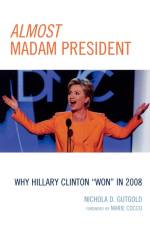
All around the world women are presidents and prime ministers, yet in America, we have yet to elect the first woman president. When Barack Obama accepted the nomination as the Democratic candidate for president in 2008, the media were quick to point out that Hillary Clinton lost. Yet Clinton won almost 18 million votes and was the first front- runner woman candidate. Almost Madam President: Why Hillary Clinton 'Won' in 2008 argues that Hillary Clinton gained more than she lost in her bid for the presidency. This book takes the reader on a rhetorical journey through Hillary Clinton's 2008 presidential campaign, focusing on Clinton's sophisticated 'You Tube' style announcement speech, the debates, and the many notable stump speeches and media events on the campaign trail. Along the way Gutgold examines the obstacles and opportunities of women as presidential candidates.
This book examines why elected leaders pursue foreign policies that are remarkably distant from their proposed policies. To investigate this pattern this book develops a model of how the foreign policy preferences of the executive and the government in the legislature interact over the electoral cycle to affect democratic leaders' foreign policy choices. The executive is cross-pressured when the foreign policy that the legislature wants is not the same policy that the executive's constituents want. The executive must choose a policy that balances the conflicting demands of remaining in a productive government (pleasing the legislature) and obtaining votes in the next election (pleasing constituents). Getting votes is clearly more important when elections are near, so democratic leaders weigh these competing demands differently over the course of the electoral cycle. This is what can lead to trends in foreign policy: the executive first chooses policies that mollify the legislature and later reverts to the policies that please his or her constituents when elections draw near. The book pursues these ideas with a game theoretic model and a set of statistical assessment of multiple cases (Israel and the Palestinians, the US and the USSR, and others) to provide a rigorous and logical framework to the argument. The central findings are that democratic institutions and processes (i.e. the domestic context) have a predictable influence on foreign policy choices over time; some configurations of preferences, electoral systems, and election timing are not conducive to peace. Rather than the diversionary hypothesis that conflict is likely before an election, as a boost to executive popularity would be particularly valuable at that moment, a more nuanced finding is reported.
In Spirits in the Material World: The Challenge of Technology, Gil Germain provocatively argues that humans are fast becoming spirit-like creatures, beings who assume their bodies are incidental to what it means to be human, and the 'real world' an accidental quality of the human condition. Technology, it is suggested, authorizes such an understanding and legitimates a manner of action that obscures the centrality of embodiment. Technology properly understood is thus an otherworldly or spiritual force. Spirits in the Material World challenges the assumptions underpinning the technological world view through a reading of leading contemporary theorists who have addressed the interconnection between technology and embodiment. The book both reveals and contests the multifarious ways in which technology's spiritual thrust is manifested in contemporary thought and practice. While respecting technology's hold on modernity and its predisposition toward disembodiment, Germain gives important reasons why this inclination toward spiritization ought to be resisted and what shape this resistance must take if it is to be meaningful. Spirits in the Material World will appeal to a broad spectrum of scholars and students alike, especially those interested in philosophy of technology, postmodernism, political theory, phenomenology, the end of history debate, and deep ecology.
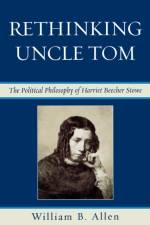
Generally critics and interpreters of Uncle Tom have constructed a one-way view of Uncle Tom, albeit offering a few kind words for Uncle Tom along the way. Recovering Uncle Tom requires re-telling his story. This book delivers on that mission, while accomplishing something no other work on Harriet Beecher Stowe has fully attempted: an in-depth statement of her political thought. Heroeuvre, in partnership with that of her husband Calvin, constitutes a demonstration of the permanent necessity of moral and prudential judgment in human affairs. Moreover, it identifies the political conditions that can best guarantee conditions of decency. Her two disciplinesDphilosophy and poetryDilluminate the founding principles of the American republic and remedy defects in their realization that were evident in mid-nineteenth century. While slavery is not the only defect, its persistence and expansion indicate the overall shortcomings. In four of her chief works (Uncle Tom's Cabin,Sunny Memories of Foreign Lands,Dred, andOldtown Folks), Stowe teaches not only how to eliminate the defect of slavery, but also how to realize and maintain a regime founded on the basis of natural rights and Christianity. Further, she identifies the proper vehicle for educating citizens so they might reliably be ruled by decent public opinion. Book one, part one of Rethinking Uncle Tom explains Uncle Tom's Cabin within the context of the Stowes' joint project, an articulation of the conditions of democratic life and the appropriate nature of modern humanism. Book two, parts one and two, analyses how key elements of Calvin's thinking were conveyed by Stowe's works, while distinguishing her thought from his, and examines the importance of her 'political geography' and the breadth of her thinking on cultural, moral, and political matters. Parts three and four investigate the most mature elements of Stowe's political thought, providing a close reading of Sunny MemoriesDrevealing the full political purpose of that work, discerned through mastery of its complex symbolismDand of Oldtown Folks, which completes the development of Stowe's political thought by assessing three alternative regimes and by presenting a vision of anutopia: the ultimate life of decency and order which is proof against false dreams of rationalized life. Rethinking Uncle Tom provides readers both better familiarity with the moral discourse of abolition and nineteenth-century reformism, and, more importantly, a glimpse of an America envisioned as producing that nobility of soul that Uncle Tom represented, the human model of surpassing excellence.
Much has been written about the Los Angeles riots of 1992, which brought out deep racial tensions throughout the city, exposed by media images of police brutality. This book sheds light on another facet of the events, the birth of a dynamic grassroots activist and community organizing movement that has been little noticed by academics or even by the press. It also focuses on the theatrical production of Twilight: Los Angeles 1992, a performance created by Anna Deavere Smith. Performance and Activism analyzes a rich, eclectic, and ongoing ensemble of local activist struggles in the context of the history and political economy of Los Angeles. Building on the important critical urban studies work of Mike Davis and Edward Soja, it also draws on Dwight Conquergood's writings on performance ethnography to theorize the political work of grassroots formations such as alternative/underground media collectives, gang truce parties/picnics, and women-organized prisoner support and court watch groups, such as Mothers Reclaiming Our Children. The book focuses on these events through the inter-disciplinary approach of performance studies, highlighting 'performance-conscious activisms' that help bridge the enormous class, race, and gender divides of our society.
In Licensing Parents, Michael McFall argues that political structures, economics, education, racism, and sexism are secondary in importance to the inequality caused by families, and that the family plays the primary role in a child's acquisition of a sense of justice. He demonstrates that examination of the family is necessary in political philosophy and that informal structures (families) and considerations (character formation) must be taken seriously. McFall advocates a threshold that should be accepted by all political philosophers: children should not be severely abused or neglected because child maltreatment often causes deep and irreparable individual and societal harm. The implications of this threshold are revolutionary, but this is not recognized fully because no philosophical book has systematically considered the ethical or political ramifications of child maltreatment. By exposing a tension between the rights of children and adults, McFall reveals pervasive ageism; parental rights usually trump children's rights, and this is often justified because children are not fully autonomous. Yet parental rights should not always trump children's rights. Ethics and political philosophy are not only about rights, but also about duties_especially when considering potential parents who are unable or unwilling to provide minimally decent nurturance. While contemporary political philosophy focuses on adult rights, McFall examines systems whereby the interests and rights of children and parents are better balanced. This entails exploring when parental rights are defeasible and defending the ethics of licensing parents, whereby some people are precluded from rearing children. He argues that, if a sense of justice is largely developed in childhood, parents directly influence the character of future generations of adults in political society. A completely stable and well-ordered society needs stable and psychologically healthy citizens in addition to just laws, and McFall demonstrates how parental love and healthy families can help achieve this.
Ought Implies Kant offers an original defense of the ethical theory of Immanuel Kant, and develops an extension of that theoryOs account of moral duty to include direct duties to nonhuman animals. The discussion centers on a critical examination of consequentialism, the view that the rightness or wrongness of an action is determined solely by its consequences. Kantianism, by contrast, claims that the core of ethics is to treat all persons_or, in Joel MarksOs view, all living beings_as ends-in-themselves. The consequentialist criterion would seem to permit, indeed require, violating the dignity of persons (not to mention the dignity of other animals) if this would result in a better outcome. This volume treats the consequentialist challenge to Kantian ethics in several novel ways. To begin with, the utilitarian version of consequentialism is delineated and defended by means of a conceptual device dubbed by the author as the Consequentialist Continuum. Marks then provides an exhaustive and definitive exposition of the relatively neglected Epistemic Objection to utilitarianism. While acknowledging the intuitive appeal of utilitarianismOs core conviction_that we should always do what is for the best_Marks argues that this is an impossible injunction to fulfill, or even to attempt to fulfill, because all of the relevant results of our actions can never be known. Kantianism is then introduced as a viable alternative account of our ethical obligations. Marks argues that Kantianism is well within the scope of normal human competence and conforms equally well to our ethical intuitions once the theoryOs proper interpretation is appreciated. However, KantOs own version must be extended to accommodate the rightful moral consideration we owe to nonhuman animals. Finally, Marks employs the notion of a Consequentialist Illusion to explain utilitarianismOs hold on our moral intuitions, while developing a form of Consequentialist Kantianism to address them. An original and penetrating examination of a central debate in moral philosophy, this book will be of interest to philosophical ethicists, upper-level and graduate philosophy students, and the intellectual reading public.
The ability to function safely, healthily, and productively in urban places is a continuing challenge for people everywhere. This challenge is exacerbated when the resources available to people in urban places happen to be severely limited or their ability to make decisions consistent with their welfare severely constrained. Nevertheless, Africans have manifested great inventiveness and resourcefulness both in contributing to, and in adapting to, urbanization. Africas Legacies of Urbanization is the culmination of several decades of research, travel, and teaching. Goodwin provides an interdisciplinary and up-to-date look at African cities and the urbanization process. This thought provoking and engaging work tackles the vastness of the mother continent by dividing it into geographic regions: western, central, southern, eastern, and northeastern. Beginning with an overview of the urban experience in Africa, Goodwin then studies the histories of urbanization in the various regions of the continent. Thoroughly researched and accessibly written, this comprehensive work will appeal to scholars of African studies, urban studies, anthropology, and cultural ecology.
During the 1990s, a new type of controversy began occurring across the United States: controversies over the siting of superstores, also known as big box stores. In these disputes, which often involve Wal-Mart, the world's biggest retailer, local citizens mount organized opposition to the proposed siting of a superstore in their town or neighborhood. Opponents criticize Wal-Mart superstores for putting local independent merchants out of business, siphoning money from the local economy, providing substandard jobs, disrupting residential neighborhoods, contributing to the 'McDonaldization' of society, inducing sprawl, destroying downtowns and Main Streets, and undermining local uniqueness and small town charm. More generally, these David-and-Goliath controversies represent particularly stark examples of the conflict of interests between local communities and large corporations that have become common in contemporary society. Small Towns and Big Business uses fieldwork and archival sources to comprehensively examine these controversies and the underlying issues. While Wal-Mart is usually able to site its stores at its preferred locations, in some cases local opponents have been able to thwart its plans. Using detailed case studies of anti-superstore controversies in six small cities in five states, Halebsky employs a comparative-historical approach to construct an explanation of how some of these local social movements managed to prevail against Wal-Mart. This explanation is then extended to provide the basis for a model of the general conditions under which local communities may be able to constrain unwanted corporate action. Thus, this is both a study of social movement outcomes and an investigation of community-corporate conflict. Small Towns and Big Business provides insight into the potential of the local state to control large corporations, the inherently problematic nature of corporate retailing, the possibilities for resisting McDonaldization, and the fate of local anti-corporation activism.
Unlike the dominant trend in cognitive approach to foreign policy, the approach in this book is not guided by reflections in psychology. Like part of Jervis's work, it is inspired by reflections concerning the philosophy of science; yet not by Kuhn's or those of its most well-known critics, but by some more recent and formal reflections known as the AGM theory. The AGM theory, proposed in the 1980's by Alchourr-n, GSrdenfors, and Makinson, is the core of a most dynamic branch of logic, focusing on belief change. It has produced impressive formal results, with echoes in artificial intelligence, database management, and decision and game theory. This book shows how it can be used in political science. The book includes three parts. Part One is a twenty-page review of the AGM theory, avoiding a number of pitfalls, inaccuracies, and misunderstandings that are common elsewhere. Part Two is a review of U.S.-Iranian relations under the reign of the last shah, focusing on the last years of monarchy, and including an unconventional interpretation of U.S. intelligence performance in 1978. The essential part is Part Three, where an AGM model is tested, and intriguing results obtained in connection with U.S. perceptions of the Iranian revolution.
In John Dahl and Neo-Noir: Examining Auteurism and Genre, Paul Monaco provides a focused inquiry into the first three feature films that director John Dahl made for theatrical release: Kill Me Again (1989), Red Rock West (1993), and The Last Seduction (1994). Subsequent to their releases, these three films became identified in academic film criticism as neo-noir, and Dahl was labeled a 'noir-meister' who made 'a cottage industry of neo-noir.' The importance of these three films, and Monaco's investigation of them, is how they illuminate a modern director's creative process in relation to an emerging genre. Dahl is rightly recognized for his directorial vision and his creative style. His approach to film direction, and his distinctiveness of vision, is thoroughly explored in the book. Using interviews with the professionals with whom Dahl has worked closely, Monaco also explores basic notions about auteurism and how genre is defined. Considering Dahl's extensive directing for television alongside his first three films, John Dahl and Neo-Noir ultimately demonstrates how this groundbreaking director is a prime example of a modern 'director for hire.'
In America in JeruSALEm, the authors examine the effects of globalization and Americanization on the national identity of small nations. Using Israel as a case study, First and Avraham analyzed the changes in Israeli advertising over the past two decades. They found that since the '90s, Israeli advertisers began using American symbols, values, sights, and heroes to promote diverse products without any consideration of the place they were actually made. The perspective offered in this book_a consideration of advertising as a locus of the tension between national identity and globalization/Americanization_is an innovative one, generating a model that can be used to analyze national identity through advertising in the age of globalization/Americanization. Although many books have focused on numerous aspects of Israeli society, America in JeruSALEm offers a new and accessible perspective on the changes in Israeli identity.
China's rise has become inevitable, but there is no agreement about whether China will rise peacefully or pose a threat to the United States. The author asserts that both theories of 'China threat' and 'peaceful rise' failed to address China's central domestic problem. Thus, both theories are not convincing. This book attempts to develop a third view of China's rise from a domestic perspective and contends that China's potential threat to the existing global order is not derived from her rapid economic growth and military expansion, but from her potential domestic chaos. A strong democratic China will contribute to the global peace, but the collapse of China will gravely threaten Western societies. The current Chinese political system directly contributes to this social instability and could possibly cause China's social crash. China's democratization is the key to ensure China's peaceful rise in a global context. However, the Party is still in power and any attempt to dissolve the one-party system in presentday China has poor prospects. China must take a two-step, gradual reform approach to complete the transition from an authoritarian regime to a democratic one. In the two-step theory, the first phase for promoting China's democratization includes exercising freedom of media, increasing the consciousness of citizen participation, and enacting religious rights. Through all these democratic exercises, China will gradually be able to achieve a fully democratic society. This two-step theory is crucial for the United States if it is to enact effective foreign policy toward China and for China to develop a democratic harmonious society.
Prying Open Fortress: The Turn to Sectoral Labor Migration is unique in the field of migration studies since it traces the microeconomic motivations of the relevant economic actors who influence labor migration policy. The book updates the study of the political economy of immigration through a focus on the central and pro-active role of employers, exploring how they interact with trade unions and government to reconfigure the labor migration paradigm in Western Europe. By doing so, it is attentive to the logic behind their strategies, being sensitive to macroeconomic changes that produce sectorally variant policy outcomes. Beyond offering a micro-economically informed explanation for immigration policy, the study transcends the field of migration studies by offering insights relevant to larger debates concerning the nature of national varieties of capitalism. Challenging the 'national models' understanding of capitalism through a multi-country, multi-sectoral study of employers' policy preferences, it demonstrates how in the area of labor migration, economic branches evidence different worker flexibility needs that lead to differing policy results within countries yet similar responses in the same industries of different countries. Though the book's case studies examine policy development and the role of German, British, Austrian, and Dutch employers, the central comparison is that of Germany, with its highly regulated economy, to the more laissez-faire UK. The book analyzes labor migration policy with four concentrations: IT, hospitality, construction and metalwork, the impact of differing worker flexibility requirements upon employer calculations to make findings more obvious.
What is Machiavelli's place in the history of political thought? Did he seek to revive the civic virtues espoused by ancient Greek and Roman political theorists, or was he an intellectual rebel whose radical critique of the classical philosophic tradition made him a harbinger of the modern era? Almost every significant book on Machiavelli since the beginning of the twentieth century has addressed the question of his relation to classical thought in one form or another. Yet, there has never been a comprehensive study of the relationship between Machiavelli and Xenophon, the classical political theorist whose shrewd analysis of effective politics comes closest to Machiavelli's. Excellence Unleashedis a detailed comparison of Machiavelli and Xenophon's political philosophy, focusing on Xenophon's Education of Cyrus and Hiero or On Tyranny and Machiavelli's The Prince and Discourses on Livy. This study examines a number of major themes essential to both writers: the moral and political requirements of healthy republics; imperial expansion; the relationship between human nature, politics, and virtue; the role of religion in politics; the distinction between legitimate and illegitimate rule; and the influence of philosophy on politics. By elucidating the remarkable scope, depth, and subtlety of the debate between these two great thinkers, this book offers a fresh perspective on the philosophic and political significance of Machiavelli's proto-modern break from the classical tradition.
The O.C., A Critical Understanding, by Lori Bindig and Andrea M. Bergstrom, is a feminist cultural studies analysis of FOX's hit teen television drama The O.C. (2003-2007). Episodes of The O.C. are analyzed as a set of media texts that blur the boundaries between hegemonic and counter-hegemonic content. This analysis utilizes ancillary media such as director commentary in conjunction with content in order to understand how ideological content, in regards to gender, race, class, sexuality, and consumerism, is presented throughout the show. The O.C. is also examined in terms of audience analysis, auteur theory, aesthetics, and reality television spin-offs. Bindig and Bergstrom place The O.C. in a larger social context and explore the potential ramifications of popular media texts, as well as the series cultural legacy which continues to resonate in media and culture.
Envisioning Media Power develops an original geographical perspective on the nature and exercise of power in the international television economy. It uses theories of political economy as the basis for a comparative empirical examination of the UK and New Zealand television markets, while closely considering these markets' respective relationships with the US market and its globally-influential media corporations. In fleshing out this geographical perspective, the book critically addresses the power to produce, reproduce, and extract profit from territorialized media markets. To understand such powers, the book examines processes of creation and dissemination of industry knowledge, structures of industry governance, and the locational characteristics of television's operational economy. Through its rigorous and creative combination of conceptual insights with empirical substance, Envisioning Media Power both illuminates the fabric of television's international space economy, and ultimately offers a unique theoretic argument - suggesting that power, knowledge and geography are inseparable not only from one another, but from the process of accumulation of media capital.
Building on and going far beyond W.E.B. Du Bois and the Problems of the Twenty-First Century and Du Bois's Dialectics, Reiland Rabaka's Africana Critical Theory innovatively identifies and analyzes continental and diasporan African contributions to classical and contemporary critical theory. This book represents a climatic critical theoretical clincher that cogently demonstrates how Du Bois's rarely discussed dialectical thought, interdisciplinarity, intellectual history-making radical political activism, and world-historical multiple liberation movement leadership helped to inaugurate a distinct Africana tradition of critical theory. With chapters on W.E.B. Du Bois, C.L.R. James, Negritude (Aime Cesaire and Leopold Senghor), Frantz Fanon and Amilcar Cabral, Africana Critical Theory endeavors to accessibly offer contemporary critical theorists an intellectual archaeology of the Africana tradition of critical theory and a much-needed dialectical deconstruction and reconstruction of black radical politics. These six seminal figures' collective thought and texts clearly cuts across several disciplines and, therefore, closes the chasm between Africana Studies and critical theory, constantly demanding that intellectuals not simply think deep thoughts, develop new theories, and theoretically support radical politics, but be and constantly become political activists, social organizers and cultural workers - that is, folk the Italian critical theorist Antonio Gramsci referred to as 'organic intellectuals.' In this sense, then, the series of studies gathered in Africana Critical Theory contribute not only to African Studies, African American Studies, Caribbean Studies, Cultural Studies, Gender Studies, and Postcolonial Studies, but also to contemporary critical theoretical discourse across an amazingly wide-range of 'traditional' disciplines, and radical political activism outside of (and, in many instances, absolutely against) Europe's ivory towers and the absurdities of the American academy.
Conservative Brain Trust traces the rise, fall, and rise again of the American Enterprise Institute for Public Policy Research (AEI). More than that, it is the story of one of Washington's leading think tanks: what it's like to work there, how Washington works, and how AEI influences policy, including policy on the controversial Iraq War. This is a wide-ranging review of the Washington think tank world, focused particularly on AEI. The book is a social science and political study of the role of think tanks in Washington policy-making and, in part, a personal memoir of the author's adventures and perceptions in seeking to link academic research and American foreign policy. What emerges is a portrait of AEI as an influential, but also troubled, think tank with access to the highest levels of the U.S. government. Irreverent as well as analytic, the author recounts his adventures and experiences in the think tank and policy worlds.
Colombia is a major exporter of fresh-cut flowers. As in other global assembly line industries, women constitute a majority of Colombia's floriculture workforce. This ethnographic study explores the links between agro-industrial employment in the context of economic adjustment programs and the individual experience of employment and economic change at the household level. Author Greta Friedemann-Snchez's challenges the current academic consensus that transnational assembly line industries reinforce patriarchal ideologies of reproduction and the exploitation of women. What from a global perspective may be perceived as exploitation can be seen from the local perspective as an opportunity within the community. Specifically, the study focuses on how the interrelated factors of formal employment, wage income, property ownership, social capital, and self-esteem articulate with women's resistance to male dominated households and domestic violence. Expertly combining qualitative and quantitative methodologies, Assembling Flowers and Cultivating Homes contributes greatly to the study of gender and power, household economics and structure, and Latin American society.
The Dark Side of Zionism: Israel's Quest for Security through Dominance arises out of the scholarship of the 'new historians,' a group of mostly Israeli scholars who have uncovered a history widely ignored in the popular media. Baylis Thomas argues that both the early Zionists and, later, the Israelis sought their security through the military domination of the indigenous Arab population of Palestine. This strategy required both avoiding negotiations with the Palestinian-Arabs and provoking the weak Arab states-opposed to the Israeli takeover of Palestine-into entering wars they would lose. The role of British imperial power was crucial in this early history, as was the later U.S. support of Israel, right or wrong. Thomas explores the larger context of this history in chapters on colonization, hegemony, weapons diplomacy, terrorism, nationalism, religion, Zionism, and prospects for resolution of the conflict. While students and scholars of Middle Eastern studies and international relations will find this book valuable, it is intended for the intelligent general reader who is curious about current events yet puzzled about the Palestinian-Israeli conflict. Israel's national identity, founded on the memory of being victims of the Holocaust, focuses on current events that seem consistent with the past, even as the nation uses force to thwart Palestinian national aspirations. The Dark Side of Zionism argues that peace for both Israelis and Palestinians can only come if Israel relinquishes military rule.
Set within the context of the political and ideological developments of the time, History vs. Apologetics examines the role played by the Catholic Church in the rise and consolidation of the Third Reich and in particular with regard to the Nazi persecution of the Jews. Distanced in the beginning, the Catholic Church and the Nazi party drew closer as Hitler's popularity increased. At the ratification of the Concordat in Rome, a commitment not to interfere with the Nazis' 'Final Solution' to the 'Jewish Question' was traded for a verbal promise from Berlin to exclude the baptized converts. While the Nazi government violated the Concordat at every turn, the Church kept zealously its promise. Pope Pius XII never mentioned the persecuted Jews by name and denied any knowledge of the annihilation of the Jews. Even after the war, Pius XII refused to condemn anti-Semitism and Germany's role in the Holocaust. Instead, the Vatican engaged in the protection of genocide perpetrators and assisted in their mass escape. David Cymet's comprehensive critical analysis of the polemical literature on the topic makes it possible to separate legitimate history from apologetic allegations and misrepresentations, bringing to light key elements of Church policy that is intentionally misinterpreted by apologists. By surveying the Church's policy from just before the rise of Nazism to the present, Cymet demonstrates how the Nazis were able to turn the Catholic Church into their ally in their war against the Jews.
Philosophical tradition holds that character traits are global; if you possess a particular character trait, you will perform trait-related behavior across a broad range of situations. In Situational Traits of Character: Dispositional Foundations and Implications for Moral Psychology and Friendship, a groundbreaking study at the intersection of ethics, moral psychology, and metaphysics, Candace L. Upton offers an intriguing alternative to this philosophical tradition. By appealing to both normative considerations and the metaphysics of dispositions, Upton argues that character traits should be understood situationally. After developing and defending her situational account of character traits, Upon uses this account to adjudicate the debate over the compatibility of the demands of consequentialism with those of genuine friendship in favor of the friendly consequentialist.
On Thin Ice explores the relationship between the Inuit and the modern state in the vast but lightly populated North American Arctic. It chronicles the aspiration of the Inuit to participate in the formation and implementation of diplomatic and national security policies across the Arctic region and to contribute to the reconceptualization of Arctic Security, including the redefinition of the core values inherent in northern defense policy. With the warming of the Earth's climate, the Arctic rim states have paid increasing attention to the commercial opportunities, strategic challenges, and environmental risks of climate change. As the long isolation of the Arctic comes to an end, the Inuit who are indigenous to the region are showing tremendous diplomatic and political skills as they continue to work with the more populous states that assert sovereign control over the Arctic in an effort to mutually assert joint sovereignty across the region Published on the 50th anniversary of Ken Waltz's classic Man, the State and War, Zellen's On Thin Ice is at once a tribute to Waltz's elucidation of the three levels of analysis as well as an enhancement of his famous 'Three Images,' with the addition of a new 'Fourth Image' to describe a tribal level of analysis. This model remains salient in not only the Arctic where modern state sovereignty remains limited, but in many other conflict zones where tribal peoples retain many attributes of their indigenous sovereignty.
Abonner på vårt nyhetsbrev og få rabatter og inspirasjon til din neste leseopplevelse.
Ved å abonnere godtar du vår personvernerklæring.