


















Gjør som tusenvis av andre bokelskere
Abonner på vårt nyhetsbrev og få rabatter og inspirasjon til din neste leseopplevelse.
Ved å abonnere godtar du vår personvernerklæring.Du kan når som helst melde deg av våre nyhetsbrev.

Removing the Commons examines the moral condition in which people can remove--through either use or appropriation--natural resources from the commons. This task begins with a robust defense of the view that natural resources initially belong to all people. Granting that natural resources initially belong to all people, it follows that all people have a claim that limits the way in which others may go about taking or removing natural resources from the commons. In assessing these limitations, Eric Roark argues for a Lockean left-libertarian theory of justice in which all people have the right of self-ownership and may only remove natural resources from the commons if they adhere to the Lockean Proviso by leaving ';enough and as good' for others. Roark's account goes beyond existing treatments of the Lockean Proviso by insisting that the duty to leave enough and as good for others applies not merely to those who appropriate natural resources from the commons, but also to those who use natural resources within the commons. Removing the Commons defends a Georgist interpretation of the Lockean Proviso in which those who remove natural resources from the commons must pay the competitive rent of their removal in a fashion that best promotes equal opportunity for welfare. Finally, Roark gives extended consideration to the implications that the developed Lockean Left-Libertarian account of removing natural resources from the commons poses toward both global poverty and environmental degradation.
In this book an attempt is made to probe more carefully the processes by which social and ethnic problems, as these pertain to Caribbean countries, Trinidad and Tobago and Guyana, are conveyed to the political arena and the mechanisms by which they determine critical outcomes. The authors of this book have accordingly distinguished between predisposing factors and what are described as triggering mechanisms. The factors that trigger dramatic changes will differ between Guyana and Trinidad and Tobago. In short, while in some respects these societies are similar, in others, there are dramatic differences in their respective histories and political developments.This study begins with a survey of the literature on race relations and their connections with politics; it then proceeds to examine the context for the insertion of the two major groups into these societies, the emergence of ethnic groups, and their relationships with political organizations. The nature and politics of the leaders are then analyzed along with the political structures with a view to identifying what factors were responsible for the differing political experiences of both countries.
A book on legal philosophy, necessarily, focuses attention on law. In addition to this focus, An Introduction to an African Legal Philosophy focuses attention on philosophy. The link between law and philosophy is brought into relief, which is done through an African context. An attempt is made to spell out what is African about legal philosophy without being cut off of African legal philosophy from non-African legal philosophy. The book draws attention to the view that a basic component of African legal philosophy consists of an investigation of what it is to be an African, and because an African is a human being among other human beings, the investigation is about what it is to be a human being. Ubuntuism is an African-derived word that captures this mode of being human. Moreover, because human beings are cultural beings, African cultural context guides the investigation. Inescapably, it is claimed that, every legal philosophy is embedded in a culture. African legal philosophy is not an exception. It is deeply rooted in African culture a culture that is today shaped, in part, by a European colonialist culture. One feature that will strike one as one reads the book is that the book approaches African legal philosophy as a means of decolonization of African culture. African legal philosophy can accomplish this intelligently and effectively if it is itself decolonized. In doing this it contrasts sharply with mainstream Western legal philosophy.
The Culture of Urban Control: Jail Overcrowding in the Crime Control Era explores and analyzes the growth and expansion of the United States' largest single-site urban jail system. Through an analysis of a United States Federal Court initiated consent decree this research provides a narrative of criminal justice policy, politics and legal maneuvering between the years of 1993 and 2003 associated with overcrowding within the Cook County Jail. As a result of increased policing presence and subsequent arrests during the crime control era of the 1990's, the Cook County Department of Corrections experienced a continually overcrowded correctional facility resulting in pre-trial and post-convicted inmates sleeping on floors in overcrowded and dilapidated facilities. Beginning in the early 1990's and under the supervision of the federal court, Chicago and Cook County, Illinois undertook the largest expansion of local level incarceration and correctional control in their history. The disputing process between local, state and federal level claims-makers within the legal arena and through media representations are analyzed in conjunction with infrastructure growth, changing correctional populations, community level expansion of correctional programming and the social reality of the inmate experience. How local level corrections and federal interdiction were shaped by local level politics and criminal justice systems are examined.
War, Evacuation, and the Exercise of Power examines the history of the Pedagogical Institute, located in the USSR's Kirov region from 1941 to 1952. Holmes reveals a tangled and complex relationship of local, regional, and national agencies. While it recognizes the immense strength of the center, it emphasizes a contentious diffusion, although not a confusion, of authority. In so doing, it departs from traditional models of Soviet power with their neatly drawn vertical and horizontal lines of command. It also demonstrates institutional and personal behavior simultaneously consistent with and at odds with a triumphalist wartime narrative.The Nazi invasion of Soviet-held territory in 1941 set off a massive evacuation eastward that included the relocation in Kirov of the Commissariat of Forest Industry and a large factory under the jurisdiction of the Commissariat of Aviation Industry. By occupying the two main buildings of Kirov's Pedagogical Institute, these commissariats forced the Institute to abandon the provincial capital for a remote rural location, Iaransk. Then and for years thereafter, the Pedagogical Institute portrayed itself as the victim of these commissariats' bad behavior that included the physical destruction of the Institute's buildings and much of its property. In its quest for justice, as it understood it, the Institute had the support of the Commissariat of Education. But that agency was far too weak in comparison with its institutional competitors, the offending commissariats, to provide much help. Of greater significance, the Institute forged a remarkable alliance with governing party and state organs in the city and region of Kirov. A united Kirov compelled the entry into the dispute of the Council of Peoples Commissars of both the Russian Republic and Soviet Union and the party's Central Committee.In addition to a focus on the exercise of power at the center and periphery, this study also assesses the Institute's wartime exile in Iaransk. The difficulties of life there led to a Soviet version of town vs. gown and provoked the Institute's further resentment of Moscow. They also exacerbated conflict among distinct groups at the Institute as each advanced its own interests and authority. Faculty and administration, ranked and unranked faculty, communists and non-communists, and evacuated instructors and the Institute's own all fought amongst themselves over the relationship of politics and scholarship and over the legitimacy of a highly stratified system of food rationing.
Ecotourism Development in Costa Rica: The Search for Oro Verde, by Andrew P. Miller, examines the use of ecotourism as a development strategy in Costa Rica and its applicability to other Central American states. Ecotourism provides an important environmental check on industry, giving the environment a voice by making its preservation an economic necessity due to the number of people who derive their income from it. The move away from agriculture to ecotourism is a natural fit because many of those who are engaged in agriculture have extensive knowledge of plants and animals that can be utilized by the ecotourism industry. The use of ecotourism as a development strategy is distinctive. For ecotourism to succeed, it must preserve the natural environment, but it must do so in a way that does not preclude growth in other sectors of the economy. Miller shows how the successful pursuit of foreign direct investment coupled with Costa Rica's immense biodiversity and its attractiveness to tourists is key to understanding the success of the Costa Rican economy. Many of the preferences that ecotourists have for a vacation destination also help create an amenable atmosphere for business. These factors include: political and social stability, high quality of life, low levels of corruption, economic freedom, high levels of education, and a suitable infrastructure. The most important part of this research is its development of strategies based upon the Costa Rican model that would be useful for other states in the region. When looking at whether states can replicate the development strategy of Costa Rica, environmental sustainability is an important concern. Ecotourism Development in Costa Rica is an essential text for students and scholars interested in Latin American politics and history, development studies, and environmental sustainability.
That Broader Definition of Liberty synthesizes a political theory of the New Deal from the writings of Franklin Roosevelt, Eleanor Roosevelt, Henry Wallace, and Thurman Arnold. The resultant theory highlights the need for the public accountability of private economic power, arguing that when the private economic realm is unable to adequately guarantee the rights of citizens, the state must intervene to protect those rights. The New Deal created a new American social contract that accorded our right to the pursuit of happiness a status equal to liberty, and grounded both in an expansive idea of security as the necessary precondition for the exercise of either. This was connected to a theory of the common good that privileged the consumer as the central category while simultaneously working to limit the worst excesses of consumption-oriented individualism. This theory of ends was supplemented by a theory of practice that focused on ways to institutionalize progressive politics in a conservative institutional context. Brian Stipelman, drawing upon a mixture of history, American political development, and political theory, offers a comprehensive theory of the New Deal, covering both the ends it hoped to achieve and the means it used to achieve them.
In political science, war is generally considered the most traumatic event a nation faces, often posing threats to a nation's very existence. The challenge of surviving the war may, therefore, prove central to the life of a nation. However, national resilience during war has not yet been fully investigated. National Resilience during War: Refining the Decision-Making Model, by Eyal Lewin, searches for the mechanisms of national resilience through a deep inquiry into nine different case studies taken from the scenery of World War II. Following a multi-disciplinary attitude, a business management model is adopted (the PEST and SWOT model) and political, economic, social, and military-technological factors are analyzed for each of the case studies. The result is a comprehensive political decision-making model on a national level that can serve as a means for leaders to navigate successfully in geopolitical turbulence as well as for social scientists to better understand the defeats that different countries suffer and the victories that others demonstrate. This research, however, goes further by refining the model and pointing to the exact combination of factors that are crucial for a nations ability to win its wars. Using a qualitative comparative analysis technique, the exact combination is traced. The results emphasize that the winning scheme blends political and social factors together: leadership, positive psychology and an inspiring national ethos prove to be a necessary, though not a sufficient, conditional combination for success. National Resilience during War fills a significant gap in the literature on the politics of war.
In his new book, Two Shining Souls, James Cracraft explores the decades-long encounter of Jane Addams, the famous American social reformer and peace activist, with Leo Tolstoy, the acclaimed Russian writer and sage. He documents Tolstoy's influence in Progressive-era America and particularly on Addams's career, citing previously unknown or neglected sources. In addition to her study of Tolstoy's writingshis now largely forgotten religious tracts more than his celebrated fictionAddams traveled to Russia to see him personally, a meeting that is recounted in detail. Late in her life, Addams described Tolstoy as a rare ';shining soul,' a term, Cracraft suggests, that applies equally well to her. His book adds an enduring religious dimension to Addams's rich legacy while newly delimiting, by contrast, the legacy of Tolstoy.The story of Addams and Tolstoy brings into focus issues of continuing public concern, including the often conflicting demands on the individualparticularly womenof family and society; the legitimacy of violence in pursuit of political aims; the problem of poverty; the role of government in social reform; and the place of religion in both public and private life. The distinctive ways in which these emblematic figures dealt with such controversial issues offer insights that may be valuable even today.Yet the single most important link between Addams and Tolstoy was their preoccupation with the question of peace, which they understood as a value subsuming all other values or goods. So Two Shining Souls is also about the invention and spread of ';pacifism' in 19th-century Europe and America and the great crisis in its history precipitated by World War I.
The unleashing of the French Revolution in 1789 resulted in the acceleration of time coupled with an inability to predict what might happen next. As unprecedented events outpaced the days, those caught up in the whirlwind had little time to make judicious decisions about which course of action to follow. The lack of reliable information and delays in communication between Paris and the provinces only exacerbated the situation. Consequently, some fled into exile in Europe and the United States, while others remained to take advantage of new opportunities provided by the revolutionary government. Between 1789 and 1794, the government moved from a position of hopeful cooperation to one of desperate measures instigated during the Terror of 17931794. As a result, those French citizens who had fled early in the revolution, including many aristocrats and the kings brothers, as well as the artist Elisabeth Vigee-LeBrun, could not return until many years later, while those who had remained, such as Vigee-LeBrun's husband, the art dealer Jean-Baptiste Pierre LeBrun, as well as the artist Jacques-Louis David, the writers Sebastien Chamfort and Andre Chenier, and expelled Girondin deputies, chose survival strategies that they hoped would be successful. For all those concerned, timing was key to survival, and those who lived found that they had crossed a bridge between the Ancien Regime and the beginning of the modern world. It would not be possible to grasp the full import of the period between 1789 and 1795 until time had decelerated to a more reasonable level after the fall of Robespierre in 1794. Yet few could have then imagined that almost one hundred years would pass before a stable French republic would be established.
Medical Licensing and Discipline in America traces the evolution of the U.S. medical licensing system from its historical antecedents in the 18th and 19th century to its modern structure. David A. Johnson and Humayun J. Chaudhry provide an organizational history of the Federation of State Medical Boards within the broader context of the development of America's state-based system. As the national organization representing the interests of the individual state medical boards, the Federation has been at the forefront of developments in licensing, discipline, and regulation impacting the medical profession, medical education, and health policy within the United States. The narrative shifts between micro- and macro-level developments in the evolution of America's medical licensing system, blending national context with state-specific and Federation initiatives. For example, the book documents such milestones as the national shift toward greater public accountability by state medical boards as evidenced by California's inclusion of public members on its medical board, New Mexico's requirement for continuing medical education by physicians as a condition for license renewal and the Federation's policy development work advocating for both initiatives among all state medical boards.The book begins by examining the 18th and 19th century origins of the modern state-based medical regulatory system, including the reinstitution of licensing boards in the latter part of the 19th century and the early challenges facing boards, e.g., license portability, examinations, physician impostors, inter-professional tensions among physicians, etc. Medical Licensing and Discipline in America picks up the story of the Federation and its role in the major issue of licensing and discipline in the 20th century: uniformity in medical statute, evaluation of international medical graduates, nationally administered examinations for licensure, etc.
In recent years numerous scholars in disciplines not traditionally associated with theology have promoted an interesting thesis. They maintain that one particular Christian doctrine, the Incarnation, had an inordinate influence on the shape of Western culture. The doctrine, they say, was so radical that it mandated an epistemological break with pagan society's perception of the universe and forced Christians to form a new culture. As medieval society worked out the consequences of the doctrine, it gave birth to those attitudes, institutions, and actions that define modern Western culture. The claims are well argued, but it is a historically untested thesis. How the Doctrine of Incarnation Shaped Western Culture is a response to the situation. It investigates whether the presence of the doctrine had the definitive effect on Western culture that so many scholars claim it did. It searches early Christian and medieval sources for evidence and concludes that the doctrine had a dominant effect on the developing culture. No other idea was as omnipresent or pervasive in Western society during its formative stage as the Incarnation doctrine. The doctrine was influential in the establishment of every major facet of Western culture. Its paradox, irrationality, and juxtaposition of opposites created a tension that cried out for resolution, and society responded accordingly. The ideas within the doctrine acted as catalysts for cultural change. As a result, the West developed its most characteristic traits and forged a path that was uniquely its own.
It has been said that new discoveries and developments in the human, social, and natural sciences hang ';in the air' (Bowler, 1983; 2008) prior to their consummation. While neo-Darwinist biology has been powerfully served by its mechanistic metaphysic and a reductionist methodology in which living organisms are considered machines, many of the chapters in this volume place this paradigm into question. Pairing scientists and philosophers together, this volume explores what might be termed ';the New Frontiers' of biology, namely contemporary areas of research that appear to call an updating, a supplementation, or a relaxation of some of the main tenets of the Modern Synthesis. Such areas of investigation include: Emergence Theory, Systems Biology, Biosemiotics, Homeostasis, Symbiogenesis, Niche Construction, the Theory of Organic Selection (also known as ';the Baldwin Effect'), Self-Organization and Teleodynamics, as well as Epigenetics. Most of the chapters in this book offer critical reflections on the neo-Darwinist outlook and work to promote a novel synthesis that is open to a greater degree of inclusivity as well as to a more holistic orientation in the biological sciences.
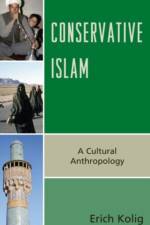
Conservative Islam: A Cultural Anthropology by Erich Kolig analyzes the salient characteristics of Islam and contemporary Muslim society from the perspective of traditional cultural anthropology. Gender issues, the headscarf and veiling, alcohol and pork prohibition, the taboo on satirizing religious contents, violence and jihad, attitudes toward rationalism and modernity, and other important issues that emanate from Islamic doctrine are discursively highlighted as to their origins, symbolic meanings, and importance in the modern world. By highlighting socio-cultural configurations, the universals they represent, the circumstances of their creation, and their semiotic meaning, Kolig helps the reader gain understanding of Islam in the modern world.
Fulton J. Sheen, Norman Vincent Peale, and Billy Graham were America's most popular religious leaders during the mid-twentieth century period known as the golden years of the Age of Extremes. It was part of an era that encompassed polemic contrasts of good and evil on the world stage in political philosophies and international relations. The 1950s and early 1960s, in particular, were years of high anxiety, competing ideologies, and hero/villain mania in America. Sheen was the voice of reason who spoke against those conflicting ideologies which were hostile to religious faith and democracy; Peale preached the gospel of reassurance, self-assurance, and success despite ominous global threats; and Graham was the heroic model of faith whose message of conversion provided Americans an identity and direction opposite to atheistic communism. This study looks at how and why their rhetorical leadership, both separately and together, contributed to the climate of an extreme era and influenced a national religious revival.
Beatific Enjoyment in Medieval Scholastic Debates examines the religious concept of enjoyment as discussed by scholastic theologians in the Latin Middle Ages. Severin Kitanov argues that central to the concept of beatific enjoyment (fruitio beatifica) is the distinction between the terms enjoyment and use (frui et uti) found in Saint Augustine's treatise On Christian Learning. Peter Lombard, a twelfth-century Italian theologian, chose the enjoyment of God to serve as an opening topic of his Sentences and thereby set in motion an enduring scholastic discourse. Kitanov examines the nature of volition and the relationship between volition and cognition. He also explores theological debates on the definition of enjoyment: whether there are different kinds and degrees of enjoyment, whether natural reason unassisted by divine revelation can demonstrate that beatific enjoyment is possible, whether beatific enjoyment is the same as pleasure, whether it has an intrinsic cognitive character, and whether the enjoyment of God in heaven is a free or un-free act. Even though the concept of beatific enjoyment is essentially religious and theological, medieval scholastic authors discussed this concept by means of Aristotle's logical and scientific apparatus and through the lens of metaphysics, physics, psychology, and virtue ethics. Bringing together Christian theological and Aristotelian scientific and philosophical approaches to enjoyment, Kitanov exposes the intricacy of the discourse and makes it intelligible for both students and scholars.
The Life of Margaret Alice Murray: A Woman's Work in Archaeology is the first book-length biography of Margaret Alice Murray (18631963), one of the first women to practice archeology. Despite Murray's numerous professional successes, her career has received little attention because she has been overshadowed by her mentor, Sir Flinders Petrie. This oversight has obscured the significance of her career including her fieldwork, the students she trained, her administration of the pioneering Egyptology Department at University College London (UCL), and her published works. Rather than focusing on Murray's involvement in Petrie's archaeological program, Kathleen L. Sheppard treats Murray as a practicing scientist with theories, ideas, and accomplishments of her own. This book analyzes the life and career of Margaret Alice Murray as a teacher, excavator, scholar, and popularizer of Egyptology, archaeology, anthropology, linguistics, and more. Sheppard also analyzes areas outside of Murray's archaeology career, including her involvement in the suffrage movement, her work in folklore and witchcraft studies, and her life after her official retirement from UCL.
Debatable Humor represents the first systematic foray into understanding the use of humor by politicians on the campaign trail. Using content analysis of primary debates for both Republican and Democratic parties during the 2008 presidential election, Patrick A. Stewart considers not just how humor was used, who used it, and how successful these attempts at humor were, but he also gives readers insight regarding why humor and the laughter that results is an important part of politics. Not only can humor reveal a candidate's intelligence, values, personality, and his/her connection with the audience, it also reveals the underlying values of egalitarian political systems.
The Teleological Discourse of Barack Obama, by Richard Leeman, provides an in-depth analysis of President Barack Obama's speeches and writings to explain the power of the 44th presidents speaking.This book argues that, from his earliest writings through his latest presidential speeches, Obama has described the world through a teleological lens. Teleology is the philosophy of discovering in the essential nature of humans or countries the telos, or ideal, towards which one should progress. Obama consistently portrays freedom and equality as essential to human nature and the American spirit. Understanding his discourse as teleological helps explain the inspirational and philosophical nature of his rhetoric, as well as his famous patience, perceiving progress where others become frustrated. Teleological discourse is ancient, with its roots in philosophies such as Aristotles Nicomachean Ethics and Christian theology, and its handprints evident in Lincolns Gettysburg Address. In order to discover the roots of Obamas teleological perspective, Leeman also examines the speeches of presidents Franklin Roosevelt, John F. Kennedy, and Ronald Reagan, as well as the civil rights discourse of Martin Luther King, Jr., Frederick Douglass, and W. E. B. Du Bois. Although the roots of his teleological discourse run deep, President Obamas particular use of the philosophy is very modern. The Teleological Discourse of Barack Obama is an essential contribution to the study of American politics and political rhetoric.
Transformations in Central Europe between 1989 and 2012: Geopolitical, Cultural, and Socioeconomic Shifts by Tomas Kavaliauskas, is an in-depth study of the transformations in Central Europe in the years since the fall of Communism. Using a comparative analysis of geopolitical, ethical, cultural, and socioeconomic shifts, this essential text investigates postcommunist countries including Estonia, Latvia, Lithuania, Poland, the Czech Republic, Slovakia, Hungary, Romania, Bulgaria, and Slovenia. Next to transitological interpretations, this study ventures upon negative and positive freedom (Isaiah Berlin) in Central Europe after two decades of post-communist transition. Kavaliauskas questions the meaning of completeness of postcommunist transition, both geopolitical and socioeconomic, when there are many transformations that do not necessarily mean unequivocal progress. The author also analyses why Central Europe in 1989, armed with civil disobedience, could not maintain its moral politics. But the book touches sensitive issues of memory as well: an examination of May 9th is provided from the Russian and the Baltic perspectives, revealing two opposing world views regarding this date of liberation or occupation. Finally, Kavaliauskas analyzes the tragedy at Smolensk airport, which became an inseparable part of Central European identity. Transformations in Central Europe between 1989 and 2012 is an essential contribution to the literature on Central Europe and the lasting effects of Communism and its aftermath.
Social media is ubiquitous. From Facebook and Twitter to YouTube, the blogosphere, and Massively Multi-Player Online Role-Playing Games, people have plugged into numerous online venues for social, intellectual, and leisure activities. The pervasiveness of social media calls for ethical reflection, and one of the most pertinent values at stake is that of truth. Current figures estimate there are more than 1 billion social media users worldwide with the ability to connect with people who share similar interests, to present themselves as experts on anything and everything no matter their qualifications, and to contribute the types of factual information formerly limited to professional communication outlets such as news agencies. It's this wide-ranging definition of truth that demands evaluation of the myriad ways social media affect society. This volume does just that by collecting insights from leading experts in the communication and philosophy disciplines as they examine a variety of issues related to the value of truth in the realm of social media.
This book examines development issues, particularly spatial integration, in Sub-Saharan Africa regarding its tropical timber trade, and the related formal-informal operational turf creation, control and dynamics. Focusing primarily on Ghana, Owusu examines the scramble to control the timber trade by various political and socio-economic interests, from the colonial to the neo-liberal era. In relation to this, Owusu documents the structural and organizational changes that have occurred in the region resulting from national and international development policies, such as modernization and neo-liberal structural adjustment on industrialization and development, and assesses the roles played by powerful international organizations such as The World Bank as agents of economic change. The discussion is couched in the critical but often unrecognized or neglected role the discipline of geography and its associated perspectives play in relation to examining and understanding the unequal relationship between the advanced and developing economies, and how that relationship affects development and trade behavior of developing economies. The core argument made regarding this relationship is tied to the structuralist perspective that Africa's persistent underdevelopment problem is rooted in the very structure of its political economy. Based on the discussion, Owusu identifies and distills lessons from Ghana's experience for Development policy and practice in Africa and comparable Developing countries in the 21st Century.
Twenty years post-independence Ukraine remains split, still floundering toward viable democracy. Active participation in civic affairs required for democracy is unfamiliar for most Ukrainian citizens, having internalized centuries of divisive oppression under a series of authoritarian regimes. Democracy-building and peace-building require participant agency and voice; rising out of oppression, people often need support to speak about and transform their lived experiences.Peacebuilding with Women in Ukraine: Using Narrative to Envision a Common Future, by Maureen P. Flaherty, explores the roles women's shared narrative, dialogue, and group-visioning play in the support of personal empowerment and bridge building between diverse communities. Despite participants' initial beliefs that their regional counterparts shared little in common with them, in the process of telling their personal life stories women were able to reflect upon their own values and strengths, and with this rooting, they were then able to reach out to others. Rather than looking for differences, participants sought ways to express a shared vision for an inclusive, functional, peace-building future for themselves, their families, and Ukraine as a whole. Peacebuilding with Women in Ukraine is a model for emancipatory social action and social change, while the women's stories offer a window into the formative years and present-day lives of eighteen women born and raised in the Soviet Union. This study is a unique contribution to peace studies and to the history and building of a country that has most often had its history written for it.
In the early draft of his Autobiography (London, 1873), John Stuart Mill described himself as ';a pupil of Plato, and cast in the mould of his dialectics. However, how Plato's influence came about, to what extent, and with regard to which aspects of Mill's thought, form questions that do not usually preoccupy Mill scholarship. To fill this gap in critical attention, this book draws upon a variety of primary sources to pay particular attention to Mill's concern with reform, method, character, virtue, and happiness through his reading of the ancient Greeksparticularly Plato. At the same time, this book focuses on the intellectual relationship between father and son, studying their responses to the prevalent trends as to the worth of classical studies and of Platonic philosophy in nineteenth-century Britain. Not only does John Stuart Mill's ';intoxication' with ancient Greece manifest itself in all those aspects of his works already mentioned; butwhat is most importantit also permeates his unvarying aim: the improvement of mankind through the improvement of its individual members.
Rationality and Cultural Interpretivism: A Critical Assessment of Failed Solutions critically assesses cultural interpretivism by scrutinizing five different proponents of it and their solutions to the problem of rationality. The book examines the works of Peter Winch, Charles Taylor, Clifford Geertz, Marshall Sahlins, and Gananath Obeyesekere and their contributions to the so-called rationality debate in the philosophy of the social sciences. This debate began with Winch's criticism of Edward Evans-Pritchard and has become one of the central debates in the field since 1960s, continuing as a controversy between Sahlins and Obeyesekere. Kei Yoshida reveals the need for a cogent solution to the problem of rationality. He identifies two main problems with previous theories: first, that they exaggerate the differences between the natural and the social/cultural, and hence they also exaggerate the differences between the natural and the social sciences; and second, that they ignore important social science problems, particularly outcomes from the unintended consequences of human actions. Yoshida urges social scientists not simply to interpret agents' intentions or symbolic systems, but also to explain the unintended consequences of human actions.Still entangled in positivism, cultural interpretivists claim that the social sciences differ from the natural sciences and thus reject any unity of method. Yoshida argues that we need to overcome the mistaken positivist image of science in order to develop a more fruitful philosophy of the social sciences. The analysis presented in this book will be of value to students and scholars of social epistemology, philosophy of science, philosophy of the social sciences, and the social sciences themselves, as well as anyone interested in the philosophical problem of rationality and relativism.
Alfred Sohn-Rethel located the origin of philosophical abstraction in the false conciousness brought about by the new money economy of Greek Antiquity. In the Enlightenment the conceptual barrier Kant put between phenomenal reality and the thing-in-itself expressed, in Sohn-Rethel's view, the reified consciousness stemming from commodity-exchange and the division of mental and manual labor. Because Sohn-Rethel saw the entire history of philosophy as branded by a timeless universal logic, he dismissed Hegel's concept of totality as idealist and Hegel's critique of Kantian dualism as irrelevant to Marx's critique of political economy.David Black, in the title essay of The Philosophical Roots of Anti-Capitalism, suggests, contra Sohn-Rethel, that Marx's exposition of the fetishism of commodities is historically-specific to capitalist production, and therefore cannot explain the origins of philosophy, which Black shows to have involved various historical developments in Greek society and culture as well as monetization. Just as Hegel's critique of Kantian formalism informs Marx's critique of capital, Hegel's writings on how the proper organization of labor might abolish the barrier Aristotle put between production and the Realm of Freedom prefigure Marxs efforts to formulate of an alternative to capitalism. Part Two, Critique of the Situationist Dialectic: Art, Class Consciousness and Reification, begins with Surrealism, whose disappearance as a revolutionary artistic and social force Guy Debord and the Situationists sought to make up for by superseding the poetry of Art with the poetry of Life. As well highlighting Debord's achievements in both theory and practice, Black points to his philosophical shortcomings and relates these to Debord's later pessimistic assessment of the possibility of revolutionary class consciousness within globalizing capitalism. The four essays in Part Three cover the Aristotelian anarchism, the ambivalent legacy of Lukcs theory of reification, Raya Dunayevskaya's Hegelian-Marxist concept of absolute negativity as revolution in permanance, and Gillian Rose's philosophical challenge to both postmodernism and traditional Marxism.
A Change in Worlds explores the environmental, economic, and political history of the Sino-Tibetan Songpan region of northern Sichuan from the late imperial Qing Dynasty to the early 21st century. A historically Tibetan region on the eastern edge of the Tibetan Plateau, with significant Han and Muslim Chinese populations, Songpan played important roles in the development of western and modern China's ethnic relations policies, forestry sector, grasslands and environmental conservation, and recent developments in eco- and ethnic tourism as part of various Chinese states. However, in spite of close associations with various Tibetan and Chinese regimes, the region also has a rich history of local independence and resilient nomadic, semi-nomadic and agricultural populations and identities. The Sino-Tibetan diversity in Songpan, partly formed by unique ecological conditions, conditioned all attempts to incorporate the region into larger and more centralized state homogenizing structures. This historical study analyzes the social force of markets and nature in the Songpan region in concert with the political and social conflicts and compromise at the heart of changing political regimes and the area's ethnic groups. It presents new perspectives on the social transformation and economies of Tibetans and Han Chinese from the late Qing Dynasty to Mao era and contemporary western China. It not only allows for a new understanding of how the natural environment and landscapes fit into the imagination of the Sino-Tibetan borderlands, it also figures in the challenges of negotiating ethnic and market relations among societies. The mix of complicated relations over natural environment, resources, politics and markets was at the heart of the region's social and political infrastructures, with far-reaching implications for both historical and contemporary China.
Traditional Chinese medicine (TCM) originated from the traditional medical system in the Chinese civilization, with influences from the Daoist and Chinese folk traditions in bodily cultivation and longevity techniques. In the past few decades, TCM has become one of the leading alternative medical systems in the United States. This book demonstrates the fluidity of a medical ideological system with a rich history of methodological development and internal theoretical conflicts, continuing to transform in our postmodern world where people and ideas transcend geographic, ethnic, and linguistic limitations. The unique historical trajectories and cultural dynamics of the American society are crticial nutrients for the localization of TCM, while the constant traffic of travelers and immigrants foster the globalizing tendency of TCM. The practitioners in this book represent an incredible range of clinical applications, personal styles, theoretical rationalizations, and business models. What really unifies all these practitioners is not their specific practices but the goal of these practices. The shared goal is to strive for health, not just health in terms of the lack of illness but the ultimate health of achieving perfect balance in every aspect of the being of a personphysically, mentally, spiritually, and energetically.
Function-Based Spatiality and the Development of Korean Communities in Japan utilizes the theoretical model of complex adaptive systems and introduces the concept of function-based spatiality to investigate the roles of the urban environments of Tokyo and Osaka in the development of Korean communities in Japan. Analysis of distinct Korean communities allows for the examination of urban factors of each city which contributed to the patterns of Korean immigration and community formation. By utilizing a comparative narrative of the two cities, distinctions between the organic growth of Osaka and the planned city of Tokyo are illuminated. Additionally, the discussion utilizes the concept of function-based spatiality to show how each city interacted with its surrounding regional, national, and global spheres. The functions of Tokyo, as a gateway to Western modernization and center of the Japanese state, shaped the interactions with Korean immigrants. Likewise, Osaka's functions as a center of mercantilism and second city played a large role in how Koreans were incorporated into the urban ethnoscapes. Taken together, these two examples provide insight to the dynamics of urban systems on the development of immigrant communities.
The political project of pragmatism has focused primarily on its defense of democracy as the best political system to maintain and improve human well-being over lifetimes and generations. Pragmatism Politics and Perversity: Democracy and the American Party Battle describes this project of Peirce, Dewey, Hook, and Rorty, and combines it with Charles Beard's study of the party battle as the most determinative influence upon American democracy. The book updates and confirms Beard's hypothesis that the history of the party battle is a chronicle of perverse schemes and self-inflicted wounds the most salient to date being the American Civil War because it reflects a ceaselessly disruptive contest over the creation of two largely incompatible political states: nation state and market state.The book supports its thesis with detailed historical accounts of the formation of the Constitution and early federal judiciary, the sedition trials and political schemes of the 1790s, the frustration of market state Whigs to attract white working-class voters by exploiting their religious identities, the reckless machinations of Whig Republicans in precipitating a national crisis over a contrived threat of oligarchy and white slavery, and the ideological oscillations of the Supreme Court from market state to nation state jurisprudence and back again.To reduce perversity in political rhetoric and free up pragmatic democratic practices, the book proposes a robust neo-Madisonian view of free speech, where political actors and their surrogates are not only free to speak and write, but are also obligated to explain, retract, and revise what they have said and written.
Abonner på vårt nyhetsbrev og få rabatter og inspirasjon til din neste leseopplevelse.
Ved å abonnere godtar du vår personvernerklæring.