























Gjør som tusenvis av andre bokelskere
Abonner på vårt nyhetsbrev og få rabatter og inspirasjon til din neste leseopplevelse.
Ved å abonnere godtar du vår personvernerklæring.Du kan når som helst melde deg av våre nyhetsbrev.

Jozef Teodor Konrad Korzeniowski, who gradually transformed himself into the English writer, Joseph Conrad, was a mercurial personality. He left Poland for the sea, though he had no experience with salt water. He left the Polish language for French, and then for English. He attempted suicide at the age of twenty. He invested in various schemes and lost his inheritance. He married an English typist nearly sixteen years younger than himself with whom he had nothing in common. He worked as a writer though he made no money through all the years of his most important work and though he experienced terrible psychological breakdowns after completing each novel. He was warm with his friends, ingratiating with influential strangers, but also intensely irritable and easily offended.His work is as varied and changeable as his personality, from his first two, emotionally intense Malay novels, to the stolid and confident Nigger of the ';Narcissus' and ';Typhoon'; from the coldly ironic ';Outpost of Progress' to the nightmarishly subjective Heart of Darkness; from the leisurely, panoramic visions of Nostromo to the tautly nervous, claustrophobic ironies in The Secret Agent. Despite the extraordinary thematic and tonal range of his work, critics have imposed a stable political perspective on his fictionmost often an organic conservatism, influenced by his Polish background. This is understandable; until recently, a critic's role has been to impose order on an artist's creations. The approach in this book is different. Drawing on the work of Michel Foucault and Jean-Francois Lyotard, especially on the latter's critique of what he called ';the grand narrative,' A Political Genealogy of Joseph Conrad shows how Conrad's politics were always radically contingent on audience, contemporary events, and, especially, genre. While the political perspective in each of his stories and novels may be more-or-less coherent and consistent, there is no consistency throughout his work. A Political Genealogy of Joseph Conrad is the first book devoted exclusively to Conrad's politics since the 1960s.
The Polish Experience through World War II explores Polish history through the lives of people touched by the war. The touching and terrible experiences of these people are laid bare by straightforward, first-hand accounts, including not only the hardships of deportation and concentration and refugee camps, but also the price paid by the officers killed or taken as prisoners during WWII and the families they left behind. Ziolkowska-Boehm reveals the difficulties of these women and children when, having lost their husbands and fathers, their travails take them through Siberia, Persia, India, and then Africa, New Zealand, or Mexico. Ziolkowska-Boehm recounts the experiences of individuals who lived through this tumultuous period in history through personal interviews, letters, and other surviving documents. The stories include Krasicki, a military pilot who was on of around 22 thousand Polish killed in Katyn; the saga of the Wartanowicz family, a wealthy and influential family whose story begins well before the war; and Wanda Ossowska, a Polish nurse in Auschwitz and other German prison camps. Placed squarely in historical context, these incredible stories reveal the experiences of the Polish people up through the second World War.
America was important to many British radicals. It was a model, an exemplar, a source of inspiration, and American events were believed to have a bearing on reform debates in Britain. Many scholars focus on the positive impressions of the United States that prominent British radicals entertained, developed, and propagated, but it is necessary also to explore the reasons why some radicals condemned rather than praised America, and to explain how America was conceptualized and used by them, and to what purpose. Liberty and Liberticide focuses on the influence America exerted over the ideas and activities of nineteenth-century British radicals. While some looked on America as the model of liberty, others associated it with the destruction of liberty. Turner shows how radicals' views about the United States and the course of Anglo-American relations shaped their domestic reform agenda and their assumptions about British political values and Britain's place in the world.
This is an ambitious work on constitutional theory. Influenced by the views of Ludwig Wittgenstein, Sean Wilson tackles the problem of how a judge can obey a document written in ordinary, flexible language. He argues that whether something is ';constitutional' is not an historical fact, but is an artisan judgment. Criteria are set forth showing why some judgments represent superior connoisseurship and why others do not. Along the way, Wilson offers a potent critique of originalism. He not only explains this belief system, but shows why it is inherently incompatible with the American legal system. His conclusion is that originalism can only be understood as a legal ideology, not a meaningful contribution to philosophy of law. The ways of thinking about constitutional interpretation provided in the book end up challenging the scholarship of Ronald Dworkin and numerous law professors. And the findings also challenge the way that professors of politics often think about whether a judge has ';followed law.'
This book is revolutionary in intent, and is in many ways quite an uncommon work. It is iconoclastic, as it goes about dislodging roots. It attempts to release the stigmatized Other from entrapment by rationalism and modern liberalism. The stigmatized Other are legendarily marginalized from congenial social relations with mainstream society. They include peoples of color, women, gays and lesbians, among others. Entrapment through misrecognition is captured via marked contrasts existing between two major liberal configurations: modern liberalism and pragmatism. Accordingly the book is tasked with overcoming the systemic constraints placed upon the stigmatized Other to conform when such a demand runs disastrously counter to their inherently irrefragable self-definition. Conformity is reductionist, beholden to dyadic forms of thinking which impose a singular, mathematically-derived God's Eye View upon reality. The difficulty here is that the imposed criteria for giving meaning, value and purpose to human life, have no place for what the stigmatized Other adopts. On the other hand, pragmatism of a particular stripe establishes a naturalistic, instead of the mathematical basis, for our understanding of human life. Naturalism counsels that human beings should situate themselves directly in the midst of what constitutes their sense of life, with experience providing the bases for all the related determinations. Experience draws upon conditions of flux and uncertainty as the basis of human life. To adhere to the God's Eye View is to make human beings into ';desiccated calculating machines.'This book is located in the heart of this tension. Programmatically, it deconstructs the rationalism/modern liberalism combine, and constructs its replacement in pragmatism complemented by phronesis, as carriers of this alternative mode of thought. Consequential change emerges: a modern liberal world of fixity in social relations, mathematically-derived is displaced by one characterized by intersubjective relations, where lived experience forms its scientific and philosophical bases. The Ancients figure prominently in this book, as it is shaped around the central idea that the emancipation of the stigmatized Other is occurring in the context of perhaps the first engagement between the Platonic and the Protagorean (Sophistic) confrontation which lies at the heart of early Greek thought.
What factors determine whether a person's beliefs are epistemically rational? Many traditional accounts contend that those factors lie in the beliefs themselves. For example, a belief can fit with one's evidence, it can originate in reliable (or otherwise virtuous) processes, or it can cohere with other beliefs (some of which may be self-justifying). In this provocative book, Franz-Peter Griesmaier presents a new picture of epistemic rationality, emphasizing the role of the agent rather than the belief. The rationality of an agent's beliefs ultimately depends on her epistemic sophistication, which is manifest in the stringency of her standards, in the skill she has in accessing and evaluating evidence, and in the wisdom she displays in choosing contextually appropriate standards. To be epistemically rational means, in this view, that one has discharged one's epistemic duties by using the contextually proper standards for finding and evaluating the available evidence during the process of belief formation. In the course of defending this view, Griesmaier discusses a wide variety of topics from the perspective of a unifying framework. These topics include the possibility of lucky justification, the importance of error avoidance, the problem of simplicity, various forms of evidentialism, doxastic voluntarism, epistemic deontologism, the question of belief's aim, contextualism, and the connections between his account and formal models of justification and knowledge, such as epistemic and justification logics.
Special Interest Society:How Membership-based Organizations Shape America is that no modern democratic society can function without them. With a focus on how they emerge and the steps they take to advance their mutual interests, the book also provides a sober account of how MBOs can be slow to accept important and necessary changes. It also reveals the less flattering role they have played in denying access or limiting acceptance to eligible individuals based on their race, gender, ethnicity, and more. In Special Interest Society, James R. Hudson analyzes over 400 published histories of MBOs to report on their emergence, growth, and development. Many provide essential services within our society of which we are unaware that we have come to rely upon. Employing several sociological theories, he explains why their actions have enabled these organizations to thrive in a democratic society as well as affect significant social change. Throughout, he demonstrates how open and democratic societies provide a fertile ground for their continued emergence. He explains why their numbers have increased over the last two hundred years as occupations and personal interests have become more specialized and complex. Written for students and scholars working in sociology, public policy, business, community development, and nonprofit management, as well as association professionals and their staff, this book provides an unparalleled insight into the history, purpose, and challenges of associations in America.
Disability & Justice: The Capabilities Approach in Practice examines the capabilities approach and how, as a matter of justice, the experience of disability is accounted for. It suggests that the capabilities approach is first, unable to properly diagnose both those who are in need as well as the extent to which assistance is required. Furthermore, it is suggested that counterfactually, if this approach to justice were capable of assessing need, that it would fail to be as stigma-sensitive as other approaches of justice. That is to say, the capabilities approach would have the possibility of further stigmatizing those requiring accommodation. Finally, Disability & Justice argues that health and the absence of disability belong in a category of functionings that are of special moral importancea fact the Capabilities Approach fails to recognize.
Max Weber and Charles Peirce: At the Crossroads of Science, Philosophy, and Culture shows that a relational conception of science is implicit in Max Weber's reflections on scientific inquiry as a bridge between the Geisteswissenschaften (soft sciences) and Naturwissenschaften (hard sciences). Because he is not a trained philosopher, Weber does not have the precise philosophical language in which to articulate his ideas clearly. Consequently, his relational vision of science remains obscure. Basit Bilal Koshul brings clarity and precision to Weber's insights using the pragmaticist philosophy of Charles Peirce. He makes explicit the phenomenology, semiotics, and logic that are implicit in Weber's methodological writings and translates them into Peircean terms. Since Peirce explicitly offers his philosophy of science as a critique of the modern divide between the humanistic and natural sciences and of the divide between religion and science, this translation has a double effect. It clarifies Weber's insights on the methodology of scientific inquiry, and it extends the reparative force of these insights into the larger culture of which science is one part. The reconstruction of Weber's relational conception of science along the lines of Peirce's pragmaticism, in turn, reveals that Weber's work points toward deep affinities between religion and science. Given the fact that the same phenomenology, semiotics, and logic that underpin Peirce's philosophy of science are also at the root of his philosophy of religion, we can begin to appreciate the fact that Weber's work makes an important contribution to bridging the divide between religion and science. In providing models that bridge divides and move towards complementary relationships, Weber and Peirce not only help us to better understand disenchantment as the fate of our times, but also offer uniquely valuable resources to reach for cultural horizons that lie beyond it.
This book is, in essence, about incentives: the incentives for competing societal interest groups to cooperate with each other to benefit from a growing economic pie, rather than fighting over a bigger share of a smaller one. This is the conundrum of economic development. If elite interest groups have both incentive and ability to allocate resources toward themselves, and if such rent seeking causes a decline in economic inefficiency, how can economies ever grow? The book illuminates the mechanisms by which in one of the world's recent economic success stories Vietnam's rapid industrialization and passage into the middle-income categorythe interest in cooperating to grow the economy overrode the elites' instinct to allocate resources through the use of political power. The book shows how the need to provide positive conditions for international investment altered pay-off structures and pushed the all-powerful Communist Party of Vietnam to engage in bargaining with provincial officials; provincial officials with international investors; and finally all coercive elites even with the working classes. It describes the emergence of a harmony of interest among societal groups in which each group benefits from a growing economy, and no one group can monopolize the benefits of growth without hurting itself. The Vietnam case validates Nobel-Prize winning economist Mancur Olson's proposition that elite predation can only be kept in check when the elite itself suffers from the economic decline it causes at least as much as it gains from the rents it collects.
The history of the United States has been deeply determined by Germans throughout time, but hardly anyone has noticed that this was the case in the Southwest as well, known as Arizona/Sonora today, in the eighteenth century as Pimera Alta. This was the area where the Jesuits operated all by themselves, and many of them, at least since the 1730s, originated from the Holy Roman Empire, hence were identified as Germans (including Swiss, Austrians, Bohemians, Croats, Alsatians, and Poles). Most of them were highly devout and dedicated, hard working and very intelligent people, achieving wonders in terms of settling the native population, teaching and converting them to Christianity. However, because of complex political processes and the effects of the ';black legend' all Jesuit missionaries were expelled from the Americas in 1767, and the order was banned globally in 1773. As this book illustrates, a surprisingly large number of these German Jesuits composed extensive reports and even encyclopedias, not to forget letters, about the Sonoran Desert and its people. Much of what we know about that world derives from their writing, which proves to be fascinating, lively, and highly informative reading material.
Dragon in Ambush by Jeremy Ingalls is a critique and new translation of the first twenty poems of Mao Zedong's published poetry. This seminal work stands out from previous translations of Mao's poems in seeing them as an expression of his core political beliefs, rather than for their poetic effect. Instead, Dr. Ingalls shows in consummate detail that Mao was careful and deliberate in employing imagery in his poetry to lay out procedures for political supremacy in which the central drive was his will to psychological domination. That is, domination of the minds of others is the unifying theme of Mao's verse-sequence.The crux of Prof. Ingalls' work lies in her focus on the symbolism in the poems. The poems are, in Mao's use of them as a means of communication, meaningless on their surface. No image, however seemingly commonplace, is ever employed for merely lyrical or aesthetic description. Every image functions as a factor in an entirely political calculus. According to Dr. Ingalls, ';When Mao mentions streams or mountains, suns or moons, clouds or winds or icicles, horses, elephants, snakes, tigers, leopards or bears, specifies kinds of trees or birds or fish, flies, brooms, mats or bridges, these and all his other images have, as their primary function, neither happenstance descriptions nor whimsical metaphor. They all have politically symbolic functions in Mao's algebra of versified political discourse.' Furthermore, in her analysis, Prof. Ingalls downplays the significance of Marxism-Leninism in the Thought of Mao Zedong. She shows that throughout his career, Mao regarded Marxism-Leninism as a political convenience, not as a doctrine permanently essential to his master-plan. Just as Mao used the Nationalists of Chiang Kai-shek and Stalin's Soviet Union as means to further his own political ambitions, so did he manipulate Marxist-Leninist ideology to hoodwink and attract, at home and abroad, professional revolutionaries to help do his bidding. Mao's aims express, in their worldviews, an entirely Chinese tradition. In his poems Mao's dialectics, his materialism, and his authoritarianism all take their points of reference from within the Chinese cultural order. Dragon in Ambush is a thoroughly unique and revolutionary approach to understanding the Mind of Mao Zedong.
The Nature of Christianity in Northern Tanzania explores the relationship between the region's environment and social change during the pivotal, often over-looked German colonial period (1890-1916). The work connects changes in the landscape order and biogeography closely with the beginning Christianization of the three groups on the mountains the Chagga on Mt Kilimanjaro and the Meru and Arusha peoples of Mt Meru. The work tells a story which is ordered, green and Christian. It looks at both new ideas and plants brought by the Germans to their colony in East Africa. The introduced German-like order and the exotic plants changed the landscape during the short period of German rule. However, the changes taking root in the African societies, driven primarily by the introduction of Christianity, led to an acceptance and adaptation of these imports. Religious change is one of the most profound elements of social change and it deeply impacted the world view of the Chagga, Meru and Arusha peoples. Within all three groups, their worldview was closely tied to religion there is no difference between the natural and social spheres nor the religious and secular worlds.In the interaction between the German and Africans, the ideas, use of plants and even Christianity became altered, Africanized, and finally propagated by the African groups, helping to create the new African/European landscape. This heritage lives on up till today, growing on the landscape, nurtured by the changes in the societies of the Chagga, Meru and Arusha peoples on Mt Kilimanjaro and Mt Meru.
For many, the advent of globalization brought with it an end to the way that the world had been viewed previous to the fall of the Berlin Wall. Among the many endings the one that most concerns my book is the perceived foreclosure of any alternatives to the capitalistic ideology that structures globalization. Even criticisms of globalization are bounded by its limits since the critical models they use cannot conceive of a space outside its homogenizing discourse. Against the final limits that shape most interpretations of globalization, I show how writers on the periphery of the globalizing north, through the development and deployment of neo-baroque imaginings, offer a different possibility to monological globalism. I show that the baroque has been a way of resisting and reconfiguring the colonial gaze in Latin America since the time of the first encounter to the present.
Death of a Holy Land: Reflections in Contemporary Israeli Fiction, by Rose Levinson, uses the work of four contemporary Israeli authors as a lens into present-day Israel. Discussing the novels of Orly Castel-Bloom, Michal Govrin, Zeruya Shalev, and Yoram Kaniuk, the book argues for a new understanding of today's Israel. Crucial to renewed awareness is a view of the country that jettisons the notion of Israel as an exceptional, sacred state immune from 21st century discontents. Attention is focused on ways in which many of Israel's most pressing problems are linked to long-standing issues of Jewish identity. Continual reference to the novels gives weight and substance to Death of a Holy Land's underlying insistence on the need for a critical view of Israel as a country deeply ill-at-ease with itself.
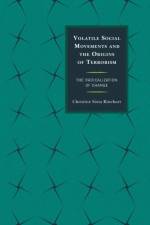
Although many scholars have studied terrorism, few scholars have ever studied terrorism from the aspect of its initial origins in social movements. Not only is research concerning this phenomenon outdated, but there has also been no consensus as to what causes terrorism. Many contemporary terrorist organizations were once social movements that formed for a specific purpose using nonviolent tactics to accomplish their agenda. Eventually, terrorist tactics became the method of choice for these once peaceful social movements.Volatile Social Movements and the Origins of Terrorism: The Radicalization of Change, by Christine Sixta Rinehart, focuses on why this transition occurred; why did a peaceful social movement transition to a terrorist organization? The case studies in this book include the Muslim Brotherhood, the ETA, the FARC, and the LTTE. The study focuses on the individual characteristics, group dynamics, and external forces that caused social movements to use terrorist tactics. It is ascertained who made the decision to use terrorism, and why and how that person or group of people ascended to a leadership position within the social movement. After the (person) people, time, and place are found pertaining to the first decision to use terrorism, Sixta Rinehart examines why terrorism became an attractive option for each social movement. Volatile Social Movements and the Origins of Terrorism asks a necessary question for scholars and researchers in counterterrorism and international policy: Under what conditions do social movements resort to the use of terrorist tactics?
Leo Strausss connection with Martin Heidegger and Carl Schmitt suggests a troubling proximity to National Socialism but a serious critique of Strauss must begin with F. H. Jacobi. While writing his dissertation on this apparently Christian opponent of the Enlightenment, Strauss discovered the tactical principles that would characterize his lifework: writing between the lines, a faith-based critique of rationalism, the deliberate secularization of religious language for irreligious purposes, and an all or nothing antagonism to middling solutions. Especially the latter is distinctive of his Zionist writings in the 1920s where Strauss engaged in an ongoing polemic against Cultural Zionism, attacking it first from an orthodox, and then from an atheists perspective. In his last Zionist article (1929), Strauss mentions the Machiavellian Zionism of a Nordau that would not fear to use the traditional hope for a Messiah as dynamite. By the time of his change of orientation, National Socialism was being led by a nihilistic Messiah while Strauss had already radicalized Schmitts political theology and Heideggers deconstruction of the ontological Tradition. Central to Strausss advance beyond the smartest Nazis is his Second Cave in which he claimed modern thought is imprisoned: only by escaping Revelation can we recover natural ignorance. By using pseudo-Platonic imagery to illustrate what anti-Semites called Jewification, Strauss attempted to annihilate the common ground, celebrated by Hermann Cohen, between Judaism and Platonism. Unlike those who attacked Plato for devaluing nature at the expense of the transcendent Idea, the emigre Strauss effectively employed a new Plato who was no more a Platonist than Nietzsche or Heidegger had been. Central to Strausss Platonic political philosophy is the mysterious protagonist of Platos Laws whom Strauss accurately recognized as the kind of Socrates whose fear of death would have caused him to flee the hemlock. Any reader who recognizes the unbridgeable gap between the real Socrates and Plato's Athenian Stranger will understand why ';the German Stranger' is the principal theoretician of an atheistic re-enactment of religion, of which genus National Socialism is an ultra-modern species.
Economic Life of Mexican Beach Vendors: Acapulco, Puerto Vallarta, and Cabo San Lucas is based on interviews with 82 men and 84 women who vend their wares on beaches in three Mexican tourist centers. Assuming that some people may actively choose self-employment in the informal or semi-informal economy, the employment and educational aspirations of the vendors and their levels of satisfaction with their work are explored. Most of the vendors had other family members who were also vendors, and 75 (45.2 percent) had 5 or more family members who vended, most usually on Mexican beaches. The vendors are aware of the forces of globalization (though they do not express these forces in those words), as revealed by their responses to questions as to how the current world economic recession has affected them. The beach vendors live in essentially segregated neighborhoods that can be considered apartheid-like, far from the tourist zones.Most of the vendors or their parents are rural-to-urban migrants and cross ethnic, linguistic, and economic borders as they migrate to and work in what have been called transnational social spaces. Of the vendors interviewed, 82 (49.4 percent) speak an indigenous language, and of these, 60 (73.2 percent) speak Nahuatl. The majority are from the state of Guerrero, but there were also Zapotec-speakers from Oaxaca. Both indigenous and non-indigenous women take part in beach vending. They are often wives, daughters, or sisters of male beach vendors, and they may be single, married, living in free union, or widowed. Their income is often of central importance to the household economy. This monograph aims to bring their stories to tourists and to scholars and students of tourism development and /or the informal or semi-informal economy in Mexican tourist centers.
Anthropological Research Framing for Archaeological Geophysics: Material Signatures of Past Human Behavior initiates a dialogue with other archaeological and geophysical professionals to do so. Most archaeological applications of geophysics remain methodological and technical, devoted to gaining awareness of buried anthropogenic materials but not human behavior. By proposing the amelioration of communication gaps between traditional and geophysical archaeologists, Jason Randall Thompson foments dialogue and participates in bringing about new ways of thinking anthropologically about archaeological geophysics.
A sustainable city enables the fulfillment of the mobility needs of its citizens via accessible, reliable and safe transportation systems. Safety is one of many factors influencing the mobility of individuals in urban environments. Moving Safely: Crime and Perceived Safety in Stockholm's Subway Stations aims to provide both theoretical and empirical perspectives on safety conditions at subway stations. The book adopts an approach that is place-centered, looking upon those who travel through the system and who may become a victim of crime. Safety at transportation nodes is not a field for one science only; it demands the combination of cross-disciplinary theories (urban criminology, architecture, geography, transportation and urban planning) as well as integrated methods that are capable of dealing with an ever-increasing volume of data. Adopting a whole journey approach to safety, the book offers suggestions on how to plan safety at subway stations with a variety of passengers' needs. Although these suggestions are not the first ones in the literature, certainly they are new in terms of relying on findings from hypothesis testing and spatial data from a Scandinavian city. Moving Safely is relevant for experts in safety and transportation research, including criminologists, planners, transportation engineers, architects as well as professionals dealing directly with safety interventions.
In The American YMCA and Russian Culture, Matthew Lee Miller explores the impact of the philanthropic activities of the Young Men's Christian Association (YMCA) on Russians during the late imperial and early Soviet periods. The YMCA, the largest American service organization, initiated its intense engagement with Russians in 1900. During the First World War, the Association organized assistance for prisoners of war, and after the emigration of many Russians to central and western Europe, founded the YMCA Press and supported the St. Sergius Theological Academy in Paris. Miller demonstrates that the YMCA contributed to the preservation, expansion, and enrichment of Eastern Orthodox Christianity. It therefore played a major role in preserving an important part of pre-revolutionary Russian culture in Western Europe during the Soviet period until the repatriation of this culture following the collapse of the USSR. The research is based on the YMCA's archival records, Moscow and Paris archives, and memoirs of both Russian and American participants. This is the first comprehensive discussion of an extraordinary period of interaction between American and Russian cultures. It also presents a rare example of fruitful interconfessional cooperation by Protestant and Orthodox Christians.
The Black Panther Party and Transformative Pedagogy: Place-Based Education in Philadelphia, by Omari L. Dyson, is the first scholarly text to detail the social relief efforts of the Philadelphia, Pennsylvania Branch of the Black Panther Party. Through a postcolonial lens, this story captures the lived resistances, highlights the socio-historical context, and examines the discourse of former members of the Black Panther Party and local residents of Philadelphia from 1968-1974. Overall, this book provides insight from a multiplicity of sources to better capture the identity(-ies) and complexity of the organization. Not only does this text resolve a dearth in the literature that highlights the multiple facets of the Black Panther Party (especially at the local level), but it serves as a template on effective strategies for researchers, educators, and policymakers to implement on their quest for social and educational transformation.
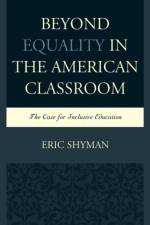
Beyond Equality in the American Classroom: The Case for Inclusive Education addresses the basis of inclusive education for students with exceptionalities from the perspective of social justice and scholarship-activism. Drawing on historical, legislative, and philosophical references, this book builds the case for including individuals with exceptionalities in general education classrooms as a matter of social justice and civil rights. Providing a comprehensive foundation for exploring the concept of inclusive education scholastically, Shyman provides a well-organized and clearly-structured treatise for both the philosophy of inclusive education as well as a means of putting inclusive education into practice in American schools. With pointed critiques of the current trend of standardization and traditionalization in the current educational climate, a new philosophy for addressing inclusive education is put forth. The book is both readable and scholastically legitimate, and can be adapted for personal academic use or as a teaching tool for undergraduate or graduate classes in the areas of education, philosophy and sociology.
This book boldly ventures to cross some traditional academic boundaries, offering an original, philosophically informed argument regarding the nature of language by reading and interpreting the poetry of Wallace Stevens and the novels of Vladimir Nabokov. So it is a work both in literary criticism and in philosophy. The approach is strongly influenced by Walter Benjamin's philosophy of language and Theodor Adorno's aesthetic theory, but the philosophical thought of other philosophersnotably Plato, Kant, Hegel, Emerson, Heidegger, and Wittgensteinfigures significantly in the reading and interpretation. The essence of the argument is that, despite its damaged condition (standardization, commodification, staleness), language is, as such, by virtue of its very existence, the bearer of a utopian or messianic promise of happiness. Moreover, it is argued that, by reconciling the two senses of sense (sensuous sense and intelligible sense), showing the sheer power of words to create fictional worlds and destroy what they have just created, and redeeming the revelatory power of wordsabove all, the power to turn the familiar into something no longer familiar, something astonishing or perplexingthe two writers in this study sustain our hope for a world of reconciled antagonisms and contradictions, evoking in the way they freely play with the sounds and meanings of words, some intimations of a worldour world here, this very world, not some heavenly worldin which the promise of happiness would be fulfilled and redeemed. In the first part of the book, reflecting on the poetry of Stevens, Kleinberg-Levin argues that the poet defies the correspondence theory of truth to enable words to be faithful to truth as transformative and revelatorywhat Heidegger calls ';unconcealment', translating the Greek. He also argues that in the pleasure we get from the sensuous play of words, there is an anticipation of the promise of happiness that challenges the theological doctrine of an otherworldly happiness and makes the religious experience seem like a paltry substitute. In the second part of the book, Kleinberg-Levin shows how Nabokov inherits Mallarme's conception of literature, causing with his word-plays the sudden reduction of the fictional world he has just so compellingly created to its necessary conditions of materiality: white paper, ink, print on the page. We thus see the novel as a work of fiction, as mere semblance; we see its conditions of possibility, created and destroyed before our very eyes. But the pleasure in seeing words doing this, and the pleasure in their sensuous materiality, are intimations of the promise of happiness that language bears. Using a Kantian definition of modernism, according to which a work is modernist if it reveals and questions the inherited assumptions about its necessary conditions of possibility, these studies show how and why both Stevens and Nabokov are exemplars of literary modernism.
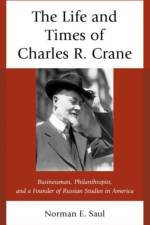
In The Life and Times of Charles R. Crane, Norman E. Saul analyzes the contributions of Charles R. Crane, world traveler, businessman, diplomat, and philanthropist in the setting of his times. Crane acquired his appreciation for Russian culture and life through travel in the country, making a total of twenty-four trips to Russia. He developed friendships and professional relationships with many prominent Russians in political, cultural, and artistic spheres in addition to his connections to important figures in American history such as Woodrow Wilson. As the son of a Chicago industrialist with little formal education, Charles R. Crane enjoyed remarkable success serving as a financial backer and advisor to the Woodrow Wilson administration, founding member of the 1917 Root Commission to Russia, minister to China, and establishing a factory in Russia to manufacture air brakes for the Russian railroad. He devoted a considerable amount of his own time and resources to educating Americans about the Russian people. He sponsored visiting lecturers, subsidized publications, and commissioned works by Russian artists. Charles Crane was arguably the first true American globalist. His activities involved Russia, China, and the Middle East, but Saul emphasizes his travels in Russia and his role in the development and promotion of Russian studies in America. Crane represented the United States becoming a world power in business and diplomacy, and fostered an American appreciation and knowledge of Russian, Asian, and Middle Eastern societies. By studying this unusual man, Saul explores the world in which he lived and traveled. The relationship between America and Russia has always been a complex and fascinating one, and Saul shines light on a pivotal period in that relationship.
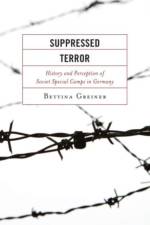
At the end of World War II, the Soviet secret police installed ten special camps in the Soviet occupation zone, later to become the German Democratic Republik. Between 1945 and 1950, roughly 154,000 Germans were held incommunicado in these camps. Whether those accused of being Nazis, spies, or terrorists were indeed guilty as charged, they were indiscriminately imprisoned as security threats and denied due process of the law. One third of the captives did not survive. To this day, most Germans have no knowledge of this postwar Stalinist persecution, even though it exemplifies in a unique way the entangled history of Germans as perpetrators and victims.How can one write the history of victims in a ';society of perpetrators?' This is only one of the questions Displaced Terror: History and Perception of Soviet Special Camps in Germany raises in exploring issues in memory culture in contemporary Germany. The study begins with a detailed description of the camp system against the backdrop of Stalinist security policies in a territory undergoing a transition from war zone to occupation zone to Cold War hot spot. The interpretation of the camps as an instrument of pacification rather than of denacification does not ignore the fact that, while actual perpetrators were a minority, the majority of the special camp inmates had at least been supporters of Nazi rule and were now imprisoned under life-threatening conditions together with victims and opponents of the defeated regime. Based on their detention memoirs, the second part of the book offers a closer look at life and death in the camps, focusing on the prisoners self-organization and the frictions within these coerced communities. The memoirs also play an important role in the third and last part of the study. Read as attempts to establish public acknowledgment of violence suffered by Germans, they mirror German memory culture since the end of World War II.
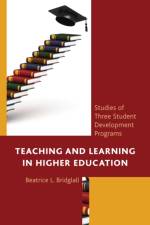
Concerns with how students are taught, and whether and how they learn, has become particularly salient in higher education. This is evident in growing awareness of increases in time-to-degree and declines in attainment rates for many students, including those who are underrepresented, in our nation's community and public and private colleges and universities. It is also demonstrated vis--vis recent findings that more than a third of college students evinced no noticeable improvement in critical thinking, writing, and complex reasoning skills after four years as an undergraduate. These findings suggest that while a focus on access to and participation in the nation's colleges and universities remain a prominent goal, it is no longer sufficient given persistent disparities in post secondary student learning.There are a few models however, from which we can distill a set of strategies for promoting not only high achievement, but also retention and completion rates. This book examines three such models in higher education the Meyerhoff Scholars Program at the University of Maryland, Baltimore County; the Opportunity Programs at Skidmore College in Saratoga Springs, New York; and the Premedical Program at Xavier University in New Orleans with a proven record of student achievement and completion.
This study is concerned with the different interpretations of Greek tragedy proposed by G.W.F. Hegel. While Hegel's philosophical interest in tragedy as an art form is well known, the motivation for his preoccupation with this art form needs to be further explored. Indeed, why would Hegel, a pivotal figure of German idealism, be inclined to concern himself with a form of poetry that reached its peak in the 5th century B.C.? Precisely this question forms the core of this book. It articulates what the primary stakes are and thereby develop and defend the thesis that Hegel's examination of Greece and tragedy is one that has a direct bearing on the ';fate' of politics in the modern world.
At the end of the Second World War when the horror of the holocaust became known, Hannah Arendt committed herself to a work of remembrance and reflection. Intellectual integrity demanded that we comprehend and articulate the genesis and meaning of totalitarian terror. What earlier spiritual and moral collapse had made totalitarian regimes possible? What was the basis of their evident mass appeal? To what cultural resources and political institutions and traditions could we turn to prevent their recurrence? After years of profound study, Arendt concluded that the deepest crisis of the modern world was political and that the enduring appeal of political mass movements demonstrated how profound that crisis had become. For Arendt the modern political crisis is also a crisis of humanism. The radical totalitarian experiment was rooted in two distorted images of the human being. The agents of terror believed in the limitless power generated by strategic organization, a power exercised without restraint and justified by appeal to historical necessity. The victims of terror, by contrast, were systematically dehumanized by the ruling ideology, and then brutally deprived of their legal rights and their moral and existential dignity. Arendt's political humanism directly challenges both of these distorted images, the first because it dangerously inflates human power, the second because it deliberately subverts human freedom and agency. This book offers a dialectical account of the political crisis that Arendt identified and shows why her interpretation of that crisis is especially relevant today. The author also provides detailed analysis and appraisal of Arendt's political humanism, the revisionary anthropology she based on the politically engaged republican citizen. Finally, the work distinguishes the merits from the limitations of Arendt's genealogical critique of ';our tradition of political thought', showing that she tended to be right in what she affirmed and wrong in what she excluded or omitted.
This book examines the right to a neutral and detached decisionmaker as interpreted by the U.S. Supreme Court. This right resides in the Constitution's Fifth Amendment and Fourteenth Amendment guarantees to procedural due process and in the Sixth Amendment's promise of an impartial jury. Supreme Court cases on these topics are the vehicles to understand how these constitutional rights have come alive. First, the book surveys the right to an impartial jury in criminal cases by telling the stories of defendants whose convictions were overturned after they were the victims of prejudicial pretrial publicity, mob justice, and discriminatory jury selection. Next, the book articulates how our modern notion of judicial impartiality was forged by the Court striking down cases where judges were bribed, where they had other direct financial stakes in the outcome of the case, and where a judge decided the case of a major campaign supporter. Finally, the book traces the development of the right to a neutral decisionmaker in quasi-judicial, non-court settings, including cases involving parole revocation, medical license review, mental health commitments, prison discipline, and enemy combatants. Each chapter begins with the typically shocking facts of these cases being retold, and each chapter ends with a critical examination of the Supreme Court's ultimate decisions in these cases.
Abonner på vårt nyhetsbrev og få rabatter og inspirasjon til din neste leseopplevelse.
Ved å abonnere godtar du vår personvernerklæring.