



















Gjør som tusenvis av andre bokelskere
Abonner på vårt nyhetsbrev og få rabatter og inspirasjon til din neste leseopplevelse.
Ved å abonnere godtar du vår personvernerklæring.Du kan når som helst melde deg av våre nyhetsbrev.

The book provides a detailed description of how OMICS can help crop science and horticulture to enhance crop yields, resistance and nutritional values. Burgeoning world population, decreased water supply and land resources, coupled with climate change, result in severe stress conditions which is a great threat to the global food supply. To meet these challenges, exploring OMICS technologies could lead to improved yields of cereals, tubers and grasses that may ensure food security. Improvement of yields through crop improvement and biotechnological means are the need-of-the-hour, and the current book "OMICS-Based Approaches in Plant Biotechnology", reviews the advanced concepts on breeding strategies, OMICS technologies (genomics, transcriptomics and metabolomics) and bioinformatics that help to glean the potential candidate genes/molecules to address unsolved problems related to plant and agricultural crops. The first six chapters of the book are focused on genomics and cover sequencing, functional genomics with examples on insecticide resistant genes, mutation breeding and miRNA technologies. Recent advances in metabolomics studies are elucidated in the next 3 chapters followed by 5 chapters on bioinformatics and advanced techniques in plant biotechnology and crop breeding. Audience The information contained in the volume will help plant breeders, plant biotechnologists, plant biochemists, agriculture scientists and researchers as well as policy makers in using this applied research to focus on better crop breeding and stress adaptation strategies.
Ceramic Transactions, Volume 264, Proceedings of the 12th Pacific Rim Conference on Ceramic and Glass Technology Dileep Singh, Manabu Fukushima, Young-Wook Kim, Kiyoshi Shimamura, Nobuhito Imanaka, Tatsuki Ohji, Jake Amoroso, and Michael Lanagan; Editors This proceedings contains a collection of 32 papers presented at the 12th Pacific Rim Conference on Ceramic and Glass Technology (PacRim12), May 21-26, 2017 in Waikoloa, Hawaii. PacRim is a bi-annual conference held in collaboration with the ceramic societies of the Pacific Rim countries - The American Ceramic Society, The Chinese Ceramic Society, The Korean Ceramic Society, and the Australian Ceramic Society. Topics included in this collection include multiscale modeling and simulation, processing and manufacturing, nanotechnology, multifunctional materials, ceramics for energy and the environment, biomedical materials, and more
This unique multidisciplinary 8-volume set focuses on the emerging issues concerning graphene materials and provides a shared platform for both researcher and industry. Graphene has attracted enormous interest since its discovery in 2004, given its unique physical, mechanical, and electrical properties. With its two-dimensional single atomic layer structure, graphene exhibits very different features compared to traditional semiconductors like silicon. For example, it has zero band gap with valence band and conduction band meeting at the Dirac point, while at the same time it shows incredibly high electrical conductivity. Graphene has witnessed a phenomenal transformation from a curious material to a vital advanced material, following its initial isolation. Volume 8 is solely focused on Graphene Technology and Innovation. Some of the important topics include but not limited to: Reworking defective soldering joints with graphene sheets and gold nanoparticles; printed graphene radio frequency and sensing applications for internet of things; modeling and characterization of the metal contact and the channel in a graphene device; modeling of graphene-based electronics: from material properties to circuit simulations; hybrid graphene-silicon photonic and optoelectronic integrated devices; sustainability, research, and development of graphene for engineering applications; graphene oxide multilayers obtained from bamboo: new synthesis method, basic properties, and future electronic applications; laser direct-writing graphene oxide to graphene--mechanisms to applications; wave propagation responses of double-layered graphene sheets in hygrothermal environment; graphene terahertz leaky-wave antennas; terahertz applications of graphene; modelling of graphene nanoribbons antenna based on MoM-GEC method to enhance nanocommunications in terahertz range; graphene-based plasmonic components for THz applications: planar ring array devices; continuous graphene oxide fiber and its applications; buckling characteristics of bilayer graphene sheets subjected to humid thermomechanical loading; polymer/graphene nanomaterials: a platform for current high-tech applications; graphene-based advanced nanostructures. Audience This book is intended for researchers and graduate students in the field of advanced materials and graphene in particular, who are currently investigating the fundamental properties of this material and its applications in micro- and nanotechnologies.
This unique multidisciplinary 8-volume set focuses on the emerging issues concerning graphene materials and provides a shared platform for both researcher and industry. Graphene-based materials have recorded significant usage in the medical industries, especially in the areas of bioelectronics, imaging, drug delivery, and tissue engineering. A key property that has made this material relevant has been its excellent electrical, mechanical, and thermal properties and its biocompatibility. These materials also demonstrate excellent electrochemical and optical properties, as well as the capability to adsorb a variety of aromatic biomolecules through a - stacking interaction and/or electrostatic interaction, which makes them ideal materials for constructing biosensors and loading drugs. Volume 7 is solely focused on Biomaterials of Graphene. Some of the important topics include but not limited to: Biological, biomedical and medical applications of graphene and graphene-based materials; effect of graphene oxide nanosheets on the structure and properties of cement composites; adaptation and viability of graphene-based materials in clinical improvement; graphene-based synaptic devices for neuromorphic applications; graphene-based materials for implants; ultrashort pulse fiber laser generation using molybdenum disulfide and tungsten disulfide saturable absorber; handbook on the graphene modified asphalt; graphene-based materials for brain targeting; antimicrobial activities of graphene-based materials; graphene quantum dots - a new member of graphene family: structure, properties and biomedical applications; functionalized graphene nanomaterials as biocatalysts: recent developments and future prospects. Audience This book is intended for researchers and graduate students in the field of advanced materials and graphene in particular, who are currently investigating the fundamental properties of this material and its applications in micro- and nanotechnologies.
This unique multidisciplinary 8-volume set focuses on the emerging issues concerning graphene materials and provides a shared platform for both researcher and industry. Since the pioneering work of Geim and Novoselov, numerous articles have been published on the physicochemical properties of graphene. Methods for synthesizing graphene in large quantities are still a subject of extensive research. The search for novel applications of graphene has also received a great deal of attention. The high conductivity, large surface-area-to-volume ratio, and fascinating optical properties combined with excellent biocompatibility make graphene a remarkable candidate for application in biosensors. Related materials like graphene oxide (GO) and reduced graphene oxide (RGO) are receiving increasing interest due to the abundance of surface groups, which can be utilized for the attachment of biospecies. Thanks to the chemical flexibility of the physical properties of these groups, like hydrophobicity or fluorescence of RGO, materials can be tuned to obtain optimal values for biosensor applications. All the properties of graphene, GO, and RGO are described in this book, which addresses many aspects relevant to the design of biosensors for application in a variety of fields ranging from clinical testing, environmental monitoring, and agriculture, to food analysis and quality control. This volume 6 of Handbook of Graphene is devoted to Biosensors and Advanced Sensors. It comprises 26 chapters from internationally recognized researchers. Some of the important topics include but not limited to: Graphene for electrochemical biosensors applications in biomedical, agro-defense, pesticides; reduced graphene oxide for biosensing and electrocatalytic applications; electrochemical biosensor-based on green synthesized graphene and graphene nanocomposites; graphene-based nanomaterials; graphene-based fiber optic label-free biosensor; label-free biosensors based on graphene; graphene molecules as platforms for sers detection; graphene-based electrochemical aptasensors; self-organized 3D graphene as a robust sensing platform; interactions of molecular species with graphene and graphene sensing; self-assembled thin films of graphene materials for sensors; graphene and graphene nanocomposite-based electrochemical sensors; controlling the electromagnetic and electrochemical sensing properties of graphenes via heteroatom doping; finite element analysis of graphene materials; quantitative real-time evaluation of c/o ratios and stepwise control of deoxidization of graphene oxide using plasmonic-based electrochemical spectroscopy. Audience This book is intended for researchers and graduate students in the field of advanced materials and graphene in particular, who are currently investigating the fundamental properties of this material and its applications in micro- and nanotechnologies.
This unique multidisciplinary 8-volume set focuses on the emerging issues concerning graphene materials and provides a shared platform for both researcher and industry. The Handbook of Graphene comprises 140 chapters from world renowned experts and presents in a unique eight-volume format covering all aspects relating to graphene--its development, synthesis, application techniques, and integration methods; its modification and functionalization; its characterization tools and related 2D materials; physical, chemical, and biological studies of graphene and related 2D materials; graphene composites; use of graphene in energy, healthcare, and environmental applications (electronics, photonics, spintronics, bioelectronics and optoelectronics, photovoltaics, energy storage, fuel cells and hydrogen storage, and graphene-based devices); its large-scale production and characterization; as well as graphene-related 2D material innovations and their commercialization. Volume 5 is solely focused on selected topics in energy, healthcare and environmental applications and provides an overview of the multitude of different research directions that are currently being taken at the international level. Some of the important topics include but are not limited to: Graphene nanomaterials in energy and environment applications; graphene as nanolubricant for machining; three-dimensional graphene foams for energy storage applications; three-dimensional graphene materials: synthesis and applications in electrocatalysts and electrochemical sensors; graphene and graphene-based hybrid composites for advanced rechargeable battery electrodes; graphene-based materials for advanced lithium ion batteries; graphene based materials for supercapacitors and conductive additives of lithium ion batteries; graphene based flexible actuators, sensors and supercapacitors; graphene as catalyst support for the reactions in fuel cells; nitrogen-doped carbon nanostructures as oxygen reduction reaction (orr) and oxygen evolution reaction (oer) electrocatalysts in acidic media; recent advances in graphene-based materials for photocatalytic h2 evolution; graphene thermal functional device and its property characterization; self- and directed-assembly of metallic and non-metallic fluorophors: considerations into graphene and graphene oxides for sensing and imaging applications; stimuli-responsive graphene based matrices for smart therapeutics; application of graphene materials in molecular diagnostics; graphene-based membranes for liquid separation. Audience This book is intended for researchers and graduate students in the field of advanced materials and graphene in particular, who are currently investigating the fundamental properties of this material and its applications in micro- and nanotechnologies.
This unique multidisciplinary 8-volume set focuses on the emerging issues concerning graphene materials and provides a shared platform for both researcher and industry. The Handbook of Graphene comprises 140 chapters from world renowned experts and presents in a unique eight-volume format covering all aspects relating to graphene--its development, synthesis, application techniques, and integration methods; its modification and functionalization; its characterization tools and related 2D materials; physical, chemical, and biological studies of graphene and related 2D materials; graphene composites; use of graphene in energy, healthcare, and environmental applications (electronics, photonics, spintronics, bioelectronics and optoelectronics, photovoltaics, energy storage, fuel cells and hydrogen storage, and graphene-based devices); its large-scale production and characterization; as well as graphene-related 2D material innovations and their commercialization. Volume 4 is solely focused on selected topics in graphene composites materials and provides an overview of the multitude of different research directions that are currently being taken at the international level. Some of the important topics include but are not limited to: Graphene composites; graphene reinforced advanced composite materials; graphene based composites materials; interfacial mechanical properties of graphene/substrate system: measuring method and experimental analysis; graphene based ceramic composites: processing and applications; ab-initio design of 2d and 3d graphene-based nanostructure; graphene based composite nanostructures: synthesis, properties and applications; graphene-based composites with shape memory effect-properties, applications and future perspectives; graphene-based scroll structures: optical characterization and its application in resistive switching memory devices fabrication and properties of copper-graphene composites; graphene-metal oxide composite as anode materials in li ion batteries; graphene/tio2 nanocomposites: synthesis routes, characterization, and solar cell applications role of reduced graphene oxide nanosheets composition with zno nanostructures in gas sensing properties functional graphene oxide/epoxy nanocomposites coatings with enhanced protection properties; supramolecular graphene-based systems for drug delivery; polymeric nanocomposites including graphene nanoplatelets; graphene oxide- polyacrylamide composites: optical and mechanical characterizations; synthesis, characterization and applications of polymer/graphene oxide composites materials. Audience This book is intended for researchers and graduate students in the field of advanced materials and graphene in particular, who are currently investigating the fundamental properties of this material and its applications in micro- and nanotechnologies.
This unique multidisciplinary 8-volume set focuses on the emerging issues concerning graphene materials and provides a shared platform for both researcher and industry. The Handbook of Graphene comprises 140 chapters from world renowned experts and presents in a unique eight-volume format covering all aspects relating to graphene--its development, synthesis, application techniques, and integration methods; its modification and functionalization; its characterization tools and related 2D materials; physical, chemical, and biological studies of graphene and related 2D materials; graphene composites; use of graphene in energy, healthcare, and environmental applications (electronics, photonics, spintronics, bioelectronics and optoelectronics, photovoltaics, energy storage, fuel cells and hydrogen storage, and graphene-based devices); its large-scale production and characterization; as well as graphene-related 2D material innovations and their commercialization. Volume 3 is solely focused on selected topics in graphene-like 2D materials and provides an overview of the multitude of different research directions that are currently being taken at the international level. Some of the important topics include but are not limited to: Proximity-induced topological transition and strain-induced charge transfer in graphene/MoS2 bilayer heterostructures; planar graphene superlattices; magnetic and optical properties of graphene materials with porous defects; graphynes: advanced carbon materials with layered structure; nanoelectronics application of graphyne and its structural derivatives; twisted bilayer graphene: low-energy physics, electronic and optical properties; effects of charged coulomb impurities on low-lying energy spectra in graphene magnetic dot and ring; graphene in bioelectronics; graphene metamaterial electron optics: excitation processes and electro-optical modulation; linear carbon: from 1D carbyne to 2D hybrid sp-sp2 nanostructures beyond graphene; band structure modifications in beyond graphene materials; chemically modified 2D materials: production and applications; black phosphorus saturable absorber for passive mode-locking pulses generation; and search for fundamental physics on table-top experiments with Dirac-Weyl materials. Audience This book is intended for researchers and graduate students in the field of advanced materials and graphene in particular, who are currently investigating the fundamental properties of this material and its applications in micro- and nanotechnologies.
This unique multidisciplinary 8-volume set focuses on the emerging issues concerning graphene materials and provides a shared platform for both researcher and industry. The Handbook of Graphene comprises a set of 8 individual volumes that brings an interdisciplinary perspective to accomplish a more detailed understanding of the interplay between the synthesis, structure, characterization, processing, applications and performance of the advanced graphene materials. The Handbook of Graphene comprises 140 chapters from world renowned experts. Volume 2 is solely focused on selected topics in physics, chemistry, and biology and provides an overview of the multitude of different research directions that are currently being taken at the international level. Some of the important topics include but not limited to: Topological design of graphene; graphene at the metal-oxide interface: a new approach to modify the chemistry of supported metals; the combinatorial structure of graphene; Interacting electrons in graphene; computational determination of the properties of graphene nanoribbons; synthetic electric fields influence the non-stationary processes in graphene; interaction and manipulation of bi adatoms on monolayer epitaxial graphene; strain engineering: electromechanical properties of graphene; characteristic mechanical responses of graphene membranes; graphene and its derivatives as platform for Maldi-MS; characterization and dynamic manipulation of graphene by in situ transmission electron microscopy at atomic scale; peculiarities of quasi-particle spectra in graphene nanostructures; complex refractive index (ri) of graphene; fractional quantum hall effect in graphene: a topological approach; graphene plasmonic: switching applications; theoretical study and numerical modeling of graphene's electromagnetic response; graphene-like anb8-n compounds on metals and semiconductors; lower dimensional materials; nature of graphene, its chemical structure, composites, synthesis, properties and applications; graphene-based nanomaterials in tissue engineering and regenerative medicine. Audience This book is intended for researchers and graduate students in the field of advanced materials and graphene in particular, who are currently investigating the fundamental properties of this material and its applications in micro- and nanotechnologies.
This unique multidisciplinary 8-volume set focuses on the emerging issues concerning graphene materials and provides a shared platform for both researcher and industry. The Handbook of Graphene comprises a set of 8 individual volumes that brings an interdisciplinary perspective to accomplish a more detailed understanding of the interplay between the synthesis, structure, characterization, processing, applications and performance of the advanced materials. The Handbook of Graphene comprises 140 chapters from world renowned experts. Volume 1 is solely focused on Growth, Synthesis, and Functionalization of Graphene. Some of the important topics include but not limited to: Graphite in metallic materials-growths, structures and defects of spheroidal graphite in ductile iron; synthesis and quality optimization; methods of synthesis and physico-chemical properties of fluorographenes; graphene-SiC reinforced hybrid composite foam: response to high strain rate deformation; atomic structure and electronic properties of few-layer graphene on SiC(001); features and prospects for epitaxial graphene on SiC; graphitic carbon/graphene on Si(111) via direct deposition of solid-state carbon atoms: growth mechanism and film characterization; chemical reactivity and variation in electronical properties of graphene on Ni(111) and reduced graphene oxide; chlorophyll and graphene: a new paradigm of biomimetic symphony; graphene structures: from preparations to applications; three-dimensional graphene-based structures: production methods, properties and applications; electrochemistry of graphene materials; hydrogen functionalized graphene nanostructure material for spintronic application; the impact of uniaxial strain and defect pattern on magnetoelectronic and transport properties of graphene; exploiting graphene as an efficient catalytic template for organic transformations: synthesis, characterization and activity evaluation of graphene-based catalysts; exfoliated graphene based 2D materials; synthesis and catalytic behaviors; functionalization of graphene with molecules and/or nanoparticles for advanced applications; carbon allotropes "between diamond and graphite" how to create semiconductor properties in graphene and related structures. Audience This book is intended for researchers and graduate students in the field of advanced materials and graphene in particular, who are currently investigating the fundamental properties of this material and its applications in micro- and nanotechnologies. It is also necessary reading for entrepreneurs and industrialists because it discusses a variety of possible applications of graphene and different ways of improving the quality of synthesized graphene.
ACCLAIM FOR PREVIOUS VOLUMES OF FIESERS "Essential for chemistry collections at the university and research levels." --New York Public Library "Highly recommended . . . lots of succinct, practical information on recent developments . . . in a format that is easy to use. The reagents are taken up in alphabetical order (common usage names, not CAS indexing codenames), sometimes several to a page, sometimes several pages to a reagent. One can expect to find how to make the reagent (in loose terms), or where it can be bought, what it is good for, and where to seek complete details. As with previous volumes, one can profit from just browsing, even if one does not feel a need to look up any particular subject. It is thus a secondary function of the book to help one keep abreast of the field, and it would be a rare chemist who would not learn something new and useful from a casual perusal of the pages." --Journal of the American Chemical Society This highly successful series has provided generations of professional chemists and students with a comprehensive, up-to-date examination of the reagent literature. Volume 29 surveys the most important synthetic methodologies published from 2013-mid 2014. Listed by common name, each entry features concise descriptions, information on preparing or buying the reagent, illustrations of chemical reactions, examples of applications, and references for further investigation. CONTENTS: General abbreviations Reference abbreviations Reagents Author index Subject index
Provides a comprehensive description of mass spectrometry basics, applications, and perspectives Mass spectrometry is a modern analytical technique, allowing for fast and ultrasensitive detection and identification of chemical species. It can not only serve for analysis of narcotics, counterfeit medicines, components of explosives, but also in clinical chemistry, forensic research and anti-doping analysis, for identification of clinically relevant molecules as biomarkers of various diseases. This book describes everything readers need to know about mass spectrometry--from the instrumentation to the theory and applications. It looks at all aspects of mass spectrometry, including inorganic, organic, forensic, and biological MS (paying special attention to various methodologies and data interpretation). It also contains a list of key terms for easier and faster understanding of the material by newcomers to the subject and test questions to assist lecturers. Knowing how crucial it is for young researchers to fully understand both the power of mass spectrometry and the importance of other complementary methodologies, Mass Spectrometry: An Applied Approach teaches that it should be used in conjunction with other techniques such as NMR, pharmacological tests, structural identification, molecular biology, in order to reveal the true function(s) of the identified molecule. Provides a description of mass spectrometry basics, applications and perspectives of the technique Oriented to a broad audience with limited or basic knowledge in mass spectrometry instrumentation, theory, and its applications in order to enhance their competence in this field Covers all aspects of mass spectrometry, including inorganic, organic, forensic, and biological MS with special attention to application of various methodologies and data interpretation Includes a list of key terms, and test questions, for easier and faster understanding of the material Mass Spectrometry: An Applied Approach is highly recommended for advanced students, young scientists, and anyone involved in a field that utilizes the technique.
The 96th volume in this series for organic chemists in industry presents critical discussions of widely used organic reactions or particular phases of a reaction. The material is treated from a preparative viewpoint, with emphasis on limitations, interfering influences, effects of structure and the selection of experimental techniques. The work includes tables that contain all possible examples of the reaction under consideration. Detailed procedures illustrate the significant modifications of each method.
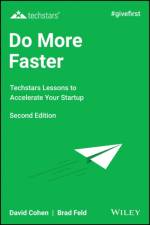
Refreshed, updated, and expanded. Do More Faster provides time-tested advice, tips, and experiences by founders and mentors of Techstars to help entrepreneurs succeed!David Cohen and Brad Feld, leading advocates for entrepreneurs and startups, team up to provide first-time entrepreneurs with the tools, insights, and experiences to help them do more faster. The authors share their decades of experience working with thousands of startup founders and have enlisted the advice of dozens of Techstars startup founders and mentors. Contributors include Tim Ferriss, Eric Ries, Matt Mullenweg (WordPress), Isaac Saldana (SendGrid), and other successful entrepreneurs.Co-founders of Techstars, the worldwide network that helps entrepreneurs succeed, Cohen and Feld recognize the daunting task of creating a sustainable business and have seen first-hand the common mistakes first-time entrepreneurs make over and over. The authors take the complexity and uncertainty of starting a business and distill the critical factors into seven themes: Ideas and Vision, People, Working Effectively, Product, Fundraising, Legal and Structure, and Work and Life Harmony. They share their hard-won successes, failures, and advice for anyone with an idea who wants to create a business.Throughout the book crucial questions are raised and addressed from multiple perspectives.* How important is it to have an original idea?* How is founder conflict handled?* What are the tradeoffs between bootstrapping and financing?Make-or-break decisions like company structure, hiring, and legal consequences are presented in an easy-to-understand style. Do More Faster will elevate your thinking on a range of important topics, help you avoid costly mistakes, and provide you with a resource to consult as you go from idea to successful business.If you have the drive and desire to start a business, need to create a vibrant entrepreneurial ecosystem in your community, or want to spark greater innovation in your organization--don't go it alone. Use the advice, tips, and tactics found throughout Do More Faster to give yourself the best chance of succeeding.
An updated review of the theories and applications of corporate risk managementAfter the financial crisis of 2008, issues concerning corporate risk management arose that demand new levels of oversight. Corporate Risk Management is an important guide to the topic that puts the focus on the corporate finance dimension of risk management. The author--a noted expert on the topic--presents several theoretical models appropriate for various industries and empirically verifies theoretical propositions. The book also proposes statistical modeling that can evaluate the importance of different risks and their variations according to economic cycles.The book provides an analysis of default, liquidity, and operational risks as well as the failures of LTCM, ENRON, and financial institutions that occurred during the financial crisis. The author also explores Conditional Value at Risk (CVaR), which is central to the debate on the measurement of market risk under Basel III. This important book:* Includes a comprehensive review of the aspects of corporate risk management* Presents statistical modeling that addresses recent risk management issues* Contains an analysis of risk management failures that lead to the 2008 financial crisis* Offers a must-have resource from author Georges Dionne the former editor of The Journal of Risk and InsuranceCorporate Risk Management provides a modern empirical analysis of corporate risk management across industries. It is designed for use by risk management professionals, academics, and graduate students.
"Special edition for use in the criminal justice system."
The accessible, non-technical guide to applying and benefiting from blockchain technology.Blockchain has grown at an enormous rate in a very short period of time. In a business context, blockchain can level the playing field between small and large organisations in several ways: Exact copies of the immutable, time-stamped data is held by all parties, all transactions can be viewed in real time, data blocks are cryptographically linked, all raw materials are traceable and smart contracts ensure no middle-men, ease of audit and reduced friction. The trust, transparency, security, quality and reduced costs of blockchain make it a game-changing technology that crosses sectors, industries and borders with ease. Even though the technologies are ready for adoption, businesses remain largely unaware of their full potential and effective implementation. End users require accurate and up-to-date information on the practical applications of blockchain -- Commercializing Blockchain provides it.A practical and easy-to-understand guide to blockchain, this timely book illustrates how this revolutionary technology can be used to transform governments, businesses, enterprises and entire communities. The author draws from his experience with global retailers, global technology companies, UCL Centre for Blockchain technologies, the government of the UK, Retail Blockchain Consortium and many other sources to present real-world case studies on the use and benefits of blockchain. Topics include financial transactions, tokenisation, identity management, supply chain transparency, global shipping and freight, counterfeiting and more. Provides practical guidance for blockchain transactions in business operations* Provides practical guidance for blockchain transactions in business operations* Demonstrates how blockchain can add value and bring increased efficiency to commercial operations* Covers all of the essential components of blockchain such as traceability, provenance, certification and authentication* Requires no technical expertise to embrace blockchain strategiesCommercializing Blockchain: Strategic Applications in the Real World is ideal for enterprises seeking to develop and deploy blockchain technology, particularly in areas retail, supply chain and consumer goods.
HYDRAULIC FLUID POWERLEARN MORE ABOUT HYDRAULIC TECHNOLOGY IN HYDRAULIC SYSTEMS DESIGN WITH THIS COMPREHENSIVE RESOURCEHydraulic Fluid Power provides readers with an original approach to hydraulic technology education that focuses on the design of complete hydraulic systems. Accomplished authors and researchers Andrea Vacca and Germano Franzoni begin by describing the foundational principles of hydraulics and the basic physical components of hydraulics systems. They go on to walk readers through the most practical and useful system concepts for controlling hydraulic functions in modern, state-of-the-art systems.Written in an approachable and accessible style, the book's concepts are classified, analyzed, presented, and compared on a system level. The book also provides readers with the basic and advanced tools required to understand how hydraulic circuit design affects the operation of the equipment in which it's found, focusing on the energy performance and control features of each design architecture. Readers will also learn how to choose the best design solution for any application.Readers of Hydraulic Fluid Power will benefit from:* Approaching hydraulic fluid power concepts from an "outside-in" perspective, emphasizing a problem-solving orientation* Abundant numerical examples and end-of-chapter problems designed to aid the reader in learning and retaining the material* A balance between academic and practical content derived from the authors' experience in both academia and industry* Strong coverage of the fundamentals of hydraulic systems, including the equations and properties of hydraulic fluidsHydraulic Fluid Power is perfect for undergraduate and graduate students of mechanical, agricultural, and aerospace engineering, as well as engineers designing hydraulic components, mobile machineries, or industrial systems.
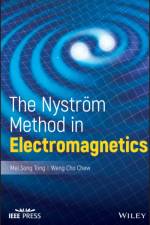
A comprehensive, step-by-step reference to the Nyström Method for solving Electromagnetic problems using integral equationsComputational electromagnetics studies the numerical methods or techniques that solve electromagnetic problems by computer programming. Currently, there are mainly three numerical methods for electromagnetic problems: the finite-difference time-domain (FDTD), finite element method (FEM), and integral equation methods (IEMs). In the IEMs, the method of moments (MoM) is the most widely used method, but much attention is being paid to the Nyström method as another IEM, because it possesses some unique merits which the MoM lacks. This book focuses on that method--providing information on everything that students and professionals working in the field need to know.Written by the top researchers in electromagnetics, this complete reference book is a consolidation of advances made in the use of the Nyström method for solving electromagnetic integral equations. It begins by introducing the fundamentals of the electromagnetic theory and computational electromagnetics, before proceeding to illustrate the advantages unique to the Nyström method through rigorous worked out examples and equations. Key topics include quadrature rules, singularity treatment techniques, applications to conducting and penetrable media, multiphysics electromagnetic problems, time-domain integral equations, inverse scattering problems and incorporation with multilevel fast multiple algorithm.* Systematically introduces the fundamental principles, equations, and advantages of the Nyström method for solving electromagnetic problems* Features the unique benefits of using the Nyström method through numerical comparisons with other numerical and analytical methods* Covers a broad range of application examples that will point the way for future researchThe Nystrom Method in Electromagnetics is ideal for graduate students, senior undergraduates, and researchers studying engineering electromagnetics, computational methods, and applied mathematics. Practicing engineers and other industry professionals working in engineering electromagnetics and engineering mathematics will also find it to be incredibly helpful.
Insights on current research and recent developments in understanding global savanna systems Increasingly recognized as synonymous with tropical grassy biomes, savannas are found in tropical and sub-tropical climates as well as warm, temperate regions of North America. Savanna Woody Plants and Large Herbivores examines the interactions between woody plants and browsing mammals in global savannas--focusing primarily on the C4 grassy ecosystems with woody components that constitute the majority of global savannas--and discusses contemporary savanna management models and applications. This much-needed addition to current research examines topics including the varying behavior of browsing mammals, the response to browsing by woody species, and the factors that inhibit forage intake. Contributions from an international team of active researchers and experts compare and contrast different savanna ecosystems, offering a global perspective on savanna functioning, the roles of soil and climate in resource availability and organism interaction, and the possible impacts of climate change across global savannas. Fills a gap in literature on savanna management issues, including biodiversity conservation and animal production Applies concepts developed in other biomes to future savanna research Complements contemporary books on savanna or large herbivore ecology Focuses on the woody component of savanna ecosystems and large herbivore interactions in savannas Compares tree-mammal systems of savannas and other eco-systems of temperate and boreal regions Provides numerous case studies of plant-mammal interactions from various savanna ecosystems Savanna Woody Plants and Large Herbivores is a valuable addition to those in fields such as ecology, wildlife and conservation biology, natural resource management, and environmental science.
Discover the military's keys to excellent leadership and team building trainingThe Program: Lessons From Elite Military Units for Creating and Sustaining High Performing Leaders and Teams offers a hands-on guide to the winning techniques and tactics of The Program, the acclaimed team building and leadership development company. Drawing on the actual experiences of The Program's instructors from their personal combat stories to working with world-class athletic teams and successful corporations, the book clearly shows how The Program's training operations can help to achieve life goals and ambitions.The Program offers a road map that contains illustrative examples, ideas, and approaches for improving teammates and leaders at all levels within an organization of any size or type.* Bring your organization to the next level of success* Discover how to hold your leaders and teammates to the highest standards* Understand how accountability increases effectiveness* Learn to communicate effectivelyThis important book explores the military's leadership and team building concepts that can be implemented to ensure an organization creates and sustains performance that adheres to the highest standards of excellence.
A comprehensive review of the life cycle processes, methods, and techniques used to develop and modify software-enabled systemsSystems Engineering of Software-Enabled Systems offers an authoritative review of the most current methods and techniques that can improve the links between systems engineering and software engineering. The author--a noted expert on the topic--offers an introduction to systems engineering and software engineering and presents the issues caused by the differences between the two during development process. The book reviews the traditional approaches used by systems engineers and software engineers and explores how they differ.The book presents an approach to developing software-enabled systems that integrates the incremental approach used by systems engineers and the iterative approach used by software engineers. This unique approach is based on developing system capabilities that will provide the features, behaviors, and quality attributes needed by stakeholders, based on model-based system architecture. In addition, the author covers the management activities that a systems engineer or software engineer must engage in to manage and lead the technical work to be done. This important book:* Offers an approach to improving the process of working with systems engineers and software engineers* Contains information on the planning and estimating, measuring and controlling, managing risk, and organizing and leading systems engineering teams* Includes a discussion of the key points of each chapter and exercises for review* Suggests numerous references that provide additional readings for development of software-enabled physical systems* Provides two case studies as running examples throughout the textWritten for advanced undergraduates, graduate students, and practitioners, Systems Engineering of Software-Enabled Systems offers a comprehensive resource to the traditional and current techniques that can improve the links between systems engineering and software engineering.
Provides detailed mathematical exposition of the fundamentals of fuzzy set theory, including intuitionistic fuzzy sets This book examines fuzzy and intuitionistic fuzzy mathematics and unifies the latest existing works in literature. It enables readers to fully understand the mathematics of both fuzzy set and intuitionistic fuzzy set so that they can use either one in their applications. Each chapter of Fuzzy Set and Its Extension: The Intuitionistic Fuzzy Set begins with an introduction, theory, and several examples to guide readers along. The first one starts by laying the groundwork of fuzzy/intuitionistic fuzzy sets, fuzzy hedges, and fuzzy relations. The next covers fuzzy numbers and explains Zadeh's extension principle. Then comes chapters looking at fuzzy operators; fuzzy similarity measures and measures of fuzziness; and fuzzy/intuitionistic fuzzy measures and fuzzy integrals. The book also: discusses the definition and properties of fuzzy measures; examines matrices and determinants of a fuzzy matrix; and teaches about fuzzy linear equations. Readers will also learn about fuzzy subgroups. The second to last chapter examines the application of fuzzy and intuitionistic fuzzy mathematics in image enhancement, segmentation, and retrieval. Finally, the book concludes with coverage the extension of fuzzy sets. This book: Covers both fuzzy and intuitionistic fuzzy sets and includes examples and practical applications Discusses intuitionistic fuzzy integrals and recent aggregation operators using Choquet integral, with examples Includes a chapter on applications in image processing using fuzzy and intuitionistic fuzzy sets Explains fuzzy matrix operations and features examples Fuzzy Set and Its Extension: The Intuitionistic Fuzzy Set is an ideal text for graduate and research students, as well as professionals, in image processing, decision-making, pattern recognition, and control system design.
The book adopts a critical perspective and draws on abundant empirical evidences and valuable data to substantiate its analyses of the major higher education systems under scrutiny. This book is a critical account of the history, evolution and challenges of higher education in mainland China, Taiwan and Hong Kong, with important reflections on other systems, notably those in the US, UK, Korea and Japan. In addition to hardware and software, it introduces the concept of "soulware" in global higher education and analyzes its importance for internationalization and the pursuit of excellence. The book's critical analysis and insightful reflections provide considerable value for a range of global stakeholders interested in higher education reform to nurture talent and promote innovation to prepare students for an unpredictable future. "Professor Kuo's perspective provides considerable value for a range of global stakeholders both in the east and the west. As American universities awake to the realization that the demand for higher education is an increasingly global phenomena, his contribution could not be more timely." Mike Crow, PhD President, Arizona State University "Way's book is not just about the past or the present. Rather, it offers useful insights into the future. In an age where robots and artificial intelligence are impacting our jobs and our daily lives, he introduces the concept of "soulware" and analyzes its importance for higher education." G. P. "Bud" Peterson, PhD President, Georgia Institute of Technology
An interdisciplinary study of the Kuroshio nutrient streamThe surface water of the Kuroshio, a western boundary current in the North Pacific Ocean, is nutrient-depleted and has relatively low primary productivity, yet abundant fish populations are supported in the region. This is called the "Kuroshio Paradox".Kuroshio Current: Physical, Biogeochemical and Ecosystem Dynamics presents research from a multidisciplinary team that conducted observational and modeling studies to investigate this contradiction. This timely and important contribution to the ocean sciences literature provides a comprehensive analysis of the Kuroshio.Volume highlights include:* New insights into the role of the Kuroshio as a nutrient stream* The first interdisciplinary examination of the Kuroshio Paradox* Reflections on the influence of the Kuroshio on Japanese culture* Research results on both the lower and higher trophic levels in the Kuroshio ecosystem* Comparisons of nutrient dynamics in the Kuroshio and Gulf Stream* Predictions of ecosystem responses to future climate variability
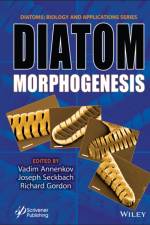
DIATOM MORPHOGENESISA unique book presenting the range of silica structures formed by diatoms, theories and hypotheses of how they are made, and applications to nanotechnology by use or imitation of diatom morphogenesis.There are up to 200,000 species of diatoms, each species of these algal cells bearing an ornate, amorphous silica glass shell. The silica is structured at 7 orders of magnitude size range and is thus the most complex multiscalar solid structure known. Recent research is beginning to unravel how a single cell marshals chemical, physical, biochemical, genetic, and cytoskeletal processes to produce these single-cell marvels. The field of diatom nanotechnology is advancing as this understanding matures.Diatoms have been actively studied over the recent 10-20 years with various modern equipment, experimental and computer simulation approaches, including molecular biology, fluorescence-based methods, electron, confocal, and AFM microscopy. This has resulted in a huge amount of information but the key stages of their silica morphogenesis are still not clear. This is the time to reconsider and consolidate the work performed so far and to understand how we can go ahead.The main objective of this book is to describe the actual situation in the science of diatom morphogenesis, to specify the most important unresolved questions, and to present the corresponding hypotheses. The following areas are discussed:* A tutorial chapter, with a glossary for newcomers to the field, who are often from outside of biology, let alone phycology;* Diatom Morphogenesis: general issues, including symmetry and size issues;* Diatom Morphogenesis: simulation, including analytical and numerical methods for description of the diatom valve shape and pore structure;* Diatom Morphogenesis: physiology, biochemistry, and applications, including the relationship between taxonomy and physiology, biosilicification hypotheses, and ideas about applications of diatoms.AudienceResearchers, scientists, and graduate students in the fields of phycology, general biology, marine sciences, the chemistry of silica, materials science, and ecology.
A review of various types of whole grains, the bioactives present within them, and their health-promoting effectsAs rates of obesity and other chronic conditions continue to rise, so too does the need for clear and accurate information on the connections between diet and disease, particularly regarding the cereal grains that dominate the Western diet. In this volume, editors Jodee Johnson and Taylor Wallace assemble a panel of leading experts to address this issue. The result is a comprehensive examination of the cereal and pseudo-cereal grains and their most important bioactive compounds.Not only does this volume offer summaries of existing research, it also places these findings within the larger context of health promotion and disease prevention. This includes frank discussions on the limitations of existing studies, as well as current gaps in research for those who want to offer evidence-based recommendations to their patients. Topics addressed include:* Methodical analyses of domesticated grain species, their horticultural history, nutritional composition, and known effects on health* Beneficial properties of certain bioactive compounds found in particular grain species* How bioactive compounds work within an individual's overall diet to increase health and prevent diseaseAcademic and industry researchers, as well as medical practitioners and public health professionals, will appreciate Whole Grains and their Bioactives, not only as an engaging overview of current research, but also as an illuminating contribution to the often-murky debate surrounding health and the human diet.
NONTHERMAL PLASMAS FOR MATERIALS PROCESSINGThis unique book covers the physical and chemical aspects of plasma chemistry with polymers and gives new insights into the interaction of physics and chemistry of nonthermal plasmas and their applications in materials science for physicists and chemists.The properties and characteristics of plasmas, elementary (collision) processes in the gas phase, plasma surface interactions, gas discharge plasmas and technical plasma sources, atmospheric plasmas, plasma diagnostics, polymers and plasmas, plasma polymerization, post-plasma processes, plasma, and wet-chemical processing, plasma-induced generation of functional groups, and the chemical reactions on these groups along with a few exemplary applications are discussed in this comprehensive but condensed state-of-the-art book on plasma chemistry and its dependence on plasma physics.While plasma physics, plasma chemistry, and polymer science are often handled separately, the aim of the authors is to harmoniously join the physics and chemistry of low-pressure and atmospheric-pressure plasmas with polymer surface chemistry and polymerization and to compare such chemistry with classic chemistry.Readers will find in these chapters* Interaction of plasma physics and chemistry in plasmas and at the surface of polymers;* Explanation and interpretation of physical and chemical mechanisms on plasma polymerization and polymer surface modification;* Introduction of modern techniques in plasma diagnostics, surface analysis of solids, and special behavior of polymers on exposure to plasmas;* Discussion of the conflict of energy-rich plasma species with permanent energy supply and the much lower binding energies in polymers and alternatives to avoid random polymer decomposition* Technical applications such as adhesion, cleaning, wettability, textile modification, coatings, films, etc. New perspectives are explained about how to use selective and mild processes to allow post-plasma chemistry on non-degraded polymer surfaces.AudiencePhysicists, polymer chemists, materials scientists, industrial engineers in biomedicine, coatings, printing, etc.
Abonner på vårt nyhetsbrev og få rabatter og inspirasjon til din neste leseopplevelse.
Ved å abonnere godtar du vår personvernerklæring.