


























Gjør som tusenvis av andre bokelskere
Abonner på vårt nyhetsbrev og få rabatter og inspirasjon til din neste leseopplevelse.
Ved å abonnere godtar du vår personvernerklæring.Du kan når som helst melde deg av våre nyhetsbrev.

In this book, the biologist Raghavendra Gadagkar focuses on the single species he has worked on throughout his career. His years of study have led him to believe that ecological, physiological, and demographic factors can be more important than genetic relatedness in the selection for or against social traits.
For much of the Middle Ages, the Lara family was among the most powerful aristocratic lineages in Spain. This book, the first modern study of the Laras, explores the causes of change in the dynamics of power, and narrates the dramatic story of the events that overtook the family.
In these eleven in-depth essays, drawn from the award-winning reference work Late Antiquity: A Guide to the Postclassical World, an international cast of experts provides essential information and fresh perspectives on this period's culture and history.
In The Arts of Deception, James Cook explores the distinctly modern mode of trickery designed to puzzle the eye and challenge the brain. Upsetting the normally strict boundaries of value, race, class, and truth, the spectacles offer a revealing look at the tastes, concerns, and prejudices of America's very first mass audiences.
Originally published in 1959, Advertisements for Myself is an inventive collection of stories, essays, polemic, meditations, and interviews. It is Mailer at his brilliant, provocative, outrageous best.
In a newly enlarged edition of this book, David Courtwright offers an original interpretation of the dramatic change in the pattern of opiate addiction--from respectable upper-class matrons to lower-class urban males, often with a criminal record.
In this dazzling commentary on Greek and Roman myth and society, weaving emerges as a metaphor rich with possibility. From rituals symbolizing the cohesion of society to the erotic and marital significance of weaving, this lively book defines the logic of one of the central concepts in Greek and Roman thought.
The question: can - or should - the United States try to promote reform in client states in the Third World is at the heart of this book. The book focuses on three case studies of reformist intervention in Asia: China 1946-1948; the Philippines 1950-1953; and Vietnam 1961-1963.
In the wake of the Civil Rights movement, a new, loosely-organized social movement was born in the struggle for cultural representation. Rhea terms it the "Race Pride movement," and shows how American minorities carried the struggle for cultural inclusion into museums, schools, and universities, yielding dramatic and lasting change.
"Black-Jewish relations," Melnick argues, has mostly been a way for American Jews to talk about their ambivalent racial status. He elaborates this idea through an in-depth look at Jewish songwriters, composers, and perfomers who made "Black" music in the first few decades of this century.
Drawing on letters, poems, notebooks, and secret diaries, Koerner tells the story of one of the most famous naturalists who ever lived, the Swedish-born botanist and systematizer, Carl Linnaeus. Koerner's narrative goes against the grain of scholarship old and new by analyzing not how modern Linnaeus was, but how he understood science in his time.
Presenting the foundations of an integrated theory of organizations, Jensen argues that the cost of transferring information necessitates decentralization of some decision rights in organizations and economies. This in turn requires organizations to solve the control problem that results when self-interested persons do not behave as perfect agents.
Jennifer Hornsby offers here detailed discussions of ontology, human agency, and everyday psychological explanation. In her distinctive view of questions about "the mind's place in nature" she argues for a particular position in philosophy of mind: naive naturalism.
Is "right-brain" thought essentially creative, and "left-brain" strictly logical? Joseph B. Hellige argues that this view is far too simplistic. Surveying extensive data in the field of cognitive science, he disentangles scientific facts from popular assumptions about the brain's two hemispheres.
Gamm places neighborhood institutions at the center his investigation. He challenges the long-held assumption that bankers and real estate agents were responsible for the rapid Jewish exodus. Rather, according to Gamm, basic institutional rules explain the strength of Catholic attachments to neighborhood and the weakness of Jewish attachments.
In this timely book, Norman Finkel looks at the relationship between the "law on the books," as set down in the Constitution and developed in cases and decisions, and what he calls "commonsense justice" the ordinary citizen's notions of what is just and fair.
This book examines the connection between the decline of the orphanage and the rise of welfare in America. Matthew Crenson argues that the prehistory of the welfare system was played out not on the stage of national politics or class conflict but in the micropolitics of institutional management.
This vivid account of Israeli rule in Jerusalem details the Jewish state's attempt to lay claim to all of Jerusalem, even when that meant implementing harsh policies toward the city's Arab population. The authors, Jerusalemites from the spheres of politics, journalism, and the military, have themselves been players in the drama.
Is Lucan's brilliant and grotesque epic Civil War an example of ideological poetry at its most flagrant, or is it a work that despairingly proclaims the meaninglessness of ideology? Shadi Bartsch offers a startlingly new answer to this split debate on the Roman poet's magnum opus.
Barnes's reconstruction of Athanasius's career analyzes the nature and extent of the Bishop's power, especially as it intersected with imperial policies. Untangling classic misconceptions, Barnes reveals the Bishop's true role in the struggles within Christianity, and in the relations between the Roman emperor and the Church at a critical juncture.
Wallace takes us on a tour of discovery to unexplored regions of Jefferson's mind. There, the bookish Enlightenment scholar-chronicler of the eloquence of America's native peoples and mourner of their tragic fate--sits uncomfortably close to Jefferson the imperialist and architect of Indian removal.
Jolly demonstrates that the females who came after Lucy played as crucial a role in the human evolutionary process as "man" ever did. She shows us that to understand our origins and where we go next, we need to understand how sex and intelligence, cooperation and love, emerged from the harsh Darwinian struggle in the past.
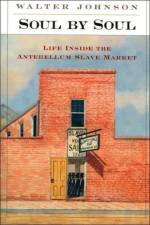
Taking us inside the New Orleans slave market, Walter Johnson transforms the statistics of this chilling trade into the human drama of traders, buyers, and slaves, negotiating sales that would alter the life of each. What emerges is not only the brutal economics of trading but the vast and surprising interdependencies among the actors involved.
Drawing from in-depth interviews with sixty women of different ages and ethnic and class backgrounds-police officers, attorneys, substance abusers, homemakers, artists-Dana Jack provides a rich account of how women explain (or explain away) their own hidden or actual acts of hurt to others.
In 1904, New York nuns brought 40 Irish orphans to a remote Arizona mining camp, to be placed with Mexican-Catholic families. The town's Anglo-Americans, furious at this "transgression," formed a vigilante squad that kidnapped the children. The church sued but the U.S. Supreme Court ruled for the vigilantes. Gordon tells this gripping story.
This political history shows how the turmoil and transformation of nursing during the French Third Republic reflected the political and cultural tensions at work in the nation, including critical conflicts over the role of the Church in society, the professionalization of medicine, and the emancipation of women.
This engaging cultural history examines the emergence of a professional identity for American women artists. By focusing on individual sculptors, painters, and illustrators, Prieto gives us a compelling picture of the prospects and constraints faced by women artists in the United States from the late eighteenth century through the 1930s.
This powerful book extends and completes a project begun with Steven Ozment's When Fathers Ruled (Harvard). Here Ozment, the leading historian of the family in the middle centuries, replaces the often miserable depiction of premodern family relations with a delicately nuanced portrait of a vibrant and loving social group.
Only 30 minutes a day of moderate exercise can save your life. This is the message that Manson-a lead investigator of both the Women's Health Initiative and the Nurses's Health Study-and her coauthor send to American women. Their book offers medical research coupled with step-by-step instructions on how to maintain a physically active lifestyle.
More than 50,000 Americans migrated to Canada during the Vietnam War. Hagan, himself a member of the exodus, searched declassified government files, consulted previously unopened resistance organization archives and contemporary oral histories, and interviewed American war resisters settled in Toronto to learn how they made the momentous decision.
Abonner på vårt nyhetsbrev og få rabatter og inspirasjon til din neste leseopplevelse.
Ved å abonnere godtar du vår personvernerklæring.