


















Gjør som tusenvis av andre bokelskere
Abonner på vårt nyhetsbrev og få rabatter og inspirasjon til din neste leseopplevelse.
Ved å abonnere godtar du vår personvernerklæring.Du kan når som helst melde deg av våre nyhetsbrev.

Discusses recombinant DNA, genetic screening, biological weapons, and other ethical dilemmas.
First published in 1951, Genesis and Geology describes the background of social and theological ideas and the progress of scientific researches which, between them, produced the religious difficulties that afflicted the development of science in early industrial England.
Eirenaeus Philalethes was reputed to have performed miracles-restoring an aged lady's teeth and hair, bringing a withered peach tree to fruit-and was also rumored to possess a philosophers' stone. That he was merely a mythical creation didn't diminish his public reputation a whit. This is the story of the man behind the myth, George Starkey.
Baranczak-a poet, critic, translator, and Polish emigre-supplies politico-cultural context for Herbert while analyzing the texts and themes of his poems. Herbert's poetry, he shows, is based on permanent confrontation-of Western tradition with the experience of an Eastern European, of classicism with modernity, of cultural myth with empiricism.
Oscar and Lilian Handlin show how the new voyagers in the twentieth century--from Asia, Africa, Australia, and Latin America--record their experiences in the United States. Many accounts are newly translated from Arabic, Persian, Hebrew, and Spanish, and include such authors as Rabindranath Tagore, V. S. Naipaul and Octavio Paz.
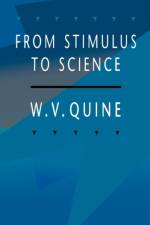
W. V. Quine has produced a sharp, sprightly book that encapsulates the whole of his philosophical enterprise, including his thinking on all the key components of his epistemological stance--especially the value of logic and mathematics.
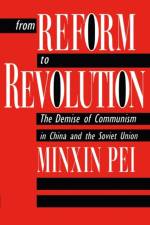
The demise of communism in the former Soviet Union and the massive political and economic changes in China are the stunning transformations of our century. Two central questions are emerging: Why did different communist systems experience different patterns of transition? Why did partial reforms in the Soviet Union and China turn into revolutions?
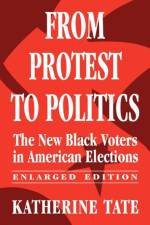
The struggle for civil rights among black Americans has moved into the voting booth. How such a shift came about-and what it means-is revealed in this timely reflection on black presidential politics. It will benefit those who wish to understand better the subtle interplay of race and politics, at the voting booth and beyond.
What do Chinese literature and film inspired by the Cultural Revolution (1966-1976) have in common with media of the May Fourth movement (1918-1930)? This book demonstrates several shared aims: to liberate narrative arts from aesthetic orthodoxies, to draw on foreign sources for inspiration, and to free individuals from social conformity.
Since World War II West German film-makers have tried to come to terms with Germany's past. Kaes argues that a shift in German attitudes in the 1970s - illustrated in films - shows the focus is now less on guilt and atonement and more on personal memory and a need for a national identity.
The American Civil War and the Paris Commune of 1871, Philip Katz argues, were part of the broader sweep of transatlantic development in the mid-nineteenth century-an age of democratic civil wars. Katz shows how American political culture in the period that followed the Paris Commune was shaped by that event.
In this monumental intellectual biography, Frank Sulloway demonstrates that Freud always remained, despite his denials, a biologist of the mind; and, indeed, that his most creative inspirations derived significantly from biology.
Choquette narrates the peopling of French Canada across the 17th and 18th centuries, the lesser known colonial phase of French migration. Drawing on French and Canadian archives, she carefully traces the precise origins of individual immigrants, describing them by gender, class, occupation, region, religion, age, and date of departure.
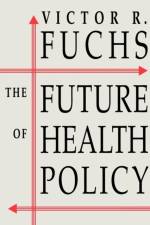
From 1971 to 1982, researchers at the RAND Corporation devised an experiment to address two key questions in health care financing: how much more medical care will people use if it is provided free of charge? and what are the consequences for their health? This book presents a comprehensive account of the experiment and its findings.
Roemer challenges the morality of an economic system based on private ownership of the means of production. Unless you start with a certain amount of wealth in such a society, you are only "free to lose." This book addresses crucial questions of political philosophy and normative economics.
Freda Kirchwey was a beacon for liberals and activists of her era. A journalist with The Nation from 1918 to 1955-owner, editor, and publisher after 1937-she was an advocate of advanced ideas about sexual freedom and a tireless foe of fascism. In this biography, Alpern weaves the strands of gender-related issues with larger social explorations.
The end of the nineteenth century in France was marked by political scandals, social unrest, dissension, and "decadence," yet also by great social and scientific progress. In this thoroughly engaging history, Weber describes ways of life, not as recorded by general history, but as contemporaries experienced them.
This first comprehensive biography in 50 years has taken advantage of Yale's massive edition-in-progress of Franklin's papers and of the many specialized studies inspired by the correspondence. Designed for the general reader, it is also a work for scholars, and includes an analysis of other interpretations of Franklin's career and personality.
In a remarkably fresh and historically grounded reinterpretation of the American Constitution, William Nelson argues that the fourteenth amendment was written to affirm the general public's long-standing rhetorical commitment to the principles of equality and individual rights on the one hand, and to the principle of local self-rule on the other.
Vogel brings masterly insight to the underlying question of why Japan and the little dragons-Taiwan, South Korea, Hong Kong, and Singapore-have been so extraordinarily successful in industrializing while other developing countries have not.
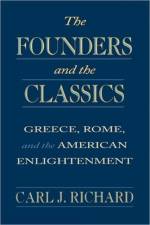
The influence of Greek and Roman authors on our American forefathers finally becomes clear in this fascinating book-the first comprehensive study of the founders' classical reading.
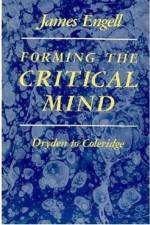
Offering major reevaluations of Dryden, Hume, and Johnson, Engell shows that 18th-century criticism cannot be represented by just a few major critics or by generalizations about Augustan taste, neoclassical rules, or "common sense." He presents a complex and highly varied body of theoretical writing and practical application by dozens of critics.
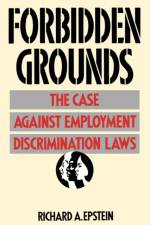
This timely and controversial book presents powerful theoretical and empirical arguments for the repeal of the anti-discrimination laws within the workplace.
Kornberg describes his successive research problems, the challenges they presented, and the ultimate accomplishments that resulted, in this primer in the strategies needed to do significant scientific work. This book will challenge biology and chemistry students at all levels who want to do important work rather than simply follow popular trends.
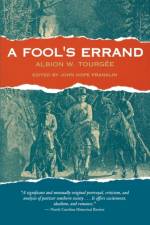
Though the discussion of sectional and racial problems is an important element in the book, A Fool's Errand has merit as a dramatic narrative-with its love affair, and its moments of pathos, suffering, and tragedy. This combination of tract and melodrama made it a bestseller in its day.
Abonner på vårt nyhetsbrev og få rabatter og inspirasjon til din neste leseopplevelse.
Ved å abonnere godtar du vår personvernerklæring.