









Gjør som tusenvis av andre bokelskere
Abonner på vårt nyhetsbrev og få rabatter og inspirasjon til din neste leseopplevelse.
Ved å abonnere godtar du vår personvernerklæring.Du kan når som helst melde deg av våre nyhetsbrev.

Just war theory exists to stop armies and countries from using armed force without good cause. But how do we decide whether a use of armed force is just or unjust? In this original book, John W. Lango takes some distinctive approaches to the ethics of armed conflict. 1. A revisionist approach that involves generalising traditional just war principles, so that responsible agents can apply them to all forms of armed conflict. 2. A cosmopolitan approach that features the Security Council. 3. A preventive approach that emphasises alternatives to armed force, including negotiation, nonviolent action and peacekeeping missions. 4. A human rights approach that encompasses not only armed humanitarian intervention but also armed invasion, armed revolution and all other forms of armed conflict. Using these principles, he discusses issues surrounding just cause, last resort, proportionality and noncombatant immunity. He then applies them to hot topics in international conflicts including drone strikes, no-fly zones, moral dilemmas, deterrence, intelligence, legitimate authority, escalation and peace agreements, drawing on real-world case studies from recent conflicts in countries including Afghanistan, Darfur, Libya and South Sudan.
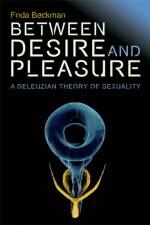
Intervening into fields including posthumanist, disability, animal and feminist studies, and current critiques of capitalism and consumerism, Frida Beckman recovers a theory of sexuality from Deleuze's work.
An in-depth and insightful study of Shari'ah governance from a theoretical and practical perspective. Shari'ah governance has a profound influence on the day-to-day practice of Islamic Financial Institutions (IFIs) and each jurisdiction has adopted a different approach to developing a governance framework. Hasan Zulkifli reviews these pluralistic approaches and identifies best practice. With examples, case studies and practical discussions based on IFIs in Malaysia, the GCC countries of Bahrain, UAE, Qatar, Kuwait and Saudi Arabia and the UK. Topics covered include; The theory behind corporate and Shari'ah governance; The regulatory framework for Shari'ah governance; Shari'ah governance approaches; The Shari'ah Board's role and how it retains its independence, transparency and competence; The operational procedures of Shari'ah governance; The effectiveness of the Shari'ah Board and how it could be improved
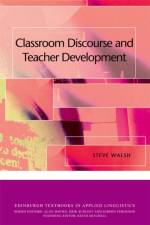
Do you want to improve your teaching practice? Do you need to know more about getting the most out of student feedback? This textbook covers all topics in preparing TESOL teachers for the practical component of their programme. Covering both the theory of reflective practice and practical techniques, this book explains the cycle of observation, planning and materials, teaching, feedback, and action. By encouraging this teaching practice cycle and raising your awareness, you will learn the practical ways in which these activities can improve your teaching performance. Activities which focus on your own knowledge and experiences are included in each chapter, alongside a selection of further reading. The real data used, including classroom interaction and feedback discourse, come from a range of different cultural contexts. On-going professional development and practice-based and action research are also explained.
Identifying six significant writers - Whitman, Dostoevsky, Rimbaud, Lewis Carroll, Proust and D. H. Lawrence - Katy Masuga explores their influence on Miller's work as well as Miller's retroactive impact on their writing. She explores four forms of intertextuality in relation to each 'ancestral' author: direct allusions; unconscious style; reverse influence; and participation of the ancestral author as part of the story within the text. The study is informed by the theories of Bakhtin, Barthes and Kristeva on polyvocity and of Blanchot, Wittgenstein and Deleuze on language games and the indefatigability of writing. By presenting Miller in intertextual context, he emerges as a noteworthy modernist writer whose contributions to literature include the struggle to find a distinctive voice alongside a distinguished lineage of literary figures. Key Features* Major contribution to rehabilitating an important and often overlooked twentieth-century writer* Places Miller's work in thought-provoking intertextual relationships among a diverse range of writers* Provides an incisive critical approach to Miller's writing
By connecting Fenian and anarchist violence found in popular fiction from the 1880s to the early 1900s with the avant-garde writing of British modernism, Deaglan Donghaile demonstrates that Victorian popular fiction and modernism were directly influenced by the explosive shocks of late nineteenth-century terrorism. For the first time, late-Victorian 'dynamite novels', radical journalism and modernist writing are brought together in provocative readings of Henry James, R L Stevenson, Joseph Conrad and Wyndham Lewis. Key Features*Extensive original archival research from libraries in the UK, Ireland and the US*The first book to examine types of political and literary disruption*Reads Henry James, R L Stevenson and Joseph Conrad in new contexts *Detailed discussion of Wyndham Lewis's avant-garde Vorticist journal BLAST in chapter 4
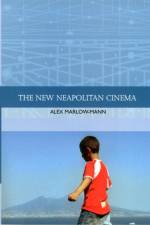
Vito and the Others (1991), Death of a Neapolitan Mathematician (1992) and Libera (1993), the debuts of three young Neapolitan filmmakers, stood out dramatically from the landscape of Italian cinema in the early 1990s. On the back of their critical success, over the next decade and a half, Naples became a thriving centre for film production. In this first study in English of one of the most vital and stimulating currents in contemporary European Cinema, Alex Marlow-Mann provides a detailed, multi-faceted and provocative study of this distinct regional tradition. In tracing the movement's relationship with the popular musical melodramas previously produced in Naples, he reveals how contemporary Neapolitan filmmakers have interrogated, subverted and reconfigured cinematic convention as part of a through-going re-examination of Neapolitan identity. Key features include: analyses of over 45 contemporary Italian films, including Paolo Sorrentino's The Consequences of Love, Mario Martone's L'amore molesto, Antonio Capuano's Pianese Nunzio: 14 in May and Vincenzo Marra's Sailing Home; a theoretical discussion of the concept of regional cinema; an examination of the movement in its broader context as both product and critique of Mayor Bassolino's 'Neapolitan Renaissance'; and a study of one European film industry in terms of legislation, production, distribution and exhibition.
Throughout his career, Deleuze developed a series of original philosophies of time and applied them successfully to many different fields. Now James Williams presents Deleuze's philosophy of time as the central concept that connects his philosophy as a whole. Through this conceptual approach, the book covers all the main periods of Deleuze's philosophy: the early studies of Hume, Nietzsche, Kant, Bergson and Spinoza, the two great philosophical works, Difference and Repetition and Logic of Sense, the Capitalism and Schizophrenia works with Guattari, and the late influential studies of literature, film and painting. The result is an important reading of Deleuze and the first full interpretation of his philosophy of time.
The most arresting aspect of the Scottish Enlightenment is its conception of commercial society as a distinct and distinctive social formation. Christopher Berry explains why Enlightenment thinkers considered commercial society to be wealthier and freer than earlier forms, and charts the contemporary debates and tensions between Enlightenment thinkers that this idea raised. The book analyses the full range of literature on the subject, from key works like Adam Smith's 'Wealth of Nations', David Hume's 'Essays and Treatises on Several Subjects' and Adam Ferguson's 'Essay on the History of Civil Society' to lesser-known works such as Robert Wallace's 'Dissertation on Numbers of Mankind'.
Highlights the importance of classroom discourse to any second language teacher education programmeReflective practice is central to teacher education and development, yet is something that many teachers struggle with. Can reflective practice be refocused by asking teachers to place classroom interaction and discourse at the centre of their reflections?In this accessible textbook, Steve Walsh explains why it is essential to put an understanding of classroom discourse at the centre of any second language teacher education programme, whether it is a formal programme under the guidance of a teacher educator or a more informal, self-directed programme of teacher development. He argues that in order to improve their professional practice, language teachers need to gain a detailed, up-close understanding of their local context by focusing on the complex relationship between teacher language, classroom interaction and learning. In order to do this he revisits and reconceptualises the notion of reflective practice by giving teachers appropriate tools which allow them to reflect on and improve their professional practice. This thought-provoking book not only stimulates debate on classroom discourse and reflective practice, but also contains practical exercises and advice which will be invaluable to both new and experienced language teachers as well as to researchers in applied linguistics.Task commentaries, a glossary of technical terms and an annotated list of further reading are also included.
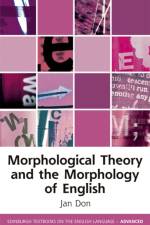
In presenting the morphology of English in relation to theoretical developments that have shaped the field over the last couple of decades, this textbook gives a reasoned overview of the morphology of English.
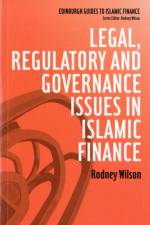
From Iran, where all banking is Shari'ah compliant, to Malaysia and the gulf, where Islamic financial institutions compete with conventional banks, Rodney Wilson examines how Islamic financial institutions are licensed and governed by common and civil law. Covering Islamic banks, takaful operators, fund management and Shari'ah-compliant securities, it examines how their assets and liabilities differ from their conventional counterparts and what the implications are for risk management.
Between 1907 and 1911, Ferdinand de Saussure gave three series of lectures on the topic of general linguistics. After his death, these lecture notes were gathered together by his students and published as the Course in General Linguistics. And in the past one hundred years, there has been no more influential and divisive reading of Saussure than that of Jacques Derrida.This book is an examination of Derrida's philosophical reconstruction of Saussurean linguistics, of the paradigm shift from structuralism to post-structuralism, and of the consequences that continue to resonate in every field of the humanities today.Despite the importance of Derrida's critique of Saussure for cultural studies, philosophy, linguistics and literary theory, no comprehensive analysis has before been written. The magnitude of the task undertaken here makes this book an invaluable resource for those wishing to interrogate the encounter beyond appearances or received wisdom.In this process of a close reading, the following t
This volume traces the social, economic and political history of the Greeks between 500 and 1050. The book adopts an interdisciplinary approach and uses archaeological evidence, as well as coins and seals, fiscal documents, medieval chronicles, and hagiographic literature to examine the development of Greek culture in the early medieval period. Several themes provide the foundation for this volume and run through the chapters; these include the Balkan context, the Social Role of the Army and the Onset of Economic Growth. Special attention is paid to the size of the economy in early medieval Greece. Both the social and the economic are privileged and analyzed together as integrally connected spheres of life, thus filling a major gap in existing literature on this period.
A systematic study of the process of developing Islamic financial products for banks. Islamic banking began in the 1970s with the aim of providing financial services compatible with Islamic law. Driven by market forces it has grown rapidly in Muslim countries and in international financial sectors. It is projected to grow at an annual rate of 15-20% and a key factor determining this future growth is the availability of new products that will satisfy the needs of various segments of society. While other texts discuss the basic principles and contracts used in Islamic banking and finance, few discuss how these can be used to develop financial products. This book fills that gap, starting with the basic principles that form the building blocks of contemporary Islamic financial products and then discussing the more intricate issues relating to product development processes. Key FeaturesDiscusses the different stages of the product development cycle in detailIncludes case studies showing the structures of various productsCritically evaluates the issues related to product development including the types of products used by Islamic banks and the approaches adopted in developing themThe author is well-positioned to write this text, having been an economist at the Islamic Development Bank Group in Saudi Arabia (1999-2007)
This is the first book-length study of Islamic financial services in the United Kingdom. It describes the ways in which British examples of Islamic financial provision illustrate both the main characteristics of Islamic financial teaching and some key issues in the situation of British Muslims. Coverage of the subject is comprehensive: there are chapters on the history of Islamic finance in the UK and on personal accounts, home purchase finance, the equivalents of personal loans and insurance, investment, commercial funding and the relatively new bond-like instruments of sukuk. The author's approach is broadly sympathetic to the general spirit and aims of the Islamic financial tradition but critical of some of its manifestations in practice. The book is especially topical at present, following the crisis in the UK banking industry and the unprecedented level of public debate about the appropriate aims and techniques of the financial markets. Some commentators have recently expressed disappointment that Islamic finance in the UK has failed to live up to the high expectations surrounding it. This book attempts to give a balanced account of the sector's strengths and weaknesses.
A study of how we should read one of America's most important poets. Ben Hickman argues that we must attend to Ashbery's radical conception of reading if we are to understand the originality of his writing. His study focuses on Ashbery's reading of English poets, including Andrew Marvell, John Donne, William Wordsworth, John Clare, T. S. Eliot and W. H. Auden, and examines Ashbery's writing in terms of an 'aesthetic of inattention'. Hickman critiques the Americanisation of Ashbery's work as well as common assumptions about his Romanticism, his avant-garde Modernism and his engagement with the historical present. He demonstrates that Ashbery's generosity as a writer is closely tied to his generosity, inattention and situatedness as a reader.
Defining an institution as a public system of rules that sets out positions, rights and duties, this book uses a philosophical argument to analyse the roles that social, economic and political institutions play in conditioning the justification, scope and content of principles of justice. It critically evaluates a number of positions about the role of institutions in generating requirements of distributive justice and considers their implications for the scope - global or otherwise - of justice. It then develops a novel theory about the role political and economic institutions play in determining the content of requirements of distributive justice and, in a cosmopolitan argument against statist positions, shows how they can affect the scope of application of these requirements.
Scott's startlingly contemporary approach to theories of language and the creative impact of this on his work are explored in this new study. Alison Lumsden examines the linguistic diversity and creative playfulness of Scott's fiction and suggests that an evolving scepticism towards the communicative capacities of language runs throughout his writing. Lumsden re-examines this scepticism in relation to Scottish Enlightenment thought and recent developments in theories of the novel. Structured chronologically, the book covers Scott's output from his early narrative poems until the late, and only recently published, Reliquiae Trotcosienses
Why the international community should have intervened in Rwanda. Kassner contends that the violation of the basic human rights of the Rwandan Tutsis morally obliged the international community to intervene militarily to stop the genocide. This compelling argument, grounded in basic rights, runs counter to the accepted view on the moral nature of humanitarian intervention. It has profound implications for our understanding of the moral nature of humanitarian military intervention, global justice and the role moral principles should play in the practical deliberations of states.
The first student guide to American autobiographyThis introduction to the major forms of autobiographical writing in America and important current developments in autobiography studies discusses both 'canonised' texts and those from contemporary writers. Taking a broadly chronological approach, the history of American autobiography is explored including the social and cultural factors that might account for the importance of autobiography in American culture. Then post-1970 autobiographies are examined, taking into account the development in poststructuralism from this time that affected notions of the subject who could write, and conceptions of truth, identity and reference.Key Features* Engages in discussions about the 'Americanness' of autobiography, especially in relation to important contemporary issues such as multiculturalism and transnationalism* Acknowledges the problematic nature of the 'canon' of American autobiography* Explores the most exciting recent developments in relation to the self, writing, and autobiography (e.g. poststructuralist thought, the postmodern, the post-colonial, life-writing and genre)* Considers autobiographies from Benjamin Franklin, Frederick Douglass, Harriet Jacobs, Walt Whitman and Gertrude Stein to Maxine Hong Kingston, Lance Armstrong, Lucy Grealy and Barack Obama* Includes study of the Puritan autobiography, the slave narrative, political texts, photography in autobiography, and illness/ disability memoirs
This book is the first full-length study of hospitality in the writings of Jacques Derrida. Hospitality is critically important in Derrida's writings, and his insights in this have been influential across a range of disciplines from geography, politics and sociology to literary studies and philosophy. It functions as a way of both thinking about relations between individuals, and analysing the (often inhospitable) reception of outsiders, such as refugees or migrants, by the community or state. Still also follows the thread of sexual difference in Derrida's writing in order to shed light on his exploration of the complex and delicate, strange yet familiar, political and ethical dilemmas of how to be those impossible things, a good host and a good guest. This book sets Derrida's work in a series of contexts including the socio-political history of France, especially in relation to Algeria, and the writing on hospitality of other key thinkers, most importantly Hlne Cixous, Luce Irigaray and Emmanuel Levinas.
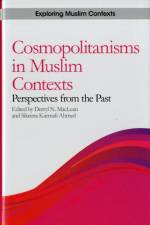
Looks at moments in world history when cosmopolitanism pervaded Muslim societies.This volume focuses on instances in world history when cosmopolitan ideas and actions pervaded specific Muslim societies and cultures, exploring the tensions between regional cultures, isolated enclaves and modern nation-states. Models from the past are chosen from 4 geographic areas: the Swahili coast, the Ottoman Empire/ Turkey, Iran and Indo-Pakistan. Each region is covered in 2 chapters, proving a basis for the comparison of specific cosmopolitan instances in Muslim contexts.Cosmopolitanism is a key concept in social and political thought, standing in opposition to closed human group ideologies such as tribalism, nationalism and fundamentalism. Much recent discussion of this concept has been situated within Western self-perceptions with little inclusion of information from Muslim contexts; this volume redresses the balance.
What happens when fictional characters acknowledge our 'presence' as film spectators? By virtue of its eccentricity and surprising frequency as a filmic device, direct address enables us to ask some fundamental questions of film theory, history and criticism and tackle, head-on, assumptions about the cinema as a medium. Brown provides a broad understanding of the role of direct address within fiction cinema, with focused analysis of its role in certain strands of avant-garde or experimental cinema, on the one hand, and popular genre traditions (musicals and comedies) on the other.
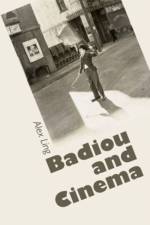
This book offers an in-depth examination of cinema and its philosophical significance. Alex Ling employs the philosophy of Alain Badiou to answer the question central to all serious film scholarship - namely, 'can cinema be thought?' Treating this question on three levels, the author first asks if we can really think what cinema is, at an ontological level. Second, he investigates whether cinema can actually think for itself; that is, whether or not it is truly 'artistic'. Finally he explores in what ways we can rethink the consequences of the fact that cinema thinks. In answering these questions, the author uses well-known films ranging from Hiroshima mon amour to Vertigo to The Matrix to illustrate Badiou's philosophy as well as to consider the ways in which his work can be extended, critiqued and reframed with respect to the medium of cinema.
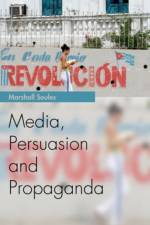
Living in a saturated media environment, we are crowded from all sides by persuasive messages and information. Advice, promotion and propaganda form a spectrum of persuasion, and everywhere we see it performed in its full theatricality, complete with actors, scripts, props and costumes.Based on enduring rhetorical principles, these persuasive techniques and the psychology behind them have become increasingly sophisticated during the 'age of persuasion', a century of applied research in advertising, advocacy, public relations, mass entertainment and social control. Media, Persuasion and Propaganda guides the reader through the many varieties of persuasion and its performance, exploring the protocols of rhetoric unique to the medium, from orality and print to film and digital images. Using case studies and exercises, this innovative study poses challenging questions, such as: How do individuals and organisations exert influence to build communities and networks? What role do media play in communicating persuasive messages? How do we use recent discoveries in cognitive science to promote a cause, advocate social change or market ideas and products? How do we defend ourselves against manipulation and undue influence, and when does persuasion turn into propaganda?
Published in 1967, 'Voice and Phenomenon' marked a crucial turning point in Derrida's thinking: the culmination of a 15-year-long engagement with the phenomenological tradition. It also introduced the concepts and themes that would become deconstruction. 'Voice and Phenomenon' is a short book, but it can be an overwhelming text, particularly for inexperienced readers of Derrida's work. This is the first guide to clearly explain the structure of his argument, step by step.
This book examines the phenomenon of the post-civil war Anglophone Lebanese fictional narrative. The texts chosen for study have been produced in, and are substantially about, life in exile. They therefore deal not only with the brutal civil strife in Lebanon (1975-1990) but with one of its crucial and long-standing by-products: expatriation. Syrine Hout shows how these texts characterise a distinctly new literary and cultural trend and have founded an Anglophone Lebanese diasporic literature. The authors discussed in the book are Rabih Alameddine, Tony Hanania, Rawi Hage, Nada Awar Jarrar, Patricia Sarrafian Ward and Nathalie Abi-Ezzi. In her exploration of their writings Hout teases out the different meanings and reformulations of home, be it Lebanon as a nation, a house, a host country, an irretrievable pre-war childhood, a state of in-between dwelling, a portable state of mind, and/or a utopian ideal.
Gathers 20 of Smith's new and classic essays into one volume for the first time. Combining his most important pieces over the last 15 years along with two completely new essays, 'On the Becoming of Concepts' and 'The Idea of the Open', this volume is Smith's definitive treatise on Deleuze. The four sections cover Deleuze's use of the history of philosophy, his philosophical system, several Deleuzian concepts and his position within contemporary philosophy. Smith's essays are frequent references for students and scholars working on Deleuze, and Dan Smith is widely regarded as the world's leading commentator on Deleuze. Several of the articles have already become touchstones in the field, notably those on Alain Badiou and Jacques Derrida. For anyone interested in Deleuze's philosophy, this book is not to be missed.
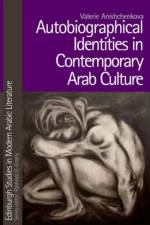
Over the last 40 years, autobiography in Arab societies has moved away from exemplary life narratives and toward more unorthodox techniques such as erotic memoir writing, postmodernist self-fragmentation, cinematographic self-projection and blogging. Valerie Anishchenkova argues that the Arabic autobiographical genre has evolved into a mobile, unrestricted category arming authors with narrative tools to articulate their selfhood. Reading works from Arab nations such as Egypt, Iraq, Morocco, Syria and Lebanon, Anishchenkova connects the century's rapid political and ideological developments to increasing autobiographical experimentation in Arabic works. The immense scope of her study also forces consideration of film and online forms of self-representation and offers a novel theoretical framework to these various modes of autobiographical cultural production.
Abonner på vårt nyhetsbrev og få rabatter og inspirasjon til din neste leseopplevelse.
Ved å abonnere godtar du vår personvernerklæring.