

























Gjør som tusenvis av andre bokelskere
Abonner på vårt nyhetsbrev og få rabatter og inspirasjon til din neste leseopplevelse.
Ved å abonnere godtar du vår personvernerklæring.Du kan når som helst melde deg av våre nyhetsbrev.

Human Kindness and the Smell of Warm Croissants makes philosophy fun, tactile, and popular. Moral thinking is simple, Ruwen Ogien argues, and as inherent as the senses. In our daily experiences, in the situations we confront and in the scenes we witness, we develop an understanding of right and wrong as sophisticated as the moral outlook of the world's most gifted philosophers. By drawing on this knowledge to navigate life's most perplexing problems, ethics becomes second nature.Ogien explores, through experimental philosophy and other methods, the responses nineteen real-world conundrums provoke. Is a short, mediocre life better than no life at all? Is it acceptable to kill a healthy person so his organs can save five others? Would you swap a "e;natural"e; life filled with frustration, disappointment, and partial success for a world in which all of your needs are met, but through artificial and mechanical means? Ogien doesn't seek to show how difficult it is to determine right from wrong or how easy it is for humans to become monsters or react like saints. Helping us tap into the wisdom and feeling we already possess in our ethical "e;toolboxes,"e; Ogien instead encourages readers to question moral presuppositions and rules; embrace an intuitive sense of dignity, virtue, and justice; and pursue a pluralist ethics suited to the principles of human kindness.
Over the past forty years, the criminal justice system in the United States has engaged in a very expensive policy failure, attempting to punish its way to public safety, with dismal results. So-called "e;tough on crime"e; policies have not only failed to effectively reduce crime, recidivism, and victimization but also created an incredibly inefficient system that routinely fails the public, taxpayers, crime victims, criminal offenders, their families, and their communities.Strategies that focus on behavior change are much more productive and cost effective for reducing crime than punishment, and in this book, William R. Kelly discusses the policy, process, and funding innovations and priorities that the United States needs to effectively reduce crime, recidivism, victimization, and cost. He recommends proactive, evidence-based interventions to address criminogenic behavior; collaborative decision making from a variety of professions and disciplines; and a focus on innovative alternatives to incarceration, such as problem-solving courts and probation. Students, professionals, and policy makers alike will find in this comprehensive text a bracing discussion of how our criminal justice system became broken and the best strategies by which to fix it.
In this unique, well-illustrated book, readers learn how fifty financial corporations came to dominate the U.S. banking system and their impact on the nation's political, social, and economic growth. A story that spans more than two centuries of war, crisis, and opportunity, this account reminds readers that American banking was never a fixed enterprise but has evolved in tandem with the country.More than 225 years have passed since Alexander Hamilton created one of the nation's first commercial banks. Over time, these institutions have changed hands, names, and locations, reflecting a wave of mergers, acquisitions, and other restructuring efforts that echo changes in American finance. Some names, such as Bank of America and Wells Fargo, will be familiar to readers. The origins of others, including Zions Bancorporation, founded by Brigham Young and owned by the Mormon Church until 1960, are surprising. Exploring why some banks failed and others thrived, this book wonders, in light of the 2008 financial crisis, whether recent consolidations have reached or even exceeded economically rational limits. A key text for navigating the complex terrain of American finance, this volume draws a fascinating family tree for projecting the financial future of a nation.
One of Asia's best-respected writers on business and economy, Hong Kong-based author Mark L. Clifford provides a behind-the-scenes look at what companies in China, India, Japan, Korea, the Philippines, Indonesia, Hong Kong, Singapore, and Thailand are doing to build businesses that will lessen the environmental impact of Asia's extraordinary economic growth. Dirty air, foul water, and hellishly overcrowded cities are threatening to choke the region's impressive prosperity. Recognizing a business opportunity in solving social problems, Asian businesses have developed innovative responses to the region's environmental crises. From solar and wind power technologies to green buildings, electric cars, water services, and sustainable tropical forestry, Asian corporations are upending old business models in their home countries and throughout the world. Companies have the money, the technology, and the people to act-yet, as Clifford emphasizes, support from the government (in the form of more effective, market-friendly policies) and the engagement of civil society are crucial for a region-wide shift to greener business practices. Clifford paints detailed profiles of what some of these companies are doing and includes a unique appendix that encapsulates the environmental business practices of more than fifty companies mentioned in the book.
To some, food allergies seem like fabricated cries for attention. To others, they pose a dangerous health threat. Food allergies are bound up with so many personal and ideological concerns that it is difficult to determine what is medical and what is myth. Another Person's Poison parses the political, economic, cultural, and genuine health factors of a phenomenon that dominates our interactions with others and our understanding of ourselves. For most of the twentieth century, food allergies were considered a fad or junk science. While many physicians and clinicians argued that certain foods could cause a range of chronic problems, from asthma and eczema to migraines and hyperactivity, others believed that allergies were psychosomatic. 'This book traces the trajectory of this debate and its effect on public-health policy and the production, manufacture, and consumption of food. Are rising allergy rates purely the result of effective lobbying and a booming industry built on self-diagnosis and expensive remedies? Or should physicians become more flexible in their approach to food allergies and more careful in their diagnoses? Exploring the issue from scientific, political, economic, social, and patient-centered perspectives, this book is the first to engage fully with the history of a major modern affliction, illuminating society's troubled relationship with food, disease, nature, and the creation of medical knowledge.
Drawing on twenty-four years of experience in government, Michael H. Armacost explores how the contours of the U.S. presidential election system influence the content and conduct of American foreign policy. He examines how the nomination battle impels candidates to express deference to the foreign policy DNA of their party and may force an incumbent to make wholesale policy adjustments to fend off an intra-party challenge for the nomination. He describes the way reelection campaigns can prod a chief executive to fix long-neglected problems, kick intractable policy dilemmas down the road, settle for modest course corrections, or scapegoat others for policies gone awry.Armacost begins his book with the quest for the presidential nomination and then moves through the general election campaign, the ten-week transition period between Election Day and Inauguration Day, and the early months of a new administration. He notes that campaigns rarely illuminate the tough foreign policy choices that the leader of the nation must make, and he offers rare insight into the challenge of aligning the roles of an outgoing incumbent (who performs official duties despite ebbing power) and the incoming successor (who has no official role but possesses a fresh political mandate). He pays particular attention to the pressure for new presidents to act boldly abroad in the early months of his tenure, even before a national security team is in place, decision-making procedures are set, or policy priorities are firmly established. He concludes with an appraisal of the virtues and liabilities of the system, including suggestions for modestly adjusting some of its features while preserving its distinct character.
In the poorest countries, such as Afghanistan, Haiti, and Mali, the United States has struggled to work with governments whose corruption and lack of capacity are increasingly seen to be the cause of instability and poverty. The development and security communities call for "e;good governance"e; to improve the rule of law, democratic accountability, and the delivery of public goods and services. The United States and other rich liberal democracies insist that this is the only legitimate model of governance. Yet poor governments cannot afford to govern according to these ideals and instead are compelled to rely more heavily on older, cheaper strategies of holding power, such as patronage and repression. The unwillingness to admit that poor governments do and must govern differently has cost the United States and others inestimable blood and coin. Informed by years of fieldwork and drawing on practitioner work and academic scholarship in politics, economics, law, and history, this book explains the origins of poor governments in the formation of the modern state system and describes the way they govern. It argues that, surprisingly, the effort to stigmatize and criminalize the governance of the poor is both fruitless and destabilizing. The United States must pursue a more effective foreign policy to engage poor governments and acknowledge how they govern.
Hillary Rodham Clinton was the first Secretary of State to declare the subjugation of women worldwide a serious threat to U.S. national security. Known as the Hillary Doctrine, her stance was the impetus behind the 2010 Quadrennial Diplomatic and Development Review of U.S. foreign policy, formally committing America to the proposition that the empowerment of women is a stabilizing force for domestic and international peace.Blending history, fieldwork, theory, and policy analysis while incorporating perspectives from officials and activists on the front lines of implementation, this book is the first to thoroughly investigate the Hillary Doctrine in principle and practice. Does the insecurity of women make nations less secure? How has the doctrine changed the foreign policy of the United States and altered its relationship with other countries such as China and Saudi Arabia? With studies focusing on Guatemala, Afghanistan, and Yemen, this invaluable policy text closes the gap between rhetoric and reality, confronting head-on what the future of fighting such an entrenched enemy entails. The research reports directly on the work being done by U.S. government agencies, including the Office of Global Women's Issues, established by Clinton during her tenure at the State Department, and explores the complexity and pitfalls of attempting to improve the lives of women while safeguarding the national interest.
In his new history of food, acclaimed historian Massimo Montanari traces the development of medieval tastes-both culinary and cultural-from raw materials to market and captures their reflections in today's food trends. Tying the ingredients of our diet evolution to the growth of human civilization, he immerses readers in the passionate debates and bold inventions that transformed food from a simple staple to a potent factor in health and a symbol of social and ideological standing.Montanari returns to the prestigious Salerno school of medicine, the "e;mother of all medical schools,"e; to plot the theory of food that took shape in the twelfth century. He reviews the influence of the Near Eastern spice routes, which introduced new flavors and cooking techniques to European kitchens, and reads Europe's earliest cookbooks, which took cues from old Roman practices that valued artifice and mixed flavors. Dishes were largely low-fat, and meats and fish were seasoned with vinegar, citrus juices, and wine. He highlights other dishes, habits, and battles that mirror contemporary culinary identity, including the refinement of pasta, polenta, bread, and other flour-based foods; the transition to more advanced cooking tools and formal dining implements; the controversy over cooking with oil, lard, or butter; dietary regimens; and the consumption and cultural meaning of water and wine. As people became more cognizant of their physicality, individuality, and place in the cosmos, Montanari shows, they adopted a new attitude toward food, investing as much in its pleasure and possibilities as in its acquisition.
Critically engaging the work of Immanuel Kant, Hannah Arendt, Martin Heidegger, and Jacques Derrida together with her own observations on contemporary politics, environmental degradation, and the pursuit of a just and sustainable world, Kelly Oliver lays the groundwork for a politics and ethics that embraces otherness without exploiting difference. Rooted firmly in human beings' relationship to the planet and to each other, Oliver shows peace is possible only if we maintain our ties to earth and world.Oliver begins with Immanuel Kant and his vision of politics grounded on earth as a finite surface shared by humans. She then incorporates Hannah Arendt's belief in plural worlds constituted through human relationships; Martin Heidegger's warning that alienation from the Earth endangers not only politics but also the very essence of being human; and Jacques Derrida's meditations on the singular worlds individuals, human and otherwise, create and how they inform the reality we inhabit. Each of these theorists, Oliver argues, resists the easy idealism of world citizenship and globalism, yet they all think about the earth against the globe to advance a grounded ethics. They contribute to a philosophy that avoids globalization's totalizing and homogenizing impulses and instead help build a framework for living within and among the world's rich biodiversity.
Bollywood is India's most popular entertainment and one of its most powerful social forces. Its blockbusters contest ideas about state formation, capture the nation's dispersed anxieties, and fabricate public fantasies of what constitutes "e;India."e; Written by an award-winning scholar of popular culture and postcolonial modernity, Bollywood's India analyzes the role of the cinema's most popular blockbusters in making, unmaking, and remaking modern India. With dazzling interpretive virtuosity, Priya Joshi provides an interdisciplinary account of popular cinema as a space that filters politics and modernity for its viewers. Themes such as crime and punishment, family and individuality, vigilante and community capture the diffuse aspirations of an evolving nation. Summoning India's tumultuous 1970s as an interpretive lens, Joshi reveals the cinema's social work across decades that saw the decline of studios, the rise of the multi-starrer genre, and the arrival of corporate capital and new media platforms. In elegantly crafted studies of iconic and less familiar films, including Awara (1951), Ab Dilli Dur Nahin (1957), Deewaar (1975), Sholay (1975), Dil Se (1998), A Wednesday (2008), and 3 Idiots (2009), Joshi powerfully conveys the pleasures and politics of Bollywood blockbusters.
The United Nations's groundbreaking Arms Trade Treaty (ATT), which went into effect in 2014, sets legally binding standards to regulate global arms exports and reflects the growing concerns toward the significant role that small and major conventional arms play in perpetuating human rights violations, conflict, and societal instability worldwide. Many countries that once staunchly opposed shared export controls and their perceived threat to political and economic autonomy are now beginning to embrace numerous agreements, such as the ATT and the EU Code of Conduct. Jennifer L. Erickson explores the reasons top arms-exporting democracies have put aside past sovereignty, security, and economic worries in favor of humanitarian arms transfer controls, and she follows the early effects of this about-face on export practice. She begins with a brief history of failed arms export control initiatives and then tracks arms transfer trends over time. Pinpointing the normative shifts in the 1990s that put humanitarian arms control on the table, she reveals that these states committed to these policies out of concern for their international reputations. She also highlights how arms trade scandals threaten domestic reputations and thus help improve compliance. Using statistical data and interviews conducted in France, Germany, Belgium, the United Kingdom, and the United States, Erickson challenges existing IR theories of state behavior while providing insight into the role of reputation as a social mechanism and the importance of government transparency and accountability in generating compliance with new norms and rules.
Families of Virtue articulates the critical role of the parent-child relationship in the moral development of infants and children. Building on thinkers and scientists across time and disciplines, from ancient Greek and Chinese philosophers to contemporary feminist ethicists and attachment theorists, this book takes an effective approach for strengthening families and the character of children.Early Confucian philosophers argue that the general ethical sensibilities we develop during infancy and early childhood form the basis for nearly every virtue and that the parent-child relationship is the primary context within which this growth occurs. Joining these views with scientific work on early childhood, Families of Virtue shows how Western psychology can reinforce and renew the theoretical underpinnings of Confucian thought and how Confucian philosophers can affect positive social and political change in our time, particularly in such areas as paid parental leave, breastfeeding initiatives, marriage counseling, and family therapy.
Marching Through Suffering is a deeply personal portrait of the ravages of famine and totalitarian politics in modern North Korea since the 1990s. Featuring interviews with more than thirty North Koreans who defected to Seoul and Tokyo, the book explores the subjective experience of the nation's famine and its citizens' social and psychological strategies for coping with the regime.These oral testimonies show how ordinary North Koreans, from farmers and soldiers to students and diplomats, framed the mounting struggles and deaths surrounding them as the famine progressed. Following the development of the disaster, North Koreans deployed complex discursive strategies to rationalize the horror and hardship in their lives, practices that maintained citizens' loyalty to the regime during the famine and continue to sustain its rule today. Casting North Koreans as a diverse people with a vast capacity for adaptation rather than as a monolithic entity passively enduring oppression, Marching Through Suffering positions personal history as key to the interpretation of political violence.
Many associate terrorism with irrational behavior and believe only lunatics could perpetuate such horrific acts. Global Alert debunks this myth by anatomizing the rationale behind modern terrorism. It draws a distinct picture of its root and instrumental causes and plots the different stages of a terrorist attack, from indoctrination and recruitment to planning, preparation, and launch.Global Alert also exposes the measured exploitation of democratic institutions by terrorists to further their goals. Despite its strong capabilities and extensive resources, the modern liberal-democratic state is nevertheless subject to the rules of war, which partially restrict the state's ability to operate and maneuver. Boaz Ganor shows how terrorist organizations exploit these values to paralyze or neutralize the states they oppose. In outlining this new "e;hybrid"e; terrorist organization and its activity in both the military-terrorist arena and the political-welfare arena, Ganor advances an international doctrine for governing military operations between state and nonstate actors as part of a new type of armed conflict termed "e;multidimensional warfare."e;
Evolutionary theory made its stage debut as early as the 1840s, reflecting a scientific advancement that was fast changing the world. Tracing this development in dozens of mainstream European and American plays, as well as in circus, vaudeville, pantomime, and "e;missing link"e; performances, Theatre and Evolution from Ibsen to Beckett reveals the deep, transformative entanglement among science, art, and culture in modern times.The stage proved to be no mere handmaiden to evolutionary science, though, often resisting and altering the ideas at its core. Many dramatists cast suspicion on the arguments of evolutionary theory and rejected its claims, even as they entertained its thrilling possibilities. Engaging directly with the relation of science and culture, this book considers the influence of not only Darwin but also Lamarck, Chambers, Spencer, Wallace, Haeckel, de Vries, and other evolutionists on 150 years of theater. It shares significant new insights into the work of Ibsen, Shaw, Wilder, and Beckett, and writes female playwrights, such as Susan Glaspell and Elizabeth Baker, into the theatrical record, unpacking their dramatic explorations of biological determinism, gender essentialism, the maternal instinct, and the "e;cult of motherhood."e;It is likely that more people encountered evolution at the theater than through any other art form in the late nineteenth and early twentieth centuries. Considering the liveliness and immediacy of the theater and its reliance on a diverse community of spectators and the power that entails, this book is a key text for grasping the extent of the public's adaptation to the new theory and the legacy of its representation on the perceived legitimacy (or illegitimacy) of scientific work.
Conducting the first comprehensive study of films that do not move, Justin Remes challenges the primacy of motion in cinema and tests the theoretical limits of film aesthetics and representation. Reading experimental films such as Andy Warhol's Empire (1964), the Fluxus work Disappearing Music for Face (1965), Michael Snow's So Is This (1982), and Derek Jarman's Blue (1993), he shows how motionless films defiantly showcase the static while collapsing the boundaries between cinema, photography, painting, and literature. Analyzing four categories of static film--furniture films, designed to be viewed partially or distractedly; protracted films, which use extremely slow motion to impress stasis; textual films, which foreground the static display of letters and written words; and monochrome films, which display a field of monochrome color as their image--Remes maps the interrelations between movement, stillness, and duration and their complication of cinema's conventional function and effects. Arguing all films unfold in time, he suggests duration is more fundamental to cinema than motion, initiating fresh inquiries into film's manipulation of temporality, from rigidly structured works to those with more ambiguous and open-ended frameworks. Remes's discussion integrates the writings of Roland Barthes, Gilles Deleuze, Tom Gunning, Rudolf Arnheim, Raymond Bellour, and Noel Carroll and will appeal to students of film theory, experimental cinema, intermedia studies, and aesthetics.
Within intellectual paradigms that privilege mind over matter, dance has long appeared as a marginal, derivative, or primitive art. Drawing support from theorists and artists who embrace matter as dynamic and agential, this book offers a visionary definition of dance that illuminates its constitutive work in the ongoing evolution of human persons. Why We Dance introduces a philosophy of bodily becoming that posits bodily movement as the source and telos of human life. Within this philosophy, dance appears as an activity that humans evolved to do as the enabling condition of their best bodily becoming. Weaving theoretical reflection with accounts of lived experience, this book positions dance as a catalyst in the development of human consciousness, compassion, ritual proclivity, and ecological adaptability. Aligning with trends in new materialism, affect theory, and feminist philosophy, as well as advances in dance and religious studies, this work reveals the vital role dance can play in reversing the trajectory of ecological self-destruction along which human civilization is racing.
Hegel's "e;highway of despair,"e; introduced in his Phenomenology of Spirit, is the tortured path traveled by "e;natural consciousness"e; on its way to freedom. Despair, the passionate residue of Hegelian critique, also indicates fugitive opportunities for freedom and preserves the principle of hope against all hope. Analyzing the works of an eclectic cast of thinkers, Robyn Marasco considers the dynamism of despair as a critical passion, reckoning with the forms of historical life forged along Hegel's highway. The Highway of Despair follows Theodor Adorno, Georges Bataille, and Frantz Fanon as they each read, resist, and reconfigure a strand of thought in Hegel's Phenomenology of Spirit. Confronting the twentieth-century collapse of a certain revolutionary dialectic, these thinkers struggle to revalue critical philosophy and recast Left Hegelianism within the contexts of genocidal racism, world war, and colonial domination. Each thinker also re-centers the role of passion in critique. Arguing against more recent trends in critical theory that promise an escape from despair, Marasco shows how passion frustrates the resolutions of reason and faith. Embracing the extremism of what Marx, in the spirit of Hegel, called the "e;ruthless critique of everything existing,"e; she affirms the contemporary purchase of radical critical theory, resulting in a passionate approach to political thought.
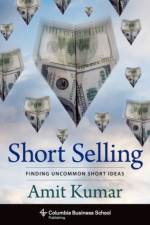
When an investor believes a stock is overvalued and will soon drop in price, he might decide to "e;short"e; it. First, he borrows an amount of the stock, and then sells it. He waits for the stock to tank before buying back the same amount of shares at a deflated price. After returning the shares to his lender, he pockets the difference-unless any one of several hard-to-predict variables interferes, and the stock fails to drop. Since these variables are so hard to predict, short selling is difficult for even seasoned investors. It takes great talent and experience to isolate the best short ideas for falling stocks-skills Amit Kumar developed and honed over decades of market analysis and trading. This book shares his short-selling framework, built on themes common to falling stocks and the market's endemic strengths and cycles. Featuring key case studies and exclusive interviews with successful fund managers Bill Ackman (Pershing Square Capital Management) and Mark Roberts (Off Wall Street Consulting Group), Kumar shows investors how to avoid traps and profit from well-researched short ideas. Investors may not always act on short ideas, but they can avoid losses by using Kumar's framework to identify overvalued stocks. Professionals and amateur investors alike will benefit from this fundamental research approach, which transforms short selling into a long-term strategy.
Spirituality often plays a critical role in health and wellness, yet few have explored in detail the process through which practitioners can identify and use clients' spiritual strengths to their mutual advantage. To address this gap, this practice-oriented text equips helping professionals with the tools they need to administer spiritual assessments ethically and professionally. David R. Hodge outlines a number of assessment approaches, including an implicit method for evaluating "e;secular"e; forms of spirituality. Case examples illustrate the implementation of these strategies in different clinical settings and with groups from diverse racial, geographic, and socioeconomic backgrounds.
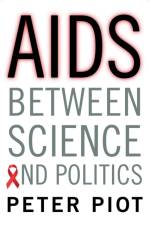
Peter Piot, founding executive director of the Joint United Nations Programme on HIV/AIDS (UNAIDS), recounts his experience as a clinician, scientist, and activist fighting the disease from its earliest manifestation to today. The AIDS pandemic was not only catastrophic to the health of millions worldwide but also fractured international relations, global access to new technologies, and public health policies in nations across the globe. As he struggled to get ahead of the disease, Piot found science does little good when it operates independently of politics and economics, and politics is worthless if it rejects scientific evidence and respect for human rights.Piot describes how the epidemic altered global attitudes toward sexuality, the character of the doctor-patient relationship, the influence of civil society in international relations, and traditional partisan divides. AIDS thrust health into national and international politics where, he argues, it rightly belongs. The global reaction to AIDS over the past decade is the positive result of this partnership, showing what can be achieved when science, politics, and policy converge on the ground. Yet it remains a fragile achievement, and Piot warns against complacency and the consequences of reduced investments. He refuses to accept a world in which high levels of HIV infection are the norm. Instead, he explains how to continue to reduce the incidence of the disease to minute levels through both prevention and treatment, until a vaccine is discovered.
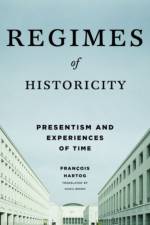
Francois Hartog explores crucial moments of change in society's "e;regimes of historicity,"e; or its ways of relating to the past, present, and future. Inspired by Hannah Arendt, Reinhart Koselleck, and Paul Ricoeur, Hartog analyzes a broad range of texts, positioning The Odyssey as a work on the threshold of historical consciousness and contrasting it with an investigation of the anthropologist Marshall Sahlins's concept of "e;heroic history."e; He tracks changing perspectives on time in Chateaubriand's Historical Essay and Travels in America and sets them alongside other writings from the French Revolution. He revisits the insights of the French Annales School and situates Pierre Nora's Realms of Memory within a history of heritage and today's presentism, from which he addresses Jonas's notion of our responsibility for the future. Our presentist present is by no means uniform or clear-cut, and it is experienced very differently depending on the position we occupy in society. We are caught up in global movement and accelerated flows, or else condemned to the life of casual workers, living from hand to mouth in a stagnant present, with no recognized past, and no real future either (since the temporality of plans and projects is inaccessible). The present is therefore experienced as emancipation or enclosure, and the perspective of the future is no longer reassuring, since it is perceived not as a promise, but as a threat. Hartog's resonant readings show us how the motor of history(-writing) has stalled and help us understand the contradictory qualities of our contemporary presentist relation to time.
Ethical loneliness is the experience of being abandoned by humanity, compounded by the cruelty of wrongs not being acknowledged. It is the result of multiple lapses on the part of human beings and political institutions that, in failing to listen well to survivors, deny them redress by negating their testimony and thwarting their claims for justice. Jill Stauffer examines the root causes of ethical loneliness and how those in power revise history to serve their own ends rather than the needs of the abandoned. Out of this discussion, difficult truths about the desire and potential for political forgiveness, transitional justice, and political reconciliation emerge. Moving beyond a singular focus on truth commissions and legal trials, she considers more closely what is lost in the wake of oppression and violence, how selves and worlds are built and demolished, and who is responsible for re-creating lives after they are destroyed. Stauffer boldly argues that rebuilding worlds and just institutions after violence is a broad obligation and that those who care about justice must first confront their own assumptions about autonomy, liberty, and responsibility before an effective response to violence can take place. In building her claims, Stauffer draws on the work of Emmanuel Levinas, Jean Amery, Eve Sedgwick, and Friedrich Nietzsche, as well as concrete cases of justice and injustice across the world.
Moral hazard-the tendency to change behavior when the cost of that behavior will be borne by others-is a particularly tricky question when considering health care. Kenneth J. Arrow's seminal 1963 paper on this topic (included in this volume) was one of the first to explore the implication of moral hazard for health care, and Amy Finkelstein-recognized as one of the world's foremost experts on the topic-here examines this issue in the context of contemporary American health care policy. Drawing on research from both the original RAND Health Insurance Experiment and her own research, including a 2008 Health Insurance Experiment in Oregon, Finkelstein presents compelling evidence that health insurance does indeed affect medical spending and encourages policy solutions that acknowledge and account for this. The volume also features commentaries and insights from other renowned economists, including an introduction by Joseph P. Newhouse that provides context for the discussion, a commentary from Jonathan Gruber that considers provider-side moral hazard, and reflections from Joseph E. Stiglitz and Kenneth J. Arrow.
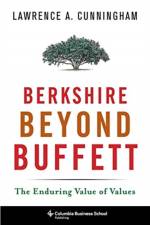
Berkshire Hathaway, the $300 billion conglomerate that Warren Buffett built, is among the world's largest and most famous corporations. Yet, for all its power and celebrity, few people understand Berkshire, and many assume it cannot survive without Buffett. This book proves them wrong. In a comprehensive portrait of the corporate culture that unites Berkshire's subsidiaries, Lawrence A. Cunningham unearths the traits that assure the conglomerate's continued prosperity. Riveting stories of each subsidiary's origins, triumphs, and journey to Berkshire reveal how managers generate economic value from intangibles like thrift, integrity, entrepreneurship, autonomy, and a sense of permanence. Rich with lessons for those wishing to profit from the Berkshire model, this engaging book is a valuable read for entrepreneurs, business owners, managers, family business members, and investors, and it is an important resource for scholars of corporate stewardship. General readers will enjoy learning how an iconoclastic businessman transformed a struggling textile company into a corporate legacy.
Engaged Journalism explores the changing relationship between news producers and audiences and the methods journalists can use to secure the attention of news consumers. Based on Jake Batsell's extensive experience and interaction with more than twenty innovative newsrooms, this book shows that, even as news organizations are losing their agenda-setting power, journalists can still thrive by connecting with audiences through online technology and personal interaction.Batsell conducts interviews with and observes more than two dozen traditional and startup newsrooms across the United States and the United Kingdom. Traveling to Seattle, London, New York City, and Kalamazoo, Michigan, among other locales, he attends newsroom meetings, combs through internal documents, and talks with loyal readers and online users to document the successes and failures of the industry's experiments with paywalls, subscriptions, nonprofit news, live events, and digital tools including social media, data-driven interactives, news games, and comment forums. He ultimately concludes that, for news providers to survive, they must constantly listen to, interact with, and fulfill the specific needs of their audiences, whose attention can no longer be taken for granted. Toward that end, Batsell proposes a set of best practices based on effective, sustainable journalistic engagement.
In this concise yet thorough history of America in the 1980s, Doug Rossinow takes the full measure of Ronald Reagan's presidency and the ideology of Reaganism. Believers in libertarian economics and a muscular foreign policy, Reaganite conservatives in the 1980s achieved impressive success in their efforts to transform American government, politics, and society, ushering in the political and social system Americans inhabit today.Rossinow links current trends in economic inequality to the policies and social developments of the Reagan era. He reckons with the racial politics of Reaganism and its debt to the backlash generated by the civil rights movement, as well as Reaganism's entanglement with the politics of crime and the rise of mass incarceration. Rossinow narrates the conflicts that rocked U.S. foreign policy toward Central America, and he explains the role of the recession during the early 1980s in the decline of manufacturing and the growth of a service economy. From the widening gender gap to the triumph of yuppies and rap music, from Reagan's tax cuts and military buildup to the celebrity of Michael Jackson and Madonna, from the era's Wall Street scandals to the successes of Bill Gates and Sam Walton, from the first "e;war on terror"e; to the end of the Cold War and the brink of America's first war with Iraq, this history, lively and readable yet sober and unsparing, gives readers vital perspective on a decade that dramatically altered the American landscape.
Through a comparative analysis of the novels of Roberto Bolano and the fictional work of Cesar Aira, Mario Bellatin, Diamela Eltit, Chico Buarque, Alberto Fuguet, and Fernando Vallejo, among other leading authors, Hector Hoyos defines and explores new trends in how we read and write in a globalized era. Calling attention to fresh innovations in form, voice, perspective, and representation, he also affirms the lead role of Latin American authors in reshaping world literature. Focusing on post-1989 Latin American novels and their representation of globalization, Hoyos considers the narrative techniques and aesthetic choices Latin American authors make to assimilate the conflicting forces at work in our increasingly interconnected world. Challenging the assumption that globalization leads to cultural homogenization, he identifies the rich textual strategies that estrange and re-mediate power relations both within literary canons and across global cultural hegemonies. Hoyos shines a light on the unique, avant-garde phenomena that animate these works, such as modeling literary circuits after the dynamics of the art world, imagining counterfactual "e;Nazi"e; histories, exposing the limits of escapist narratives, and formulating textual forms that resist worldwide literary consumerism. These experiments help reconfigure received ideas about global culture and advance new, creative articulations of world consciousness.
The shape, lineation, and prosody of postmodern poems are extravagantly inventive, imbuing both form and content with meaning. Through a survey of American poetry and poetics from the end of World War II to the present, Michael Golston traces the proliferation of these experiments to a growing fascination with allegory in philosophy, linguistics, critical theory, and aesthetics, introducing new strategies for reading American poetry while embedding its formal innovations within the history of intellectual thought.Beginning with Walter Benjamin's explicit understanding of Surrealism as an allegorical art, Golston defines a distinct engagement with allegory among philosophers, theorists, and critics from 1950 to today. Reading Fredric Jameson, Angus Fletcher, Roland Barthes, and Craig Owens, and working with the semiotics of Charles Sanders Pierce, Golston develops a theory of allegory he then applies to the poems of Louis Zukofsky and Lorine Niedecker, who, he argues, wrote in response to the Surrealists; the poems of John Ashbery and Clark Coolidge, who incorporated formal aspects of filmmaking and photography into their work; the groundbreaking configurations of P. Inman, Lyn Hejinian, Myung Mi Kim, and the Language poets; Susan Howe's "e;Pierce-Arrow,"e; which he submits to semiotic analysis; and the innovations of Craig Dworkin and the conceptualists. Revitalizing what many consider to be a staid rhetorical trope, Golston positions allegory as a creative catalyst behind American poetry's postwar avant-garde achievements.
Abonner på vårt nyhetsbrev og få rabatter og inspirasjon til din neste leseopplevelse.
Ved å abonnere godtar du vår personvernerklæring.