




















Gjør som tusenvis av andre bokelskere
Abonner på vårt nyhetsbrev og få rabatter og inspirasjon til din neste leseopplevelse.
Ved å abonnere godtar du vår personvernerklæring.Du kan når som helst melde deg av våre nyhetsbrev.

Though coming from different and distinct intellectual traditions, Richard Rorty and Gianni Vattimo are united in their criticism of the metaphysical tradition. The challenges they put forward extend beyond philosophy and entail a reconsideration of the foundations of belief in God and the religious life. They urge that the rejection of metaphysical truth does not necessitate the death of religion; instead it opens new ways of imagining what it is to be religious-ways that emphasize charity, solidarity, and irony. This unique collaboration, which includes a dialogue between the two philosophers, is notable not only for its fusion of pragmatism (Rorty) and hermeneutics (Vattimo) but also for its recognition of the limits of both traditional religious belief and modern secularism.In "e;Anticlericalism and Atheism"e; Rorty discusses Vattimo's work Belief and argues that the end of metaphysics paves the way for an anti-essentialist religion. Rorty's conception of religion, determined by private motives, is designed to produce the gospel's promise that henceforth God will not consider humanity as a servant but as a friend. In "e;The Age of Interpretation,"e; Vattimo, who is both a devout Catholic and a frequent critic of the church, explores the surprising congruence between Christianity and hermeneutics in light of the dissolution of metaphysical truth. As in hermeneutics, interpretation is central to Christianity, which introduced the world to the principle of interiority, dissolving the experience of objective reality into "e;listening to and interpreting messages."e; The lively dialogue that concludes this volume, moderated and edited by Santiago Zabala, analyzes the future of religion together with the political, social, and historical aspects that characterize our contemporary postmodern, postmetaphysical, and post-Christian world.
In Woody Allen's 1973 film, Sleeper, a character wakes up in the future to learn that civilization was destroyed when "e;a man by the name of Albert Shanker got hold of a nuclear warhead."e; Shanker was condemned by many when he shut down the New York City school system in the bitter strikes of 1967 and 1968, and he was denounced for stirring up animosity between black parents and Jewish teachers. Later, however, he built alliances with blacks, and at the time of his death in 1997, such figures as Bill Clinton celebrated Shanker for being an educational reformer, a champion of equality, and a promoter of democracy abroad. Shanker lived the lives of several men bound into one. In his early years, he was the "e;George Washington of the teaching profession,"e; helping to found modern teacher unionism. During the 1980s, as head of the American Federation of Teachers, he became the nation's leading education reformer. Shanker supported initiatives for high education standards and accountability, teacher-led charter schools, and a system of "e;peer review"e; to weed out inadequate teachers. Throughout his life, Shanker also fought for "e;tough liberalism,"e; an ideology favoring public education and trade unions but also colorblind policies and a robust anticommunism all of which, Shanker believed, were vital to a commitment to democracy. Although he had a coherent worldview, Shanker was a complex individual. He began his career as a pacifist but evolved into a leading defense and foreign policy hawk. He was an intellectual and a populist; a gifted speaker who failed at small talk; a liberal whose biggest enemies were often on the left; a talented writer who had to pay to have his ideas published; and a gruff unionist who enjoyed shopping and detested sports. Richard D. Kahlenberg's biography is the first to offer a complete narrative of one of the most important voices in public education and American politics in the last half century. At a time when liberals are accused of not knowing what they stand for, Tough Liberal illuminates an engaging figure who suggested an alternative liberal path.
Tucked away in a garden on the edge of Paris is a multimedia archive like no other: Albert Kahn's Archives de la Planete (1908-1931). Kahn's vast photo-cinematographic experiment preserved world memory through the privileged lens of everyday life, and Counter-Archive situates this project in its biographic, intellectual, and cinematic contexts. Tracing the archive's key influences, such as the philosopher Henri Bergson, the geographer Jean Brunhes, and the biologist Jean Comandon, Paula Amad maps an alternative landscape of French cultural modernity in which vitalist philosophy cross-pollinated with early film theory, documentary film with the avant-garde, cinematic models of temporality with the early Annales school of history, and film's appropriation of the planet with human geography and colonial ideology. At the heart of the book is an insightful meditation upon the transformed concept of the archive in the age of cinema and an innovative argument about film's counter-archival challenge to history. The first comprehensive study of Kahn's films, Counter-Archive also offers a vital historical perspective on debates involving archives, media, and memory.
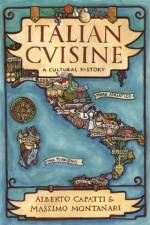
Italy, the country with a hundred cities and a thousand bell towers, is also the country with a hundred cuisines and a thousand recipes. Its great variety of culinary practices reflects a history long dominated by regionalism and political division, and has led to the common conception of Italian food as a mosaic of regional customs rather than a single tradition. Nonetheless, this magnificent new book demonstrates the development of a distinctive, unified culinary tradition throughout the Italian peninsula.Alberto Capatti and Massimo Montanari uncover a network of culinary customs, food lore, and cooking practices, dating back as far as the Middle Ages, that are identifiably Italian:o Italians used forks 300 years before other Europeans, possibly because they were needed to handle pasta, which is slippery and dangerously hot.o Italians invented the practice of chilling drinks and may have invented ice cream.o Italian culinary practice influenced the rest of Europe to place more emphasis on vegetables and less on meat.o Salad was a distinctive aspect of the Italian meal as early as the sixteenth century.The authors focus on culinary developments in the late medieval, Renaissance, and Baroque eras, aided by a wealth of cookbooks produced throughout the early modern period. They show how Italy's culinary identities emerged over the course of the centuries through an exchange of information and techniques among geographical regions and social classes. Though temporally, spatially, and socially diverse, these cuisines refer to a common experience that can be described as Italian. Thematically organized around key issues in culinary history and beautifully illustrated, Italian Cuisine is a rich history of the ingredients, dishes, techniques, and social customs behind the Italian food we know and love today.
From Los Angeles and New York to Chicago and Miami, street gangs are regarded as one of the most intractable crime problems facing our cities, and a vast array of resources is being deployed to combat them. This book chronicles the astounding self-transformation of one of the most feared gangs in the United States into a social movement acting on behalf of the dispossessed, renouncing violence and the underground economy, and requiring school attendance for membership.What caused the Almighty Latin King and Queen Nation of New York City to make this remarkable transformation? And why has it not happened to other gangs elsewhere? David C. Brotherton and Luis Barrios were given unprecedented access to new and never-before-published material by and about the Latin Kings and Queens, including the group's handbook, letters written by members, poems, rap songs, and prayers. In addition, they interviewed more than one hundred gang members, including such leaders as King Tone and King Hector. Featuring numerous photographs by award-winning photojournalist Steve Hart, the book explains the symbolic significance for the gang of hand gestures, attire, rituals, and rites of passage. Based on their inside information, the authors craft a unique portrait of the lives of the gang members and a ground-breaking study of their evolution.
Written expressly for undergraduate and graduate geologists, this book focuses on how geochemical principles can be used to solve practical problems. The attention to problem-solving reflects the authors'belief that showing how theory is useful in solving real-life problems is vital for learning. The book gives students a thorough grasp of the basic principles of the subject, balancing the traditional equilibrium perspective and the kinetic viewpoint. The first half of the book considers processes in which temperature and pressure are nearly constant. After introductions to the laws of thermodynamics, to fundamental equations for flow and diffusion, and to solution chemistry, these principles are used to investigate diagenesis, weathering, and natural waters. The second half of the book applies thermodynamics and kinetics to systems undergoing changes in temperature and pressure during magmatism and metamorphism. This revised edition incorporates new geochemical discoveries as examples of processes and pathways, with new chapters on mineral structure and bonding and on organic matter and biomarkers. Each chapter has worked problems, and the authors assume that the student has had a year of college-level chemistry and a year of calculus.Praise for the first edition"e;A truly modern geochemistry book.... Very well written and quite enjoyable to read.... An excellent basic text for graduate level instruction in geochemistry."e; -Journal of Geological Education"e;An up-to-date, broadly conceived introduction to geochemistry.... Given the recent flowering of geochemistry as an interdisciplinary science, and given the extent to which it now draws upon the fundamentals of thermodynamics and kinetics to understand earth and planetary processes, this timely and rigorous [book] is welcome indeed."e; -Geochimica et Cosmochimica Acta
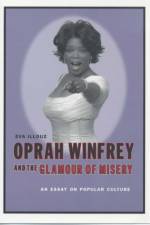
Oprah Winfrey is the protagonist of the story to be told here, but this book has broader intentions, begins Eva Illouz in this original examination of how and why this talk show host has become a pervasive symbol in American culture. Unlike studies of talk shows that decry debased cultural standards and impoverished political consciousness, Oprah Winfrey and the Glamour of Misery asks us to rethink our perceptions of culture in general and popular culture in particular.At a time when crises of morality, beliefs, value systems, and personal worth dominate both public and private spheres, Oprah's emergence as a cultural form-the Oprah persona-becomes clearer, as she successfully reiterates some of our most pressing moral questions. Drawing on nearly one hundred show transcripts; a year and a half of watching the show regularly; and analysis of magazine articles, several biographies, O Magazine, Oprah Book Club novels, self-help manuals promoted on the show, and hundreds of discussions on the Oprah Winfrey Web site, Illouz takes the Oprah industry seriously, revealing it to be a multilayered "e;textual structure"e; that initiates, stages, and performs narratives of suffering and self-improvement that resonate with a wide audience and challenge traditional models of cultural analysis. This book looks closely at Oprah's method and her message, and in the process reconsiders popular culture and the tools we use to understand it.
The Quakers in America is a multifaceted history of the Religious Society of Friends and a fascinating study of its culture and controversies today. Lively vignettes of Conservative, Evangelical, Friends General Conference, and Friends United meetings illuminate basic Quaker theology and reflect the group's diversity while also highlighting the fundamental unity within the religion. Quaker culture encompasses a rich tradition of practice even as believers continue to debate whether Quakerism is necessarily Christian, where religious authority should reside, how one transmits faith to children, and how gender and sexuality shape religious belief and behavior. Praised for its rich insight and wide-ranging perspective, The Quakers in America is a penetrating account of an influential, vibrant, and often misunderstood religious sect. Known best for their long-standing commitment to social activism, pacifism, fair treatment for Native Americans, and equality for women, the Quakers have influenced American thought and society far out of proportion to their relatively small numbers. Whether in the foreign policy arena (the American Friends Service Committee), in education (the Friends schools), or in the arts (prominent Quakers profiled in this book include James Turrell, Bonnie Raitt, and James Michener), Quakers have left a lasting imprint on American life. This multifaceted book is a concise history of the Religious Society of Friends; an introduction to its beliefs and practices; and a vivid picture of the culture and controversies of the Friends today. The book opens with lively vignettes of Conservative, Evangelical, Friends General Conference, and Friends United meetings that illuminate basic Quaker concepts and theology and reflect the group's diversity in the wake of the sectarian splintering of the nineteenth century. Yet the book also examines commonalities among American Friends that demonstrate a fundamental unity within the religion: their commitments to worship, the ministry of all believers, decision making based on seeking spiritual consensus rather than voting, a simple lifestyle, and education. Thomas Hamm shows that Quaker culture encompasses a rich tradition of practice even as believers continue to debate a number of central questions: Is Quakerism necessarily Christian? Where should religious authority reside? Is the self sacred? How does one transmit faith to children? How do gender and sexuality shape religious belief and behavior? Hamm's analysis of these debates reveals a vital religion that prizes both unity and diversity.
How did a society on the edge of collapse and dominated by wandering bands of armed men give way to a vibrant Buddhist culture, led by yogins and scholars? Ronald M. Davidson explores how the translation and spread of esoteric Buddhist texts dramatically shaped Tibetan society and led to its rise as the center of Buddhist culture throughout Asia, replacing India as the perceived source of religious ideology and tradition. During the Tibetan Renaissance (950-1200 C.E.), monks and yogins translated an enormous number of Indian Buddhist texts. They employed the evolving literature and practices of esoteric Buddhism as the basis to reconstruct Tibetan religious, cultural, and political institutions. Many translators achieved the de facto status of feudal lords and while not always loyal to their Buddhist vows, these figures helped solidify political power in the hands of religious authorities and began a process that led to the Dalai Lama's theocracy. Davidson's vivid portraits of the monks, priests, popular preachers, yogins, and aristocratic clans who changed Tibetan society and culture further enhance his perspectives on the tensions and transformations that characterized medieval Tibet.
From the streets of Seattle to corporate boardrooms to new factories in third-world nations, globalization is subject to very different and often explosively divergent interpretations. Where some see globalization as driving poor countries into further poverty, others see it as the path to economic salvation and democratic rule. With original contributions from ten eminent economists, Globalization: What's New cuts through the confusion and rhetoric to offer straightforward, incisive analysis of globalization and its future.Coming from some of globalization's most prominent supporters (David Dollar), its most vocal critics (Joseph Stiglitz), and those in-between, this collection presents diverse and original perspectives on globalization's immense reach that dig to the core of many debates. The contributors analyze recent trends in trade, immigration, and capital flows; why some poor countries have grown while others have stagnated during the past two decades; future opportunities for low-wage workers; globalization's impact on jobs and wages in poor countries and in the United States; the surprising environmental benefits of globalization; the degree to which foreign aid helps developing countries; the failures of international institutions in governing the global economy and supporting democracy; and how foreign loans and investments can wreak havoc on a nation's economy.
Al-Jazeera and other satellite television stations have transformed Arab politics over the last decade. By shattering state control over information and giving a platform to long-stifled voices, these new Arab media have challenged the status quo by encouraging open debate about Iraq, Palestine, Islamism, Arab identity, and other vital political and social issues. These public arguments have redefined what it means to be Arab and reshaped the realm of political possibility. As Marc Lynch shows, the days of monolithic Arab opinion are over. How Arab governments and the United States engage this newly confident and influential public sphere will profoundly shape the future of the Arab world.Marc Lynch draws on interviews conducted in the Middle East and analyses of Arab satellite television programs, op-ed pages, and public opinion polls to examine the nature, evolution, and influence of the new Arab public sphere. Lynch, who pays close attention to what is actually being said and talked about in the Arab world, takes the contentious issue of Iraq-which has divided Arabs like no other issue-to show how the media revolutionized the formation and expression of public opinion. He presents detailed discussions of Arab arguments about sanctions and the 2003 British and American invasion and occupation of Iraq. While Arabs strongly disagreed about Saddam's regime, they increasingly saw the effects of sanctions as a potent symbol of the suffering of all Arabs. Anger and despair over these sanctions shaped Arab views of America, their governments, and themselves. Lynch also suggests how the United States can develop and improve its engagement with the Arab public sphere. He argues that the United States should move beyond treating the Arab public sphere as either an enemy to be defeated or an object to be manipulated via public relations. Instead of wasting vast sums of money on a satellite television station nobody watches, the United States should enter the public sphere as it really exists.
Arlene Weisz and Beverly Black interview practitioners from more than fifty dating violence and sexual assault programs across the United States to provide a unique resource for effective teen dating violence prevention. Enhancing existing research with the shared wisdom of the nation's prevention community, Weisz and Black describe program goals and content, recruitment strategies, membership, structure, and community involvement in practitioners' own words. Their comprehensive approach reveals the core techniques that should be a part of any successful prevention program, including theoretical consistency, which contributes to sound content development, and peer education and youth leadership, which empower participants and keep programs relevant.Weisz and Black show that multisession programs are most useful in preventing violence and assault, because they enable participants to learn new behaviors and change entrenched attitudes. Combining single- and mixed-gender sessions, as well as steering discussions away from the assignment of blame, also yield positive results. The authors demonstrate that productive education remains sensitive to differences in culture and sexual orientation and includes experiential exercises and role-playing. Manuals help in guiding educators and improving evaluation, but they should also allow adolescents to direct the discussion. Good programs regularly address teachers and parents. Ultimately, though, Weisz and Black find that the ideal program retains prevention educators long after the apprentice stage, encouraging self-evaluation and new interventions based on the wisdom that experience brings.
Home is a powerful metaphor guiding the literature of African Americans throughout the twentieth century. While scholars have given considerable attention to the Great Migration and the role of the northern city as well as to the place of the South in African American literature, few have given specific notice to the site of "e;home."e; And in the twenty years since Houston A. Baker Jr.'s Blues, Ideology, and Afro-American Literature appeared, no one has offered a substantial challenge to his reading of the blues matrix. Burnin' Down the House creates new and sophisticated possibilities for a critical engagement with African American literature by presenting both a meaningful critique of the blues matrix and a careful examination of the place of home in five classic novels: Native Son by Richard Wright, Invisible Man by Ralph Ellison, The Bluest Eye and Song of Solomon by Toni Morrison, and Corregidora by Gayl Jones.
Over the past century and with varying degrees of success, China has tried to integrate Tibet into the modern Chinese nation-state. In this groundbreaking work, Gray Tuttle reveals the surprising role Buddhism and Buddhist leaders played in the development of the modern Chinese state and in fostering relations between Tibet and China from the Republican period (1912-1949) to the early years of Communist rule. Beyond exploring interactions between Buddhists and politicians in Tibet and China, Tuttle offers new insights on the impact of modern ideas of nationalism, race, and religion in East Asia.After the fall of the Qing dynasty in 1911, the Chinese Nationalists, without the traditional religious authority of the Manchu Emperor, promoted nationalism and racial unity in an effort to win support among Tibetans. Once this failed, Chinese politicians appealed to a shared Buddhist heritage. This shift in policy reflected the late-nineteenth-century academic notion of Buddhism as a unified world religion, rather than a set of competing and diverse Asian religious practices. While Chinese politicians hoped to gain Tibetan loyalty through religion, the promotion of a shared Buddhist heritage allowed Chinese Buddhists and Tibetan political and religious leaders to pursue their goals. During the 1930s and 1940s, Tibetan Buddhist ideas and teachers enjoyed tremendous popularity within a broad spectrum of Chinese society and especially among marginalized Chinese Buddhists. Even when relationships between the elite leadership between the two nations broke down, religious and cultural connections remained strong. After the Communists seized control, they continued to exploit this link when exerting control over Tibet by force in the 1950s. And despite being an avowedly atheist regime, with the exception of the Cultural Revolution, the Chinese communist government has continued to recognize and support many elements of Tibetan religious, if not political, culture.Tuttle's study explores the role of Buddhism in the formation of modern China and its relationship to Tibet through the lives of Tibetan and Chinese Buddhists and politicians and by drawing on previously unexamined archival and governmental materials, as well as personal memoirs of Chinese politicians and Buddhist monks, and ephemera from religious ceremonies.
The first comprehensive book on rape since Susan Brownmiller's Against Our Will and Susan Estrich's Real Rape, this volume probes every aspect of rape law and the discrepancies between ideal law (on the books) and real law (in action). Susan Caringella canvasses the success and failure of reform in the United States, as well as Australia, Britain, Canada, and New Zealand, and assesses alternative perspectives on rape reform, making use of theoretical models, court cases and statistical data. She uniquely delineates a creative model for change while addressing the discretion that undermines efforts at change. This includes charging the accused and plea bargaining, confronting a lack of transparency and accountability in implementing law, and acquiring funding for such changes.
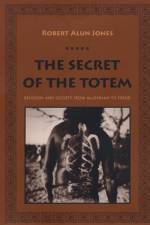
Though it is now discredited, totemism once captured the imagination of Sigmund Freud, Emile Durkheim, James Frazer, and other prominent Victorian thinkers. In this lively intellectual history, Robert Alun Jones considers the construction of a theory and the divergent ways religious scholars, anthropologists, psychoanalysts, and cultural theorists drew on totemism to explore and define primitive and modern societies' religious, cultural, and sexual norms. Combining innovative readings of individual scholars' work and a rich portrait of Victorian intellectual life, Jones brilliantly traces the rise and fall of a powerful idea. First used to describe the belief systems of Native American tribes, totemism ultimately encompassed a range of characteristics. Its features included belief in a guardian spirit that assumed the form of an a particular animal; a prohibition against marrying outside the clan combined with a powerful incest taboo; a sacrament in which members of the totemic clan slaughtered a representative of the totemic species; and the tracing of descent through the female rather than the male. These attributes struck a chord with the late Victorian mentality and its obsession with inappropriate sexual relations, evolutionary theory, and gender roles. Totemism represented a set of beliefs that, though utterly primitive and at a great evolutionary distance, reassured Victorians of their own more civilized values and practices.Totemism's attraction to Victorian thinkers reflects the ways in which the social sciences construct their objects of study rather than discovering them. In discussing works such as Freud's Totem and Taboo or Frazer's The Golden Bough, Jones considers how theorists used the vocabulary of totemism to suit their intellectual interests and goals. Ultimately, anthropologists such as A. A. Goldenweiser, Franz Boas, and Claude Levi-Strauss argued that totemism was more a reflection of the concerns of Victorian theorists than of the actual practices and beliefs of "e;primitive"e; societies, and by the late twentieth century totemism seemed to have disappeared altogether.
Virginia Woolf and the Bloomsbury Avant-Garde traces the dynamic emergence of Woolf's art and thought against Bloomsbury's public thinking about Europe's future in a period marked by two world wars and rising threats of totalitarianism. Educated informally in her father's library and in Bloomsbury's London extension of Cambridge, Virginia Woolf came of age in the prewar decades, when progressive political and social movements gave hope that Europe "e;might really be on the brink of becoming civilized,"e; as Leonard Woolf put it. For pacifist Bloomsbury, heir to Europe's unfinished Enlightenment project of human rights, democratic self-governance, and world peace-and, in E. M. Forster's words, "e;the only genuine movement in English civilization"e;- the 1914 "e;civil war"e; exposed barbarities within Europe: belligerent nationalisms, rapacious racialized economic imperialism, oppressive class and sex/gender systems, a tragic and unnecessary war that mobilized sixty-five million and left thirty-seven million casualties. An avant-garde in the twentieth-century struggle against the violence within European civilization, Bloomsbury and Woolf contributed richly to interwar debates on Europe's future at a moment when democracy's triumph over fascism and communism was by no means assured.Woolf honed her public voice in dialogue with contemporaries in and beyond Bloomsbury- John Maynard Keynes and Roger Fry to Sigmund Freud (published by the Woolfs'Hogarth Press), Bertrand Russell, T. S. Eliot, E. M. Forster, Katherine Mansfield, and many others-and her works embody and illuminate the convergence of aesthetics and politics in post-Enlightenment thought. An ambitious history of her writings in relation to important currents in British intellectual life in the first half of the twentieth century, this book explores Virginia Woolf's narrative journey from her first novel, The Voyage Out, through her last, Between the Acts.
The first text to explore the history, characteristics, and challenges of hospice social work, this volume weaves leading research into an underlying framework for practice and care. A longtime practitioner, Dona J. Reese describes the hospice social work role in assessment and intervention with individuals, families, groups, organizations, and the community, while honestly confronting the personal and professional difficulties of such life-changing work. She introduces a well-tested model of psychosocial and spiritual variables that predict hospice client outcomes, and she advances a social work assessment tool to document their occurrence. Operating at the center of national leaders' coordinated efforts to develop and advance professional organizations and guidelines for end-of-life care, Reese reaches out with support and practice information, helping social workers understand their significance in treating the whole person, contributing to the cultural competence of hospice settings, and claiming a definitive place within the hospice team.
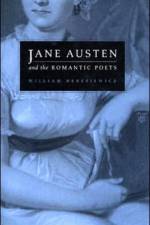
This elegant and thoughtful work offers an important new way of understanding Jane Austen by defining the fundamental impact and influence of British Romanticism on her later novels. In comparing the earlier and later phases of Austen's career, Deresiewicz addresses an important yet neglected issue regarding her work: the longstanding critical consensus that Austen's last three novels (Mansfield Park, Emma, and Persuasion) represent far greater artistic achievements than do her first three (Northanger Abbey, Sense and Sensibility, and Pride and Prejudice). Jane Austen and the Romantic Poets offers a rich account of the differences between the two phases of Austen's career. In doing so, it contextualizes her later novels within the British Romantic movement and the works of Wordsworth, Coleridge, Scott, and Byron. Through close readings of Mansfield Park, Emma, and Persuasion, Deresiewicz reveals the importance of Romantic ideas in Austen's later work, considering the ways in which the novels investigate hidden mechanisms of psychic and affective life, including "e;substitution,"e; "e;ambiguous relationships,"e; and "e;widowhood."e; Deresiewicz's innovative approach and its emphasis on Romanticism opens up new perspectives on Austen's later novels by exploring their patterns of imagery, narrative logics, and social and historical dimensions.
Animals obviously cannot have a right of free speech or a right to vote because they lack the relevant capacities. But their right to life and to be free of exploitation is no less fundamental than the corresponding right of humans, writes Julian H. Franklin. This theoretically rigorous book will reassure the committed, help the uncertain to decide, and arm the polemicist.Franklin examines all the major arguments for animal rights proposed to date and extends the philosophy in new directions. Animal Rights and Moral Philosophy begins by considering the utilitarian argument of equal respect for animals advocated by Peter Singer and, even more favorably, the rights approach that has been advanced by Tom Regan. Despite their merits, both are found wanting as theoretical foundations for animal rights. Franklin also examines the ecofeminist argument for an ethics of care and several rationalist arguments before concluding that Kant's categorical imperative can be expanded to form a basis for an ethical system that includes all sentient beings. Franklin also discusses compassion as applied to animals, encompassing Albert Schweitzer's ethics of reverence for life. He concludes his analysis by considering conflicts of rights between animals and humans.
Sister to the king of France, queen of Navarre, gifted writer, religious reformer, and patron of the arts-in her many roles, Marguerite de Navarre (1492-1549) was one of the most important figures of the French Renaissance. In this, the first major biography in English, Patricia F. Cholakian and Rouben C. Cholakian draw on her writings to provide a vivid portrait of Marguerite's public and private life. Freeing her from the shadow of her brother Francois I, they recognize her immense influence on French politics and culture, and they challenge conventional views of her family relationships.The authors highlight Marguerite's considerable role in advancing the cause of religious reform in France-her support of vernacular translations of sacred works, her denunciation of ecclesiastical corruption, her founding of orphanages and hospitals, and her defense and protection of persecuted reformists. Had this plucky and spirited woman not been sister to the king, she would most likely have ended up at the stake. Though she remained a devout catholic, her theological poem Miroir de l'Ame pecheresse, a mystical summa of evangelical doctrine that was viciously attacked by conservatives, remains to this day an important part of the Protestant corpus. Marguerite, along with her brother the king, was a key architect and animator of the refined entertainments that became the hallmark of the French court. Always eager to encourage new ideas, she supported many of the illustrious writers and thinkers of her time. Moreover, uniquely for a queen, she was herself a prolific poet, dramatist, and prose writer and published a two-volume anthology of her works. In reassessing Marguerite's enormous oeuvre, the authors reveal the range and quality of her work beyond her famous collection of tales, posthumously called the Heptameron. The Cholakians' groundbreaking reading of the rich body of her work, which uncovers autobiographical elements previously unrecognized by most scholars, and their study of her surviving correspondence portray a life that fully justifies Marguerite's sobriquet, "e;Mother of the Renaissance."e;
It is widely supposed that the most suitable partner will be someone very much like oneself; gay fiction and cinema are often organized around this assumption. Nonetheless, power differentials are remarkably persistent-as well as sexy. What are the personal and political implications of this insight?Sinfield argues that hierarchies in interpersonal relations are continuous with the main power differentials of our social and political life (gender, class, age, and race); therefore it is not surprising that they govern our psychic lives. Recent writing enables an exploration of their positive potential, especially in fantasy, as well as their danger.On Sexuality and Power focuses on the writing of the last thirty years, revisiting also Whitman, Wilde, Mann, Forster, and Genet, and reassessing the very idea of a gay canon.
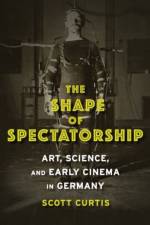
Scott Curtis draws our eye to the role of scientific, medical, educational, and aesthetic observation in shaping modern spectatorship. Focusing on the nontheatrical use of motion picture technology in Germany between the 1890s and World War I, he follows researchers, teachers, and intellectuals as they negotiated the fascinating, at times fraught relationship between technology, discipline, and expert vision. As these specialists struggled to come to terms with motion pictures, they advanced new ideas of mass spectatorship that continue to affect the way we make and experience film. Staging a brilliant collision between the moving image and scientific or medical observation, visual instruction, and aesthetic contemplation, The Shape of Spectatorship showcases early cinema's revolutionary impact on society and culture and the challenges the new medium placed on ways of seeing and learning.
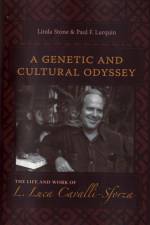
Drawing links between genetic and cultural development, Cavalli-Sforza developed groundbreaking techniques to trace the evolution of Homo sapiens and the origins of human differentiation, in addition to his earlier work in bacterial genetics. He is also the founder of the Human Genome Diversity Project and continues to work as the principal investigator at Stanford University's Human Population Genetics Laboratory. Based on extensive research and interviews with Cavalli-Sforza and his colleagues, this biography examines the scientist's life and his immense and occasionally controversial contributions to genetics, anthropology, and linguistics.
Contemporary attachment theory both enriches our understanding of human development and informs clinical practice. Examining the relational bonds between young children and their caregivers, it traces its origins to several scientific and social fields, most notably psychoanalysis, social work, behaviorism, ethology, evolutionary theory, and biology.The first portion of this book examines attachment theory and its relationship to other psychodynamic theories of development and then discusses the landmark contributions of John Bowlby, the "e;father"e; of modern attachment theory. The section concludes with a detailed summary of research on attachment, highlighting the work of Mary Ainsworth, Mary Main, Allan Sroufe, and Peter Fonagy. The second portion focuses on clinical applications with children, adolescents, and adults. Brief vignettes and lengthier case illustrations consider a verity of attachment disorders and treatment approaches, paying special attention to clinical method and technique, process dimensions, and transference and countertransference phenomena. Cases are set in a range of treatment venues, such as college and family counseling service, community mental health centers, and private practice, and involve an ethnoculturally and clinically diverse clientele.
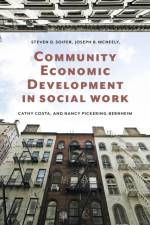
Community economic development (CED) is an increasingly essential factor in the revitalization of low- to moderate-income communities. This cutting-edge text explores the intersection of CED and social work practice, which both focus on the well-being of indigent communities and the empowerment of individuals and the communities in which they live. This unique textbook emphasizes a holistic approach to community building that combines business and real-estate development with a focus on stimulating family self-reliance and community empowerment. The result is an innovative approach to rehabilitating communities in decline while preserving resident demographics. The authors delve deep into the social, political, human, and financial capital involved in effecting change and how race and regional issues can complicate approaches and outcomes. Throughout, they integrate case examples to illustrate their strategies and conclude with a consideration of the critical role social workers can play in developing CED's next phase.
This volume has long been an invaluable resource for students and practitioners of social work. It thoroughly and clearly presents research concepts and skills, uniquely organizing them according to assessment and treatment formulation, treatment implementation and monitoring, and evaluation. Also, numerous practice cases and detailed exercises offer a complete grasp of crucial concepts and techniques.This new edition reflects contemporary developments in practice research, such as an emphasis on empirical or evidence-based practice; the importance of evaluation within the managed-care environment; the role of social work ethics in practice research; the value of qualitative research methodology for particular aspects of monitoring and evaluation; and the role of computer technology and the use of the Internet.
Compiled during the Warring States period of 475-221 B.C.E., The Art of War has had an enormous impact on the development of Chinese military strategy over the past two thousand years and occupies an important place in East Asian intellectual history. It is the first known attempt to formulate a rational basis for the planning and conduct of military operations, and while numerous editions of the work exist, Victor Mair's translation is the first to remain true to the original structure and essential style of the text.Mair's fidelity to the original, along with his insightful commentary and reliance on archaeologically recovered manuscripts, breaks new ground in solving The Art of War's difficult textual and contextual problems. He confronts complex questions concerning the authorship of the work, asserting that Sun Wu, a supposed strategist of the Spring and Autumn period (770-476 B.C.E.) to whom the text is traditionally attributed, never existed. Instead, Mair claims that The Art of War coalesced over a period of around seventy-five years, from the middle of the fourth century to the first quarter of the third century B.C.E. Mair also reveals the way The Art of War reflects historical developments in technological and military strategy in civilizations throughout Eurasia, especially in regards to iron metallurgy. He demonstrates the close link between the philosophy in The Art of War and Taoism and discusses the reception of the text from the classical period to today. Finally, Mair highlights previously unaddressed stylistic and statistical aspects and includes philological annotations that present new ways of approaching the intellectual and social background of the work. A phenomenal achievement, Mair's comprehensive translation is an indispensable resource for today's students, strategists, and scholars.
Gay parenting is a topic on which almost everyone has an opinion but almost nobody has any facts. Here at last is a book based on a thorough review of the literature, as well as interviews with a pioneering group of men who in the 1980s chose to become fathers outside the boundaries of a heterosexual union-through foster care, adoption, and other kinship relationships. This book reveals how very natural and possible gay parenthood can be. What factors influence this decision? How do the experiences of gay dads compare to those of heterosexual men? How effectively do professional services such as support groups serve gay fathers and prospective gay fathers? What elements of the social climate are helpful-and hurtful? Gay Men Choosing Parenthood challenges a great deal of misinformation, showing how gay fathers from different backgrounds adapted, perceived, and constructed their options and their families.
From Shirley MacLaine's spiritual biography Out on a Limb to the teenage witches in the film The Craft, New Age and Neopagan beliefs have made sensationalistic headlines. In the mid- to late 1990s, several important scholarly studies of the New Age and Neopagan movements were published, attesting to academic as well as popular recognition that these religions are a significant presence on the contemporary North American religious landscape. Self-help books by New Age channelers and psychics are a large and growing market; annual spending on channeling, self-help businesses, and alternative health care is at $10 to $14 billion; an estimated 12 million Americans are involved with New Age activities; and American Neopagans are estimated at around 200,000. New Age and Neopagan Religions in America introduces the beliefs and practices behind the public faces of these controversial movements, which have been growing steadily in late twentieth- and early twenty-first-century America.What is the New Age movement, and how is it different from and similar to Neopaganism in its underlying beliefs and still-evolving practices? Where did these decentralized and eclectic movements come from, and why have they grown and flourished at this point in American religious history? What is the relationship between the New Age and Neopaganism and other religions in America, particularly Christianity, which is often construed as antagonistic to them? Drawing on historical and ethnographic accounts, Sarah Pike explores these questions and offers a sympathetic yet critical treatment of religious practices often marginalized yet soaring in popularity. The book provides a general introduction to the varieties of New Age and Neopagan religions in the United States today as well as an account of their nineteenth-century roots and emergence from the 1960s counterculture. Covering such topics as healing, gender and sexuality, millennialism, and ritual experience, it also furnishes a rich description and analysis of the spiritual worlds and social networks created by participants.
Abonner på vårt nyhetsbrev og få rabatter og inspirasjon til din neste leseopplevelse.
Ved å abonnere godtar du vår personvernerklæring.