

Gjør som tusenvis av andre bokelskere
Abonner på vårt nyhetsbrev og få rabatter og inspirasjon til din neste leseopplevelse.
Ved å abonnere godtar du vår personvernerklæring.Du kan når som helst melde deg av våre nyhetsbrev.

Clergyman, schoolmaster and writer on aesthetics, William Gilpin (1724-1804) is best known for his works on the picturesque. In his Essay on Prints, published in 1768 and reissued in this series, he defined picturesque as 'a term expressive of that peculiar kind of beauty, which is agreeable in a picture'. First published in 1804, the present work is one of a series which records his reflections on the picturesque across British landscapes. It traces the journey he made in 1774, equipped with notebook and sketching materials, along England's south coast from Portsmouth to Dover and Canterbury via Brighton, Rye and Romney Marsh. He describes his impressions of famous landmarks such as the South Downs, Petworth House, Dover Castle and Canterbury Cathedral, and includes several reproductions of his pen-and-wash drawings. The companion volumes of Observations on other parts of Britain are also reissued in the Cambridge Library Collection.
This journal, published in 1819 and generally attributed to Alexander Fisher, assistant surgeon of the Alexander, describes Sir John Ross' abortive expedition to search for the North-West Passage. Ross' own report of the voyage (also reissued in this series) was highly controversial, and William Edward Parry (1790-1855), who had commanded the Alexander, was sent by the Admiralty early in 1819 to continue the mission instead of his former superior. Fisher's account, which he insists is 'strictly true', begins with details of the generous provisions and special cold-weather equipment on the ships (including a form of central heating, and wolf-skin blankets issued gratis to all personnel). He vividly describes Baffin Bay, icebergs, and 'dismal' black cliffs, identified by regular compass bearings. Later, the author expresses surprise at Ross' ship turning around and leaving Lancaster Sound, although no land was visible ahead; this incriminating detail may explain Fisher's preference for anonymity.
The Florentine nobleman Leonardo Frescobaldi (fl. 1384-1405) travelled with two compatriots, and at the urging of the king of Naples, to the Holy Land in 1384-5, and he wrote this account on his return. It was published in 1818 by the librarian of the Barberini Library in Rome, Guglielmo Manzi (1784-1821), who prefixed to his edition an essay (also in Italian) on the activities of Italian merchants abroad in the fourteenth century. Frescobaldi and his companions went first to Venice, whence they sailed to Alexandria in Egypt, in order to visit St Catharine's monastery on the way to Jerusalem. Frescobaldi describes the churches and holy places in great detail, and then describes their route home, via Damascus and Beirut, thence by ship (and after enduring a terrible storm) to Venice. Frescobaldi's lively curiosity about everything he saw makes this account of his pilgrimage a fascinating read.
Having trained as a civil engineer and surveyor, the ornithologist William Eagle Clarke (1853-1938) established himself in his field by preparing reports on bird migration for the British Association. Focusing on the species passing through the British Isles, Clarke spent many months in various lighthouses and on remote islands. He brought all his research together in this two-volume work, first published in 1912 and illustrated with maps and weather charts. In Volume 2, Clarke describes key examples of his investigations. Photographs of the sites he visited accompany the text. The locations range from the Flannan Isles, in the Outer Hebrides, to the island of Ushant, off the coast of Brittany. Clarke's expedition to the latter location ended abruptly when he and his colleague were mistaken for spies and forced to leave. Extensive coverage is also given to Fair Isle, between Shetland and Orkney.
The Byzantine writer Laonicus Chalcocondyles (c.1430-90) has been described as 'the last Athenian historian'. From a noble Athenian family, he moved to the court of Mistra in the Peloponnese, then ruled by Constantine XI Palaiologos (later the last emperor of Byzantium), and may have been a pupil of Gemistos Plethon. Laonicus' most important work was this 'Apodeixis' or 'setting forth' of the history of the period from 1298 to 1463, during which the Byzantine Empire came under increasing pressure from, and eventually succumbed to, the Ottoman Turks. Laonicus uses the Ancient Greek historians, especially Herodotus, as his models, comparing the fall of Constantinople in 1453 to the fall of Troy. The surviving Greek manuscripts of his work were not well preserved, and for this edition of 1843, the German philologist Immanuel Bekker (1785-1871) collated the various versions and supplied a Latin translation, rendering the work accessible to historians.
Having trained as a civil engineer and surveyor, the ornithologist William Eagle Clarke (1853-1938) established himself in his field by preparing reports on bird migration for the British Association. Focusing on the species passing through the British Isles, Clarke spent many months in various lighthouses and on remote islands. He brought all his research together in this two-volume work, first published in 1912 and illustrated with maps, weather charts and photographs of key research locations. In Volume 1, Clarke notes which species arrive in the British Isles during each season. A map shows the routes they take. He also explains how weather conditions affect avian journeys, using charts to indicate temperature changes across Europe and wind conditions over Britain. The annual movements of swallows, skylarks, rooks and other species are then discussed individually. The volume closes with Clarke's account of the month he spent at the Eddystone Lighthouse.
The geologist Sir Henry Thomas De la Beche (1796-1855) made important contributions as both a surveyor and a theorist. Elected to the Royal Society in 1823, he mapped geological strata in Devon during the 1830s and became the founding director of the British Geological Survey, the world's first national geological survey. In 1847, he was elected president of the Geological Society of London. Reflecting the scope of his scientific knowledge, the present work covers a wide range of topics, including the density of planets, the mineralisation of organic remains, and what could be inferred from the fossils thus created. The book was first published in 1834, the year he became embroiled in an argument with his contemporary Roderick Murchison. Lasting several years, the dispute became known as the 'The Great Devonian Controversy'. De la Beche's Geological Manual (third edition, 1833) has also been reissued in this series.
The author of this history was a member of the Byzantine Doukas family, a grandson of Michael Doukas, who had come to prominence in the civil wars of the fourteenth century, and possibly a remote descendant of the eleventh-century emperor Michael VII. His own first name and dates of birth and death are not known, but he seemed to have worked for a Genoese family or business, and after the fall of Constantinople took refuge on the island of Lesbos, then controlled by the Genoese Gattilusi dynasty. His history of the period 1341-1462, including the Ottoman conquest, survived in one manuscript: this 1834 edition by Immanuel Bekker provides, as well as a Latin translation of the original Greek text, a near-contemporary Italian version of unknown authorship discovered in a Venetian library by the historian Leopold Ranke, who supplied it to Bekker.
Clement Huart (1854-1926) graduated in Arabic, Persian, Turkish and Modern Greek and served as a French diplomat in Istanbul (or, as he called it, Constantinople) for twenty years before becoming Professor of Persian at the Ecole des Langues Orientales in Paris. He edited and translated many oriental texts and published widely on Middle-Eastern cultures. This 1897 publication describes a visit to Konya, where Huart hoped to find out more about the capital of the Seljuk Empire than was recorded in Byzantine or Persian sources. Travelling on horseback from Istanbul, Huart noted his impressions of archaeological sites and historic buildings, and recorded details of many inscriptions from the Seljuk period on mosques, mausoleums, caravanserais and fortresses. He also met the whirling dervishes. His fascinating account of his experiences is interwoven with references to medieval battles and Islamic legends, together with advice for future travellers to this rapidly modernising region.
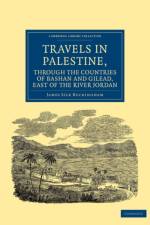
Cornish-born writer, traveller and controversialist James Silk Buckingham (1786-1855) spent much of his early life as a sailor in the Atlantic and the Mediterranean and went on to publish accounts of his extensive travels to India, Palestine and Persia. His criticisms of the East India Company and the Bengal government led to his expulsion from India in 1823. In the 1830s he became a Member of Parliament and campaigned for social reforms and for the promotion of the temperance movement. He founded several journals, including the periodical The Athenaeum, covering a wide range of topics from literature to popular science. In this work, first published in 1821, Buckingham describes his journey from Egypt by sea to Syria and then to Palestine. He ascended Mount Tabor and visited the Holy Sepulchre, but considered his experiences in Bashan and Gilead, east of the Jordan, to form the climax of his journey.
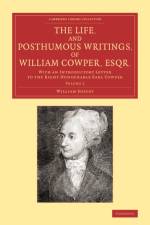
Successors such as Wordsworth and Coleridge admired yet overshadowed William Cowper (1731-1800). Troubled by mental instability, he retreated from both the legal profession and the woman he had hoped to marry, seeking out a quiet existence in the country. In spite of his struggles, he made a translation of Homer's Iliad, produced a considerable body of poetry, and maintained many epistolary contacts. This four-volume biography, compiled by his friend and fellow poet William Hayley (1745-1820), appeared between 1803 and 1806, bringing together selected letters and unpublished poems to illuminate Cowper's personal and literary life. Volume 4 (1806) is a collection of supplementary material, namely amendments to the previous volumes, additional letters and an index giving a short description of every letter's content.
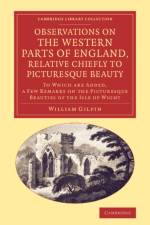
Clergyman, schoolmaster and writer on aesthetics, William Gilpin (1724-1804) is best known for his works on the picturesque. In his Essay on Prints, published in 1768 and reissued in this series, he defined picturesque as 'a term expressive of that peculiar kind of beauty, which is agreeable in a picture'. First published in 1798, the present work is one of a series which records his reflections on the picturesque across British landscapes. It traces the journey he made, equipped with notebook and sketching materials, westwards from Wiltshire through Somerset and Devon to Cornwall, returning via Dorset, Hampshire and the Isle of Wight. He describes his impressions of famous landmarks such as Stonehenge, Glastonbury Abbey, the River Tamar and Carisbrooke Castle, and includes several evocative reproductions of his pen-and-wash drawings. The companion volumes of Observations on other parts of Britain are also reissued in the Cambridge Library Collection.
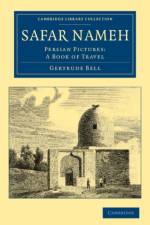
This book of 'Persian Pictures' is the first published work of Gertrude Bell (1868-1926), the celebrated traveller, archaeologist, Orientalist and supporter of Arab independence. She first visited Persia in 1892, when a relative by marriage was British minister there, and published her impressions in a series of essays in 1894. Her subjects range from Roman ruins to Ottoman graves to shopping in the bazaars, and from the bustling life of cities to the isolation of the desert. Having studied the Persian language in preparation for her journey, she was able to enter into the life of the country, and especially of its women, more deeply than a casual visitor, and indeed her second publication was a free-verse translation of the fourteenth-century poet Hafiz. Bell captures a sense of delight at a mysterious land still marked by the traces of many of the great civilisations of the past.
'If modern Egypt is so far away that it takes three weeks to get there, ancient Egypt is infinitely more distant.' So wrote novelist, journalist, traveller and Egyptologist Amelia Edwards (1831-92) in this, the last published work of her career. Having first travelled to Egypt in 1873, in 1889-90 Edwards was invited to lecture in the United States, campaigning for the Egypt Exploration Fund, of which she was joint honorary secretary. In five months she addressed 100,000 people at over 110 meetings in sixteen states. First published in 1892, a month before her death, this book is a collection of her lectures, containing substantial illustrations, additions, notes, and references. Exhibiting both Edwards' ability to make abstruse subjects come alive without losing factual correctness, and the humour and enthusiasm with which she recounted her experiences, this book marks the culmination of twenty years' research and exploration.
The antiquary Sir William Gell (1777-1836) was most famous for his two books on the archaeological discoveries at Pompeii (also reissued in this series) but his interest in the topography of classical sites is also reflected in this work, first published in 1823. Gell describes his experiences of many visits to the Peloponnese over a period of twenty years, during which the Greek movement for independence from the Ottoman Empire was gathering momentum and widespread support in Europe. Written partly in response to a request to 'give us anything but your dull maps and measures', the book does not discuss archaeological sites in detail but rather records impressions of the lives of the Greek and Turkish inhabitants in the period immediately before the outbreak of war. Gell's own conclusions about the prospects for 'Grecian liberty' are gloomy: he holds it to be 'quite unattainable at the present day'.
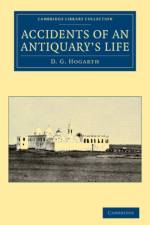
The archaeologist D. G. Hogarth (1862-1927) was, when he died, keeper of the Ashmolean Museum and president of the Royal Geographical Society. During his career he excavated in Cyprus, Egypt, Greece and Asia Minor. His books about his travels and excavations were well received and A Wandering Scholar in the Levant of 1896 (also reissued in this series) was described by T. E. Lawrence as 'one of the best travel books ever written'. This work, first published in 1909, contains six lectures on the origins of Ionia. Hogarth presents and evaluates the theories of the origins of Ionian culture that were popular at the time, and in the course of his discussion he delivers the results of some of his own excavations, including those at Ephesus in 1904. The work remains of interest to scholars and students of the region and of the history of archaeology.
The distinguished archaeologist David G. Hogarth (1862-1927) excavated in Cyprus, Egypt, Greece and Asia Minor over the course of his career. He wrote books about his excavations and travels to bring archaeology to a popular audience. His A Wandering Scholar in the Levant (1896; also reissued in this series) was described by T. E. Lawrence as 'one of the best travel books ever written'. Hogarth later became president of the Royal Geographical Society, and Keeper of the Ashmolean Museum, Oxford, from 1908 to 1927. This work, first published in 1889, describes his travels around Cyprus in the summer following his excavations at Old Paphos. He visited areas that had not been examined by archaeologists before, and the book contains many illustrations of buildings and objects he found during his journey, providing details of sites and landscapes still of interest to those studying the history of the island or of archaeology.
In April 1855, Bernard Whittingham (fl.1850), a captain of the Royal Engineers, set off from Hong Kong aboard H.M.S. Sibylle. He had volunteered to join an Allied squadron attempting 'to discover the progress of Russian aggrandisement in North-eastern Asia, and to ascertain how far the reports of her successful encroachment on the sea frontiers of China and Japan were true'. In the context of the Crimean War's Pacific theatre, he was also keen to see avenged the Royal Navy's defeat by the Russians at Petropavlovsk the previous year. Whittingham's notes, published in 1856, give a personal and uniquely British account of an understudied time and place with far-reaching influence on later events. The book is also a rich source of anecdotes, not least that relating to the capture of crew members of the ill-fated Russian frigate Diana.
The archaeologist D. G. Hogarth (1862-1927) was, when he died, keeper of the Ashmolean Museum and president of the Royal Geographical Society, whose gold medal he was also awarded. This 1910 book is his account of various episodes in his career from 1897, when he covered the Cretan revolt against Turkey for The Times, to his 1907 excavations in Asyut, Egypt. A mixture of travel writing and archaeological reporting - the volume also contains an academic report on the excavation of Carchemish - this book, a follow-up to his A Wandering Scholar in the Levant (also reissued in this series), and intended for a popular audience, remains a highly readable account of the practicalities behind Hogarth's intellectual career. It also provides background to Hogarth's political involvement with the Near East, as acting director of the Arab Bureau in Cairo during the First World War and an attendee at the Versailles peace conference.
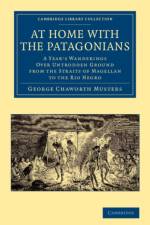
Orphaned by the age of four, George Chaworth Musters (1841-79) joined the Royal Navy at thirteen, served with distinction during the Crimean War, and reached the rank of commander. Having been stationed on the coast of South America, during which time he read up on Darwin's voyage in the Beagle, he pursued in 1869 his aim of travelling through the south of the continent. In this 1871 publication, which earned him the nickname 'the king of Patagonia', Musters records the year he spent among native Patagonians, covering almost 1,400 miles. He gives a detailed account of their customs and daily life, particularly the manners, dress, hunting practices and methods of battle of the Tehuelche people. Featuring a number of vivid engravings, the book did much to reveal this land to Europeans. It remains an instructive text in the history of South American exploration and anthropology.
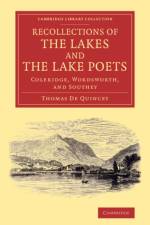
Thomas De Quincey (1785-1859) described his adolescent discovery of the Lyrical Ballads of Wordsworth and Coleridge as 'an absolute revelation of untrodden worlds, teeming with power and beauty'. The admiring letter he sent to Wordsworth led to friendships with him, Coleridge and Robert Southey. Relations soured over time, though, as De Quincey's opium addiction and debts increased. Following Coleridge's death in 1834, De Quincey began writing his 'Lake Reminiscences', published serially in Tait's Magazine up to 1840. Candid, occasionally bitter, and highlighting flaws such as Coleridge's plagiarism, the recollections offended the surviving poets and their families, yet these vivid portraits attract continued scholarly interest for both the light shed on the subjects and on the author himself. The collected essays, reissued in this 1863 printing of the 1862 first edition, certainly served to confirm the Lake Poets as leading figures of English Romanticism.
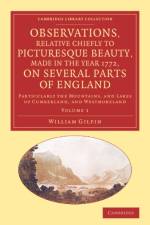
Clergyman, schoolmaster and writer on aesthetics, William Gilpin (1724-1804) is best known for his works on the picturesque. In his Essay on Prints, published in 1768 and reissued in this series, he defined picturesque as 'a term expressive of that peculiar kind of beauty, which is agreeable in a picture'. First published in 1786, this two-volume work formed part of a successful series which recorded his reflections on the picturesque across British landscapes. It traces the journey he made in 1772, equipped with notebook and sketching materials, in the Lake District. Describing his route from southern England, noting highlights along the way, Volume 1 includes discussion of Furness, Windermere and Keswick. The volume also features several reproductions of Gilpin's pen-and-wash drawings. Further exploring the concept of the picturesque, his volumes of Observations on other parts of Britain are also reissued in the Cambridge Library Collection.
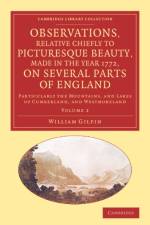
Clergyman, schoolmaster and writer on aesthetics, William Gilpin (1724-1804) is best known for his works on the picturesque. In his Essay on Prints, published in 1768 and reissued in this series, he defined picturesque as 'a term expressive of that peculiar kind of beauty, which is agreeable in a picture'. First published in 1786, this two-volume work formed part of a successful series which recorded his reflections on the picturesque across British landscapes. It traces the journey he made in 1772, equipped with notebook and sketching materials, in the Lake District. Continuing to describe his route and its highlights, Volume 2 includes discussion of parts of Yorkshire, Derbyshire, Leicestershire and Northamptonshire as well as the Lakes. The volume also features several reproductions of Gilpin's pen-and-wash drawings. Further exploring the concept of the picturesque, his volumes of Observations on other parts of Britain are also reissued in the Cambridge Library Collection.
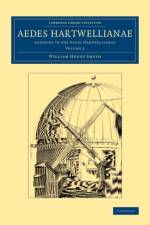
The astronomer John Lee (1783-66) inherited Hartwell House in Buckinghamshire in 1827. During its colourful history, the mansion had notably been occupied between 1809 and 1814 by the exiled court of Louis XVIII. Lee turned the house into something of a museum for his antiquarian and scientific interests, constructing an observatory to the design of the his close friend William Henry Smyth (1788-1865), after whom Lee named a lunar sea. A naval officer, Smyth had helped to found the Royal Geographical Society in 1830. His Sidereal Chromatics (1864) and The Sailor's Word-Book (1867) are also reissued in this series. This charming history and description of Hartwell, its grounds, buildings and contents, appeared in two volumes between 1851 and 1864, illuminating especially the practice of contemporary astronomy. Illustrated throughout, the second volume (1864) serves as a supplement, recording Smyth's researches in the years since the first volume went to press.
Successors such as Wordsworth and Coleridge admired yet overshadowed William Cowper (1731-1800). Troubled by mental instability, he retreated from both the legal profession and the woman he had hoped to marry, seeking out a quiet existence in the country. In spite of his struggles, he made a translation of Homer's Iliad, produced a considerable body of poetry, and maintained many epistolary contacts. This four-volume biography, compiled by his friend and fellow poet William Hayley (1745-1820), appeared between 1803 and 1806, bringing together selected letters and unpublished poems to illuminate Cowper's personal and literary life. Opening with an essay, 'Desultory remarks on the letters of eminent persons, particularly those of Pope and Cowper', Volume 3 (1804) includes letters in which Cowper gives his frank opinions of contemporary literary figures, notably Samuel Johnson, interspersed with his characteristic flights of whimsy and enthusiastic remarks on gardening.
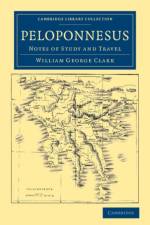
William George Clark (1821-78) is probably best remembered as the co-editor (with W. Aldis Wright) of the Cambridge Shakespeare (1863-6; also reissued in this series). A fellow of Trinity College, Cambridge, he was a classical and literary scholar and editor, but travelled widely in his vacations, and this work, first published in 1858, is an account of a tour of Greece undertaken in 1856 with W. H. Thompson (1810-86), who later succeeded William Whewell as Master of Trinity. Clark's plan was to visit the archaeological sites of the Peloponnese using W. M. Leake's various surveys as a guide and comparing Leake's observations and his own with those of the ancient traveller Pausanias. The result is an engaging combination of travel narrative and serious archaeological and topographical research backed up by a profound knowledge of classical literature. It remains an interesting resource for those studying the history of Greek archaeology.
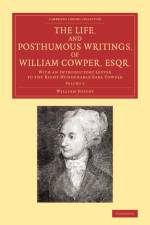
Successors such as Wordsworth and Coleridge admired yet overshadowed William Cowper (1731-1800). Troubled by mental instability, he retreated from both the legal profession and the woman he had hoped to marry, seeking out a quiet existence in the country. In spite of his struggles, he made a translation of Homer's Iliad, produced a considerable body of poetry, and maintained many epistolary contacts. This four-volume biography, compiled by his friend and fellow poet William Hayley (1745-1820), appeared between 1803 and 1806, bringing together selected letters and unpublished poems to illuminate Cowper's personal and literary life. Volume 2 (1803) contains personal letters from the period 1791-4, accompanied by Hayley's biographical remarks. Also included are appendices of some of Cowper's original poems and translations from Latin and Greek, notably sections from Horace and Virgil.
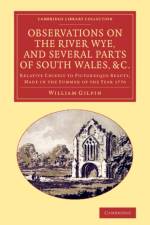
Clergyman, schoolmaster and writer on aesthetics, William Gilpin (1724-1804) is best known for his works on the picturesque. In his Essay on Prints, published in 1768 and reissued in this series, he defined picturesque as 'a term expressive of that peculiar kind of beauty, which is agreeable in a picture'. First published in 1782, the present work was the first in a series which recorded his reflections on the picturesque across British landscapes. It traces the journey he made, equipped with notebook and sketching materials, along the River Wye and into South Wales, visiting such notable sites as Tintern Abbey. As well as describing his route and its highlights, Gilpin includes several reproductions of his pen-and-wash drawings. Further developing and exploring the concept of the picturesque, his later volumes of Observations on various parts of Britain are also reissued in the Cambridge Library Collection.
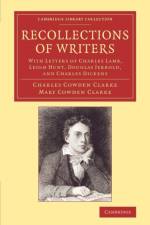
Charles Cowden Clarke (1787-1877) and his wife Mary (1809-98) were born into literary and musical circles which deeply shaped their careers and supplied lifelong friendships with great artists and writers. Among Charles's closest school friends was John Keats, and his acquaintances later included William Hazlitt, Leigh Hunt, Coleridge and the Shelleys. Mary's childhood introduction to Charles and Mary Lamb's Tales from Shakespeare led to a lifetime of Shakespearean scholarship, friendship with the Lambs, and her performance in several Shakespearean roles for the amateur company run by Charles Dickens. Wed in 1828, the Cowden Clarkes were, as Mary writes, 'among the happiest of married lovers for more than forty-eight years', publishing jointly and enjoying mutual friendships. Their insightful recollections of their literary friends, first published serially towards the end of Charles's life, were afterwards collected by Mary, together with many important letters, and published in this 1878 work.
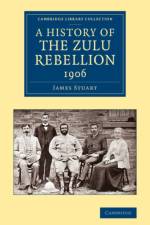
After many years of relatively peaceful coexistence, a dispute over taxation in 1906 stirred thousands of Zulus into bloody revolt against the British in Natal. Following the rebellion's defeat, James Stuart (1868-1942), an expert on Zulu customs and history, was commissioned to write the official history of military operations. It later became a private project of much broader scope. Providing a thoroughly researched account of the rebellion, Stuart wrote using the full breadth of his knowledge of Africa, drawing on the contacts and materials that became available to him during his time as an intelligence officer in the Natal Field Artillery. First published in 1913, the work also covers the administration of the Zulu territories and goes on to investigate the aftermath of the rebellion, including the arrest and imprisonment of the Zulu king, Dinuzulu.
Abonner på vårt nyhetsbrev og få rabatter og inspirasjon til din neste leseopplevelse.
Ved å abonnere godtar du vår personvernerklæring.