









Gjør som tusenvis av andre bokelskere
Abonner på vårt nyhetsbrev og få rabatter og inspirasjon til din neste leseopplevelse.
Ved å abonnere godtar du vår personvernerklæring.Du kan når som helst melde deg av våre nyhetsbrev.

Conquête ottomane de l'Égypte (1517) propose de mesurer l'impact de la défaite mamelouke face aux Ottomans sur les structures sociales, politiques et culturelles de l'Égypte, ainsi que sur les équilibres géopolitiques en Méditerranée, et d'étudier comment les contemporains perçurent l'événement. Conquête ottomane de l'Égypte (1517) examines how far Selīm Ist's victory and the subsequent fall of the Mamluk sultanate altered the political, social and cultural structures in Egypt, how far it transformed the balance of powers in the Mediterranean, and how contemporaries perceived this major event.
During the middle ages, the head of St John the Baptist was widely venerated. According to the biblical text, John was beheaded at the order of Herod s stepdaughter, who is traditionally given the name Salome. His head was later found in Jerusalem. Legends concerning the discovery of this relic form the basis of an iconographic type in which the head of St John the Baptist is represented as an object. The phenomenon of the Johannessch ssel is the subject of this essay. Little is known about how exactly these objects functioned. How are we to understand this fascination with horror, death and decapitation? What phantasms does the artifact channel? Barbara Baert contextualizes the Johannessch ssel as a cultural phenomenon against the background of relic cults and the diverse artistic production that encompasses both high and low registers of medieval material culture. The Johannessch ssel puts the reader on the trail of archetypes regarding blood, sacrifice and genealogy. In this sense, the present essay also involves important anthropological points of departure. This publication offers the unique key to the Johannessch ssel as artifact, phenomenon, phantasm and medium. Barbara Baert studied Art History and Philosophy at the University Leuven and the University of Siena, Italy. In 2006 she founded the Iconology Research Group, an international and interdisciplinary platform for the study of the interpretation of images. Her disciplines concern Sacred Topography, Visual Anthropology, Relics and Devotion and Art Theory. Recent books are "Fluid Flesh. The Body, Religion and the Visual Arts" ((Ed.) 2009) and "Interspaces between Word, Gaze and Touch: The Bible and the Visual Medium in the Middle Ages: Collected essays on Noli me tangere, the Woman with the Haemorrhage, the Head of John the Baptist" (2011).
Bringing together an international team of historians of science and philosophy to discuss the fate of matter and form, this volume shows how disputes about matter and form spurred innovation as well as conservatism in early modern science and philosophy.
This is the first comprehensive sociological study of a new Chinese Buddhist movement, known as Tzu Chi (otherwise, the Buddhist Compassion Merit Society). Based in Taiwan, it was founded in 1966 and is still led by a female Buddhist master - Master Cheng Yen. Its members are laity and its main focus is medical charity and education of the wealthy in an ethical way of life.
Freedom of expression - particularly freedom of speech - is, in most Western liberal democracies, a well accepted and long established, though contested constitutional right or principle. Whilst based in ethical, rights-based and political theories such as those of: justice, the good life, personal autonomy, self determination, and welfare, as well as arrangements over legitimate government, pluralism and its limits, democracy and the extent and role of the state, there is always a lack of agreement over what precisely freedom of expression entails and how it should be applied. For the purposes of this book we are concerned with freedom of expression and the media with regard to the current application of legal standards and self-regulation to journalistic practice.
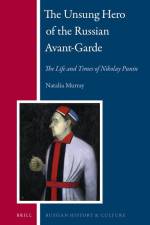
The first biography of Nikolay Punin, this book offers a comprehensive analysis of his life in the context of Russian political, social and cultural history in the first half of the 20th century.
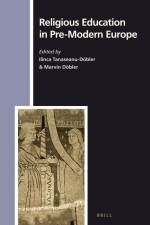
Although religious education is a crucial topic in present-day History of Religions, its study focuses on contemporary phenomena and is still undertheorised. The present volume proposes a comprehensive theoretical framework based on interdisciplinary case studies of religious education in pre-modern Europe.
"The Hebrew Bible in Fifteenth-Century Spain: Exegesis, Literature, Philosophy, and the Arts" investigates the relationship between the Bible and the cultural production of Iberian societies between the anti-Jewish riots of 1391 and the Expulsion of 1492. During this turbulent and transformative period, the Bible intersected with virtually all aspects of late medieval Iberian culture: its languages of expression, its material and artistic production, and its intellectual output in literary, philosophical, exegetic, and polemical spheres. The articles in this cross-cultural and interdisciplinary volume present instantiations of the Hebrew Bible s deployment in textual and visual forms on diverse subjects (messianic exegesis, polemics, "converso" liturgy, Bible translation, conversion narrative, etc.) and utilize a broad range of methodological approaches (from classical philology to Derridian analysis).
The publication consists of a comprehensive collection of all UN member states' legislation on non-discrimination, protection of minorities, prohibition of hate-crimes and hate speech. The publication, divided into four volumes (according to continents), provides a legal model for combating discrimination through national legislation.
"The Crescent on the Temple" elucidates how the Dome of the Rock came to stand for the Temple of Solomon in Christian, Muslim, and Jewish art. That "Temple," represented as the Muslim shrine, is often surmounted by a crescent.
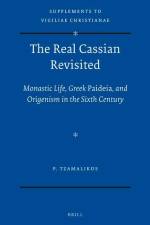
Following the discovery of a new Greek Father, namely, Cassian the Sabaite, who, by means of Medieval forgery, has been heretofore eclipsed by a figment known as 'John Cassian of Marseilles', this book casts new light on the Late Antique interplay between Hellenism and Christianity, sixth century Origenism, and Christian influence upon Neoplatonism.
Drawing on the recent discussions on Middle Arabic and Mixed Arabic, this book offers a comprehensive survey of the various fields of Muslim, Jewish and Christian Arabic texts (folklore, religious and linguistic literature) as well as the matters of mixed language and diglossia.
This work outlines available resources and proposed standards for international NGO fact-finding missions: Chapter One presents an introduction to the issue of NGO fact-finding. Chapter Two discusses the problems caused by the lack of any generally-accepted guidelines for NGO fact-finding, in contrast with contexts where NGOs have achieved consensus. Chapter Three surveys proposed guidelines for human rights and humanitarian NGOs. In addition, this section examines United Nations fact-finding standards, as well as examples of internal fact-finding standards for major NGOs. Chapter Four analyzes the fact-finding standards used in five specific cases: the International Crisis Group (Kosovo, 1999), the Independent International Fact-Finding Mission on the Conflict in Georgia (Georgia, 2008), United Nations Office of the High Commissioner for Human Rights Mapping Exercise on the Democratic Republic of Congo (1993-2003), Conflict Analysis Resource Center/University London study on Amnesty International and Human Rights Watch (Colombia, 1988-2004), and Human Rights Watch (Lebanon, 2006). The final chapter offers conclusions and recommendations.
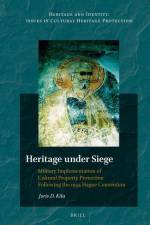
WINNER OF THE BLUE SHIELD AWARD 2012! Drawing on the results of a multidisciplinary research a first comprehensive picture of cultural property protection involving the military is presented. Practical, legal and contemplative aspects are considered while presenting a fascinating new discipline in heritage related studies.
This book offers an examination of Scottish migration to the Polish-Lithuanian Commonwealth: numbers of migrants; patterns of settlement; laws regulating their presence; their activities; their social advancement into the Polish nobility; their assimilation and then the eventual disappearance as a distinct ethnic group in Poland-Lithuania.
This volume discusses how diplomacy's contribution to the effectiveness of foreign policy has been undervalued in the United States by governments, the foreign policy community, and academics. Chapters raise awareness of the importance of American diplomacy, what it can and can't achieve, and how it may be strengthened in the interests of international peace and security.
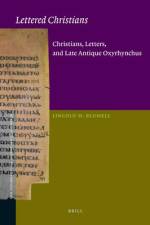
This book offers a detailed survey of the surviving Christian letters from Oxyrhynchus, which up until this time have never been collectively examined, and shows how this unique body of evidence can be used to elucidate a number of issues relating not only to Christianity in the Oxyrhynchite but also larger Christianity in late antique Egypt.
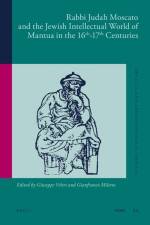
Judah ben Joseph Moscato (c.1533 1590) was one of the most distinguished rabbis, authors, and preachers of the Italian-Jewish Renaissance. This volume is a record of the proceedings of an international conference, organized by the Institute of Jewish Studies at Halle-Wittenberg (Germany), and Mantua s State Archives. It consists of contributions on Moscato and the intellectual world in Mantua during the 16th and 17th centuries.
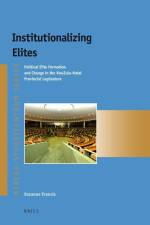
This book offers a new framework for the study of political elites and an empirically rich interrogation of the realization, accumulation and exercise of institutionalized political power by political elites in the African context of the Provincial Legislature of KwaZulu-Natal.
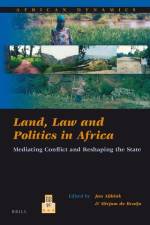
This book offers a series of new studies on the dynamics of political and legal culture as well as of conflict management in contemporary Africa, taking inspiration from and honoring the scholarly contributions and impact of Prof. Gerti Hesseling (1946-2009) in African Studies.
Capitalizing upon the enduring fascination with decapitation in European culture, this collection examines--through a variety of critical lenses--the recurring "roles/rolls" of severed human heads in the medieval and early modern imagination.
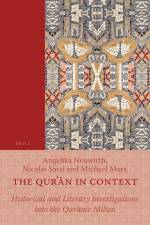
Although recent scholarship has increasingly situated the Qur' n in the historical context of Late Antiquity, such a perspective is only rarely accompanied by the kind of microstructural literary analysis routinely applied to the Bible. The present volume seeks to redress this lack of contact between literary and historical studies. Contributions to the first part of the volume address various general aspects of the Qur' n s political, economic, linguistic, and cultural context, while the second part contains a number of close readings of specific Qur' nic passages in the light of Judeo-Christian tradition and ancient Arabic poetry, as well as discussions of the Qur' n s internal chronology and transmission history. Throughout, special emphasis is given to methodological questions.
Abonner på vårt nyhetsbrev og få rabatter og inspirasjon til din neste leseopplevelse.
Ved å abonnere godtar du vår personvernerklæring.